
The elusive perfectly cooked fish is a culinary dream for many. Flaky, moist, and bursting with flavor, it’s a dish that can elevate any meal. Yet, the journey from raw to sublime is fraught with peril, primarily the risk of overcooking or undercooking. The critical variable in this culinary equation is temperature. But it’s not just about knowing what the ideal temperature is; it’s increasingly about how modern technology empowers home cooks and professional chefs alike to achieve that temperature with unwavering precision, turning guesswork into gastronomic mastery.
In an age where smart devices permeate every corner of our lives, the kitchen is no exception. From instant-read thermometers to AI-powered ovens, technology is revolutionizing how we approach delicate proteins like fish. This article delves into the science behind ideal fish temperatures and explores the innovative tech tools that are transforming our ability to consistently deliver perfectly cooked seafood.
Beyond Guesswork: The Scientific Imperative of Temperature in Fish Cookery
Cooking fish correctly isn’t just about taste; it’s about food safety and achieving the desired texture. Understanding the science of heat transfer and protein denaturation is foundational to appreciating the role technology plays.
Understanding Protein Denaturation and Texture
Fish muscle, like other meats, is primarily composed of protein. When heat is applied, these proteins begin to denature, or unravel and coagulate. This process changes the texture from translucent and gelatinous to opaque and firm. The key is to stop this process at precisely the right moment. Overcook fish, and the proteins contract too much, squeezing out moisture and leaving you with a dry, rubbery, or stringy texture. Undercook it, and the proteins haven’t fully denatured, resulting in a raw, unappetizing consistency that can also pose health risks.
The ideal texture for most fish is tender, moist, and flaky, separating easily with a fork. This state is achieved when the internal temperature allows for just enough protein denaturation to firm up the flesh while retaining its natural juices.
Recommended Internal Temperatures for Various Fish Types
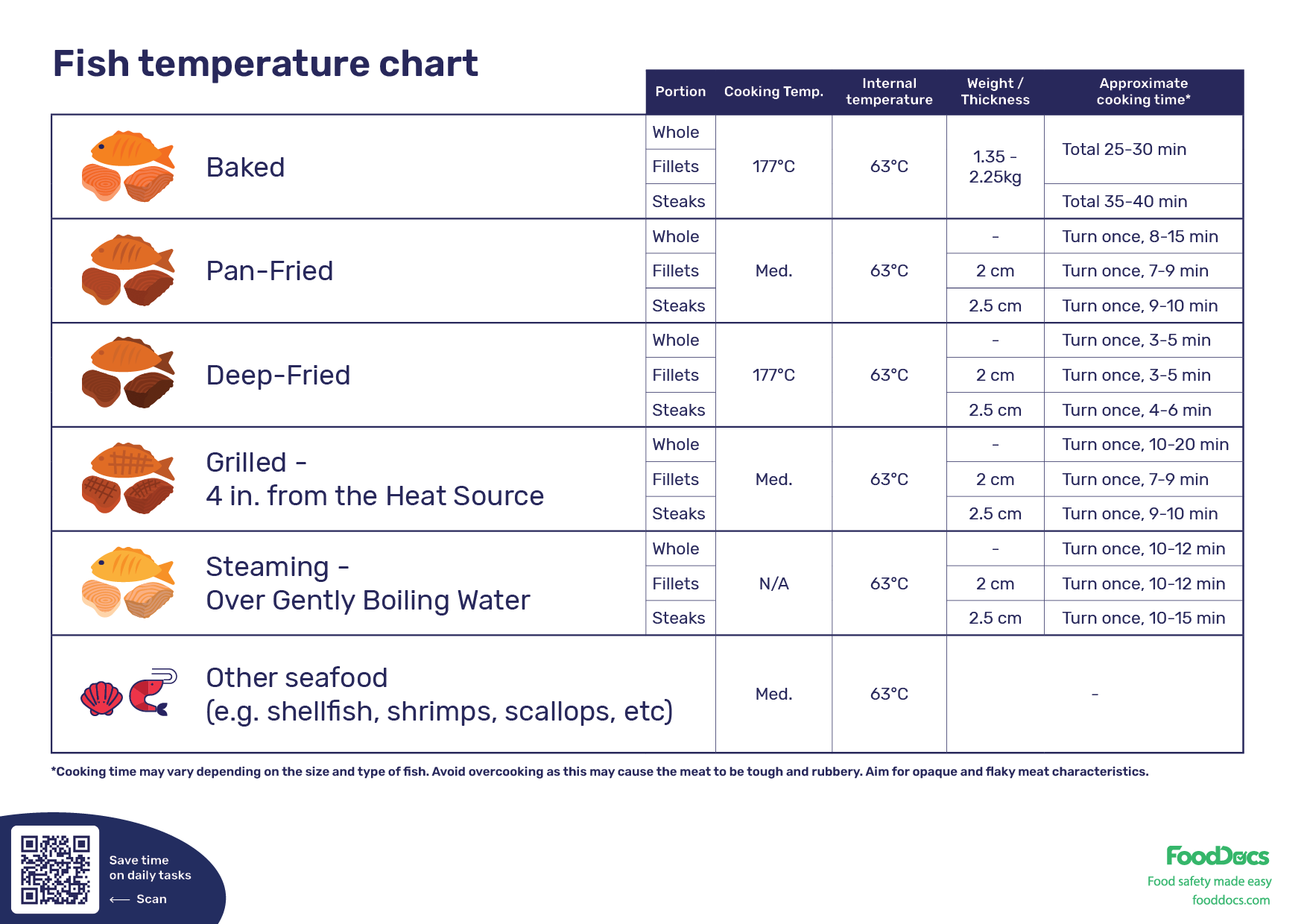
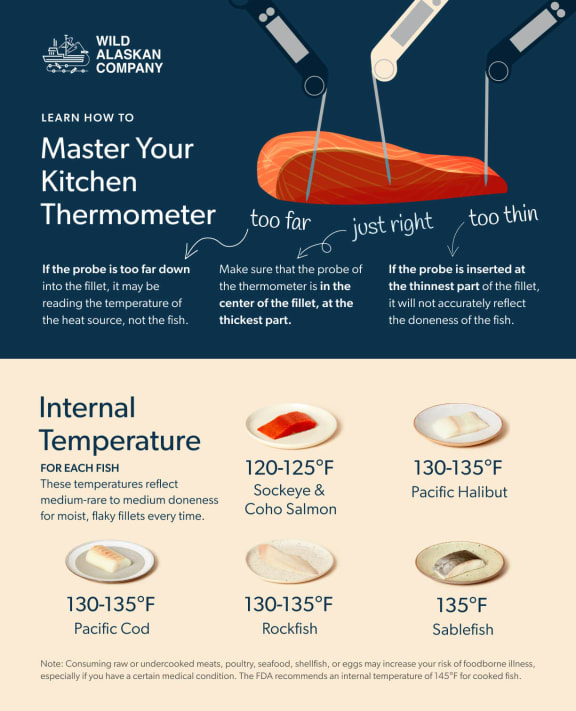
While personal preference plays a role, food safety guidelines provide a baseline. The U.S. Food and Drug Administration (FDA) recommends cooking fish to an internal temperature of 145°F (63°C) for safety. This temperature is measured at the thickest part of the fish.
However, culinary preference often leans towards slightly lower temperatures for certain species, especially high-quality, fresh fish, to achieve a more delicate texture. For instance:
- Flaky White Fish (Cod, Haddock, Tilapia): Often cooked to 135-140°F (57-60°C) for maximum moisture and flakiness, allowing for carryover cooking.
- Salmon and Fatty Fish (Tuna, Swordfish): Many chefs aim for 125-135°F (52-57°C) for a medium-rare to medium doneness, which preserves their rich, buttery texture. Tuna, in particular, is frequently served rare in the center.
- Shellfish (Shrimp, Scallops): Cook until opaque, which typically corresponds to 120-130°F (49-54°C).
The slight variation below FDA recommendations is often accepted by experienced cooks who understand the provenance of their fish and account for carryover cooking. This nuanced approach highlights the need for precise temperature monitoring, a task perfectly suited for modern tech.
The Carryover Cooking Factor
An often-overlooked aspect of cooking is carryover cooking, where food continues to cook even after being removed from the heat source. This is particularly crucial for fish, which cooks quickly. A piece of fish removed from the oven at 135°F (57°C) might rise an additional 5-10 degrees, reaching the perfect 140-145°F (60-63°C) as it rests. Failing to account for this can lead to overcooked fish, even if you pull it at the “right” temperature. Smart thermometers with predictive features are invaluable in managing this phenomenon.
The Thermometer Revolution: Smart Tools for Unwavering Accuracy
Gone are the days of poking fish with a fork or relying solely on visual cues. The modern kitchen is equipped with an array of smart thermometers that bring scientific precision to fish cookery.
Instant-Read Digital Thermometers: The Essential Upgrade
The fundamental tool for any serious cook, instant-read digital thermometers provide rapid, accurate temperature readings. Unlike their analog predecessors, digital models typically display temperatures within seconds and offer superior accuracy (often within ±1°F or 0.5°C). For fish, where every degree counts, this speed and precision are paramount, allowing you to quickly check the internal temperature without significantly impacting cooking time. Many models are also waterproof, making cleanup a breeze.
Wireless and Bluetooth Meat Thermometers: Monitoring from Afar
For larger fillets, whole fish, or when grilling and roasting, wireless and Bluetooth thermometers are game-changers. These devices feature probes that remain in the fish throughout the cooking process, transmitting real-time temperature data to a base unit or, more commonly, to a smartphone app. This allows cooks to monitor progress from another room, receive alerts when the target temperature is nearing, or when it’s reached.
This technology is particularly beneficial for fish, as it eliminates the need to constantly open oven doors or lift grill lids, which can disrupt cooking temperature and prolong the process. Apps often come with pre-set temperatures for different types of fish, making it easier for novice cooks to achieve professional results.
Advanced Features: Predictive Algorithms and Multi-Probe Systems
Some high-end smart thermometers go beyond simple temperature monitoring. They incorporate predictive algorithms that estimate how long it will take for your fish to reach its target temperature and even account for carryover cooking, suggesting when to remove the fish from the heat for optimal resting. Multi-probe systems allow you to monitor several pieces of fish or different dishes simultaneously, perfect for entertaining or complex meals. These features provide an unprecedented level of control and insight, making perfect doneness almost guaranteed.
Integrating Intelligence: Smart Ovens, Air Fryers, and Connected Kitchens
Beyond standalone thermometers, entire kitchen appliances are becoming integrated with smart technology, offering automated solutions for precision cooking.
Automated Cooking Programs and Sensors
Modern smart ovens are increasingly equipped with internal temperature probes that communicate directly with the oven’s control system. You can often program the oven to cook until the internal probe reaches a specific temperature, at which point the oven will switch to a “keep warm” setting or turn off entirely. Some advanced models even feature specific “fish” settings, which adjust temperature and cooking time based on the type and weight of fish, taking much of the guesswork out of the process.
Similarly, smart air fryers and convection ovens often include precision temperature controls and pre-set programs designed to crisp and cook fish fillets without drying them out, leveraging powerful circulating hot air. These appliances are connected via Wi-Fi, allowing for remote monitoring and control through smartphone apps, and sometimes even integration with voice assistants.
Precision Through Sous Vide: Water Bath Technology
For unparalleled temperature control and consistency, sous vide cooking stands in a league of its own, especially for delicate proteins like fish. Sous vide (French for “under vacuum”) involves vacuum-sealing food and cooking it in a precisely temperature-controlled water bath.
For fish, this method is revolutionary. You set the water bath to the exact desired final internal temperature (e.g., 130°F/54°C for medium-rare salmon). Because the fish cannot exceed the temperature of the water bath, it’s virtually impossible to overcook it. The result is incredibly tender, moist fish cooked evenly from edge to edge, with a remarkably consistent texture. The precision of modern sous vide circulators, often controlled by apps that offer vast recipe libraries and temperature guides, makes this technique accessible to home cooks and ensures perfect fish every time.
Beyond the Oven: Smart Grills and Air Fryers
Even outdoor cooking has embraced precision tech. Smart grills come with integrated temperature probes and app connectivity, allowing grill masters to perfectly cook fish fillets or whole fish without constant lid lifting. They can monitor ambient grill temperature alongside internal fish temperature, ensuring consistent results. Similarly, smart air fryers leverage rapid air circulation with precise temperature control, offering a quick and healthy way to cook fish with a crispy exterior and tender interior, all managed through intuitive digital interfaces and connected apps.
The Horizon of Culinary Tech: AI, Apps, and Future Innovations
The intersection of cooking and technology is constantly evolving, with artificial intelligence and advanced software promising even more intelligent kitchen experiences.
AI-Powered Recipe Platforms and Cooking Assistants
Imagine an app that not only tells you the ideal temperature for your fish but also dynamically adjusts cooking times based on the thickness of your specific fillet, the ambient temperature of your kitchen, and even your preferred doneness history. AI is moving beyond static recipes to create adaptive cooking experiences. AI-powered ovens are being developed that can identify the food placed inside and suggest optimal cooking settings, or even “learn” from past cooking successes and failures.
Voice-activated assistants are already integrated into smart kitchen devices, allowing hands-free control and temperature adjustments, further streamlining the cooking process.
Smart Appliances Learning from Your Preferences
Future smart kitchen appliances will likely gather data on your cooking habits and preferences, using machine learning to refine their recommendations. If you consistently prefer your salmon slightly rarer, your smart oven might adjust its pre-set “salmon” program over time to meet your specific taste. This hyper-personalization ensures that the “perfect temperature” is not just a scientific ideal, but also a reflection of individual culinary desires.
Augmented Reality and Guided Cooking
Imagine an augmented reality overlay on your cutting board or oven door that shows you exactly where to insert your temperature probe, or provides real-time visual cues on doneness as your fish cooks. While still emerging, AR has the potential to make complex cooking techniques, including precise temperature management for fish, more intuitive and accessible to everyone.
Choosing Your Culinary Tech Arsenal: A Guide for Every Chef
With so much technology available, selecting the right tools can feel overwhelming. The key is to match the tech to your specific needs and cooking style.
Assessing Your Needs: Home Cook vs. Enthusiast
For the casual home cook, a reliable instant-read digital thermometer is an indispensable first step. It offers significant improvement over guesswork without a large investment. For those who frequently cook fish, especially larger cuts or whole fish, a wireless probe thermometer with app connectivity offers convenience and superior monitoring. Culinary enthusiasts or those aiming for restaurant-quality results will find sous vide immersion circulators to be a game-changer for fish, offering unmatched precision and texture control. Smart ovens and air fryers with integrated probes cater to those seeking convenience and automation across a broader range of dishes.
Key Features to Look For: Connectivity, Accuracy, Durability
When investing in kitchen tech, consider:
- Accuracy: Look for thermometers with a high degree of accuracy (e.g., ±1°F / 0.5°C).
- Speed: Instant-read thermometers should provide readings within 2-3 seconds.
- Connectivity: For smart devices, evaluate the stability of the Wi-Fi/Bluetooth connection and the functionality of the accompanying app.
- Durability: Kitchen tools should be robust, often water-resistant, and made from food-safe materials.
- User Interface: Intuitive controls and clear displays are crucial for ease of use.
- Battery Life: For wireless devices, consider how long the battery lasts and how it recharges.
Investing in Flavor: The ROI of Smart Kitchen Gadgets
While some smart kitchen gadgets represent a significant investment, the return on investment (ROI) can be substantial. Reducing food waste from overcooked or undercooked fish, consistently achieving delicious results, and saving time by automating monitoring processes all contribute to a more satisfying and efficient cooking experience. Ultimately, these technologies are not just about making cooking easier; they’re about empowering cooks to unlock the full potential of their ingredients, ensuring that every piece of fish served is a testament to precision and culinary excellence.
Conclusion
The question “what is the temperature for cooking fish?” is no longer a simple culinary query, but an entry point into a sophisticated world where technology empowers us to achieve perfection. From the fundamental precision of instant-read thermometers to the revolutionary consistency of sous vide and the futuristic promises of AI, smart kitchen tech has fundamentally transformed how we approach this delicate protein. By embracing these innovations, cooks can move beyond traditional guesswork, ensuring that every fillet is cooked to its ideal internal temperature, resulting in dishes that are safe, delicious, and consistently outstanding. As technology continues to evolve, the future of fish cookery promises even greater ease, intelligence, and deliciousness.
aViewFromTheCave is a participant in the Amazon Services LLC Associates Program, an affiliate advertising program designed to provide a means for sites to earn advertising fees by advertising and linking to Amazon.com. Amazon, the Amazon logo, AmazonSupply, and the AmazonSupply logo are trademarks of Amazon.com, Inc. or its affiliates. As an Amazon Associate we earn affiliate commissions from qualifying purchases.