
The term “T-minus” has become an indelible part of our lexicon, instantly conjuring images of rocket launches, high-stakes missions, and the meticulous countdowns that precede pivotal technological events. It’s a phrase imbued with a sense of urgency, precision, and the collective breath-holding anticipation of a critical moment. But beyond its dramatic flair, what exactly does the “T” in “T-minus” signify? The answer, at its core, is elegantly simple yet profound in its implications for the world of technology: ‘T’ stands for ‘Time’.
Yet, to merely state that ‘T’ means ‘Time’ is to skim the surface of a concept that underpins the very foundation of complex technological endeavors. “T-minus” is far more than a placeholder for a numerical value; it represents a meticulously orchestrated sequence of events, a synchronized dance of systems, personnel, and critical decisions, all precisely aligned to a designated point in ‘Time’. In the realm of technology, where stakes are often sky-high and the margin for error infinitesimally small, understanding the true essence of ‘T’ is to grasp the chronology of precision, the imperative of planning, and the art of flawlessly executing the impossible.
The Genesis of ‘T’: A Legacy of Aerospace Engineering
The origins of “T-minus” are firmly rooted in the ambitious and often perilous world of aerospace engineering. Its necessity arose from the escalating complexity of rocket science and space exploration, demanding a universally understood language for coordinating intricate operations.
From V-2 Rockets to Apollo Missions: A Historical Imperative
The concept of a standardized countdown began to take shape during World War II with the German V-2 rocket program. These pioneering ballistic missiles, though rudimentary by today’s standards, represented an unprecedented level of mechanical and chemical complexity. Launching them required a precise sequence of fueling, arming, and systems checks, all needing to be completed within a specific timeframe leading up to ignition. A common reference point for these sequential actions became indispensable for the disparate teams involved.
However, it was during the Cold War and the ensuing Space Race between the United States and the Soviet Union that “T-minus” solidified its iconic status. Missions like Project Mercury, Gemini, and the monumental Apollo program pushed the boundaries of human ingenuity and technological capability. Launching a Saturn V rocket, for instance, was not a singular event but the culmination of hundreds of thousands of individual procedures, from loading propellants and running diagnostic checks to arming explosive bolts and switching on communication systems. Each step had to occur at an exact moment relative to launch, and any deviation could result in mission failure or catastrophic danger.
This created an imperative for a standardized, clear, and unambiguous method of referring to the remaining time until the primary event. “T-minus X” became the universal shorthand, allowing engineers, mission control specialists, and ground crews across various disciplines and geographical locations to understand precisely when their specific tasks needed to be initiated or completed. It represented a shared timeline, a common denominator in an ocean of technical jargon, ensuring that every participant was in perfect sync.
Standardizing the Countdown: Ensuring Synchronicity and Safety
The standardization offered by “T-minus” is paramount for ensuring both synchronicity and safety in high-stakes technological operations. It transforms a bewildering array of parallel and sequential tasks into a digestible, linear progression. Imagine a complex space launch: at T-minus 6 hours, certain fueling operations begin; at T-minus 1 hour, astronauts ingress the spacecraft; at T-minus 10 minutes, the final umbilical connections are retracted; at T-minus 3 seconds, main engines ignite. Each of these points is a critical juncture, and the ‘T-minus’ nomenclature provides a clear, concise reference for everyone involved.
This systematic approach is not merely for efficiency; it is a cornerstone of safety protocols. By breaking down the entire process into discrete, time-bound segments, teams can meticulously check and recheck systems, perform last-minute diagnostics, and implement contingency plans if an issue arises. The countdown provides designated hold points (“T-minus Hold”) where operations can be paused if a problem is detected, allowing for investigation and resolution without rushing or compromising safety. It facilitates clear communication for ‘Go/No-Go’ decisions, where key personnel declare readiness at specific countdown milestones. In essence, “T-minus” acts as the conductor of a vast, complex orchestra, ensuring that every instrument plays its part at precisely the right moment to achieve a harmonious and successful outcome.
Beyond Blast-Off: ‘T-Minus’ in Modern Tech Applications
While its origins are in aerospace, the conceptual power of “T-minus” has permeated various other domains within modern technology, reflecting a universal need for precise timing and coordinated execution.
Software Development and Project Management: Agile Countdown
In the fast-paced world of software development and project management, the spirit of “T-minus” is alive and well, albeit often without the explicit terminology. Concepts like “T-minus X days to alpha/beta launch,” “T-minus X hours until critical patch deployment,” or “T-minus X weeks until sprint completion” are commonplace. These phrases serve the same function as their aerospace counterparts: establishing a clear, immutable deadline around which all activities must be organized.
Agile methodologies, in particular, embody the essence of “T-minus” through practices like “time-boxing.” Sprints, which are fixed periods (e.g., two weeks) during which specific tasks must be completed, are essentially mini-T-minus countdowns. Product launches, feature releases, and critical updates all operate under intense pressure to meet predetermined timelines, demanding synchronized effort from development, testing, marketing, and operations teams. The focus is on delivering functionality by a specific ‘T’ (release date), making the preceding ‘T-minus’ period crucial for task prioritization, resource allocation, and risk management.
Hardware Integration and IoT Deployments: Orchestrating Complexity
The complexity of modern hardware deployments, especially in large-scale infrastructure projects or vast Internet of Things (IoT) ecosystems, also benefits from a “T-minus” mindset. Rolling out a new data center, upgrading a global network backbone, or activating thousands of IoT sensors across a smart city requires meticulous coordination.
Consider the deployment of a 5G network: at “T-minus X weeks” before activation, physical infrastructure must be installed; at “T-minus Y days,” base stations are powered on; at “T-minus Z hours,” network software is configured; and at “T-minus 0,” the network goes live. Each phase depends on the precise completion of the previous one. Similarly, in IoT, synchronizing the activation of a sensor network requires that all devices are online, communicating, and calibrated by a specific time, ensuring data integrity and system interoperability. Any deviation can lead to system failures, data loss, or significant operational delays, underscoring the vital role of a precise chronological approach.
Cybersecurity and Incident Response: Critical Timelines
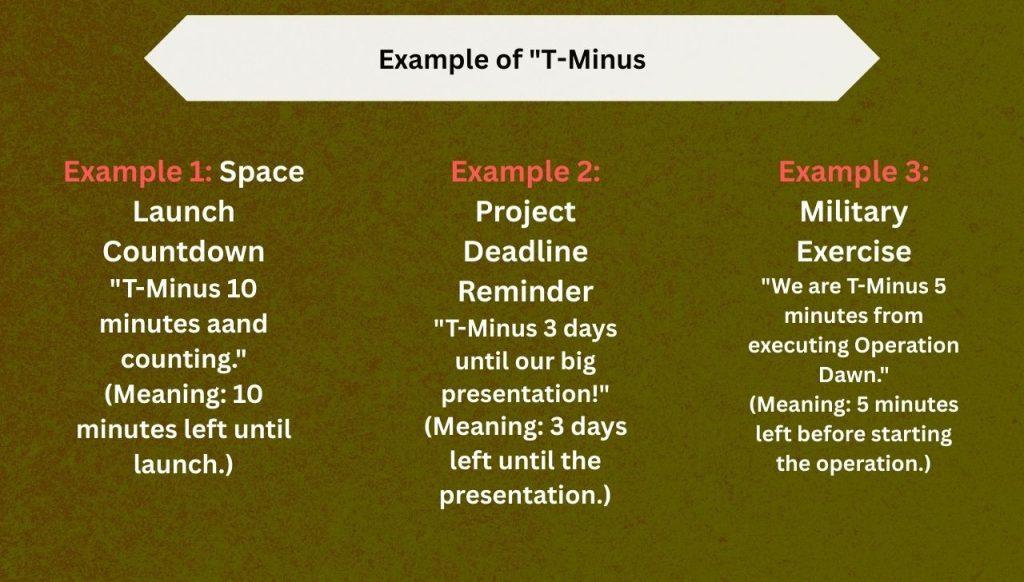
In the high-stakes arena of cybersecurity, “T-minus” takes on a particularly urgent and critical dimension. When a security breach occurs, every second counts. Incident response plans (IRP) are structured around a series of time-sensitive actions designed to contain, eradicate, recover from, and post-analyze a cyberattack. Phrases like “T-minus X minutes until system isolation,” “T-minus Y hours until full system restoration,” or “T-minus Z seconds until critical data exfiltration completes” illustrate the extreme pressure and precision required.
Security teams operate under immense time constraints to mitigate damage, prevent further data loss, and restore normal operations. The IRP breaks down the crisis into manageable, timed stages, with specific tasks assigned to different team members. The ability to coordinate these actions with “T-minus” precision can mean the difference between a contained incident and a catastrophic data breach, highlighting the term’s indispensable role in crisis management within the tech sector.
The Psychological and Operational Impact of ‘T-Minus’
Beyond its technical definition, “T-minus” has a profound psychological and operational impact, shaping team dynamics, risk mitigation strategies, and public perception of technological achievements.
Fostering Focus and Mitigating Risk
A clearly defined “T-minus” countdown acts as a powerful psychological trigger. It instills a heightened sense of urgency and hyper-focus among all personnel involved. This relentless ticking clock encourages meticulous attention to detail, adherence to established protocols, and a clear understanding of individual and collective responsibilities. The systematic approach inherent in a countdown significantly reduces the likelihood of human error by ensuring that every pre-defined check, procedure, and verification step is followed methodically.
Risk assessment and mitigation strategies are intimately tied to specific ‘T-minus’ points. Critical reviews, safety checks, and ‘Go/No-Go’ polls are conducted at predetermined milestones, allowing for the identification and rectification of potential issues before they escalate. This structured environment ensures that decisions are made under controlled conditions, with all available information, rather than in a rushed or chaotic manner, thereby enhancing overall operational safety.
Communication and Coordination at Scale
One of the most valuable aspects of “T-minus” is its ability to simplify complex communication and coordination across diverse teams, often spanning different geographical locations and organizational structures. By providing a common, universally understood timeline, it eliminates ambiguity and ensures that everyone is literally on the same page – or second. Whether it’s the launch director communicating with propulsion engineers, software developers interacting with quality assurance, or security analysts coordinating with network operations, the “T-minus” framework offers a clear, concise reference point for all instructions, updates, and decisions. This streamlined communication is crucial for real-time adjustments, abort scenarios, and seamless transitions between different phases of an operation.
The Spectacle and Anticipation: Public Engagement
While primarily a technical term, “T-minus” also plays a significant role in public engagement and anticipation for major technological feats. The countdown clock, whether for a rocket launch, a new product reveal, or a major system upgrade, transforms complex scientific and engineering endeavors into an easily digestible and exciting narrative. It builds suspense, draws attention, and fosters a sense of shared experience, allowing the public to connect with and appreciate the monumental effort and precision involved in pushing the boundaries of technology. This public engagement is vital for inspiring future generations of innovators and maintaining support for ambitious technological projects.
The Future of ‘T-Minus’: Automation and AI’s Role in Precision Timing
As technology continues to advance, the concept of “T-minus” will evolve, leveraging the power of automation and artificial intelligence to achieve even greater levels of precision and reliability.
AI-Driven Countdown Management
The integration of AI and machine learning promises to revolutionize countdown management. AI systems can process vast amounts of telemetry data in real-time, predict potential anomalies with unprecedented accuracy, and suggest optimal adjustments to procedures. Automated diagnostic checks, predictive maintenance, and intelligent contingency planning can be performed autonomously, significantly reducing the need for manual oversight in routine tasks. This frees human experts to focus on complex decision-making, critical analysis, and unforeseen challenges, enhancing both efficiency and safety. Future launch systems might even feature AI that can dynamically re-sequence parts of a countdown based on changing environmental conditions or system performance, optimizing for success in real-time.
Autonomous Systems and Distributed Operations
The next frontier of space exploration, involving autonomous probes, highly distributed satellite constellations, and deep-space missions, will necessitate even more sophisticated, automated “T-minus” protocols. Coordinating the actions of multiple autonomous agents, often separated by vast cosmic distances and operating with significant communication delays, demands a paradigm shift in timing precision.
In such scenarios, “T-minus” will extend beyond terrestrial control. On-board AI will manage localized countdowns for complex maneuvers, scientific experiments, or rendezvous procedures, coordinating actions across a network of intelligent systems with minimal human intervention. This distributed “T-minus” intelligence will be crucial for the success of multi-agent systems, swarm robotics, and missions exploring environments where direct human control is impractical or impossible, pushing the boundaries of what ‘Time’ means in an autonomous technological context.
Conclusion
The “T” in “T-minus” is unequivocally ‘Time’, but its true significance in the technological landscape extends far beyond a simple abbreviation. It is a symbol of unparalleled precision, meticulous planning, and the coordinated, high-stakes effort required to conquer the most complex engineering challenges. From the foundational countdowns of early rocketry to the agile sprints of modern software development, the synchronized orchestration of IoT deployments, and the rapid response of cybersecurity incidents, the principle of “T-minus” remains an indispensable framework.
It represents humanity’s unwavering commitment to achieving extraordinary feats through systematic execution, rigorous risk mitigation, and flawless communication. As we venture further into an era dominated by automation, AI, and increasingly complex autonomous systems, the spirit of “T-minus” will continue to evolve, driving even greater levels of chronological precision and operational reliability, cementing its role as a fundamental pillar in the ongoing saga of technological advancement.
aViewFromTheCave is a participant in the Amazon Services LLC Associates Program, an affiliate advertising program designed to provide a means for sites to earn advertising fees by advertising and linking to Amazon.com. Amazon, the Amazon logo, AmazonSupply, and the AmazonSupply logo are trademarks of Amazon.com, Inc. or its affiliates. As an Amazon Associate we earn affiliate commissions from qualifying purchases.