
For many investors, the S&P 500 represents the heartbeat of the American economy. When financial news anchors speak of “the market” being up or down, they are almost always referring to the Standard & Poor’s 500. However, for a beginner looking to place their first trade, the question “what is the symbol for the S&P 500?” can lead to a surprisingly complex set of answers.
Because the S&P 500 is a mathematical index rather than a tradable stock, there is no single symbol that covers every application. Depending on whether you are tracking the index’s performance, trading options, or buying an exchange-traded fund (ETF) for your retirement account, the ticker symbol you use will change. Understanding these distinctions is the first step toward mastering index-based investing and building a robust personal finance strategy.
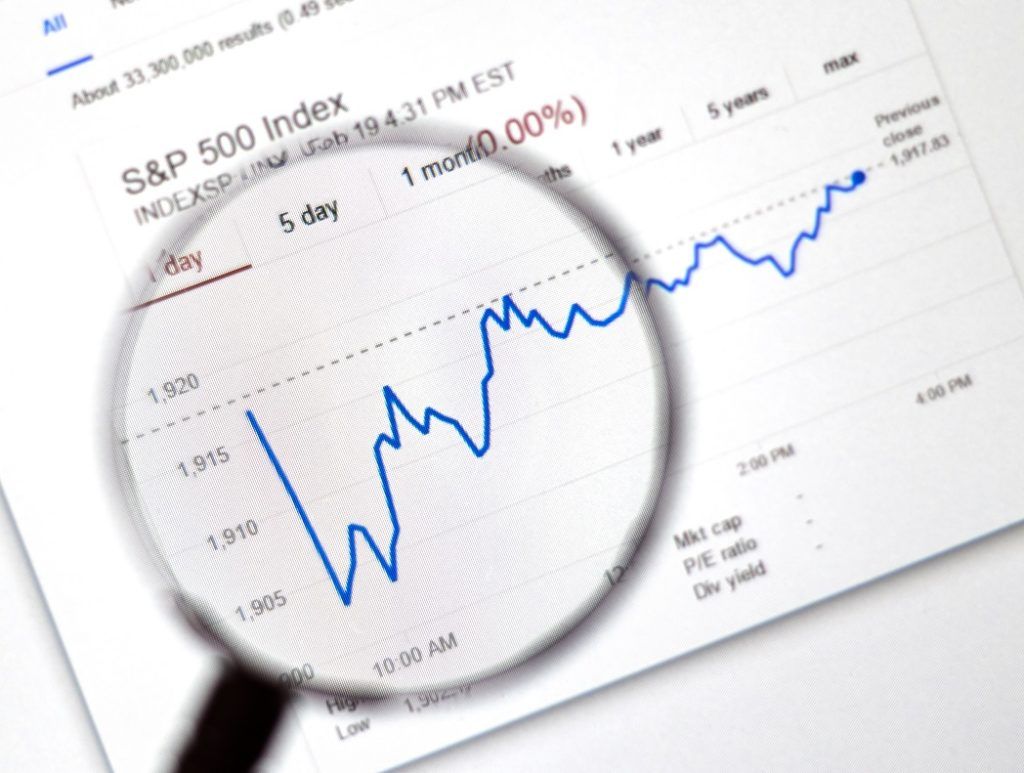
Understanding the S&P 500 Symbol and Ticker Variations
To navigate the financial markets effectively, you must distinguish between the index itself and the investment vehicles that track it. You cannot “buy” the S&P 500 directly; you can only buy products that mirror its performance.
The Core Index Symbol: ^SPX or .SPX
The actual S&P 500 Index is most commonly identified by the ticker symbol $SPX or ^SPX on charting platforms like Yahoo Finance or TradingView. Some institutional platforms use .SPX. This symbol represents the weighted value of the 500 largest publicly traded companies in the United States.
It is important to note that you cannot purchase shares of $SPX. It is a theoretical benchmark. When you see $SPX at a level of 5,000, that number is a point value calculated based on the market capitalization of its constituent companies. While you can trade options or futures contracts based directly on the $SPX value, it does not function like a standard stock ticker.
Tradable Tickers: SPY, VOO, and IVV
Since you cannot buy the index directly, financial institutions create ETFs that hold all 500 stocks in the correct proportions. These are the symbols most retail investors are looking for. The three most popular symbols for S&P 500 ETFs are:
-
SPY (SPDR S&P 500 ETF Trust): Launched in 1993, this is the oldest and most liquid S&P 500 ETF. It is the preferred choice for day traders and institutional investors due to its massive trading volume.
-
VOO (Vanguard S&P 500 ETF): Offered by Vanguard, this ticker is a favorite among long-term “buy and hold” investors because of its extremely low expense ratio.
-
IVV (iShares Core S&P 500 ETF): This is BlackRock’s version of the index. Like VOO, it offers a very low cost of ownership and is widely used in corporate 401(k) plans and individual brokerage accounts.
Why Tickers Vary Across Platforms
Depending on your brokerage or news source, you might encounter other variations. On some platforms, the S&P 500 might be listed as INX or GSPC. These are simply different internal codes used by data providers to denote the same basket of 500 stocks. For the average investor, focusing on the tradable tickers—SPY, VOO, or IVV—is the most practical approach to interacting with the market.
The Significance of the S&P 500 in Modern Finance
The S&P 500 is widely regarded as the best single gauge of large-cap U.S. equities. While the Dow Jones Industrial Average (DJIA) contains only 30 companies, the S&P 500 covers approximately 80% of the available market capitalization in the United States. This makes it a vital tool for assessing the health of the broader economy.
The Gold Standard of Market Performance
In the world of personal finance, the S&P 500 is the “benchmark.” When a hedge fund manager or a mutual fund claims to have “beaten the market,” they are stating that their returns were higher than the S&P 500’s total return over a specific period. Historically, the index has provided an average annual return of roughly 10% before inflation. This consistent performance has made it the cornerstone of wealth-building strategies for millions of people worldwide.
Market Cap Weighting: How the Index is Structured
The S&P 500 is a float-adjusted market-capitalization-weighted index. This means that companies with the largest market values—such as Apple, Microsoft, and Amazon—have a much greater influence on the index’s movement than the smaller companies at the bottom of the list.
This structure is designed to reflect the actual impact these companies have on the economy. If a massive tech giant sees its stock price drop by 10%, it has a significantly larger effect on the U.S. economy than if a smaller utility company experiences the same drop. For investors, this means that while the symbol represents 500 companies, the performance is heavily driven by the top 10 to 20 holdings.

Representation of the US Economy
The S&P 500 is divided into 11 sectors, including Technology, Healthcare, Financials, and Energy. The index is rebalanced quarterly by a committee at S&P Dow Jones Indices. They ensure that the constituent companies meet strict criteria, including a minimum market cap, high liquidity, and positive earnings over the most recent four quarters. This rigorous selection process ensures that the symbols like VOO or SPY always represent the “blue chips” of the American corporate landscape.
How to Invest in the S&P 500
Once you identify the right symbol, the next step is determining how to integrate it into your portfolio. There are several ways to gain exposure, each suited to different financial goals and risk tolerances.
Exchange-Traded Funds (ETFs)
As mentioned earlier, symbols like VOO and IVV are the most efficient ways for individuals to invest. ETFs trade just like stocks; you can buy them during market hours through any major brokerage. They offer high liquidity, meaning you can easily convert your investment back into cash. For most people, setting up a recurring purchase of an S&P 500 ETF is the most effective way to build long-term wealth.
Mutual Funds and Index Funds
Many investors prefer traditional mutual funds, especially within employer-sponsored retirement plans like a 401(k). The symbol for these funds will usually be five letters ending in “X.” For example, the VFIAX is the symbol for the Vanguard 500 Index Fund Admiral Shares. Unlike ETFs, mutual funds only trade once per day after the market closes. They are ideal for investors who want to automate their contributions without worrying about daily price fluctuations.
Options and Futures for Advanced Traders
For those looking to hedge a portfolio or speculate on short-term movements, the S&P 500 offers some of the most active derivatives markets in the world. Traders use the ES ticker for E-mini S&P 500 futures or the SPX symbol for cash-settled index options. These instruments are complex and carry higher risk, but they offer significant leverage and tax advantages (such as Section 1256 contracts) for professional traders and high-net-worth individuals.
Building a Wealth Strategy Around the S&P 500
Knowing the symbol is only the beginning; the real value lies in how you use these tools to achieve financial independence. A disciplined approach to S&P 500 investing has historically been one of the most reliable paths to wealth.
The Power of Compound Interest
The primary reason to track the S&P 500 is to benefit from compounding. By reinvesting the dividends paid out by the 500 companies within the index, an investor’s share count grows over time. Over a 30-year career, a modest monthly investment into a symbol like VOO can grow into a substantial seven-figure nest egg, thanks to the exponential growth of the U.S. corporate sector.
Dollar-Cost Averaging
Because the market can be volatile, many successful investors use a strategy called dollar-cost averaging (DCA). Instead of trying to “time the market” or wait for a dip, you invest a fixed amount of money into your chosen S&P 500 symbol at regular intervals (e.g., $500 every month). This ensures that you buy more shares when prices are low and fewer when prices are high, lowering your average cost per share over the long run.
Risk Management and Diversification
While the S&P 500 provides instant diversification across 500 companies and multiple sectors, it is still 100% focused on U.S. large-cap stocks. A balanced financial plan often involves pairing an S&P 500 fund with other assets, such as international stocks, bonds, or real estate. However, for many, the S&P 500 remains the “core” of their portfolio because of the global reach of the companies within it. Many S&P 500 companies derive more than 40% of their revenue from international markets, providing a level of global exposure even within a U.S.-focused ticker.
Common Pitfalls and Things to Watch For
While investing in the S&P 500 is generally considered a “safe” long-term bet compared to picking individual stocks, there are still nuances that can impact your bottom line.
Expense Ratios and Tracking Error
When choosing between symbols like SPY and VOO, the most important number is the “expense ratio.” This is the annual fee the fund manager charges to run the ETF. While 0.03% (VOO) and 0.09% (SPY) might seem small, these fees can compound into thousands of dollars in lost returns over several decades. Additionally, investors should look for “tracking error,” which measures how closely the ETF actually follows the index. Fortunately, the major S&P 500 symbols have some of the lowest tracking errors in the industry.

Concentration Risk in Tech Giants
In recent years, the S&P 500 has become increasingly “top-heavy.” Because it is market-cap weighted, a handful of massive technology companies now make up a significant percentage of the index’s total value. If you are looking for a symbol that treats all 500 companies equally regardless of their size, you might look at RSP (Invesco S&P 500 Equal Weight ETF). Understanding these variations helps you tailor your exposure to the market based on your personal outlook on the economy.
In conclusion, the answer to “what is the symbol for the S&P 500” depends entirely on your objective. To track the data, look for ^SPX. To invest for the long term, symbols like VOO or IVV are your best friends. By understanding these symbols and the financial engine they represent, you can take control of your investing journey and leverage the growth of the world’s most powerful economy.
aViewFromTheCave is a participant in the Amazon Services LLC Associates Program, an affiliate advertising program designed to provide a means for sites to earn advertising fees by advertising and linking to Amazon.com. Amazon, the Amazon logo, AmazonSupply, and the AmazonSupply logo are trademarks of Amazon.com, Inc. or its affiliates. As an Amazon Associate we earn affiliate commissions from qualifying purchases.