
In the contemporary economic landscape, the phrase “study abroad” has evolved from a mere academic pursuit into a sophisticated financial undertaking. When we analyze what the “study of abroad” truly represents from a fiscal perspective, we find it is less about the classroom and more about the strategic allocation of capital to acquire high-yield human assets. For the modern student—and the modern investor—international education is a high-stakes entry in a personal balance sheet that requires meticulous planning, risk management, and a clear understanding of Return on Investment (ROI).

To study abroad is to engage in a form of educational arbitrage: leveraging the costs of one economy to acquire the prestige and skills of another, with the goal of selling those skills in a globalized labor market. This article explores the financial mechanics of international education, examining the costs, the funding strategies, and the long-term wealth-building potential of global academic mobility.
Decoding the True Cost: Beyond Tuition and Room and Board
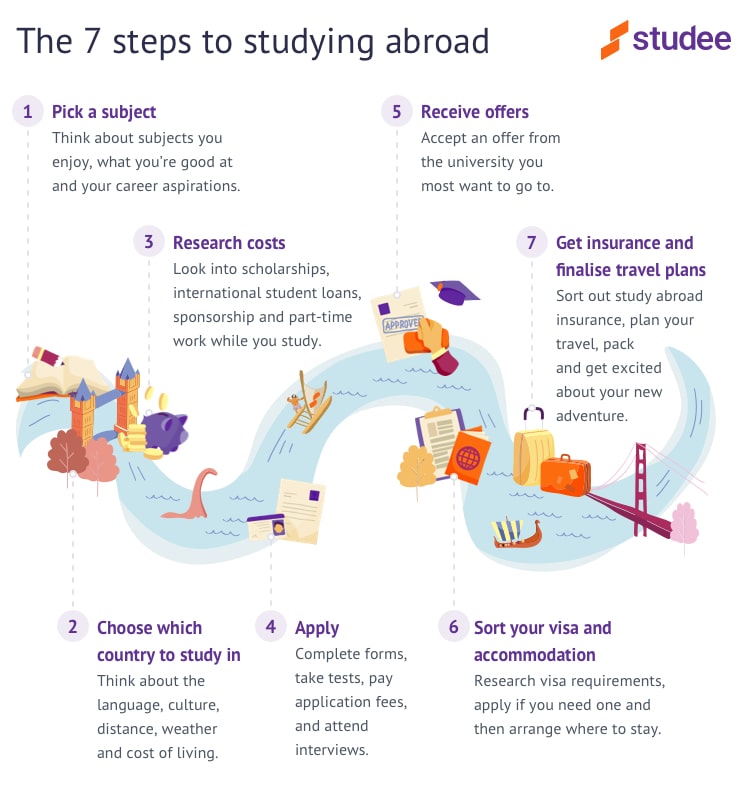
When evaluating the “study of abroad,” most families look first at the sticker price—the tuition listed on a university website. However, a professional financial analysis reveals that tuition is often less than 50% of the total capital required. Understanding the full cost of attendance (COA) is the first step in managing this investment.
Direct vs. Indirect Expenses
Direct expenses are predictable: tuition, mandatory university fees, and on-campus housing. These are usually fixed and billed directly by the institution. The complexity arises in the indirect expenses. These include international health insurance, visa processing fees, round-trip airfare (often fluctuating based on energy markets), and local transportation.
Furthermore, the “lifestyle inflation” associated with being in a new country can drastically impact a budget. Students often underestimate the cost of “experiential spending”—weekend travel, cultural immersion, and social networking—which are essential for the networking aspect of the investment but can lead to significant capital leakage if not budgeted correctly.
Currency Fluctuations and Purchasing Power Parity
A critical factor often overlooked in the “study of abroad” is exchange rate risk. If a student from a country with a volatile currency chooses to study in a “hard currency” zone like the Eurozone or the United States, they are essentially shorting their home currency. A 10% depreciation of the home currency during a semester can lead to a 10% increase in the real cost of education overnight.
Smart financial planning for international study involves understanding Purchasing Power Parity (PPP). A student may find that while tuition in Germany is lower than in the UK, the cost of living in Munich might exceed that of a provincial British city. Factoring in the local inflation rates and currency stability is vital for maintaining liquidity throughout the duration of the program.
Strategic Financing: Leveraging Scholarships, Grants, and Personal Capital
Once the total cost is identified, the next phase of the “study of abroad” is the capitalization strategy. Financing a global education requires a diversified approach, blending internal capital (savings), external debt (loans), and “free” capital (scholarships).
The Scholarship Ecosystem: Merit-Based vs. Need-Based Capital
Scholarships and grants are the most efficient way to finance an international degree because they carry no interest and require no repayment. From a financial standpoint, these are “non-dilutive” forms of funding.
- Institutional Grants: Many elite universities use their endowments to offer need-blind admissions, essentially subsidizing the education of high-potential students to maintain the brand’s prestige.
- Government-Sponsered Capital: Programs like the Fulbright (US) or Erasmus+ (EU) are geopolitical investments by states to build “soft power.” For the student, these represent a high-value subsidy that often includes stipends for living expenses, significantly reducing the debt burden.
Creative Funding and Side Hustles for the International Student
In the modern gig economy, “studying abroad” doesn’t have to mean a total cessation of income. Many students utilize remote work or “digital side hustles” to offset local living costs. This is a form of geographical arbitrage: earning in a high-value currency (like USD or GBP) while living in a country with a lower cost of living.
However, one must navigate the legalities of international tax law and student visa work restrictions. From a business finance perspective, this requires setting up efficient payment gateways and understanding the tax treaties between the home and host countries to avoid double taxation on international earnings.
The ROI of International Education: Calculating the Long-Term Yield
The ultimate question in the “study of abroad” is: what is the return? If an individual spends $100,000 on an international degree, they must ensure that the “yield”—the increase in lifetime earnings—justifies the initial outlay and the opportunity cost of not being in the workforce for those years.
Career Trajectory and Earning Potential
Data consistently shows that students with international experience command higher starting salaries. This “international premium” is a result of perceived “soft skills” such as cross-cultural communication, adaptability, and global perspective. In financial terms, an international degree acts as a “signal” to high-end employers (like management consultancies and investment banks) that the candidate possesses a high risk-tolerance and a global mindset.
When calculating ROI, one must look at the “Payback Period”—the number of years it takes for the salary increase to cover the total cost of the study abroad program. For top-tier MBA programs or specialized STEM degrees, the payback period can be as short as 3 to 5 years, making it a highly lucrative investment.
Global Networking as a Financial Asset
In finance, your “net worth is your network.” The “study of abroad” provides access to a global cohort of peers who will eventually become industry leaders in various markets. This “social capital” is a tangible asset. Having a classmate who becomes a venture capitalist in Singapore or a policy maker in Brussels provides the student with “insider” market intelligence and partnership opportunities that are inaccessible to those who stay within a domestic educational bubble. The long-term dividends of these relationships often far outweigh the academic knowledge gained in the classroom.
Risk Management and Financial Planning Tools for the Global Student
No significant investment should be made without a robust risk management strategy. The “study of abroad” involves unique risks, ranging from medical emergencies to geopolitical instability.
Insurance, Emergency Funds, and Digital Banking
A dedicated “emergency fund” is non-negotiable for the international student. This should be kept in a highly liquid account, ideally in a stable currency. Furthermore, the use of “Neo-banks” and fintech tools (such as Wise, Revolut, or Starling) is essential for modern international financial management. These platforms allow for mid-market exchange rates and low-fee international transfers, which can save a student thousands of dollars over the course of a four-year degree compared to traditional retail banks.
International health and travel insurance are also critical components of risk mitigation. A single medical emergency in a country like the United States without proper coverage can result in a catastrophic financial loss that can derail an entire educational journey and lead to long-term debt.
Tax Implications and International Financial Compliance
For students from countries with global taxation (like the U.S.), or for those working while studying, the “study of abroad” creates a complex tax profile. It is essential to understand the Foreign Earned Income Exclusion (FEIE) and FBAR (Report of Foreign Bank and Financial Accounts) requirements. Failing to comply with these financial regulations can lead to significant penalties, effectively negating the financial gains of the international experience. Proper financial planning involves consulting with cross-border tax specialists to ensure that the “study of abroad” remains a compliant and optimized financial endeavor.
Conclusion: The Strategic Value of the Global Mindset
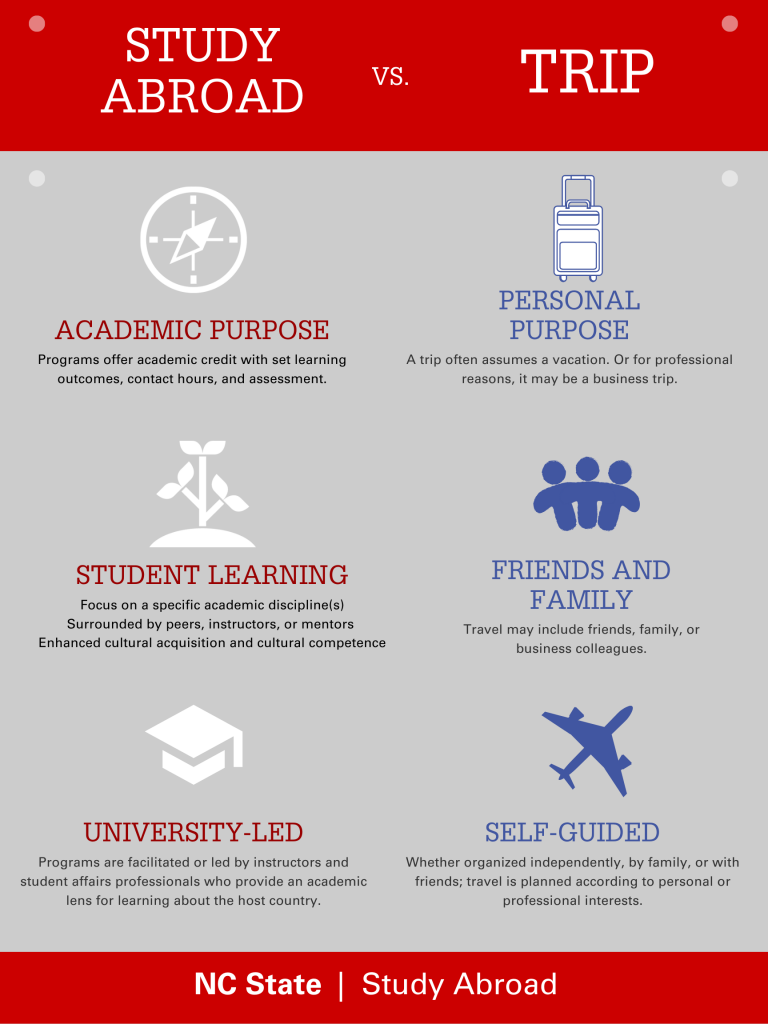
What is the study of abroad? Viewed through a financial lens, it is a sophisticated capital allocation strategy. It is the process of diversifying one’s intellectual and professional portfolio across different geographic markets. While the upfront costs are substantial, the potential for high ROI—driven by increased earning potential, global networking, and currency arbitrage—makes it one of the most powerful financial moves an individual can make in the 21st century.
By treating the “study of abroad” as a business venture—complete with a budget, a financing strategy, and a clear ROI analysis—students and their families can transform a standard educational experience into a foundational pillar of long-term wealth and global financial mobility. In the end, the study of abroad is not just an expense; it is the acquisition of a lifelong asset that pays dividends in every market, in every currency, and in every corner of the global economy.
aViewFromTheCave is a participant in the Amazon Services LLC Associates Program, an affiliate advertising program designed to provide a means for sites to earn advertising fees by advertising and linking to Amazon.com. Amazon, the Amazon logo, AmazonSupply, and the AmazonSupply logo are trademarks of Amazon.com, Inc. or its affiliates. As an Amazon Associate we earn affiliate commissions from qualifying purchases.