
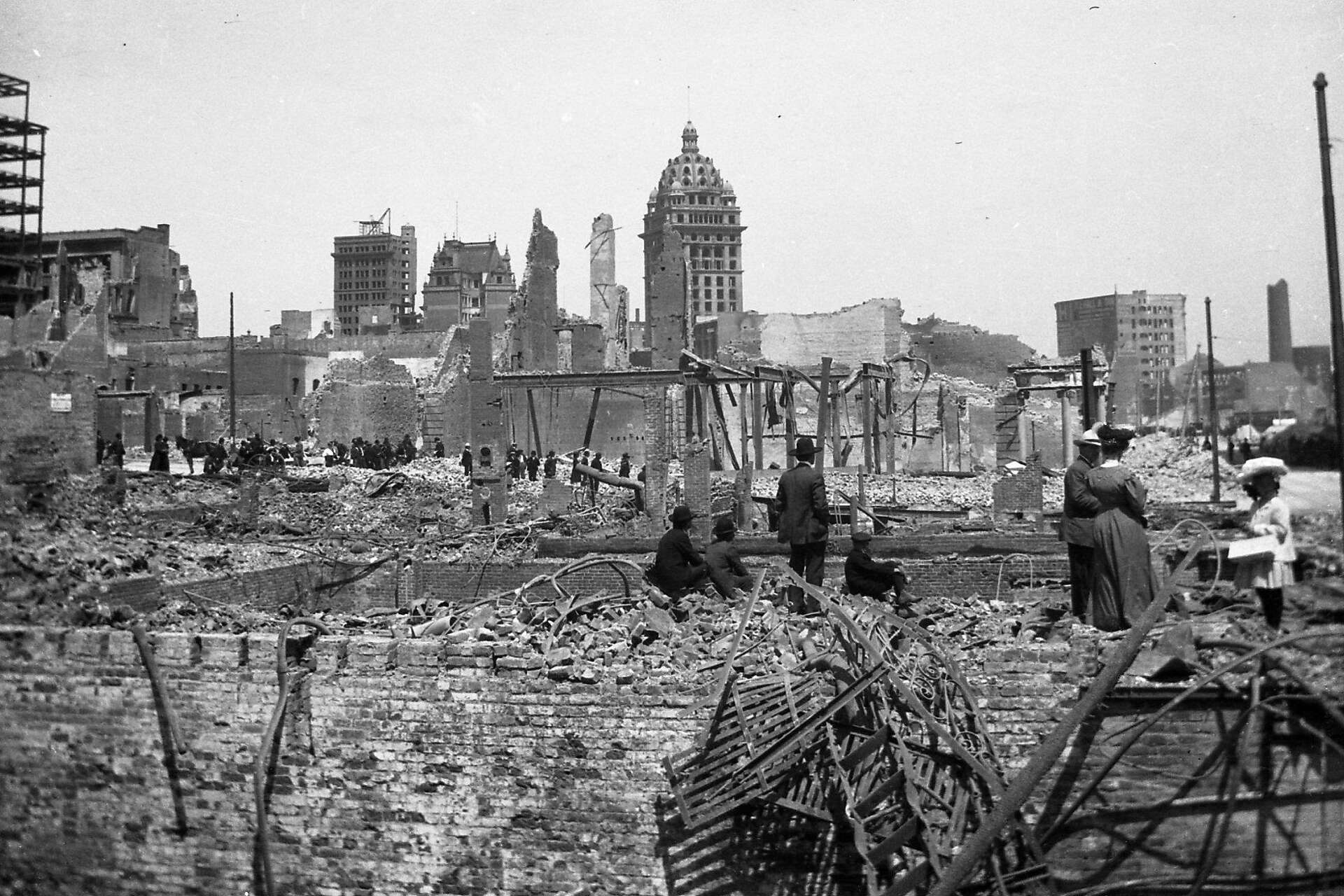
The 1906 San Francisco earthquake remains the most powerful seismic event in California’s recorded history. With an estimated magnitude of 7.9, it didn’t just reshape the geography of the Bay Area; it fundamentally altered the course of Earth science. Before the 1906 event, the study of earthquakes was a nascent field characterized more by folklore than by physics. Today, that same event serves as the primary benchmark for a massive technological ecosystem dedicated to monitoring, predicting, and mitigating the effects of tectonic shifts.
In the decades since the 1906 “Big One,” California has become the global epicenter for seismic technology. From the development of advanced telemetry systems to the integration of Artificial Intelligence in early warning software, the quest to understand California’s strongest earthquake has birthed a multi-billion dollar tech industry. This article explores the technological advancements triggered by California’s seismic history and how modern digital tools are preparing the state for the inevitable next major event.
Measuring the Unmeasurable: The Evolution of Seismic Tech
When the 1906 earthquake struck, scientists lacked the tools to quantify the energy released. They relied on intensity scales—observations of broken chimneys and cracked earth. The transition from observation to precision measurement marks the first great leap in seismological technology.
From Seismographs to Digital Sensors
The early 20th century relied on mechanical seismographs—heavy pendulums that traced lines on soot-covered paper. While revolutionary at the time, these devices were limited by their physical constraints and inability to capture high-frequency data. Today, the California Integrated Seismic Network (CISN) utilizes thousands of digital broadband sensors. These sensors utilize force-balance accelerometers that can detect ground movements smaller than the width of a human hair, while simultaneously recording the violent shaking of a major quake without “clipping” the data. This high-fidelity digital output is streamed via satellite and cellular telemetry to data centers in real-time, a feat of data engineering that would have been unimaginable a century ago.
The Magnitude Scale: Beyond the Richter Era
While the public still frequently refers to the “Richter Scale,” the tech community and seismologists have moved to the Moment Magnitude Scale (Mw). This shift was necessitated by the need for a more accurate digital representation of the energy released by massive quakes like the 1906 event. Modern software algorithms calculate the “seismic moment” by analyzing the area of the fault that slipped and the rigidity of the rock. This computational approach allows for a more nuanced digital profile of an earthquake, enabling engineers to model exactly how different types of soil and infrastructure will respond to specific wave frequencies.
Early Warning Systems: The Digital Shield of the 21st Century
The “strongest earthquake” is no longer just a historical fact; it is a real-time data challenge. The goal of modern seismic tech is to bridge the gap between the moment a fault ruptures and the moment the shaking reaches populated areas.
ShakeAlert: How Seconds Save Lives
The ShakeAlert system, managed by the USGS in collaboration with several universities, is the pinnacle of California’s seismic software. When a quake begins, P-waves (primary waves) travel faster than the more destructive S-waves (secondary waves). ShakeAlert’s network of sensors detects these P-waves instantly. The system’s algorithms then calculate the location and magnitude within seconds. If the quake meets a certain threshold, a signal is broadcast at the speed of light—faster than the seismic waves themselves—to provide a few precious seconds of warning.

The Role of Mobile Apps and IoT Integration
The true power of early warning tech lies in its integration with the Internet of Things (IoT). Through APIs and mobile applications like MyShake, developed at UC Berkeley, the data from ShakeAlert is delivered directly to millions of smartphones. Beyond simple notifications, this tech stack is integrated into the state’s infrastructure. For instance, when a major quake is detected, automated scripts can trigger the slowing of BART trains, the opening of firehouse doors, and the shutting of valves in natural gas pipelines. This automated response system transforms a passive warning into an active digital defense mechanism.
Predictive Modeling and AI: Anticipating the Next Big One
While we cannot yet predict the exact moment of an earthquake, technology has allowed us to move into the realm of high-probability forecasting and sophisticated simulation.
Machine Learning in Seismology
Machine learning (ML) is currently revolutionizing how we analyze “seismic noise.” For years, small tremors and background vibrations were discarded as data “trash.” However, AI tools are now being used to sift through decades of this data to find patterns that precede larger events. Neural networks are trained to recognize the “fingerprints” of pre-shocks that are too subtle for human analysts to detect. By processing petabytes of historical data from the 1906 event through to the 1994 Northridge quake, researchers are developing models that can estimate the likelihood of a major rupture along specific fault segments with increasing accuracy.
Simulating the “Great Shakeout” through High-Performance Computing
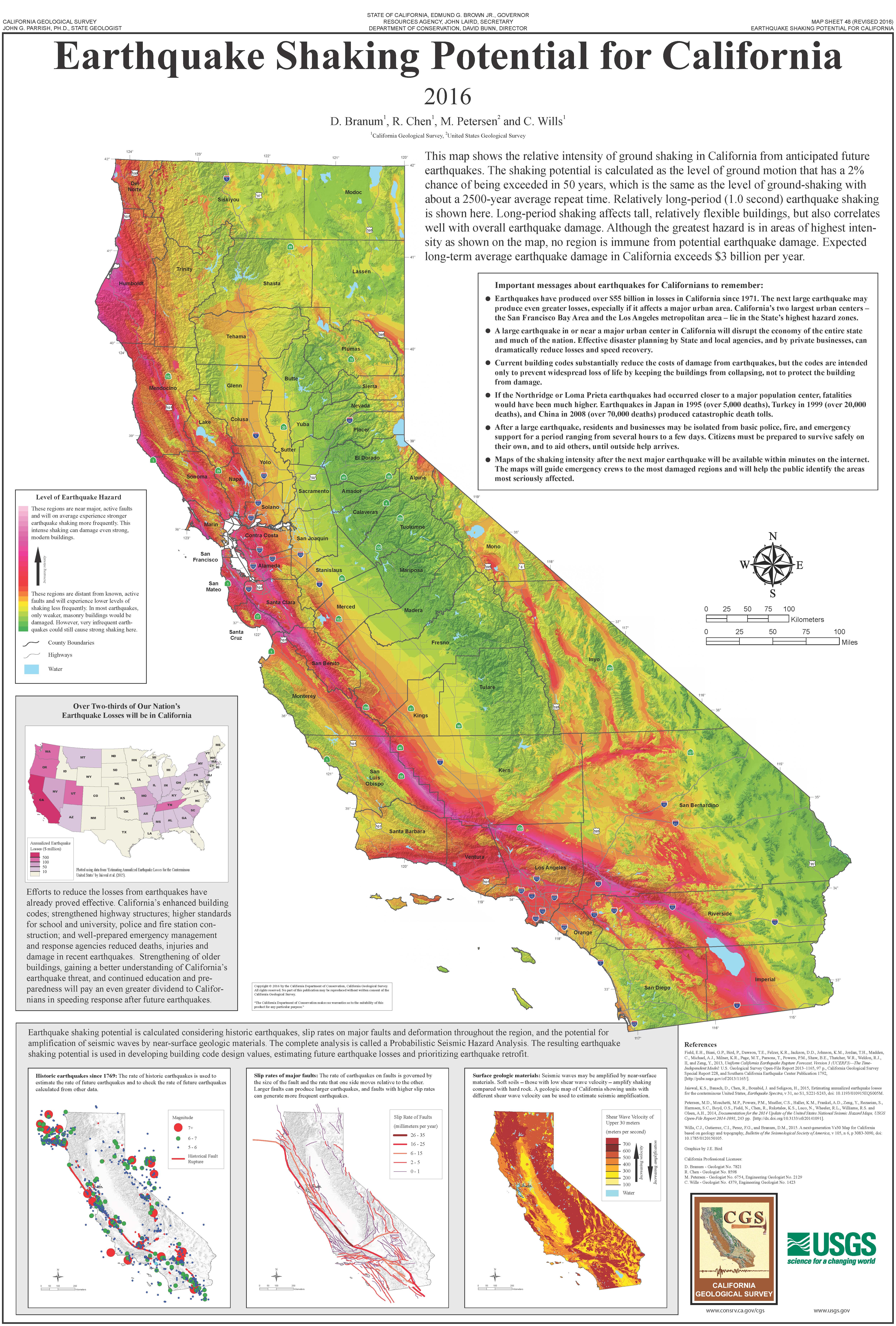
To prepare for a recurrence of California’s strongest earthquake, scientists use supercomputers to run “The Big One” simulations. These high-performance computing (HPC) models account for the 3D crustal structure of California, the specific physics of the San Andreas Fault, and the urban density of cities like Los Angeles and San Francisco. By running thousands of “synthetic” earthquakes, software developers help city planners identify which fiber-optic routes are most vulnerable and which data centers are located in “liquefaction zones.” This digital foresight is essential for maintaining the state’s tech-heavy economy during a disaster.
The Tech of Resilience: Engineering for Survival
Understanding the strongest earthquake is only half the battle; the other half is building a digital and physical environment that can withstand it. This has led to the rise of “Resilience Tech.”
Smart Materials and Base Isolation Systems
Modern architecture in California is a testament to seismic software. Structural engineers use Finite Element Analysis (FEA) software to simulate how a building will sway during a 7.9 magnitude event. This has led to the development of “smart” base isolation systems—essentially giant shock absorbers—that allow a building to move independently of the ground. Some of these systems now incorporate sensors that provide a “post-game” digital report of the building’s structural integrity, allowing for rapid inspection and re-entry after the shaking stops.
Digital Twins for Urban Planning
One of the most exciting trends in disaster tech is the creation of “Digital Twins”—virtual replicas of entire cities. By combining GIS (Geographic Information Systems) data with seismic modeling, planners can visualize how a major earthquake would impact the power grid, water supply, and telecommunications. This allows for the “stress testing” of a city’s digital infrastructure. In the event of an earthquake as strong as the 1906 quake, these digital twins would allow emergency responders to see, in real-time, which areas are likely to be cut off from help due to bridge failures or landslides.
Conclusion
The 1906 San Francisco earthquake was a tragedy that defined the early 20th century, but in the 21st century, it serves as a roadmap for technological evolution. The quest to answer “what is the strongest earthquake in California” has transitioned from a historical inquiry into a data-driven mission to safeguard the future. Through the marriage of advanced sensors, AI-driven analysis, and automated warning systems, California is not just waiting for the next “Big One”—it is building the digital framework to survive it. As technology continues to advance, the state moves closer to a future where seismic events are no longer catastrophic surprises, but manageable variables in an increasingly resilient digital landscape.
aViewFromTheCave is a participant in the Amazon Services LLC Associates Program, an affiliate advertising program designed to provide a means for sites to earn advertising fees by advertising and linking to Amazon.com. Amazon, the Amazon logo, AmazonSupply, and the AmazonSupply logo are trademarks of Amazon.com, Inc. or its affiliates. As an Amazon Associate we earn affiliate commissions from qualifying purchases.