
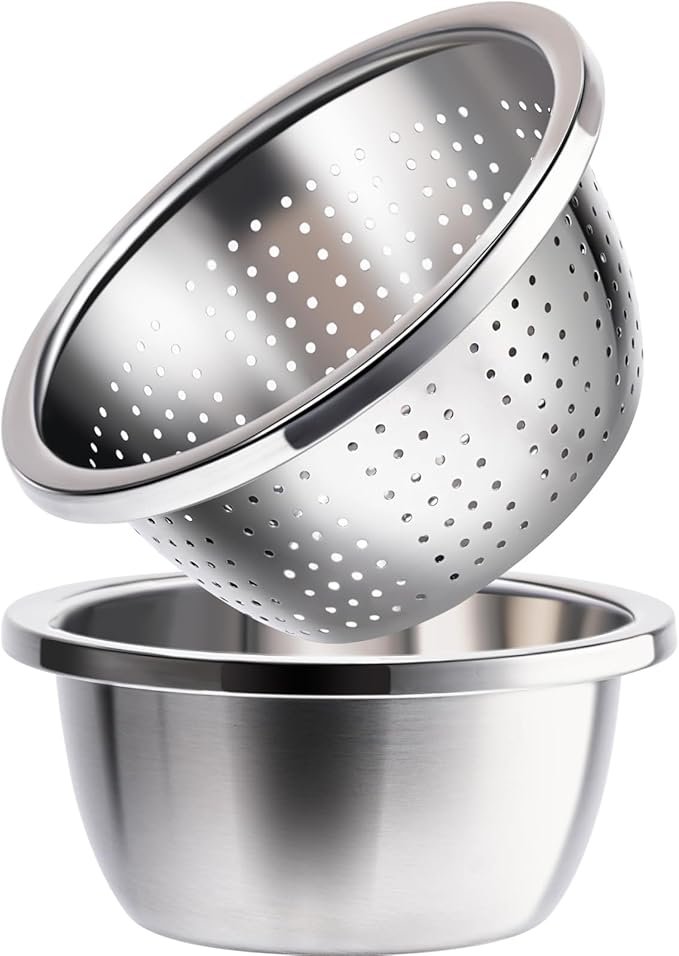
At first glance, the question “what is the strainer?” might seem disarmingly simple, evoking images of a humble kitchen utensil separating pasta from water. Yet, to confine “the strainer” to this singular, rudimentary form would be to overlook a vast and fascinating technological landscape. In the realm of technology, “straining” or “filtration” transcends its domestic origins to become a fundamental principle driving innovation across countless industries. From the microscopic precision of nanotechnology to the macroscopic demands of industrial processing and even the abstract logic of artificial intelligence, the concept of a “strainer” — a device or system designed to separate, purify, or refine — is undergoing a profound technological evolution. This article delves into the multi-faceted identity of the strainer within the tech sphere, exploring its transformation from a simple tool into a sophisticated, smart, and indispensable component of our modern world.

More Than Just a Kitchen Tool: The Core Concept of Straining
The essence of a strainer lies in its ability to separate components based on physical characteristics, typically size. While its most recognizable form resides in our kitchens, the underlying principle of selective permeability is a cornerstone of scientific and industrial processes worldwide. Understanding this core concept is crucial for appreciating its technological advancements.
From Ancient Practice to Modern Imperative
The act of straining dates back millennia, from ancient civilizations filtering water through sand and gravel to early brewers separating grains from wort. These rudimentary methods, driven by the necessity for clean water, edible food, and consistent products, laid the groundwork for what would become complex engineering disciplines. As societies advanced, so did the demand for finer separation, greater purity, and higher efficiency. The industrial revolution catalyzed significant innovations, transforming manual straining into mechanized filtration processes essential for manufacturing everything from chemicals to textiles. Today, in an era defined by precision and control, the imperative for effective straining is greater than ever, touching upon public health, environmental sustainability, and the cutting edge of material science.
The Universal Principles of Separation
Regardless of its application, every strainer operates on universal principles of separation. These include physical sieving, where particles larger than the mesh openings are retained; adsorption, where substances adhere to a filter medium; and mechanical or chemical interaction, which can alter the properties of a substance to facilitate separation. In tech, these principles are optimized through advanced materials, intelligent design, and computational modeling. For instance, membrane technology utilizes semi-permeable barriers at a molecular level to separate gases or liquids, a far cry from a colander but fundamentally rooted in the same separating principle. The constant drive in technology is to achieve more precise, faster, and more energy-efficient separation, pushing the boundaries of what these “strainers” can accomplish.
The Technological Evolution of Straining Gadgets
The evolution of the strainer is a prime example of how even the most basic tools can be revolutionized by technology. What was once a static mesh has become a dynamic, intelligent system, incorporating sensors, automation, and smart connectivity.
Smart Kitchen Strainers and Food Tech
Even in the domestic sphere, the humble strainer is undergoing a transformation. While traditional strainers remain ubiquitous, the broader category of kitchen gadgets now includes sophisticated devices that automate and enhance separation processes. Think of high-tech juicers that precisely separate pulp from juice, automated coffee makers with self-cleaning filtration systems, or advanced food processors that offer fine-tuning of consistency. These “smart strainers” often incorporate sensors to detect optimal straining times, motors for continuous agitation, and even integrated cleaning cycles, reducing manual effort and improving results. The convergence of IoT (Internet of Things) with kitchen appliances means future strainers might self-monitor filter integrity or order replacement parts autonomously, demonstrating a clear tech trend in even the most mundane of household items.
Industrial-Grade Filtration: Precision and Automation
In industrial settings, “strainers” are critical components in almost every production line. Here, the term refers to a vast array of sophisticated machinery designed for tasks ranging from purifying pharmaceutical compounds to filtering heavy crude oil. These industrial-grade filtration systems are complex gadgets, often featuring advanced materials like ceramic membranes, polymer filters, and metallic alloys capable of withstanding extreme temperatures and pressures. Automation is key, with programmable logic controllers (PLCs) monitoring flow rates, pressure differentials, and filter integrity in real-time. Predictive maintenance, a significant technology trend, is often integrated, using sensors and data analytics to anticipate filter clogging or failure, thereby preventing costly downtime. These systems are regularly reviewed for efficiency, longevity, and adherence to stringent environmental and safety regulations, marking them as advanced pieces of tech.
Digital Strainers: Filtering Information in the AI Age
Perhaps the most abstract, yet profoundly impactful, evolution of the “strainer” concept exists in the digital realm. In the age of big data and artificial intelligence, information itself needs to be “strained.” Digital strainers are algorithms and software tools designed to filter, sort, and prioritize vast quantities of data, separating noise from signal, irrelevant from critical. This category includes spam filters in email (digital security), search engine algorithms that rank information, content moderation systems that filter harmful material, and sophisticated data analytics platforms that extract actionable insights from raw data. AI tools, in particular, are at the forefront of this digital straining, utilizing machine learning to identify patterns, classify information, and dynamically adapt filtering criteria. For example, AI-powered sentiment analysis acts as a “strainer” for public opinion, sifting through social media to gauge brand perception, while recommendation engines “strain” content to deliver personalized user experiences. These digital “strainers” are apps and software critical to navigating the modern information landscape.
Strainers in Contemporary Tech Applications
The technological sophistication of strainers is evident across diverse sectors, each pushing the boundaries of separation science for unique challenges.
Advancements in Water Purification and Environmental Tech
Clean water is a global imperative, and advanced straining technologies are at the heart of modern water purification. Ultrafiltration and nanofiltration membranes, for instance, act as incredibly fine strainers, removing microscopic pathogens, dissolved solids, and even certain chemical contaminants from water. Reverse osmosis systems, often considered high-tech water gadgets, push water through semi-permeable membranes under pressure to achieve near-pure water. Beyond municipal systems, environmental tech deploys specialized strainers in wastewater treatment to remove pollutants, in air filtration systems to capture particulates and allergens, and in industrial processes to recover valuable resources from waste streams. These innovations are continuously reviewed for their efficacy and sustainability, driving technology trends in green engineering.
Microfiltration and Nanotechnology in Manufacturing
In advanced manufacturing, especially in microelectronics, pharmaceuticals, and biotechnology, the need for sterile environments and ultra-pure materials makes sophisticated straining absolutely critical. Microfiltration and ultrafiltration membranes are employed to remove particles and microorganisms down to the sub-micron level, essential for producing integrated circuits, injectable drugs, or delicate lab reagents. Nanotechnology further refines this concept, developing materials with precisely engineered pores at the nanoscale to separate individual molecules. Think of self-assembling molecular sieves or graphene-based filters that can separate specific ions or even isotopes. These high-tech strainers are indispensable tools for ensuring product quality, safety, and performance in critical industries.
The Role of AI in Predictive Filtration Systems
The integration of artificial intelligence is revolutionizing the operation and maintenance of complex straining systems, particularly in industrial and environmental applications. AI tools are increasingly used to create “predictive filtration systems.” Sensors embedded in filters collect real-time data on pressure, flow, turbidity, and chemical composition. AI algorithms analyze this data to predict when a filter will clog, degrade, or fail, allowing for proactive maintenance rather than reactive repairs. This not only minimizes downtime and operational costs but also optimizes filter lifespan and energy consumption. Furthermore, AI can dynamically adjust filtration parameters based on incoming material characteristics, ensuring optimal performance under varying conditions. This represents a significant technology trend towards autonomous and self-optimizing industrial processes.
The Future of Straining: Intelligent Separation and Beyond
As technology continues its rapid advancement, the future of the “strainer” promises even more remarkable innovations, driven by the convergence of AI, advanced materials, and an increasing demand for efficiency and sustainability.
Self-Cleaning and Adaptive Filtration Systems
One significant area of development is towards self-cleaning and adaptive filtration systems. Future strainers will likely incorporate smart materials that can change their pore size or surface properties in response to environmental cues, preventing clogging and extending operational life. Self-cleaning mechanisms, utilizing ultrasonic vibrations, reverse flushing, or electro-chemical processes, will become more common, significantly reducing maintenance requirements. These systems will be able to “learn” from their operational history, optimizing cleaning cycles and filtration parameters autonomously, minimizing human intervention and maximizing efficiency. Such gadgets will represent the pinnacle of smart, low-maintenance technology.
Personalized Filtration for Health and Wellness
Looking ahead, the concept of personalized filtration could emerge as a new tech trend in health and wellness. Imagine wearable devices or smart home systems that can filter air or water specifically tailored to an individual’s unique health needs, allergies, or sensitivities. This could involve filters that target specific allergens, pollutants, or even microorganisms based on real-time environmental monitoring and user biometric data. Smart water bottles with integrated, intelligent strainers that analyze water quality and filter contaminants on-the-go are already appearing as niche gadgets, and this trend is likely to expand into more sophisticated, personalized applications.
Sustainable Straining: Reducing Waste, Maximizing Efficiency
Finally, a major driver for future straining technology will be sustainability. The focus will be on developing more energy-efficient filtration processes, reducing the amount of waste generated by filter disposal, and improving the recovery of valuable resources from waste streams. Innovations in biodegradable filter materials, regenerative filtration systems, and closed-loop processes will be paramount. AI will play a crucial role in optimizing these systems for minimal environmental impact, ensuring that the act of “straining” not only purifies and separates but also contributes positively to a circular economy. The ongoing review of new materials and methods for their ecological footprint will be a cornerstone of this future.
In conclusion, “what is the strainer?” is a question that, when viewed through a technological lens, reveals a rich tapestry of innovation. From simple mechanical separators to complex AI-driven purification systems and metaphorical digital filters, the underlying principle of selective separation remains a vital engine of progress. As technology continues to evolve, the strainer, in its myriad forms, will remain an indispensable tool, adapting, learning, and expanding its capabilities to meet the ever-growing demands of our complex, interconnected, and data-rich world.
aViewFromTheCave is a participant in the Amazon Services LLC Associates Program, an affiliate advertising program designed to provide a means for sites to earn advertising fees by advertising and linking to Amazon.com. Amazon, the Amazon logo, AmazonSupply, and the AmazonSupply logo are trademarks of Amazon.com, Inc. or its affiliates. As an Amazon Associate we earn affiliate commissions from qualifying purchases.