
For nearly five decades, a small, mouthless white cat with a distinctive red bow has captured the hearts of millions across generations and cultures, adorning everything from school supplies to luxury goods. Hello Kitty, or Kitty White as she is officially known, is more than just a character; she is a global brand phenomenon, an emblem of “kawaii” (cuteness) that transcends mere merchandise. Her ubiquity is such that her image is instantly recognizable, yet the intricate story of her creation, strategic evolution, and enduring appeal as a masterclass in brand building often remains untold. This article delves into the fascinating narrative behind Hello Kitty, dissecting the branding strategies that transformed a simple design into a multi-billion-dollar empire and an iconic cultural touchstone.

The Genesis of a Global Icon: From Concept to Cultural Phenomenon
The tale of Hello Kitty begins in Japan, a nation celebrated for its unique aesthetic and imaginative character design. Her birth was not an accident but a deliberate act of commercial design by a company with a clear vision for connecting with consumers through emotion.
Sanrio’s Vision: The Birth of a “Kawaii” Philosophy
Hello Kitty emerged from Sanrio, a company founded in 1960 by Shintaro Tsuji. Initially named Yamanashi Silk Center Co., Ltd., Sanrio’s original focus was on selling silk products, but Tsuji quickly recognized the immense potential in adding small, charming designs to everyday items like sandals and stationery. He believed that such “cute” embellishments could foster happiness and encourage communication, transforming mundane products into “gifts that bring smiles.” This philosophy, deeply rooted in the burgeoning Japanese “kawaii” culture of the 1970s, laid the groundwork for Sanrio’s success.
In 1974, Sanrio tasked designer Yuko Shimizu with creating a new character for a line of small coin purses. The brief was simple: create something universally appealing. From this, Kitty White was born. Her first appearance was on a vinyl coin purse, sitting between a milk bottle and a goldfish bowl, quickly becoming a hit. Her timing was impeccable, coinciding with a period when Japanese youth were embracing cute aesthetics as a form of self-expression and cultural identity. Sanrio wasn’t just selling products; it was selling a feeling, a lifestyle, and a connection through cuteness.
The Design Principles: Simplicity, Universality, and Mystery
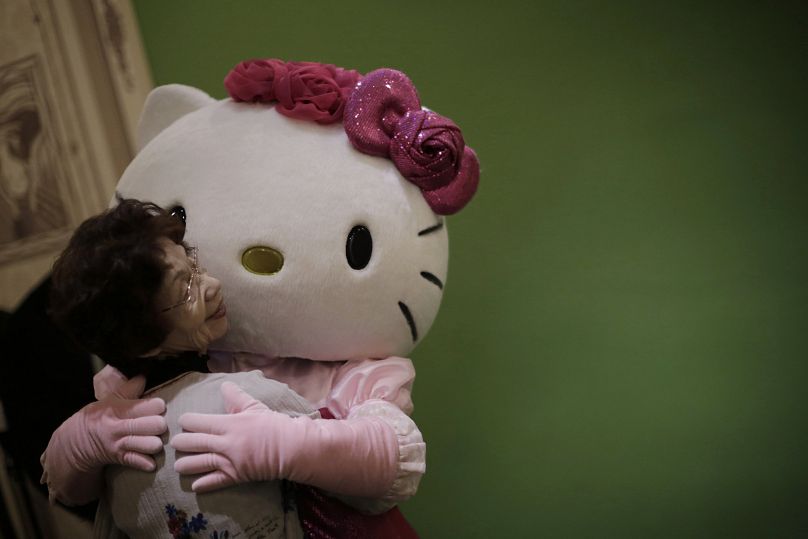
The core of Hello Kitty’s enduring brand success lies in her deceptively simple design. She is a bipedal, anthropomorphic white bobtail cat with no mouth, an oval head, two dots for eyes, and a small yellow nose. A signature red bow always adorns her left ear. This minimalist aesthetic, however, is a stroke of branding genius.
The absence of a mouth, perhaps her most distinctive feature, was a deliberate decision. Sanrio’s explanation has evolved over the years, but the most widely accepted interpretation is that it allows the consumer to project their own emotions onto her. If a child is happy, Hello Kitty is happy; if they are sad, she understands. This empathy-inducing design fosters a deeper, more personal connection, making her an emotional blank canvas that resonates regardless of the consumer’s mood or cultural background. It eliminates the barrier of language or specific emotional expression, making her universally approachable and relatable.
Furthermore, her simple lines and iconic silhouette mean she is easily recognizable and adaptable. This design integrity has allowed her image to be transposed onto virtually any product imaginable without losing its essence. This universality, combined with a touch of mystery, has been a cornerstone of her brand identity, distinguishing her from characters with more defined personalities and expressions.
Navigating Growth and Reinvention: A Brand’s Enduring Evolution
Hello Kitty’s journey from a children’s character on a coin purse to a global lifestyle brand worth billions is a testament to strategic brand management, innovative marketing, and continuous adaptation.
From Children’s Character to Lifestyle Brand
One of Hello Kitty’s most remarkable achievements is her ability to transcend her initial demographic. While she remains beloved by children, a significant portion of her fanbase comprises teenagers and adults who grew up with her and continue to embrace her as a symbol of nostalgia, individuality, and even high fashion. Sanrio masterfully cultivated this broader appeal by expanding Hello Kitty’s presence into diverse product categories that cater to all ages.
From stationery and toys, her brand evolved to include apparel, electronics, home goods, cosmetics, and even luxury items. Collaborations with high-end brands like Swarovski, MAC Cosmetics, and even Fender guitars have elevated her status, positioning her beyond a mere cartoon character into a symbol of pop culture chic. This strategy not only diversified her revenue streams but also reinforced her cultural relevance, demonstrating that cuteness has no age limit and can be sophisticated. By maintaining her core design while allowing for sophisticated interpretations, Sanrio successfully expanded her brand narrative from childhood companion to a statement of adult style.
Strategic Partnerships and Global Expansion
Licensing has been the engine of Hello Kitty’s global dominance. Sanrio understood early on that to achieve true ubiquity, they couldn’t produce everything themselves. By strategically partnering with thousands of licensees worldwide, they allowed other companies to integrate Hello Kitty into their products, drastically expanding her reach without diluting her brand integrity.
These partnerships are meticulously managed to ensure quality control and consistent brand messaging, even as they allow for local adaptations. For instance, Hello Kitty might appear in different cultural attire or with local landmarks depending on the region, yet her fundamental identity remains unmistakable. This balance between global consistency and local relevance is a hallmark of successful international branding.

Furthermore, these collaborations are not merely about product proliferation; they are about brand reinforcement. A Hello Kitty collaboration with a popular fashion designer or a respected technology company signals her relevance and cachet. It positions her as a character capable of traversing different industries and maintaining desirability, continually refreshing her image and attracting new demographics while keeping long-time fans engaged. This continuous cycle of innovation through partnership ensures the brand remains dynamic and exciting in a competitive marketplace.
The Psychology of Cuteness: Understanding Hello Kitty’s Brand Resonance
Hello Kitty’s phenomenal success isn’t just about smart business; it taps into deep psychological triggers, particularly the power of “kawaii” and its universal appeal.
The Power of “Kawaii” in Brand Building
The term “kawaii,” broadly translated as “cute,” is more than an aesthetic in Japan; it’s a cultural phenomenon that has permeated art, fashion, and consumerism. Sanrio, and Hello Kitty in particular, are arguably its most successful global ambassadors. The appeal of “kawaii” stems from its ability to evoke feelings of warmth, joy, and comfort. Cute characters often trigger a caregiving response, similar to how humans respond to babies or small animals, leading to a natural inclination to nurture and protect.
For brands, harnessing “kawaii” translates into creating an immediate emotional connection. Hello Kitty’s round features, large head, and small body proportions activate these innate responses, making her inherently endearing. This emotional bond fosters brand loyalty that goes beyond mere product satisfaction. Consumers don’t just buy Hello Kitty items; they feel a connection to Hello Kitty herself, often seeing her as a comforting presence or a reminder of simpler, happier times. This emotional resonance is a powerful driver in building a beloved and enduring brand.
Creating a Timeless Archetype: Beyond Trend Cycles
Many character brands enjoy fleeting popularity, peaking with a specific trend before fading into obscurity. Hello Kitty, however, has defied this pattern, maintaining her relevance for nearly fifty years. This longevity speaks to her status as a timeless archetype, a character whose core design and essence are immune to the transient nature of fads.
Part of this timelessness comes from her “blank canvas” nature. Without a mouth, a fixed personality, or a complex backstory (she famously has a twin sister, lives in London, and has a pet cat named Charmmy Kitty, but these details are secondary to her visual appeal), she remains incredibly versatile. She can be whatever the consumer needs her to be: a friend, a fashion statement, a symbol of nostalgia, or a comforting presence. This adaptability prevents her from being pigeonholed and allows her to evolve with her audience.
Moreover, Sanrio has consistently updated Hello Kitty’s world through new merchandise lines, collaborations, and media appearances, ensuring she remains visible and fresh. Yet, they always return to her core, iconic design, reinforcing her foundational brand identity. This strategic balance between innovation and preservation of core elements has cemented her status as an evergreen brand, a character whose appeal transcends generations.
Challenges and Adaptations: Sustaining a Legacy Brand
Even the most successful brands face challenges in maintaining relevance and integrity over time. Hello Kitty’s journey has involved navigating these obstacles while continuously adapting to an ever-changing world.
Addressing Controversy and Maintaining Brand Integrity
While Hello Kitty has largely enjoyed an unblemished public image, even she has faced moments requiring careful brand management. Perhaps the most notable instance was the “Hello Kitty is not a cat” revelation in 2014. When an anthropologist preparing an exhibit on Hello Kitty asked Sanrio for clarification, the company stated, “Hello Kitty is not a cat. She’s a cartoon character. She is a little girl. She is a friend. But she is not a cat.” This clarification, intended to explain her anthropomorphic nature and British identity (she was born in the suburbs of London), sparked widespread public debate and even mild outrage among fans.
Sanrio adeptly managed this by reiterating her fictional nature and focusing on her role as a universal friend, rather than getting bogged down in biological definitions. This situation highlighted the delicate balance between brand narrative and consumer perception. By consistently returning to her core brand promise – a symbol of friendship and happiness – Sanrio maintained integrity, showing that even a seemingly minor detail can provoke strong reactions when dealing with a deeply beloved icon.
Digital Transformation and New Media Engagement
In the 21st century, brand survival hinges on effective digital engagement. Hello Kitty has successfully transitioned from physical merchandise to a vibrant digital presence, ensuring her relevance to new generations. She has a strong foothold on social media platforms like Instagram and TikTok, where her official accounts boast millions of followers. She features in mobile games, animated web series, and digital collaborations, reaching audiences where they spend their time.
This digital strategy involves creating engaging content, leveraging influencers, and fostering interactive experiences. Hello Kitty emojis, stickers, and augmented reality filters allow fans to integrate her into their digital lives, making her a constant companion in the virtual world. By embracing new technologies and communication channels, Sanrio ensures that Hello Kitty remains a dynamic and interactive brand, capable of connecting with diverse audiences in an increasingly fragmented media landscape, thus securing her legacy for future decades.
The story behind Hello Kitty is a profound lesson in brand building. From a simple coin purse design born out of a philosophy of gifting happiness, she evolved into a multi-generational, multi-billion-dollar brand empire. Her success is not accidental but a result of brilliant minimalist design, shrewd licensing strategies, a deep understanding of emotional consumer connection through “kawaii,” and a relentless commitment to adaptation and reinvention. Hello Kitty isn’t just a character; she is a masterclass in how to build an enduring, universally beloved brand that transcends borders, demographics, and time itself.
aViewFromTheCave is a participant in the Amazon Services LLC Associates Program, an affiliate advertising program designed to provide a means for sites to earn advertising fees by advertising and linking to Amazon.com. Amazon, the Amazon logo, AmazonSupply, and the AmazonSupply logo are trademarks of Amazon.com, Inc. or its affiliates. As an Amazon Associate we earn affiliate commissions from qualifying purchases.