
Understanding the standard dimensions of sliding glass doors is more than just a matter of measurement; it’s a critical financial decision for homeowners, investors, and contractors alike. In the realm of property investment and personal finance, choosing standard-sized components can significantly impact initial costs, long-term maintenance expenses, energy efficiency, and ultimately, a property’s market value. This insight delves into the financial underpinnings of standard sliding glass door sizes, offering a perspective framed by prudent fiscal management.
The Financial Imperative of Standard Sizing
The construction and renovation industry thrives on economies of scale. When it comes to building materials, “standard” often translates directly to “cost-effective.” Sliding glass doors are no exception. Opting for standard sizes is a strategic financial choice that influences multiple aspects of a project’s budget and future financial health.

Cost Savings in Procurement and Installation
One of the most immediate financial benefits of standard sliding glass door sizes is the direct impact on procurement and installation costs. Manufacturers produce standard sizes in large volumes, which drives down per-unit production costs. These savings are then passed on to consumers. Custom-sized doors, by contrast, require bespoke engineering, specialized material cuts, and often a longer lead time, all of which contribute to a significantly higher price tag.
Beyond the initial purchase, installation costs are also lower for standard doors. Contractors are familiar with standard dimensions, leading to more efficient planning and execution. The risk of errors, which can be costly in terms of time and material waste, is also reduced. Standard rough openings in homes are designed to accommodate these sizes, minimizing the need for costly structural modifications. For homeowners, this means reduced labor hours and a quicker project completion, freeing up capital and reducing the inconvenience of an ongoing renovation. For property flippers or developers, this efficiency directly boosts profit margins and accelerates project turnover.
Impact on Property Value and Resale
The long-term financial implications of door sizing extend to a property’s market value and resale potential. While a custom door might seem like a unique selling point, it can sometimes be a double-edged sword. Standard dimensions generally appeal to a broader market. When a potential buyer considers a home, they often factor in the ease and cost of future renovations or replacements. A standard-sized sliding glass door simplifies these considerations.
Should a homeowner need to replace a damaged door or upgrade for energy efficiency down the line, a standard size ensures a wide array of readily available and affordable options. This ease of maintenance and replacement can be an attractive feature for future buyers. Conversely, a unique, custom-sized door might present a financial burden to a new owner facing a replacement, potentially deterring buyers or leading to negotiation for a lower asking price. From an investment perspective, maintaining standard fixtures helps ensure liquidity and broader appeal in the real estate market.
Understanding Standard Dimensions: A Financial Overview
While regional variations can exist, a common range of standard sizes for sliding glass doors has emerged across the industry, primarily driven by construction norms and material efficiencies. Knowing these dimensions is crucial for accurate budgeting and project planning.
Common Widths and Heights and Their Market Availability
The most common standard heights for sliding glass doors generally range from 80 inches (6 feet 8 inches) to 96 inches (8 feet). The 80-inch height is particularly prevalent, fitting well within typical residential wall framing and ceiling heights. Some manufacturers also offer intermediate heights or slightly taller options up to 96 inches for homes with higher ceilings, which can carry a modest premium but are still considered standard within certain product lines.
For widths, the dimensions are typically determined by the number of panels. The most common standard widths, representing the total opening size, are:
- 60 inches (5 feet) – Typically for a two-panel system.
- 72 inches (6 feet) – Very common for two-panel systems.
- 96 inches (8 feet) – Often a two-panel system, but can be a three-panel or four-panel configuration depending on design.
- 108 inches (9 feet) – Often a three-panel system.
- 120 inches (10 feet) – Commonly a three-panel or four-panel system.
- 144 inches (12 feet) – Frequently a four-panel system.
These widths are widely available from various manufacturers, ensuring competitive pricing and diverse style options. Deviating from these common dimensions often triggers custom fabrication processes, leading to increased costs and longer lead times. For any renovation project, a detailed measurement of the rough opening is essential, and understanding these standard ranges helps in quickly assessing whether a standard solution is viable or if a more costly custom approach will be necessary.
Two-Panel vs. Multi-Panel Systems: Cost Implications
The number of panels in a sliding glass door system directly impacts its structural complexity, material usage, and ultimately, its price.
- Two-Panel Systems: These are the most common and often the most budget-friendly option for given widths. They consist of one fixed panel and one sliding panel. Their simplicity in design and mechanism translates to lower manufacturing and installation costs. For example, a standard 6-foot wide, 80-inch tall two-panel door will be significantly less expensive than a multi-panel door of the same overall dimensions.
- Multi-Panel Systems (e.g., three-panel, four-panel): While offering a wider opening and often a more expansive view, multi-panel systems are inherently more complex. They require additional tracks, more moving parts, and more intricate framing. These factors contribute to higher material costs, increased manufacturing complexity, and potentially more involved installation, all of which elevate the overall price. For wider openings (e.g., 9 feet, 10 feet, 12 feet), multi-panel systems are often necessary, and while they might be “standard” for those larger widths, their cost per linear foot can be higher than a simpler two-panel system covering a narrower standard opening. When budgeting, it’s crucial to factor in not just the total width but also the desired number of panels, as this choice has substantial financial implications.
Custom vs. Standard: Weighing the Investment
The decision between a custom-sized and a standard-sized sliding glass door is fundamentally an investment choice. While standard options offer compelling financial advantages, there are specific scenarios where the increased cost of a custom door might be justified, and conversely, situations where choosing non-standard dimensions can lead to unforeseen financial burdens.
When Custom Dimensions Justify the Higher Cost
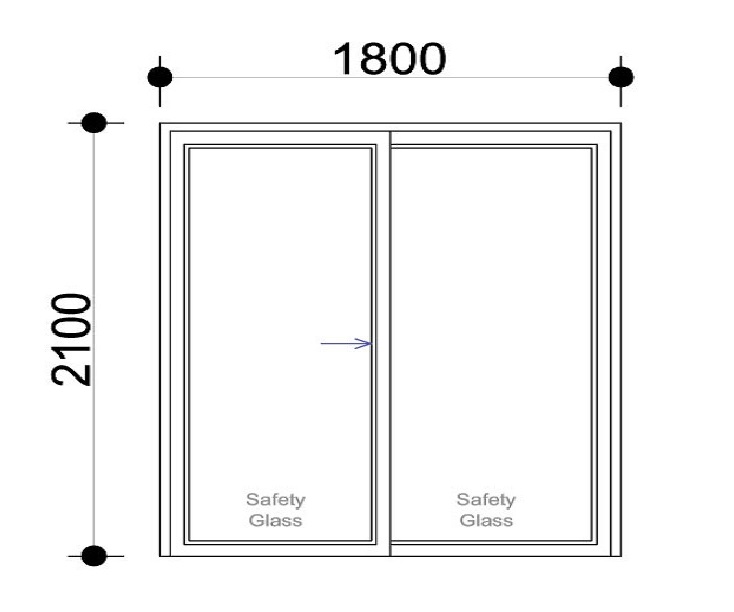
There are legitimate reasons to invest in a custom-sized sliding glass door, despite the higher price point:
- Unique Architectural Requirements: In some high-end or historically significant properties, existing openings might not conform to modern standard sizes. Altering the structural integrity of the home to fit a standard door could be more costly or even architecturally inappropriate. In such cases, a custom door preserves the home’s original design and can be a wise investment, maintaining or enhancing the property’s unique value.
- Specific Design Aesthetic or Functionality: For homeowners seeking a very particular visual impact or unique functionality (e.g., extremely tall doors for dramatic effect, specific configurations not available in standard models), custom fabrication becomes necessary. In luxury real estate, these bespoke elements can contribute to the perceived value and marketability, appealing to a niche segment of buyers willing to pay a premium for unique features.
- Maximizing Light and Views: In homes with exceptional views or a desire for maximum natural light, a custom, extra-wide or extra-tall sliding glass door might be designed to perfectly frame a landscape or integrate seamlessly with specific design goals. If this significantly enhances the home’s appeal and livability for the current owner, and potentially for future high-end buyers, the investment can be justified.
In these instances, the higher cost of a custom door is viewed as an investment in architectural integrity, unique aesthetic value, or specialized functionality that aligns with the property’s overall financial strategy or the owner’s long-term enjoyment.
The Financial Pitfalls of Non-Standard Choices
Conversely, selecting a non-standard size without a compelling financial or architectural reason can lead to significant financial drawbacks:
- Exaggerated Initial Costs: As previously mentioned, custom doors incur higher manufacturing costs due often to specialized molds, smaller production runs, and manual intervention. This can increase the door’s price by 25% to 100% or more compared to a comparable standard size.
- Installation Challenges and Costs: Non-standard doors often demand specialized installation expertise. Contractors might charge more due to the complexity, the need for custom framing adjustments, or the increased risk involved. This inflates labor costs.
- Limited Availability and Lead Times: Custom doors have longer lead times, which can delay project completion, potentially incurring additional costs (e.g., extended contractor fees, financing interest). In urgent situations, a custom door is rarely an option.
- Future Maintenance and Replacement Expenses: This is a crucial long-term financial consideration. If a custom door is damaged, finding replacement parts or a matching replacement unit can be exceedingly difficult and expensive. This might involve re-ordering from the original custom manufacturer, potentially years later, or undertaking costly modifications to fit a standard door. This can significantly reduce the long-term cost-effectiveness of the initial investment.
- Reduced Resale Appeal: For the average buyer, a custom-sized door could be perceived as a future liability rather than an asset. The thought of costly repairs or difficult replacements can deter potential purchasers, negatively impacting the property’s marketability and potentially leading to a lower selling price.
Maintenance, Repair, and Replacement: Long-Term Financial Planning
The choice of a standard sliding glass door extends its financial benefits far beyond the initial purchase and installation, influencing the long-term cost of ownership, including maintenance, repair, and eventual replacement. Proactive financial planning demands consideration of these future expenses.
Availability of Parts and Labor Costs
For standard-sized sliding glass doors, replacement parts such as rollers, locks, weatherstripping, and even glass panels are widely available from various suppliers. This broad market availability fosters competition, keeping part prices reasonable. Moreover, the ease of sourcing means repairs can often be done quickly, minimizing labor costs. Any competent general contractor or handyman will be familiar with servicing standard doors.
Custom doors, on the other hand, often require proprietary parts that may only be available from the original manufacturer, sometimes at inflated prices. If the manufacturer goes out of business or discontinues a product line, finding suitable replacements can become a costly and time-consuming scavenger hunt, potentially necessitating a full door replacement for a minor part failure. This introduces significant financial risk into the long-term ownership equation.
Energy Efficiency and Utility Bill Savings
Modern sliding glass doors, both standard and custom, can offer excellent energy efficiency. However, the consistent engineering and testing processes applied to mass-produced standard doors often ensure reliable performance metrics like U-factor and Solar Heat Gain Coefficient (SHGC). These doors are designed to create a tight seal, preventing air infiltration and heat loss/gain, which directly translates to lower utility bills.
Investing in a high-quality, energy-efficient standard sliding glass door can lead to substantial savings over its lifespan. While a custom door can also be designed for efficiency, the quality control and proven performance of standard, certified products can offer a more predictable return on investment in terms of energy savings. For homeowners and investors focused on operational costs, prioritizing energy-efficient standard options is a financially sound strategy.
Financing Your Sliding Glass Door Project
Whether opting for standard or custom, understanding the financial avenues available for funding a sliding glass door project is essential for responsible budgeting and investment management.
Budgeting for Renovation Costs
The first step in any home improvement project is to establish a realistic budget. For a sliding glass door replacement, this includes not just the door itself but also installation labor, removal of the old door, any necessary framing adjustments, finishing materials (trim, paint), and potential haul-away fees. It’s always prudent to allocate an additional 10-15% of the total estimated cost as a contingency fund for unforeseen expenses. Choosing standard sizes can help keep the project closer to the initial budget, reducing the likelihood of drawing on this contingency.

Leveraging Home Equity or Loans
Larger renovation projects, especially those involving multiple upgrades or custom elements, often require external financing. Options typically include:
- Home Equity Line of Credit (HELOC): This allows homeowners to borrow against the equity in their home. It offers flexibility as it’s a revolving credit line.
- Home Equity Loan: A lump sum loan based on home equity, with a fixed interest rate and repayment schedule.
- Personal Loan: An unsecured loan that can be quicker to obtain but often comes with higher interest rates than home equity-based financing.
- Contractor Financing: Many door suppliers and installers offer their own financing options, often through third-party lenders. These can be convenient but always compare interest rates and terms with other financing avenues.
When evaluating these options, consider the interest rates, repayment terms, and any associated fees. A standard sliding glass door project, with its typically lower costs and quicker turnaround, may be more easily financed through cash savings or a smaller, short-term loan, minimizing interest payments and overall financial burden. Conversely, a substantial custom door project might necessitate a larger, longer-term financial commitment.
In conclusion, while the question of “what is the standard sliding glass door size” appears simple, its implications are deeply financial. Understanding standard dimensions allows for informed decisions that optimize costs, enhance property value, simplify maintenance, and streamline renovation financing, embodying a financially savvy approach to home improvement and investment.
aViewFromTheCave is a participant in the Amazon Services LLC Associates Program, an affiliate advertising program designed to provide a means for sites to earn advertising fees by advertising and linking to Amazon.com. Amazon, the Amazon logo, AmazonSupply, and the AmazonSupply logo are trademarks of Amazon.com, Inc. or its affiliates. As an Amazon Associate we earn affiliate commissions from qualifying purchases.