
In the vast and often intricate world of finance, certain assets stand out as pillars, benchmarks, and entry points for countless investors. Among these, the query “what is the spy stock” is a common one, frequently posed by those looking to understand the core mechanics of market investing or seeking clarity on a fundamental ticker symbol. Despite the intriguing, almost clandestine sound of its name, “SPY” refers not to a covert operation, but to one of the most transparent, liquid, and widely recognized financial instruments in existence: the SPDR S&P 500 ETF Trust.
Understanding SPY is akin to grasping a foundational element of the U.S. stock market itself. It represents an accessible and efficient way for investors, from novices to seasoned professionals, to gain exposure to the performance of 500 of the largest publicly traded companies in the United States. This article will delve into what SPY is, how it operates, why it holds such significance in investment portfolios, and how you can strategically integrate it into your financial planning.
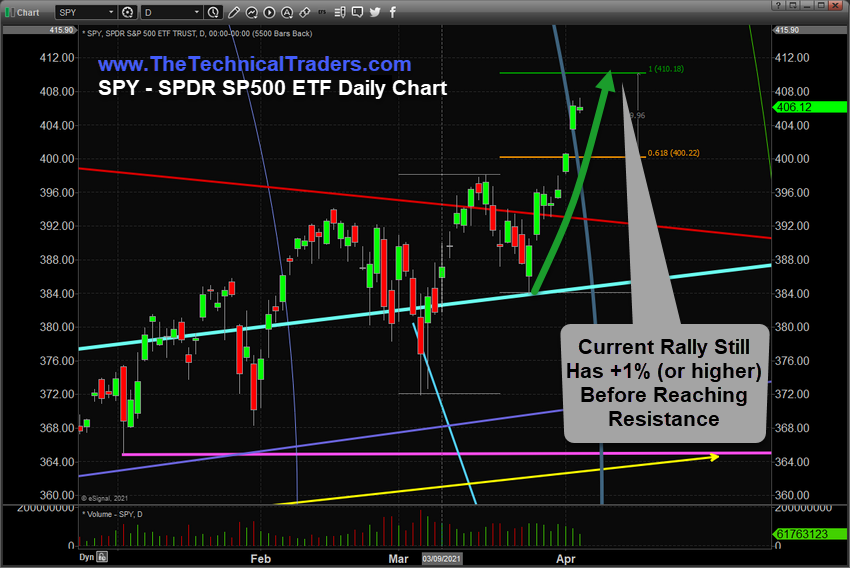
Unpacking the SPY: An Introduction to the Market’s Bellwether
The term “SPY stock” can be a slight misnomer, as SPY is not an individual stock but an Exchange-Traded Fund (ETF). However, its behavior, liquidity, and tradability often lead investors to think of it as if it were a single stock representing the broader market. To truly grasp its essence, we must dissect its components: the SPDR brand, the S&P 500 Index it tracks, and the nature of ETFs themselves.
The SPDR S&P 500 ETF Trust Defined
SPY is the ticker symbol for the SPDR S&P 500 ETF Trust, which was the very first U.S. exchange-traded fund, launched in 1993. “SPDR” stands for Standard & Poor’s Depositary Receipts, a suite of ETFs managed by State Street Global Advisors. As the pioneer ETF, SPY broke new ground by offering investors a way to trade an entire index as easily as trading a single stock throughout the day. Its primary objective is to provide investment results that, before expenses, correspond generally to the price and yield performance of the S&P 500 Index. This means it aims to mirror the movements of this critical market benchmark as closely as possible. Its substantial size and liquidity make it a dominant force, often cited in financial news and used by institutional investors for hedging and tactical allocation strategies.
The S&P 500 Index: The Heart of SPY
At the core of SPY’s functionality is the S&P 500 Index. This index is a market-capitalization-weighted index of 500 of the largest publicly traded companies in the United States. Compiled by S&P Dow Jones Indices, it is widely regarded as one of the best gauges of large-cap U.S. equities and a proxy for the overall health of the American stock market. Companies included in the S&P 500 span across all major sectors of the economy, including technology, healthcare, financials, consumer discretionary, industrials, and more. Because it is market-capitalization-weighted, companies with larger market values have a greater impact on the index’s performance. When you invest in SPY, you are indirectly investing in this diverse basket of America’s leading enterprises, representing a significant portion of the total value of the U.S. stock market.
Exchange-Traded Funds (ETFs): A Modern Investment Vehicle
To understand SPY, one must understand ETFs. An ETF is a type of investment fund that holds assets such as stocks, commodities, or bonds and trades on stock exchanges just like regular stocks. Unlike mutual funds, which are priced only once per day after the market closes, ETFs can be bought and sold throughout the trading day at market prices. This feature provides flexibility and liquidity for investors. ETFs typically have lower expense ratios (management fees) compared to actively managed mutual funds because most track an index rather than relying on a fund manager’s active stock selection. SPY embodies these characteristics, offering a cost-effective, liquid, and diversified way to invest in a broad market index.
The Mechanics Behind SPY: How It Tracks the Market
The ability of SPY to accurately reflect the S&P 500’s performance is a testament to its sophisticated, yet transparent, operational mechanics. This involves a passive management approach, a carefully constructed portfolio, and unique trading dynamics that distinguish it from other investment products.
Passive Management and Index Replication
SPY employs a passive management strategy. This means fund managers do not actively try to pick winning stocks or time the market. Instead, their objective is simply to replicate the performance of the S&P 500 Index. They achieve this primarily through a strategy called “full replication,” where the fund holds all the stocks in the S&P 500 Index in roughly the same proportions as their weighting in the index. This approach minimizes human error and research costs, which directly contributes to its lower expense ratio compared to actively managed funds. While perfect replication is challenging due to various factors like transaction costs, rebalancing, and dividend reinvestment, SPY generally does an excellent job of tracking its underlying index with minimal “tracking error.”
The Portfolio Holdings: A Snapshot of American Business
As of late, SPY’s portfolio represents a significant cross-section of the U.S. economy. Its top holdings typically include technology giants like Apple (AAPL), Microsoft (MSFT), Amazon (AMZN), and Alphabet (GOOGL), reflecting the current market leadership of the tech sector. Beyond tech, it holds substantial positions in companies across healthcare (e.g., Johnson & Johnson, UnitedHealth Group), financials (e.g., Berkshire Hathaway, JPMorgan Chase), consumer discretionary (e.g., Tesla), and many more. This diversification across sectors and industries is one of SPY’s most compelling features, providing investors with broad exposure that smooths out the idiosyncratic risks associated with investing in individual companies. The fund’s holdings are regularly adjusted to match any changes in the S&P 500 Index, ensuring it remains an accurate reflection of the index.
Liquidity and Trading Dynamics
SPY is renowned for its exceptional liquidity. It is one of the most heavily traded securities in the world, often seeing hundreds of millions of shares change hands daily. This high volume of trading ensures that investors can buy or sell shares of SPY quickly and efficiently, typically with tight bid-ask spreads (the difference between the highest price a buyer is willing to pay and the lowest price a seller is willing to accept). This liquidity is crucial for active traders and large institutional investors, who can execute substantial trades without significantly impacting the market price. The efficient pricing mechanism of ETFs, involving authorized participants who create and redeem shares, helps keep SPY’s market price aligned with its Net Asset Value (NAV), preventing significant premiums or discounts.
Why SPY Matters: Benefits for Investors
For investors seeking a robust, diversified, and cost-effective way to participate in the growth of the U.S. economy, SPY offers a compelling suite of benefits. Its design addresses many common investment challenges and provides a foundational element for various portfolio strategies.
Instant Diversification and Broad Market Exposure
One of SPY’s most significant advantages is the instant diversification it provides. By purchasing a single share of SPY, you are effectively gaining exposure to 500 companies across various sectors. This immediately reduces single-stock risk – the risk that one company’s poor performance could significantly harm your portfolio. If one company in the S&P 500 performs poorly, its impact on SPY’s overall value is diluted by the performance of the other 499 companies. This broad market exposure allows investors to capture the collective growth of the U.S. economy rather than betting on individual winners.

Low-Cost Investing: The Appeal of Expense Ratios
ETFs, especially those that track broad market indices, are celebrated for their low expense ratios. SPY typically has an expense ratio around 0.09% (as of current data), meaning for every $10,000 invested, you’d pay approximately $9 per year in management fees. This is significantly lower than many actively managed mutual funds, which can charge 0.50% or more annually, sometimes much higher. Over the long term, these lower costs can have a substantial positive impact on your net returns, as less of your investment is eroded by fees. This cost efficiency makes SPY an attractive option for long-term wealth accumulation.
Simplicity and Accessibility for All Investor Types
SPY demystifies investing in the stock market. Its simplicity and accessibility make it an ideal choice for new investors. Instead of researching and selecting individual stocks, which can be time-consuming and complex, one can simply invest in SPY to get broad market exposure. It is easily accessible through virtually any brokerage account, with no minimum investment beyond the price of a single share. This ease of access levels the playing field, allowing even small investors to participate in the growth of leading U.S. corporations without needing extensive financial knowledge or capital.
A Benchmark for Performance
Beyond being an investment vehicle, SPY and the S&P 500 Index it tracks serve as a crucial benchmark for performance. Portfolio managers, analysts, and individual investors often compare their own investment returns against the performance of the S&P 500 to gauge success. If a portfolio manager consistently underperforms the S&P 500, it raises questions about the value of their active management. For individual investors, understanding SPY’s performance provides context for broader market movements and helps evaluate the effectiveness of their chosen strategies.
Strategic Integration: How SPY Fits into Your Portfolio
Given its numerous advantages, SPY can play a versatile and essential role in various investment strategies, catering to different risk tolerances and financial goals.
Core Holding for Long-Term Growth
For many investors, SPY serves as a core holding for long-term growth. As the U.S. economy has historically grown over extended periods, so too has the S&P 500 Index. By holding SPY, investors can participate in this secular growth, benefiting from capital appreciation and dividend reinvestment. It can form the bedrock of a diversified portfolio, providing stable, broad-market exposure that complements other, potentially riskier, or more specialized investments. A common strategy involves allocating a significant portion of an equity portfolio to SPY or similar broad market ETFs, then diversifying with international stocks, bonds, or specific sector funds.
Tactical Allocation and Market Timing (with caveats)
Due to its high liquidity, SPY is also used by some investors for tactical allocation and market timing, though these strategies come with significant caveats and are generally not recommended for novice investors. Traders might use SPY to quickly increase or decrease their exposure to the overall U.S. stock market based on their short-term outlooks or technical analysis. For instance, if an investor anticipates a broad market downturn, they might sell SPY shares. Conversely, if they expect a rally, they might buy. However, successful market timing is notoriously difficult, and repeated attempts often lead to underperformance compared to a simple buy-and-hold strategy due to transaction costs and the risk of missing the market’s best days.
Complementing Individual Stocks and Specialized Funds
SPY doesn’t have to be the sole equity holding in a portfolio. It can effectively complement individual stocks and specialized funds. For investors who enjoy picking individual stocks, SPY can provide a diversified foundation, reducing the overall risk of their concentrated positions. For example, if an investor is bullish on a specific tech company, they might still hold SPY to ensure their portfolio isn’t overly reliant on that one stock’s performance. Similarly, if an investor uses sector-specific ETFs (e.g., technology, healthcare) or international ETFs, SPY can provide the essential large-cap U.S. exposure that rounds out a globally diversified asset allocation.
Beyond SPY: Considerations and Alternatives
While SPY is an outstanding investment vehicle, it’s crucial for investors to understand its limitations and consider alternatives that might better suit their specific needs or preferences.
Understanding the Risks: Market Volatility and Tracking Error
Investing in SPY is not without risk. While diversified, it is still exposed to market volatility. If the overall U.S. stock market declines, so too will the value of SPY. It does not protect against broad market downturns. Furthermore, while generally minimal, there is always a slight tracking error – the small difference between SPY’s performance and the S&P 500’s actual performance, usually due to fees, cash drag, or rebalancing costs. For most long-term investors, this is a minor concern, but it’s a factor to be aware of. Also, SPY invests primarily in large-cap U.S. companies; it does not provide exposure to small-cap stocks, international markets, or other asset classes like bonds or real estate, necessitating further diversification if those exposures are desired.
Comparing SPY to Other S&P 500 ETFs (VOO, IVV)
SPY is not the only ETF that tracks the S&P 500. Two other highly popular and equally effective alternatives are the Vanguard S&P 500 ETF (VOO) and the iShares Core S&P 500 ETF (IVV). While all three aim to track the same index, there are subtle differences. VOO and IVV often boast slightly lower expense ratios than SPY (e.g., 0.03% vs. 0.09%). This difference, while small, can compound over decades. SPY also has a unique legal structure as a Unit Investment Trust (UIT), which can have implications for dividend reinvestment and tax efficiency compared to the open-ended fund structures of VOO and IVV. For most long-term investors, VOO or IVV might be marginally preferred due to their slightly lower costs and more modern fund structures, but SPY remains a perfectly viable and highly liquid option.

Active vs. Passive Management: When to Choose What
Finally, the discussion of SPY often leads to the broader debate between active and passive management. SPY is the epitome of passive investing – low cost, index-tracking, and designed to capture market returns. Active management, conversely, involves fund managers making investment decisions with the aim of outperforming the market. While active funds promise the potential for higher returns, they often come with higher fees and a historical track record that shows a majority fail to consistently beat their benchmarks over the long term. For investors who believe in the efficiency of markets and the power of compounding low-cost returns, passive vehicles like SPY are often the preferred choice. For those seeking specialized strategies, niche exposure, or who believe in a particular manager’s ability to generate alpha, active funds might be considered, but with a clear understanding of their higher costs and inherent risks.
In conclusion, “the spy stock” is anything but clandestine. SPY represents an open, accessible, and highly efficient gateway to investing in the backbone of the U.S. economy. By understanding its structure, benefits, and how it fits into a comprehensive financial strategy, investors can leverage this powerful tool to build diversified portfolios aimed at long-term wealth creation.
aViewFromTheCave is a participant in the Amazon Services LLC Associates Program, an affiliate advertising program designed to provide a means for sites to earn advertising fees by advertising and linking to Amazon.com. Amazon, the Amazon logo, AmazonSupply, and the AmazonSupply logo are trademarks of Amazon.com, Inc. or its affiliates. As an Amazon Associate we earn affiliate commissions from qualifying purchases.