
The S&P 500 index is far more than just a collection of numbers ticking up and down on a screen; it is arguably the most widely recognized and influential barometer of the U.S. stock market’s health and, by extension, the broader American economy. Representing the performance of 500 of the largest publicly traded companies in the United States, it offers a snapshot of corporate profitability, investor sentiment, and economic prospects. For anyone with a 401(k), an IRA, or even just a passing interest in financial news, understanding “what the S&P 500 is doing” provides critical insight into current market conditions and potential future trends.

At any given moment, the S&P 500 is a dynamic entity, constantly reacting to a confluence of economic data, corporate earnings reports, geopolitical events, and shifts in investor psychology. Its movements reflect the collective optimism or pessimism regarding the future earnings power of America’s largest corporations. Whether it’s surging to new all-time highs, experiencing a sharp correction, or simply oscillating within a trading range, each movement tells a story about the intricate interplay of forces shaping our financial landscape. This article delves into the current state of the S&P 500, exploring the primary drivers of its performance, how to interpret its movements, and what strategies investors can employ to navigate these market dynamics effectively.
The S&P 500: A Barometer of the U.S. Economy
The Standard & Poor’s 500 is a market-capitalization-weighted index, meaning companies with larger market values have a greater impact on the index’s movement. This structure makes it an excellent proxy for the overall health of the U.S. equity market and a leading indicator for the national economy. Its composition is regularly reviewed and adjusted to ensure it accurately reflects the leading sectors and companies driving economic growth.
Understanding the Index’s Composition
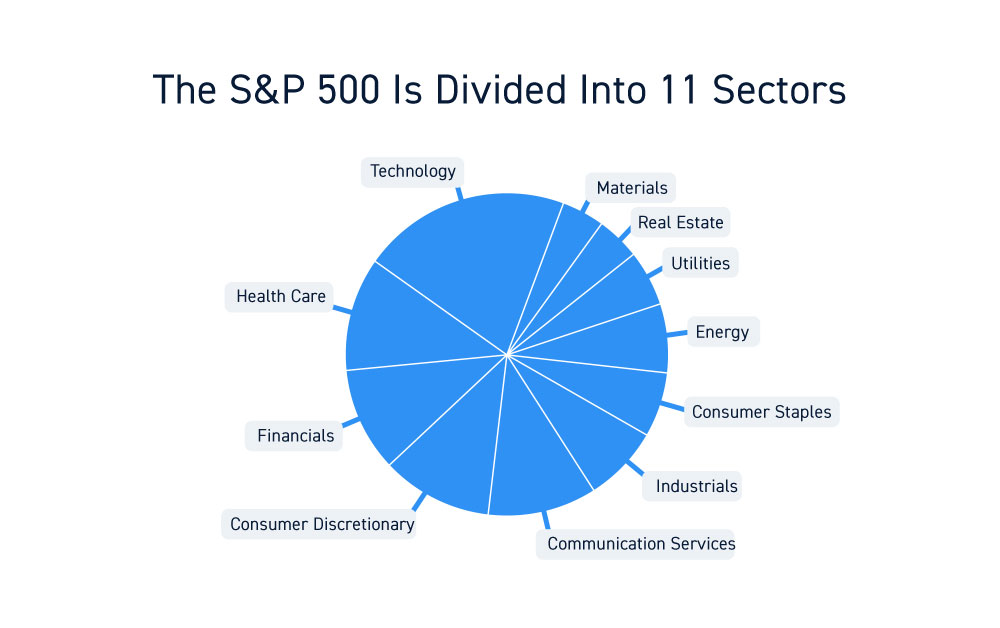
The S&P 500 is meticulously curated by a committee at S&P Dow Jones Indices. Companies must meet specific criteria related to market cap, liquidity, domicile, and sector representation. While often perceived as a tech-heavy index due to the outsized influence of mega-cap technology firms, it spans all 11 Global Industry Classification Standard (GICS) sectors, including Technology, Healthcare, Financials, Consumer Discretionary, Industrials, and more. This broad diversification ensures that the index captures a wide swathe of economic activity, from innovative startups to mature industrial giants. However, the sheer size and growth potential of companies like Apple, Microsoft, Amazon, Alphabet, and Nvidia mean that the technology sector often exerts a disproportionate influence on the index’s overall performance. A strong quarter for these giants can significantly lift the S&P 500, just as a slump can drag it down.
Why its Performance Matters to Every Investor
For the average individual investor, the S&P 500’s performance is paramount for several reasons. Firstly, it forms the backbone of many retirement savings plans. A significant portion of 401(k)s and IRAs are invested in S&P 500 index funds or exchange-traded funds (ETFs), or mutual funds that track its performance. Therefore, when the S&P 500 rises, the value of these retirement accounts generally increases, boosting financial security. Conversely, a sustained downturn can erode savings. Secondly, the S&P 500 is often cited as a benchmark for professional fund managers; their performance is frequently measured against how well they beat or trail the index. Finally, its movements are widely interpreted as a leading economic indicator. A rising S&P 500 often signals investor confidence in future economic growth and corporate profits, while a falling index can suggest looming economic challenges or a recessionary environment. Understanding its trajectory is key to assessing the broader financial climate and making informed personal finance decisions.
Key Factors Influencing Current S&P 500 Movements
The S&P 500 is constantly responding to a complex interplay of macroeconomic forces, corporate fundamentals, and external events. To understand “what it’s doing,” one must examine these primary drivers.
Macroeconomic Headwinds and Tailwinds
Currently, global macroeconomic conditions are perhaps the most significant determinant of the S&P 500’s direction. Inflation, specifically the Consumer Price Index (CPI) and Producer Price Index (PPI), plays a critical role. Persistent high inflation erodes purchasing power and corporate profit margins, often prompting central banks to raise interest rates. The Federal Reserve’s monetary policy, particularly decisions regarding the federal funds rate, directly impacts the cost of borrowing for businesses and consumers. Higher rates can slow economic growth, making it more expensive for companies to expand and for consumers to spend, which in turn can dampen corporate earnings and stock valuations. Conversely, a stable or declining inflation rate, coupled with potential interest rate cuts, can provide a significant tailwind, making equities more attractive. GDP growth figures, unemployment rates, and consumer confidence indices also provide critical clues about the underlying strength of the economy, influencing market sentiment and the S&P 500’s trajectory. A robust economy typically supports higher corporate revenues and profits, translating into stronger stock market performance.
Corporate Earnings and Sector Performance
While macro factors set the stage, individual corporate earnings reports provide the actual script. The aggregate earnings of the 500 constituent companies are a fundamental driver of the index. Strong earnings growth across multiple sectors tends to propel the S&P 500 higher, as it signifies healthy business operations and future potential. Conversely, widespread earnings misses or a downward revision of future guidance can trigger a market downturn. Currently, there’s significant focus on the technology sector’s concentration. A handful of mega-cap tech companies have an outsized influence on the S&P 500 due to their massive market capitalizations. Their individual earnings reports, product launches, and strategic announcements can move the entire index. For instance, strong AI-driven growth in specific tech giants has been a significant positive factor, while concerns over regulatory scrutiny or competition can create headwinds. The performance of other key sectors, such as healthcare (driven by drug approvals and innovation), financials (influenced by interest rate movements), and consumer discretionary (reflecting consumer spending power), also contributes meaningfully to the index’s overall behavior. Divergence in sector performance often indicates underlying economic shifts or specific industry challenges.
Geopolitical Events and Market Sentiment
Beyond economics and corporate fundamentals, geopolitical events and shifts in market sentiment can trigger swift and often unpredictable movements in the S&P 500. Major global conflicts, political instability in key regions, trade disputes, or even significant policy shifts by major governments can introduce uncertainty, causing investors to become risk-averse and leading to sell-offs. For example, ongoing geopolitical tensions in various parts of the world or significant electoral outcomes can create ripples across global financial markets, impacting investor confidence in U.S. equities. Furthermore, market sentiment itself is a powerful, often irrational, force. News cycles, social media trends, and herd mentality can amplify market reactions, sometimes detached from underlying fundamentals. Periods of euphoria can lead to speculative bubbles, while widespread fear can trigger panics. Understanding that the market is not always rational in the short term, but rather influenced by collective psychology, is crucial for interpreting its daily gyrations. Sudden shifts in investor confidence, whether driven by fear of recession or exuberance over new technological breakthroughs, can create significant volatility for the S&P 500.
Interpreting Market Volatility and Trends
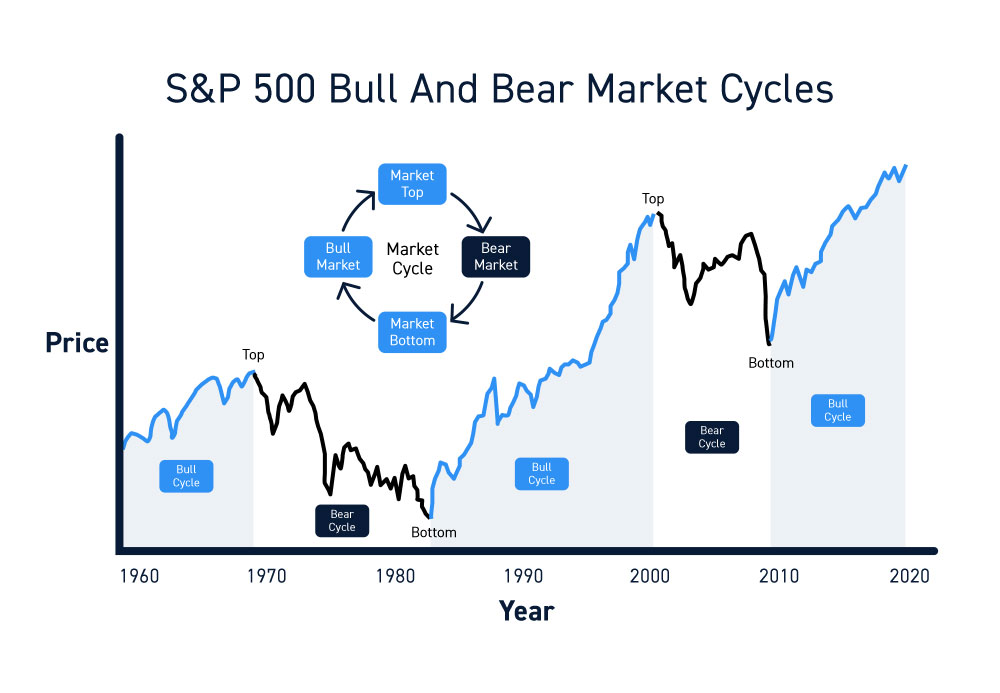
The S&P 500 rarely moves in a straight line. It is characterized by periods of volatility, sustained trends, and occasional reversals. Learning to differentiate between transient market noise and significant long-term signals is a vital skill for investors.
Differentiating Short-Term Noise from Long-Term Signals
Daily fluctuations in the S&P 500 are often a result of “noise” – reactions to minor economic data releases, intraday trading algorithms, or fleeting news cycles. A single day’s dip of 1% or a gain of 0.5%, while attention-grabbing, rarely indicates a fundamental shift in the market’s long-term trajectory. True long-term signals are usually established over weeks or months, characterized by consistent upward or downward movement that is corroborated by underlying economic and corporate trends. For instance, a persistent rise in corporate earnings expectations coupled with declining inflation over several quarters is a strong long-term positive signal. Conversely, a sustained decline in leading economic indicators combined with weakening corporate guidance points to a more significant bearish trend. The key is to avoid overreacting to daily headlines and instead focus on the broader patterns and fundamental drivers that unfold over an extended period. Seasonality and rebalancing effects (e.g., end-of-quarter portfolio adjustments) can also create short-term swings that don’t necessarily reflect a change in the market’s fundamental health.
The Role of Technical Indicators and Analyst Consensus
While fundamental analysis (looking at economic data and corporate health) is crucial for long-term investing, technical analysis offers insights into short-term price movements and potential turning points. Technical indicators, such as moving averages, relative strength index (RSI), and MACD (Moving Average Convergence Divergence), help traders and investors identify trends, momentum, and overbought/oversold conditions within the S&P 500. For example, if the S&P 500’s 50-day moving average crosses above its 200-day moving average (a “golden cross”), it’s often interpreted as a bullish signal, while the reverse (a “death cross”) can be bearish. However, these are tools for interpretation, not infallible predictors. Alongside technicals, the analyst consensus plays a role. Wall Street analysts regularly publish reports and price targets for S&P 500 companies. While individual analyst opinions vary, a broad consensus on the market’s direction or specific sector performance can influence investor behavior and, consequently, the S&P 500’s movement. Investors often look for patterns where a significant number of analysts revise earnings estimates either up or down, as this can indicate a shift in market expectations.
Navigating the Market: Strategies for Investors
Understanding what the S&P 500 is doing is only half the battle; the other half involves knowing how to respond strategically as an investor. Panic selling during downturns or chasing hot stocks during bull runs are common pitfalls. Instead, a disciplined, long-term approach often yields the best results.
Diversification and Asset Allocation
One of the most fundamental principles in investing, particularly when the S&P 500 exhibits volatility, is diversification. Spreading investments across different asset classes (stocks, bonds, real estate, commodities), sectors, and geographies helps to mitigate risk. While the S&P 500 itself is diversified across 500 companies and 11 sectors, an investor’s overall portfolio should extend beyond just this one index. For instance, including international stocks can hedge against U.S.-specific economic downturns, while bonds can provide stability during periods of stock market volatility. Asset allocation, the process of deciding how to divide investments among these various asset classes, should be tailored to an individual’s risk tolerance, investment horizon, and financial goals. Regularly rebalancing the portfolio back to its target allocations ensures that risk levels remain consistent and that profits from outperforming assets are systematically reinvested. During periods when the S&P 500 is experiencing significant swings, a well-diversified and properly allocated portfolio acts as a crucial buffer.
The Power of Long-Term Investing and Dollar-Cost Averaging
For most individual investors, especially those saving for retirement, a long-term investing perspective is paramount. Historically, the S&P 500 has consistently delivered positive returns over extended periods, despite numerous short-term corrections and bear markets. Trying to time the market – buying at the absolute bottom and selling at the absolute top – is notoriously difficult and often leads to missed opportunities. Instead, focusing on the power of compounding returns over decades is a more reliable strategy. Dollar-cost averaging (DCA) is an effective tactic within this long-term framework. It involves investing a fixed amount of money at regular intervals (e.g., monthly) regardless of market conditions. When the S&P 500 is high, your fixed investment buys fewer shares; when it’s low, it buys more. Over time, this strategy smooths out the average purchase price and reduces the risk of investing a large sum at an unfortunate market peak. It removes emotion from investing and capitalizes on market fluctuations without requiring perfect timing. For many, investing in an S&P 500 index fund or ETF through dollar-cost averaging is a simple yet powerful path to wealth accumulation.
Beyond the Index: Individual Stock Considerations
While S&P 500 index funds are an excellent core holding for many, some investors may also choose to supplement their portfolios with individual stocks. This requires deeper research and a more active approach. When evaluating individual companies, investors should consider their financial health, competitive advantages, management team, and growth prospects, independent of the broader index’s movements. During periods of S&P 500 volatility, strong, fundamentally sound companies with resilient business models might offer better protection or even unique growth opportunities. Conversely, highly speculative or indebted companies might be disproportionately affected. It’s crucial to remember that individual stock performance can diverge significantly from the S&P 500 average. While a diversified S&P 500 fund spreads risk across 500 companies, a concentrated portfolio of individual stocks carries higher specific risk. Investors interested in individual stocks should ensure they still maintain a diversified core portfolio that includes broader market exposure, such as through an S&P 500 index fund, to balance risk and reward.
The Road Ahead: Outlook and Considerations
Predicting the exact future trajectory of the S&P 500 is an impossible task, but understanding the prevailing forces and potential scenarios can help investors prepare and adapt. The index will continue to be influenced by a complex interplay of economic fundamentals, corporate performance, and global events.
Potential Scenarios for the S&P 500
Looking ahead, several scenarios could unfold for the S&P 500. A “soft landing” scenario, where inflation recedes without a significant economic downturn, would likely see the index resume a steady upward trend, supported by stable corporate earnings and potentially declining interest rates. In this scenario, sectors like technology and consumer discretionary might thrive as confidence returns. Another possibility is a “mild recession” or economic slowdown, which could lead to a correction or a bear market for the S&P 500 as corporate profits contract and consumer spending weakens. During such periods, defensive sectors like healthcare and utilities might outperform. Geopolitical escalations or unforeseen global crises also carry the potential for sudden, sharp downturns. Conversely, breakthrough innovations, particularly in fields like artificial intelligence, could spark periods of significant growth, especially for the companies at the forefront of these advancements. Each scenario presents different challenges and opportunities, requiring investors to remain vigilant and adaptable.
Staying Informed and Adaptable
For any investor, regardless of experience level, staying informed is critical. Regularly reviewing reputable financial news sources, understanding economic indicators, and keeping an eye on major corporate developments can provide valuable context for the S&P 500’s movements. However, being informed doesn’t mean reacting impulsively. The most successful investors often demonstrate patience and discipline, sticking to their long-term strategies even when the market is turbulent. Adaptability means being willing to adjust one’s strategy if fundamental economic conditions undergo a significant, sustained shift, but not deviating from a well-thought-out plan based on short-term noise. It involves periodic review of one’s portfolio and ensuring that it remains aligned with personal financial goals and risk tolerance. Ultimately, the S&P 500 will continue to ebb and flow, reflecting the dynamic nature of the U.S. and global economies. By understanding its drivers and adopting a disciplined approach, investors can harness its power for long-term financial growth.
aViewFromTheCave is a participant in the Amazon Services LLC Associates Program, an affiliate advertising program designed to provide a means for sites to earn advertising fees by advertising and linking to Amazon.com. Amazon, the Amazon logo, AmazonSupply, and the AmazonSupply logo are trademarks of Amazon.com, Inc. or its affiliates. As an Amazon Associate we earn affiliate commissions from qualifying purchases.