
In the world of finance, the most visible scars are often the result of actions taken, rather than opportunities missed. This is the essence of the “sin of commission.” While the phrase sounds theological, its application in personal finance, corporate strategy, and investment management is purely practical. An error of commission occurs when an individual or an organization takes an affirmative action that leads to a negative financial outcome. It is the mistake of “doing” when “not doing” would have preserved capital or value.
Understanding the sin of commission is vital for any investor or business leader because humans are biologically wired to favor action over inaction. We feel a psychological urge to move, to trade, and to pivot, often overlooking the fact that every active decision carries a unique set of risks. In a financial context, distinguishing between errors of commission and errors of omission (the failure to act) is the first step toward building a more resilient and profitable portfolio.

Defining the Sin of Commission in a Financial Context
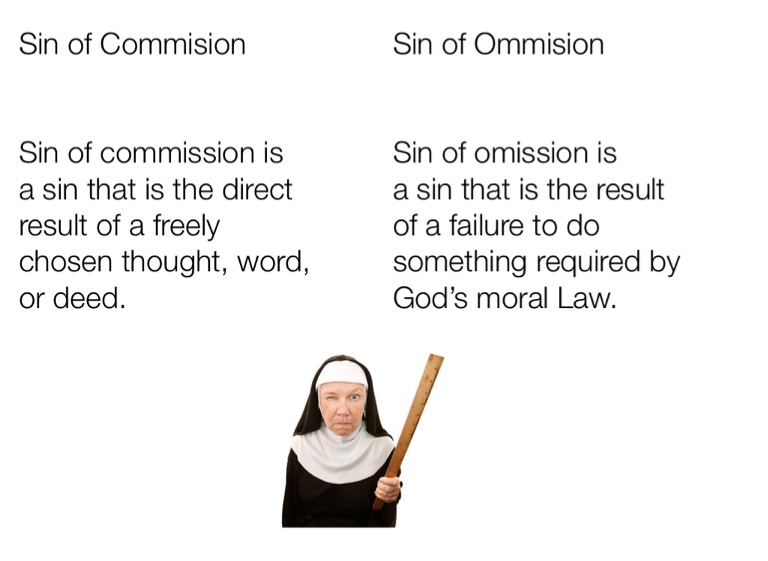
To master your finances, you must first categorize the mistakes you make. An error of commission is a mistake caused by taking a specific action. If you buy a stock and its value plummets to zero, you have committed an error of commission. You took your capital, performed a transaction, and the result was a loss.
In contrast, an error of omission is the “one that got away.” If you looked at a burgeoning tech company, decided not to buy the shares, and then watched the stock price triple, you have committed an error of omission. While both lead to a lower net worth than the optimal path would have provided, they affect the psychology of the investor differently and require different strategies to mitigate.
The Asymmetry of Risk
The sin of commission is often viewed more harshly by investors than the sin of omission. This is due to the tangible nature of the loss. When you lose $10,000 on a bad trade, that money is physically gone from your account. When you miss out on a $10,000 gain because you didn’t buy a stock, your account balance remains the same, even though your potential net worth is lower.
Because of this asymmetry, the fear of commission often leads to “analysis paralysis.” However, the paradox of investing is that the most successful individuals are those who can balance the two. They recognize that while a sin of commission is a direct hit to their capital, a series of sins of omission can lead to the slow death of a financial plan through the erosion of purchasing power and missed compounding.
Active vs. Passive Management
The debate between active and passive investing is essentially a debate over the frequency and impact of sins of commission. Active managers are paid to take actions—to buy, sell, and hedge. Every one of those actions is an opportunity for a sin of commission. Passive investors, by contrast, aim to eliminate the risk of commission by tracking an index. They accept the “market return,” thereby avoiding the specific active errors that plague many stock pickers, though they remain vulnerable to broader market omissions.
Common Manifestations in Personal Finance and Investing
The sin of commission rarely looks like a catastrophic failure at the moment of inception. Instead, it usually presents as a rational decision influenced by market noise, social pressure, or emotional volatility. Recognizing these common active mistakes can help investors build guardrails around their decision-making processes.
Chasing Performance and Trend Following
One of the most frequent sins of commission in the modern era is “chasing the green.” This happens when an investor sees an asset class—be it cryptocurrency, AI-focused tech stocks, or real estate in a specific region—climbing rapidly. Feeling the pressure of missing out, they commit capital at the peak of the cycle.
This is an active choice to enter a crowded trade. When the bubble bursts or the trend reverses, the investor is left holding an asset that was purchased based on momentum rather than fundamental value. This is a classic commission error because the investor had to physically execute a trade to incur the loss; if they had remained in a diversified, low-cost index fund, the damage would have been avoided.
Overtrading and Excessive Fees
For many, the sin of commission manifests as a thousand small cuts. This occurs through overtrading. Every time an investor enters or exits a position, they incur potential costs: brokerage fees, bid-ask spreads, and, most significantly, taxes.
In a taxable brokerage account, selling a winning position to buy something else triggers a capital gains tax. This is an active decision that reduces the amount of capital available for compounding. Over a thirty-year horizon, the “sin” of frequent trading can result in hundreds of thousands of dollars in lost wealth due to the friction of taxes and fees. In this scenario, the most profitable action is often no action at all.
Portfolio Over-Engineering
There is a temptation, particularly among high-net-worth individuals, to over-complicate their financial lives. This leads to the sin of commission through “alternative” investments that carry high management fees and low liquidity. By actively choosing to move money from a transparent, liquid market into complex hedge funds or private equity vehicles without a clear strategic advantage, investors often increase their risk profile while decreasing their net returns.
The Psychology of Action Bias
Why do we fall into the trap of the sin of commission so often? The answer lies in human evolutionary biology. For our ancestors, inaction often meant death. In the modern financial world, however, this “action bias” can be a liability.
The Need to “Do Something”
During periods of market volatility, the psychological pressure to act becomes immense. When the stock market drops by 10% in a week, the “fight or flight” response kicks in. An investor may feel that they must sell their holdings to “save” what is left. This is an active choice—a sin of commission—that crystallizes a paper loss into a permanent one.
The most successful investors, such as Warren Buffett or Jack Bogle, have long advocated for the “don’t just do something, stand there” approach. They recognize that the urge to act is often a biological impulse rather than a rational financial strategy.
Overconfidence and the Illusion of Control
Many sins of commission are born from the belief that we have more control over the market than we actually do. Overconfidence leads investors to believe they can time the market or pick the next “unicorn” company. This leads to concentrated bets. When an investor puts 50% of their net worth into a single speculative stock, they are committing a significant act of commission. While the potential for gain is high, the act itself creates a catastrophic point of failure that wouldn’t exist in a diversified approach.
Mitigating the Impact of Active Financial Failures
If the sin of commission is the result of taking the wrong action, the solution isn’t necessarily to never act. Instead, the solution is to implement systems that vet actions before they are taken and ensure that every move is aligned with long-term goals.
Rule-Based Investing and Automation
The most effective way to avoid sins of commission is to remove the human element from the equation. Automation is the ultimate tool for financial discipline. By setting up automatic contributions to a diversified portfolio, an investor shifts their focus away from individual “actions” and toward a consistent “process.”
When the process is automated, the “decision” to invest is made once, and then executed repeatedly without the interference of emotion. This prevents the investor from making the active mistake of pausing contributions during a market downturn or doubling down during a market peak.
The “Pre-Mortem” Strategy
Before making a significant financial move—such as buying a business, taking on a large mortgage, or shifting a portfolio’s asset allocation—investors should conduct a “pre-mortem.” This involves imagining that the decision has failed and working backward to determine why.
If you are about to commit capital to a new venture, ask yourself: “If this money is gone in three years, what was the most likely cause?” This exercise forces you to confront the risks of your commission. If the risks are structural and outside your control, the best course of action may be to refrain from the investment entirely.
Establishing a “Cooling-Off” Period
Since many sins of commission are the result of impulsive reactions to news or social media trends, a mandatory cooling-off period can be a lifesaver. For any non-emergency financial decision over a certain dollar amount, implement a 48-hour or one-week rule. Often, the “urgent” need to buy a specific stock or crypto token fades once the initial dopamine hit of the idea wears off.

Balancing Commission and Omission for Long-Term Wealth
In the final analysis, the goal of a sophisticated financial strategy is not to avoid all sins of commission, but to ensure that the actions you do take are calculated, diversified, and rare. In the world of money, less is often more. The “sin” isn’t in the action itself, but in the lack of discipline behind it.
By recognizing the psychological urge to act and counteracting it with rule-based systems, you can protect your capital from the most common active mistakes. Whether you are managing a household budget or a corporate balance sheet, the ability to distinguish between productive activity and the “sin of commission” is what separates those who build lasting wealth from those who merely churn their accounts. Success in finance is often determined not by what you do, but by the mistakes you are disciplined enough to avoid.
aViewFromTheCave is a participant in the Amazon Services LLC Associates Program, an affiliate advertising program designed to provide a means for sites to earn advertising fees by advertising and linking to Amazon.com. Amazon, the Amazon logo, AmazonSupply, and the AmazonSupply logo are trademarks of Amazon.com, Inc. or its affiliates. As an Amazon Associate we earn affiliate commissions from qualifying purchases.