
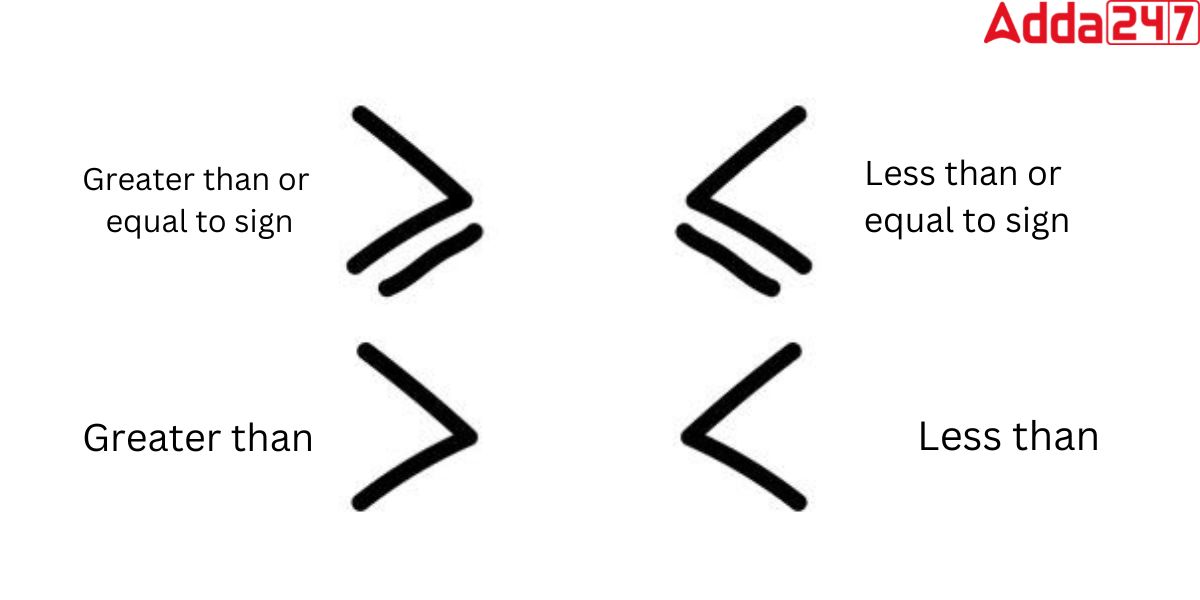
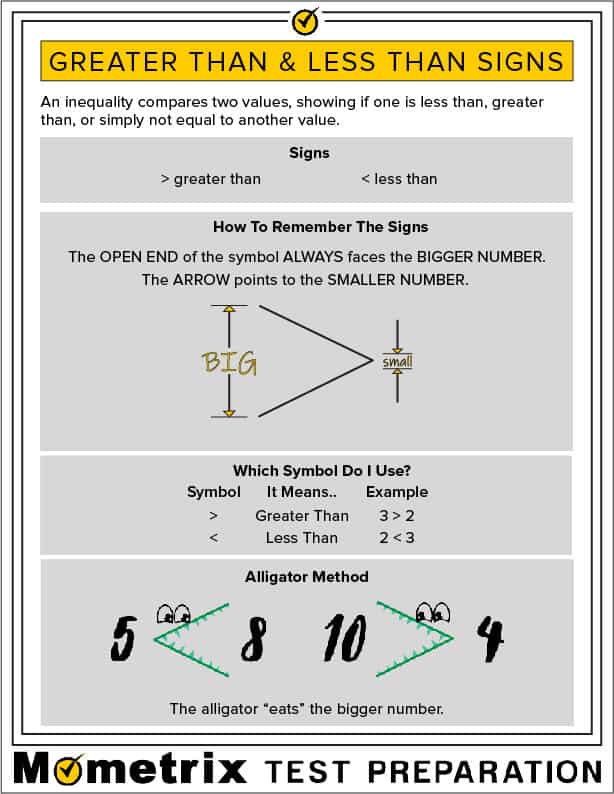
In the realm of mathematics, the “less than” (<) and "greater than" (>) signs are some of the first symbols we learn to identify. They represent a fundamental relationship between two values. However, as we move into the sophisticated world of technology, programming, and data science, these signs evolve from simple arithmetic markers into the very scaffolding of logical operations. Whether you are coding a mobile application, structuring a database, or training an artificial intelligence model, understanding the nuances of these comparison operators is essential.

This article explores the technical significance of the less than and greater than signs, examining their roles in programming logic, web development, data management, and the burgeoning field of AI.
The Foundations of Logical Operators in Programming
At its core, computing is a series of decisions based on binary logic. These decisions are almost always predicated on a comparison. The less than and greater than signs are the primary tools developers use to tell a machine how to behave when certain conditions are met.
Booleans and Conditional Logic
In programming, the result of a comparison using these signs is typically a Boolean value: either True or False. This is the cornerstone of “Conditional Logic.” Consider a simple if statement in a language like Python or JavaScript. When a developer writes if (userAge > 18), they are utilizing the greater than sign to create a gatekeeper for specific functionality. If the condition is true, the code proceeds; if false, it takes an alternative path. This simple binary fork is what allows software to feel interactive and “smart.”
Comparison Operators Across Languages
While the basic function of < and > remains consistent, their implementation can vary slightly across different programming environments.
- Python: Known for its readability, Python uses these signs for numerical comparison and even string comparison (based on ASCII values).
- JavaScript: In web development, these signs are frequently used to manipulate the Document Object Model (DOM), such as adjusting the size of an element if the window width is less than a certain pixel count.
- C++ and Java: These lower-level languages rely heavily on these signs for loop control. For example, a
forloop often runs as long as a counter is “less than” a specific limit (i < 10).
Beyond Basic Comparison: Combined Operators
In the tech world, these signs are rarely used in isolation. They are frequently combined with the equals sign to create “Less Than or Equal To” (<=) and "Greater Than or Equal To" (>=) operators. These are critical in edge-case management—ensuring that a system handles boundary values correctly, which is a common source of software bugs.
Beyond Math: These Signs in Web Development and Markup
While programmers use these signs for logic, web developers and software architects use them as structural delimiters. The transition from mathematical operator to “syntax bracket” is one of the most significant shifts in the history of digital communication.
The Syntax of HTML and XML Tags
HyperText Markup Language (HTML), the backbone of the World Wide Web, would not exist without the less than and greater than signs. Here, they are referred to as “angle brackets.” They enclose tags that tell the browser how to render content. For instance, <h1> tells a browser to display text as a primary heading.
In this context, the symbols lose their mathematical value and become a form of “meta-language.” The < signifies the start of a command, and the > signifies the end. This structure is mirrored in XML (eXtensible Markup Language), which is used for data transport between different systems. In these cases, the “less than” and “greater than” signs are the literal boundaries of the internet’s information architecture.
Escaping Characters for Web Security
Because < and > have such specific meanings in HTML, they can pose a security risk. If a user enters a “less than” sign into a comment box on a website, the browser might mistake it for the beginning of a malicious script (an XSS or Cross-Site Scripting attack).
To prevent this, tech professionals use “character escaping.” The less than sign is converted to < and the greater than sign to >. This ensures that the browser displays the symbol as text rather than executing it as code. This distinction is a fundamental concept in digital security and input validation.
Data Management and Database Querying
In the age of Big Data, the ability to filter through millions of records efficiently is paramount. This is where the mathematical roots of the less than and greater than signs return to the forefront, albeit on a massive scale.
Filtering Datasets with SQL Operators
Structured Query Language (SQL) is the standard for communicating with databases. When a financial institution wants to find all transactions higher than a certain amount, or a logistics company needs to see all shipments that arrived less than 24 hours ago, they use these signs.
A query like SELECT * FROM Transactions WHERE Amount > 5000; is a direct application of the greater than sign. Here, it acts as a high-speed filter. Without these operators, data analysts would be forced to manually sort through records, making modern data science impossible.
Performance Optimization in Comparative Queries
In high-performance computing, the use of < and > isn’t just about getting the right answer; it’s about speed. Database engines are optimized to handle these comparisons at the hardware level. Indexing—a technique used to speed up data retrieval—often uses “B-Trees,” which rely on less-than and greater-than logic to navigate through data paths quickly. Understanding how these symbols interact with database indexes is a key skill for backend engineers and database administrators.
The Role of Comparison Logic in Artificial Intelligence and Algorithms
Artificial Intelligence (AI) and Machine Learning (ML) are often perceived as “magic,” but they are ultimately built on layers of mathematical comparisons. The less than and greater than signs are the silent workhorses behind the scenes of every neural network.
Decision Trees and Branching Logic
One of the most common models in machine learning is the “Decision Tree.” Imagine an AI trying to determine if a credit card transaction is fraudulent. The algorithm asks a series of questions: Is the transaction amount greater than the user’s average? Is the distance from the user’s home less than 50 miles? Each node in this tree is a comparison using our two primary signs. By stacking hundreds of these comparisons, the AI can make incredibly accurate predictions.
Thresholding in Neural Networks
In more complex systems like deep learning neural networks, “thresholding” is a vital concept. An artificial neuron receives multiple inputs, weights them, and sums them up. If the resulting sum is “greater than” a certain threshold, the neuron “fires” or activates. This is often implemented using an activation function like ReLU (Rectified Linear Unit), which essentially says: output = max(0, input). In logical terms, this means if the input is less than zero, ignore it; if it is greater than zero, pass it through. This simple comparison allows AI to learn non-linear patterns.
Digital Security and Logical Consistency
Finally, we must look at how these signs contribute to the integrity of digital systems. In the field of cybersecurity and systems engineering, the precise application of comparison logic is often the only thing standing between a stable system and a catastrophic failure.
Validating User Input and Mathematical Constraints
Software vulnerabilities often occur when developers fail to set proper boundaries. For example, a “Buffer Overflow” can occur if a program receives data that is “greater than” the memory space allocated for it. Robust tech development requires rigorous validation: if (inputData.length < MAX_ALLOWED_SIZE).
Similarly, in financial technology (FinTech), the greater than sign is used to ensure a user’s balance never drops below zero (unless an overdraft is permitted). These signs serve as the “guardrails” of the digital world, ensuring that values remain within safe, predictable limits.
Preventing Injection Attacks
As mentioned earlier in the context of web development, the improper handling of < and > can lead to injection attacks. In the realm of digital security, “sanitizing” these signs is a top priority. Security professionals spend significant time creating filters that identify when these symbols are being used as part of a code injection attempt rather than as a simple mathematical comparison. This highlights the dual nature of these signs: they are both powerful tools for creation and potential vectors for exploitation.
Conclusion
The “less than” and “greater than” signs are far more than just elementary school math symbols. In the tech landscape, they are the building blocks of logic, the delimiters of web structure, the filters for massive datasets, and the decision-makers in artificial intelligence.
For the modern tech professional, these signs represent the power of comparison. Whether they are defining an HTML tag, filtering an SQL database, or setting a threshold for a neural network, the mastery of these symbols is a prerequisite for success in the digital age. By understanding how to use them effectively—and how to secure them—we can build more robust, intelligent, and efficient technology for the future.
aViewFromTheCave is a participant in the Amazon Services LLC Associates Program, an affiliate advertising program designed to provide a means for sites to earn advertising fees by advertising and linking to Amazon.com. Amazon, the Amazon logo, AmazonSupply, and the AmazonSupply logo are trademarks of Amazon.com, Inc. or its affiliates. As an Amazon Associate we earn affiliate commissions from qualifying purchases.