
The kilogram (kg) is the International System of Units (SI) base unit of mass. While it is a concept fundamental to basic physics, its definition and precision serve as the bedrock for the most advanced technological innovations of the 21st century. From the calibration of sensors in autonomous vehicles to the microscopic precision required in semiconductor manufacturing, the SI unit of mass is not merely a weight on a scale; it is a digital constant that powers the modern tech stack.
The Evolution of the Kilogram: From Physical Artifact to Quantum Constant
For over a century, the definition of the kilogram was tethered to a physical object. Known as the International Prototype of the Kilogram (IPK), or “Le Grand K,” this polished cylinder of platinum-iridium was stored in a high-security vault in Sèvres, France. Every precision instrument on the planet eventually traced its accuracy back to this single piece of metal. However, in the world of high-tech engineering and digital security, a physical artifact poses a significant risk: it can change.
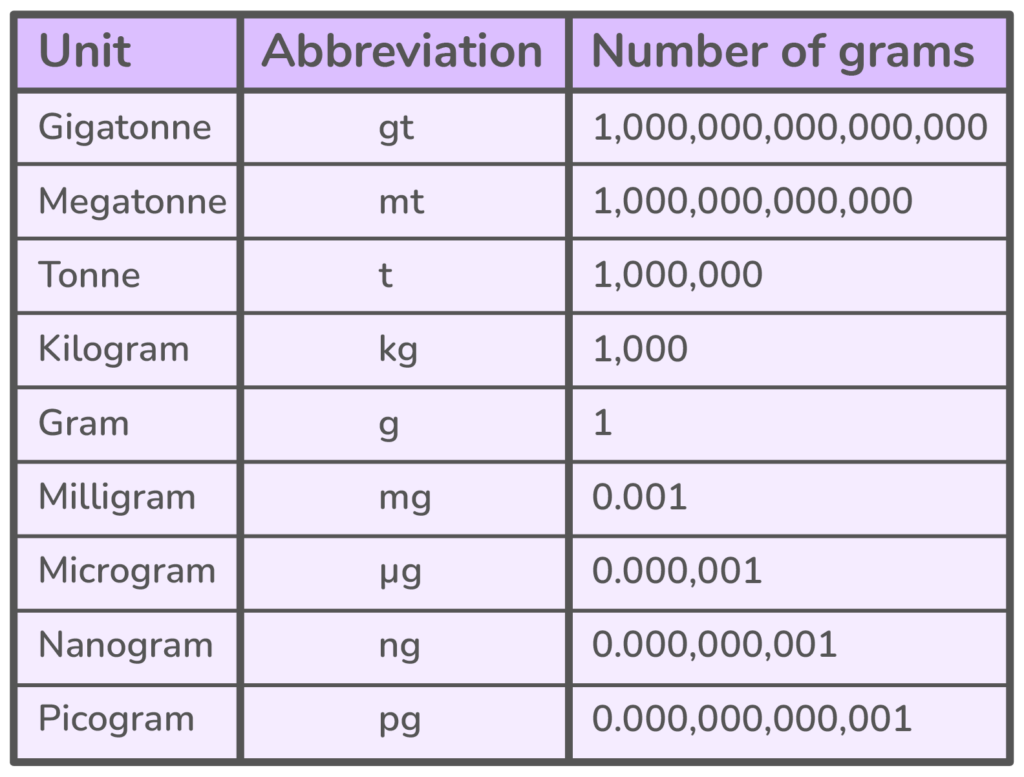
The Problem with Physical Standards
Physical objects are subject to the environment. Despite being stored in a vacuum-sealed triple bell jar, the IPK was found to have lost approximately 50 micrograms over several decades. In the realm of consumer goods, 50 micrograms is negligible. In the realm of nanotechnology and aerospace engineering, it is an unacceptable margin of error. As technology scaled down to the atomic level, the tech industry required a definition of mass that was immutable, universal, and reproducible anywhere in the cosmos.
The Redefinition via the Planck Constant
In May 2019, the global scientific and technological communities officially redefined the kilogram. It is no longer defined by an object, but by a fixed numerical value of the Planck constant (h). By linking mass to this fundamental constant of quantum physics using a Kibble balance, engineers can now realize the unit of mass through electromagnetic force. This transition from “analog” mass to “digital” mass allows for unprecedented precision in hardware development and data synchronization across global networks.
The Technological Infrastructure of Precision Measurement
The shift to a quantum-based SI unit of mass has direct implications for the hardware and software sectors. Modern technology relies on the “democratization of the kilogram,” meaning that high-tech labs no longer need to reference a physical artifact in France to calibrate their instruments; they can do so using localized quantum standards.
Semiconductors and Nanotechnology
The semiconductor industry operates at the scale of nanometers and picograms. As we move toward 2nm and 1nm process nodes, the ability to measure mass at the atomic level becomes critical. During the process of Atomic Layer Deposition (ALD), thin films of materials are grown one atomic layer at a time. The precision of the SI unit of mass ensures that the sensors monitoring these depositions are accurate. Without a stable, quantum-defined kilogram, the yield rates for the next generation of AI chips and processors would plummet due to microscopic inconsistencies in material density.
Advanced Robotics and Haptic Feedback
In the field of robotics, particularly in surgical robots and precision manufacturing arms, mass measurement is integrated into haptic feedback loops. These machines must “feel” the mass of the objects they manipulate. The software controlling these movements relies on sensors calibrated to the SI standard. When a robotic arm in a cleanroom handles a silicon wafer, its force-torque sensors utilize mass-based calculations to prevent breakage. The more precise the unit of mass, the more delicate and sophisticated these robotic operations can become.
Mass in the Digital Age: Sensors, IoT, and Data Integrity
The Internet of Things (IoT) is a vast network of billions of sensors, many of which are designed to measure pressure, force, and mass. These sensors convert physical properties into digital data, and the accuracy of that data depends entirely on the SI unit of mass.

Micro-Electromechanical Systems (MEMS)
Most smartphones and wearables contain MEMS sensors, such as accelerometers and gyroscopes. These components function by measuring the displacement of tiny internal masses. To ensure that a fitness tracker accurately reflects a user’s movement or that a smartphone’s screen rotates correctly, the software must interpret signals based on a calibrated understanding of mass. As these sensors become more integrated into critical tech like medical diagnostics, the reliability of the SI unit of mass ensures that digital health data remains accurate and actionable.
Aerospace and Satellite Technology
In the aerospace sector, mass is a critical variable in every line of flight-control code. For satellites orbiting the Earth, fuel consumption is calculated based on the mass of the craft and the gravitational forces acting upon it. When SpaceX or NASA launches a payload, the mass must be known to an extreme degree of certainty to calculate the necessary delta-v (change in velocity). The redefinition of the kilogram allows for more accurate onboard mass-gauging systems, which utilize software algorithms to manage propellant in zero-gravity environments, extending the operational lifespan of multi-billion dollar satellite constellations.
The Intersection of Digital Security and Weight Standards
While it may seem counterintuitive, the SI unit of mass plays a role in the physical layer of digital security. Hardware security modules (HSMs) and tamper-evident storage systems often rely on physical properties to protect sensitive data.
Tamper-Detection Mechanisms
High-security data centers often employ sensors that monitor the physical integrity of server racks. If a component is removed or altered, the change in mass—even if measured in milligrams—can trigger a security protocol that wipes cryptographic keys or alerts administrators. This fusion of physical mass measurement and digital security protocols creates a “hardware-rooted” trust model. By having a standardized, hyper-accurate SI unit of mass, security hardware manufacturers can create more sensitive and reliable anti-tamper devices.
Quality Control in Hardware Manufacturing
The global tech supply chain relies on the SI unit of mass for quality assurance. In the production of high-end consumer electronics, such as the MacBook or iPhone, the mass of individual components is measured to detect defects. An internal battery that is slightly over-mass or a casing that is under-mass can indicate a structural flaw or a counterfeit component. Automated sorting systems use mass-based algorithms to filter out these anomalies in real-time, ensuring that only hardware meeting rigorous specifications reaches the consumer.
Future Implications: Quantum Computing and Beyond
As we look toward the future of technology, the SI unit of mass will continue to be a cornerstone of innovation, particularly in the nascent field of quantum computing.
Quantum Hardware Calibration
Quantum computers require environments that are incredibly stable, often cooled to temperatures near absolute zero. The hardware used to house these qubits involves sophisticated cryogenic systems where the mass and thermal properties of materials are strictly controlled. The transition to a Planck-constant-based kilogram aligns perfectly with the needs of quantum researchers, as they are essentially speaking the same “mathematical language.” Measuring the mass of single ions or atoms—potential candidates for qubits—requires the level of precision that only the modern SI unit of mass can provide.
Space Exploration and Off-World Manufacturing
As humanity moves toward establishing a presence on the Moon and Mars, the concept of a physical “prototype” kilogram becomes obsolete. You cannot easily transport a physical standard through the rigors of space travel without risking its integrity. However, because the kilogram is now defined by a universal constant, a lunar manufacturing base can calibrate its instruments locally using the same physical laws as a lab on Earth. This “universal” tech standard is essential for the future of off-world 3D printing and resource extraction, where the mass of extracted minerals must be accurately accounted for in digital ledgers.

The Invisible Foundation of the Tech Industry
The kilogram is often taken for granted in daily life, but within the tech industry, it is a high-performance tool. The evolution of the SI unit of mass from a metal cylinder to a quantum definition represents the broader trend of the “digitization of everything.” We have moved away from the fallibility of the physical world into the reliability of universal constants.
Every time a developer writes code for a drone’s flight controller, every time a hardware engineer designs a more efficient battery, and every time a data scientist analyzes sensor output from an industrial plant, they are relying on the stability of the kilogram. It is the silent, invisible foundation upon which our digital world is built. As AI, robotics, and nanotechnology continue to advance, the SI unit of mass will remain the ultimate benchmark of precision, ensuring that our technological reach never exceeds our ability to measure it.
aViewFromTheCave is a participant in the Amazon Services LLC Associates Program, an affiliate advertising program designed to provide a means for sites to earn advertising fees by advertising and linking to Amazon.com. Amazon, the Amazon logo, AmazonSupply, and the AmazonSupply logo are trademarks of Amazon.com, Inc. or its affiliates. As an Amazon Associate we earn affiliate commissions from qualifying purchases.