
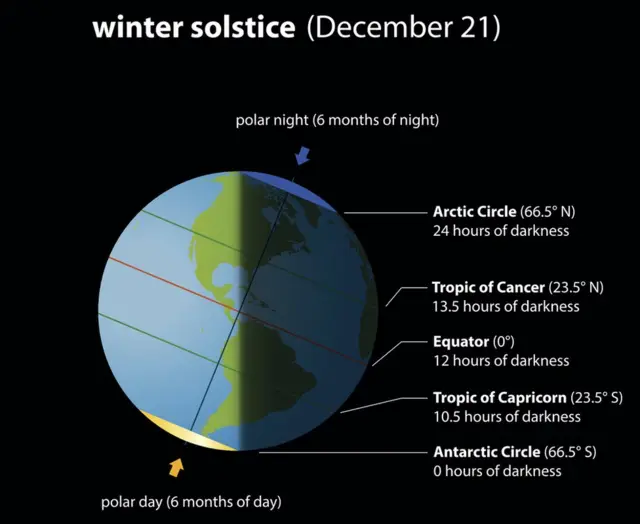
The concept of the shortest daylight day of the year, widely known as the Winter Solstice, is a fundamental astronomical event. It marks the precise moment when one of Earth’s poles has its maximum tilt away from the Sun, resulting in the fewest hours of daylight and the longest night of the year for that hemisphere. For the Northern Hemisphere, this typically occurs around December 21st or 22nd, while the Southern Hemisphere experiences it around June 20th or 21st. While this phenomenon is a natural consequence of Earth’s axial tilt and orbit, our understanding, tracking, and adaptation to it in the modern era are inextricably linked to the advancements in technology. From sophisticated astronomical software that predicts its exact timing to smart home systems that mitigate its impact on daily life, technology has transformed our relationship with the annual cycle of light and darkness.
This article delves into how technology illuminates our comprehension of the shortest daylight day and empowers us to navigate its unique challenges, transforming an ancient celestial event into a practical consideration for energy management, wellness, and urban planning in our increasingly connected world. We will explore the digital tools, sensors, AI, and smart systems that not only measure this event but also help us optimize our environments and lives in response to it, ensuring that even in the dimmest days, innovation shines bright.
Unveiling the Solstice: Technology’s Lens on Celestial Mechanics
The ability to pinpoint the exact moment of the shortest daylight day, and indeed to understand the intricate celestial mechanics behind it, is a testament to centuries of scientific inquiry augmented by cutting-edge technology. What was once observed with rudimentary instruments and calculated with complex tables is now visualized and predicted with unparalleled precision through digital tools.
Astronomical Software and Precision Tracking
Modern astronomy relies heavily on sophisticated software that simulates the cosmos with incredible accuracy. Applications like Stellarium, SkyView, and more professional-grade planetarium software allow users to visualize the Earth’s orbit, axial tilt, and the Sun’s apparent path across the sky from any location on the planet. These tools not only educate but also serve as vital instruments for professional astronomers, predicting solstices, equinoxes, and other celestial events down to the second. Underlying these user-friendly interfaces are complex algorithms that process vast datasets of celestial body positions, gravitational interactions, and orbital parameters. NASA’s various scientific platforms and observatories, for instance, utilize highly specialized software to track Earth’s orientation relative to the Sun, confirming the precise moment of the solstice. This digital precision far surpasses historical methods, making astronomical phenomena accessible and predictable for everyone from amateur stargazers to climate scientists.
Sensor Technology and Data Collection
Beyond predictive software, an array of sensor technologies plays a crucial role in validating theoretical models and understanding the real-world implications of daylight variations. Ground-based observatories, equipped with highly sensitive spectrographs and photometers, continuously measure light intensity, wavelength distribution, and atmospheric conditions. Satellites orbiting Earth carry advanced sensors that monitor global solar radiation, cloud cover, and surface albedo, providing a comprehensive picture of how solar energy interacts with our planet’s various ecosystems. Weather stations, too, contribute by recording daily sunrise and sunset times, correlating them with temperature, humidity, and other environmental factors. This continuous stream of data, collected by a global network of sensors, feeds into complex computational models. These models not only refine our understanding of Earth’s climate system but also allow for real-time monitoring of how the decrease in daylight hours during the winter solstice impacts everything from plant growth cycles to animal behavior, providing empirical evidence that complements theoretical astronomical predictions.
AI and Predictive Modeling for Climate and Daylight
The sheer volume of data generated by astronomical software and sensor networks would be overwhelming without the power of Artificial Intelligence (AI). AI algorithms are now indispensable for analyzing these massive datasets, identifying subtle patterns, and making highly accurate predictions about climate, weather, and even the micro-climates influenced by daylight changes. Machine learning models can process decades of solar radiation data, atmospheric conditions, and energy consumption patterns to forecast how different regions will experience the shortest daylight day, predicting everything from localized temperature drops to peak energy demand. For instance, AI-driven climate models can simulate the long-term effects of annual daylight cycles on ecosystems, water resources, and agricultural yields. Furthermore, AI contributes to smart energy grids by predicting solar power generation based on anticipated daylight hours and weather, optimizing energy distribution and storage. By leveraging AI, we can move beyond mere observation to proactive management, anticipating the environmental and societal impacts of the shortest daylight day with unprecedented foresight.
Navigating the Darker Days: Tech Solutions for Maximizing Light and Energy
The reduction in natural light during the shortest daylight day and the surrounding winter months presents significant challenges for energy consumption, personal well-being, and productivity. Fortunately, a suite of technological innovations offers practical solutions to mitigate these issues, optimizing our environments for comfort, efficiency, and health.
Smart Home Lighting and Automation
The advent of smart home technology has revolutionized how we manage indoor lighting, particularly during periods of limited natural light. Smart bulbs and fixtures, controllable via smartphone apps or voice commands, offer tunable white light (from warm to cool tones) and dimming capabilities, allowing users to mimic natural daylight cycles throughout the day. Automated lighting systems can be programmed to gradually brighten in the morning, simulating a sunrise, and dim in the evening, aiding circadian rhythms. Furthermore, integration with ambient light sensors means that lights can automatically adjust their intensity based on the natural light available through windows, conserving energy while ensuring optimal illumination. Smart blinds and shades can also be automated to maximize natural light during daylight hours and provide insulation during the long, cold nights, contributing to both energy efficiency and comfort. These interconnected systems not only enhance convenience but also actively work to create healthier, more energy-efficient living spaces, counteracting the effects of shorter daylight hours.
Wearable Tech and Circadian Rhythms
The impact of reduced daylight on human physiology, particularly on sleep patterns and mood, is well-documented. Wearable technology, such as smartwatches and fitness trackers, is increasingly being leveraged to help individuals manage their circadian rhythms during the darker months. These devices monitor sleep duration, quality, and exposure to light, providing personalized insights into how daily habits affect one’s biological clock. Some wearables offer features that suggest optimal times for light exposure or advise on sleep hygiene. Beyond monitoring, specialized gadgets like light therapy lamps, often referred to as “SAD lamps,” emit bright, full-spectrum light designed to mimic natural sunlight, helping to regulate melatonin production and alleviate symptoms of Seasonal Affective Disorder (SAD). While not strictly “wearable,” these devices are often integrated with apps that guide users on optimal usage based on their personal data, making light therapy a data-driven intervention. This blend of monitoring and therapeutic tech empowers individuals to take a proactive role in maintaining their well-being throughout the winter.
Energy Management Systems and Renewable Integration

The shortest daylight day inherently means a greater reliance on artificial lighting and heating, leading to increased energy consumption. Technology plays a critical role in managing this demand efficiently, especially in the context of renewable energy. Home Energy Management Systems (HEMS) provide granular control over energy usage, allowing users to monitor consumption from various appliances and schedule high-demand activities during off-peak hours or when renewable energy sources (like solar panels) are producing electricity. For homes equipped with solar panels, the shorter daylight hours reduce immediate power generation. However, advancements in battery storage solutions, coupled with smart grid integration, allow homes to store surplus energy generated on brighter days or purchase electricity during low-cost periods, then utilize this stored energy when solar input is minimal. At a larger scale, smart grids use AI and real-time data to balance energy supply and demand across entire regions, integrating diverse power sources—including fluctuating renewables—to ensure stability and efficiency during periods of high demand caused by limited daylight. These systems are crucial for minimizing environmental impact and ensuring energy security through the darkest parts of the year.
Digital Tools for Seasonal Well-being and Productivity
Beyond physical comfort and energy efficiency, the psychological and practical challenges posed by the shortest daylight day can significantly impact individual well-being and productivity. Digital tools offer innovative ways to maintain mental health, manage time effectively, and stay connected, mitigating the isolating and demotivating effects of prolonged darkness.
Productivity Apps and Time Management
With fewer daylight hours, efficient time management becomes even more critical. Productivity apps and digital planners offer robust solutions for structuring one’s day, setting goals, and tracking progress. Tools like Todoist, Trello, or Notion allow users to break down tasks, prioritize workloads, and schedule activities, ensuring that precious daylight hours are utilized optimally for tasks that benefit from natural light, while other activities can be relegated to the evenings. Features such as focus timers (e.g., Pomodoro timers), habit trackers, and reminder systems help individuals maintain routine and discipline, countering the natural inclination to slow down or feel less motivated in darker conditions. Many of these apps also offer integrations with calendars and communication platforms, creating a holistic digital ecosystem that supports sustained productivity, irrespective of the external light conditions.
Virtual Communities and Digital Engagement
The reduced opportunities for outdoor activities and social interaction during shorter, colder days can lead to feelings of isolation. Digital platforms play a vital role in fostering virtual communities and enabling digital engagement. Social media, video conferencing tools (Zoom, Microsoft Teams, Google Meet), and online forums allow individuals to stay connected with friends, family, and professional networks, bridging geographical and seasonal distances. For remote workers, these tools are indispensable for team collaboration, virtual meetings, and maintaining a sense of camaraderie that might otherwise be lost. Online hobby groups, virtual fitness classes, and digital learning platforms provide opportunities for continued personal growth and social interaction, helping to combat the “winter blues” and maintain mental stimulation. By leveraging these digital avenues, individuals can sustain a vibrant social life and intellectual engagement even when physical outings are less frequent.
Augmented Reality and Virtual Reality for Enhanced Environments
Emerging technologies like Augmented Reality (AR) and Virtual Reality (VR) offer novel ways to enhance our environments and provide immersive experiences that can combat the psychological effects of limited daylight. While still evolving, AR apps can overlay virtual sunshine or vibrant scenes onto real-world spaces, transforming a dimly lit room into a bright, airy setting. VR, on the other hand, can transport users entirely to virtual sunny beaches, lush landscapes, or even simulated bustling cityscapes, offering an escape from the drabness of winter. Beyond pure escapism, VR is being explored for therapeutic applications, such as providing virtual relaxation environments or even light therapy experiences in immersive settings, which could potentially alleviate symptoms of SAD. Companies are developing “virtual windows” – high-resolution displays that simulate dynamic outdoor scenes, complete with changing light and weather conditions – effectively bringing the outdoors indoors, regardless of the actual daylight outside. These technologies promise to redefine our sensory experience of indoor spaces, making them more vibrant and stimulating during the darkest parts of the year.
The Future of Daylight: Technological Innovation on the Horizon
As we continue to push the boundaries of technological innovation, our capacity to understand, adapt to, and even redefine our relationship with the shortest daylight day will only grow. The future promises even more integrated and intelligent solutions that leverage advanced materials, AI, and bio-adaptive systems to optimize our experience of light and energy.
Advanced Photovoltaics and Energy Harvesting
The quest for more efficient and versatile solar energy solutions is paramount, particularly for maximizing energy capture during periods of reduced sunlight. Future advancements in photovoltaics include ultra-thin, flexible solar cells that can be integrated into building materials, transparent solar panels that generate electricity from windows, and perovskite solar cells that promise higher efficiency at lower manufacturing costs. These innovations will allow for more ubiquitous energy harvesting, making buildings active power generators even during less sunny days. Beyond direct solar, ambient light harvesting technologies, which can convert various forms of light (including indoor artificial light) into electricity, will become more prevalent, powering small devices and sensors. This distributed and highly efficient energy generation will significantly reduce our reliance on traditional power grids during peak demand caused by the shortest daylight day, contributing to greater energy independence and sustainability.
AI-Driven Urban Planning and Smart Cities
The concept of smart cities, powered by AI and vast networks of IoT sensors, holds immense potential for optimizing urban life in response to seasonal daylight variations. AI-driven urban planning can intelligently manage city-wide lighting grids, dimming streetlights when natural light is sufficient and brightening them optimally during long winter nights, minimizing light pollution while enhancing safety. AI can also optimize public transportation schedules, energy distribution across city infrastructure, and even traffic flow, taking into account the increased demand for indoor activities and reduced visibility during winter months. Furthermore, predictive models can inform urban design, influencing the orientation of buildings and placement of green spaces to maximize natural light exposure in public and private areas. By orchestrating these complex systems, smart cities can create more resilient, energy-efficient, and livable environments that intelligently adapt to the annual cycle of daylight.

Personalized Light Therapy and Bio-Adaptive Systems
Moving beyond generic light therapy, the future will likely see highly personalized, bio-adaptive light systems that dynamically adjust light exposure based on an individual’s unique physiological needs and environmental conditions. Imagine smart windows or lighting fixtures that integrate with wearable sensors to monitor an individual’s circadian rhythm, mood, and activity levels. These systems could then deliver specific wavelengths and intensities of light, precisely timed to optimize sleep, alertness, and emotional well-being. This could involve “smart contact lenses” that provide therapeutic light, or advanced smart glasses that filter light to match desired circadian rhythms. Such systems would move beyond a one-size-fits-all approach, offering truly tailored light environments that proactively support health and productivity through the darkest days of the year. The intersection of biotechnology, AI, and smart lighting promises a future where our built environments are not just responsive, but truly anticipatory of our biological needs.
In conclusion, the shortest daylight day of the year, while a consistent astronomical event, presents a dynamic challenge that technology is uniquely positioned to address. From the precise prediction of its occurrence through astronomical software and AI, to the mitigation of its impacts through smart home systems and energy management, technology empowers us to not just observe but actively manage our environments and well-being. Looking ahead, the innovations in advanced photovoltaics, AI-driven urban planning, and personalized bio-adaptive light systems promise an even more seamless and optimized existence, transforming the darker days of winter into an opportunity for intelligent adaptation and sustainable living. Technology ensures that even when the sun dips to its lowest point, our ability to thrive continues to rise.
aViewFromTheCave is a participant in the Amazon Services LLC Associates Program, an affiliate advertising program designed to provide a means for sites to earn advertising fees by advertising and linking to Amazon.com. Amazon, the Amazon logo, AmazonSupply, and the AmazonSupply logo are trademarks of Amazon.com, Inc. or its affiliates. As an Amazon Associate we earn affiliate commissions from qualifying purchases.