
For decades, Apple Inc. (AAPL) has served as a cornerstone of the modern investment portfolio. Whether you are a retail investor checking a mobile brokerage app or a fund manager overseeing billions in assets, the question “what is the share price for Apple?” is often the starting point for gauging the health of the broader technology sector and the equity markets at large. However, the numerical value displayed on a ticker screen at any given second is merely the tip of a massive financial iceberg. To understand Apple’s share price, one must look beyond the daily fluctuations and examine the complex machinery of valuation, market sentiment, and fiscal strategy that keeps this trillion-dollar titan moving.
The Mechanics of Apple’s Stock Performance
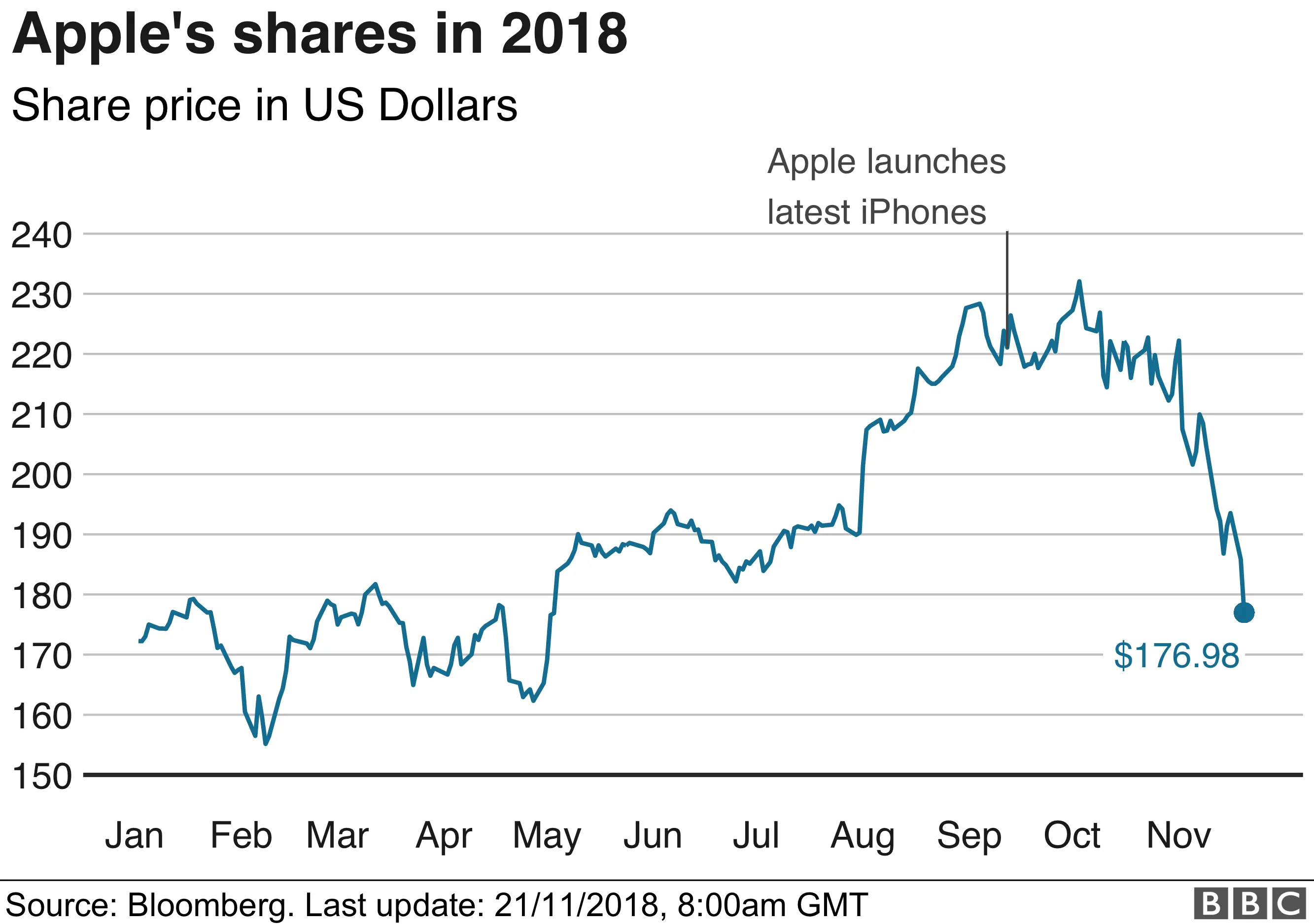
The share price of Apple is a real-time reflection of the collective expectations of millions of investors worldwide. Unlike the early days of the personal computing revolution, Apple today operates as a mature “blue-chip” technology stock, meaning its price movements are often dictated as much by its massive cash flows as by its innovation pipeline.
Historical Growth and the Impact of Stock Splits
To understand where the share price is today, one must acknowledge how Apple has managed its equity over time. Apple has undergone several stock splits—most recently a 4-for-1 split in August 2020. Stock splits do not change the intrinsic value of a company, but they lower the price per share, making it more accessible to individual investors. This “psychological liquidity” has historically helped Apple maintain a robust trading volume. When looking at long-term charts, the “adjusted” share price reveals a trajectory of exponential growth that has consistently outperformed the S&P 500 over ten- and twenty-year horizons.
Key Financial Metrics Driving Valuation
Answering “what is the share price” requires looking at the price-to-earnings (P/E) ratio. For much of the last decade, Apple traded at a P/E multiple in the mid-teens. However, as the company successfully transitioned from a hardware-reliant business to a services-oriented powerhouse, the market began to “re-rate” the stock. Today, Apple often commands a higher multiple because its revenue is seen as more predictable and recurring. Investors are willing to pay a premium for each dollar of Apple’s earnings because of the company’s “moat”—the ecosystem that makes it difficult for consumers to leave.
Fundamental Drivers Behind the Share Price
The intrinsic value of Apple’s stock is supported by a balance sheet that is arguably the strongest in corporate history. The share price fluctuates based on how well the company executes its dual-track strategy of hardware excellence and service expansion.
Revenue Streams: iPhone Cycles vs. Services Growth
The iPhone remains the primary engine of Apple’s revenue, and the share price often moves in anticipation of “super-cycles”—periods when a significant portion of the global user base is expected to upgrade their handsets. However, the “Services” segment—comprising the App Store, iCloud, Apple Music, and Apple Pay—has become the secret weapon for share price stability. Services boast much higher profit margins than hardware. When Apple reports earnings, analysts scrutinize the growth in Services because it represents “high-quality” revenue that supports a higher share price even during years when hardware sales are flat.
The Impact of Dividend Policies and Share Buybacks
Apple is a “cannibal” in the best sense of the word for investors; it uses its massive cash reserves to buy back its own shares at an unprecedented rate. By reducing the total number of shares outstanding, Apple increases the “Earnings Per Share” (EPS) for remaining investors. This financial engineering provides a “floor” for the share price. Even in a stagnant market, the sheer force of Apple’s multi-billion dollar buyback program creates upward pressure on the stock price, making it a favorite for institutional investors seeking low-volatility growth.
External Market Forces and Economic Indicators
No stock exists in a vacuum. Apple’s share price is frequently influenced by macroeconomic factors that have little to do with the quality of the latest MacBook or iPad, but everything to do with the global flow of capital.
Interest Rates and Tech Sector Volatility
Apple is a primary component of the NASDAQ-100 and the S&P 500. Consequently, when the Federal Reserve adjusts interest rates, Apple’s share price reacts. High interest rates generally lead to a “discounting” of future cash flows, which can suppress the valuations of high-growth tech stocks. Conversely, in a low-rate environment, Apple’s stable yield and growth prospects make it an attractive alternative to bonds. Understanding the current share price requires an awareness of the “macro” environment—inflation data, Treasury yields, and the prevailing “risk-on” or “risk-off” sentiment in the market.
Global Supply Chain and Geopolitical Risks
Because Apple’s manufacturing footprint is global, the share price is sensitive to geopolitical tensions, particularly those involving US-China trade relations. Disruptions in the supply chain—whether due to labor issues, component shortages (like the semiconductor crunch), or regulatory changes—can lead to immediate “sell-offs.” Savvy investors monitor these external risks, as a dip in the share price caused by a temporary supply chain bottleneck often presents a “buy the dip” opportunity for those focused on the long-term financial health of the brand.
Strategic Outlook: Predicting Future Price Movements
When investors ask what the share price is, they are usually trying to determine if the stock is currently undervalued or overvalued. This determination relies heavily on “forward-looking” guidance and the company’s ability to enter new, lucrative markets.
Innovation Cycles: AI and Spatial Computing
The next frontier for Apple’s valuation lies in “Apple Intelligence” (its proprietary AI integration) and the Vision Pro (spatial computing). The market is currently pricing in the potential for an AI-driven upgrade cycle. If Apple can prove that AI features are a necessity rather than a luxury, the resulting surge in iPhone sales could propel the share price to new all-time highs. Wall Street analysts look for “optionality”—the chance that Apple will successfully monetize a new product category—to justify price targets that exceed current trading levels.
Institutional Sentiment and Analyst Ratings
Apple is one of the most widely covered stocks in the world. The consensus “Price Target” from major investment banks like Goldman Sachs, Morgan Stanley, and J.P. Morgan acts as a compass for the share price. When an influential analyst upgrades Apple from “Hold” to “Buy,” or raises their price target based on channel checks in Asia, the share price often jumps. Monitoring institutional ownership is also key; when the “smart money” (pension funds and insurance companies) increases its stake, it signals a long-term confidence that stabilizes the price against short-term retail speculation.
How to Incorporate AAPL into Your Investment Portfolio
For the individual investor, knowing the share price is just the beginning. The real challenge is determining how to interact with that price based on personal financial goals.
Long-term Growth vs. Short-term Trading
Apple is rarely a “get rich quick” stock in the modern era; its massive market cap makes 100% gains in a single year unlikely. Instead, it is viewed as a “wealth preservation and steady growth” vehicle. Investors who focus on “Dollar Cost Averaging” (DCA)—buying a fixed dollar amount of Apple shares at regular intervals regardless of the price—tend to benefit from the stock’s long-term upward trajectory while mitigating the risk of buying at a temporary peak.

Risk Management and Diversification
While Apple is a powerhouse, holding it in a portfolio requires an understanding of concentration risk. Because Apple has such a large weighting in major index funds, many investors are already “exposed” to Apple’s share price without realizing it. From a financial planning perspective, it is essential to balance an individual position in AAPL with other sectors (like healthcare, energy, or consumer staples) to ensure that a downturn in the tech sector doesn’t disproportionately impact one’s net worth.
In conclusion, the share price of Apple is a multifaceted metric that summarizes the company’s past successes, current operational efficiency, and future potential. It is a number shaped by the precision of its balance sheet, the loyalty of its consumer base, and the volatility of the global economy. For those looking to build wealth, understanding the “why” behind the share price is infinitely more valuable than simply knowing the “what.” As Apple continues to innovate and return capital to its shareholders, its stock will likely remain a primary barometer for the financial world, offering a unique blend of safety and growth for the disciplined investor.
aViewFromTheCave is a participant in the Amazon Services LLC Associates Program, an affiliate advertising program designed to provide a means for sites to earn advertising fees by advertising and linking to Amazon.com. Amazon, the Amazon logo, AmazonSupply, and the AmazonSupply logo are trademarks of Amazon.com, Inc. or its affiliates. As an Amazon Associate we earn affiliate commissions from qualifying purchases.