
The share market, often referred to interchangeably with the stock market, is a complex yet fascinating ecosystem where individuals and institutions buy and sell shares of publicly traded companies. Far from being a mere casino, it is a sophisticated mechanism that underpins global finance, facilitating capital formation, driving economic growth, and offering avenues for wealth creation. For many, it remains an intimidating realm, shrouded in jargon and perceived risk. However, understanding its fundamental principles is crucial for anyone looking to build wealth, participate in the economic landscape, or even comprehend global financial news.
At its core, the share market provides a platform for companies to raise capital by issuing ownership stakes—shares—to investors. In return, investors acquire a claim on the company’s assets and earnings, hoping to profit from its growth and success. This intricate dance between capital seekers and capital providers forms the bedrock of modern economies, channeling savings into productive investments and allowing ordinary people to partake in the prosperity of leading corporations. Demystifying this market involves exploring its structure, functions, benefits, and inherent risks, revealing its pivotal role in both personal finance and the broader economic sphere.
Unveiling the Share Market: A Foundation of Global Finance
To truly grasp the significance of the share market, one must first dismantle its fundamental components and understand its overarching purpose. It’s more than just a place to buy “stocks”; it’s a dynamic marketplace reflecting collective expectations, corporate performance, and macroeconomic trends.
Defining the Share Market: More Than Just Stocks
The term “share market” specifically highlights the trading of “shares” or “equities,” which represent fractional ownership in a company. When you buy a share, you become a part-owner, a shareholder. The market itself is not a single physical location but a network of exchanges and brokers where these shares are bought and sold. While “stock market” is often used broadly to include other securities like bonds and derivatives, the “share market” emphasizes the equity segment. These shares entitle their holders to certain rights, including voting rights in corporate decisions (for common stock) and a share in the company’s profits, often distributed as dividends. The value of these shares fluctuates based on supply and demand, company performance, industry outlook, and broader economic sentiment. This constant price discovery mechanism makes the share market a real-time barometer of economic health and corporate prospects.
The Core Purpose: Capital Formation and Wealth Creation
The primary function of the share market is twofold: enabling capital formation for businesses and facilitating wealth creation for investors. For companies, issuing shares is a vital way to raise capital for expansion, research and development, debt repayment, or acquisitions, without incurring debt. This access to public funding fuels innovation and job creation. For investors, the share market offers the potential for significant returns. Investors can profit in two main ways: capital appreciation, where the value of their shares increases over time and they sell them for a profit, and dividends, which are portions of the company’s profits distributed to shareholders. Beyond these direct financial benefits, the market provides liquidity, meaning investors can easily convert their shares into cash, offering flexibility and accessibility that other asset classes might lack.
Key Participants: From Issuers to Investors
The share market ecosystem is populated by a diverse array of participants, each playing a crucial role. At the forefront are the issuers—publicly traded companies that offer their shares to the public. Then there are the investors, ranging from individual retail investors (like you and me) to large institutional investors such as mutual funds, pension funds, hedge funds, and insurance companies. Brokers act as intermediaries, executing buy and sell orders on behalf of investors and providing research and advice. Investment banks play a critical role in the primary market, underwriting new share issues (IPOs). Stock exchanges (e.g., NYSE, NASDAQ, LSE) provide the regulated platforms where trading occurs, ensuring transparency and efficiency. Finally, regulators (e.g., SEC in the US, SEBI in India, FCA in the UK) oversee the market to protect investors, maintain fair trading practices, and prevent market manipulation. Each participant contributes to the market’s liquidity, efficiency, and overall functioning.
The Mechanics of Trading: How the Share Market Functions
Understanding the “what” is only the first step; comprehending the “how” reveals the intricate processes that govern the buying and selling of shares daily. The market operates through a sophisticated interplay of primary and secondary mechanisms, facilitated by exchanges and regulated by governing bodies.
Primary Market: The Genesis of Shares (IPOs)
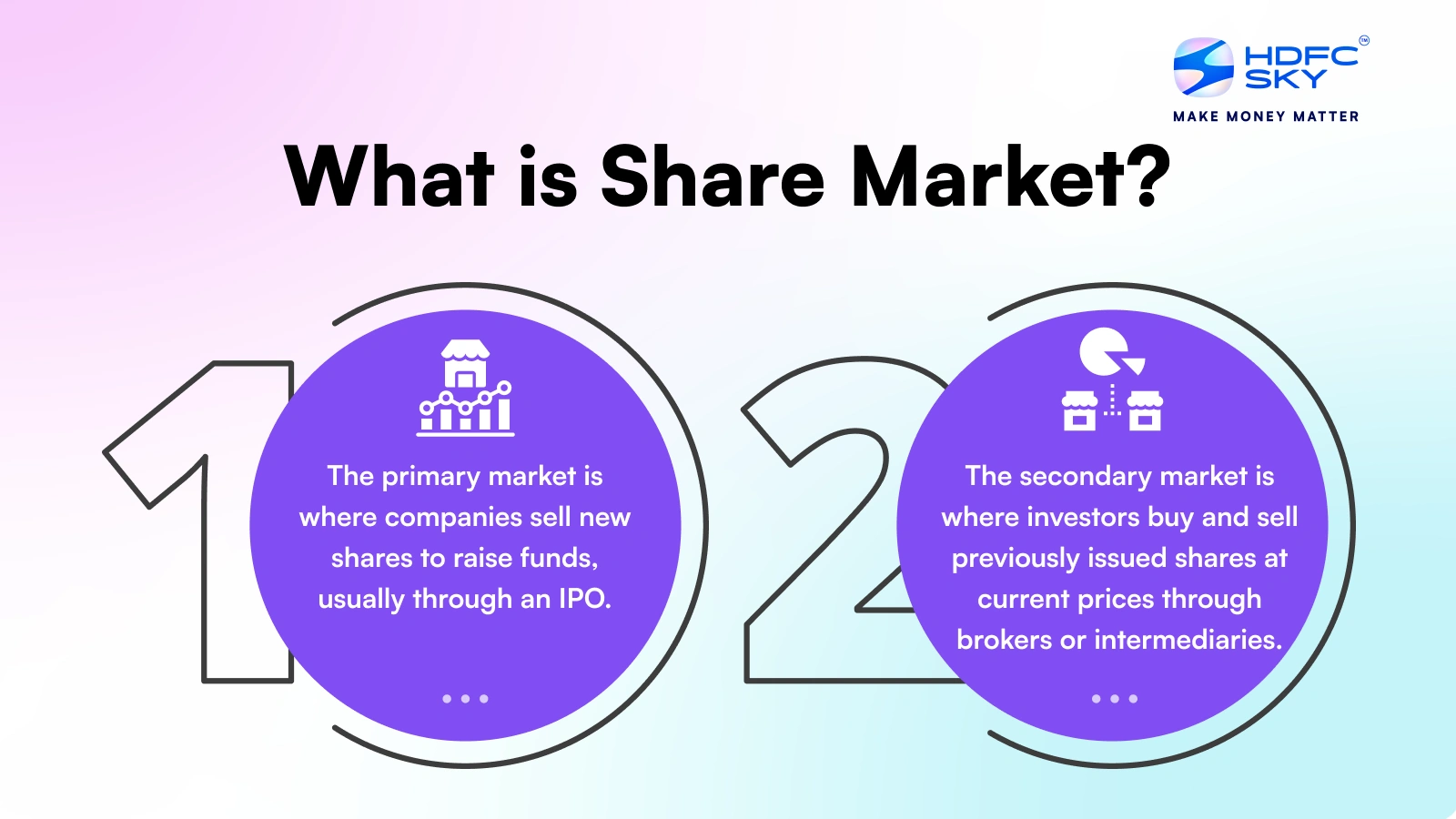
The journey of a share begins in the primary market. This is where companies first issue new shares to the public to raise capital. The most common method for this is an Initial Public Offering (IPO). When a private company decides to “go public,” it works with investment banks (underwriters) to determine the offering price and market the shares to potential investors. An IPO allows the company to transition from private ownership to public ownership, generating a significant influx of capital that can be used for growth and expansion. After the IPO, these newly issued shares begin trading on a stock exchange in the secondary market. Follow-on public offerings (FPOs) or rights issues are other ways companies raise additional capital after their initial listing. The primary market is crucial for capital formation, injecting fresh funds directly into corporate ventures.
Secondary Market: The Everyday Exchange
Once shares are issued in the primary market, they are subsequently traded among investors in the secondary market. This is the market most people refer to when they talk about the “share market.” Here, investors buy and sell existing shares from each other, rather than directly from the issuing company. Companies do not receive any money from trades in the secondary market; rather, the transactions occur between investors, facilitating liquidity. The price of shares in the secondary market is determined by the forces of supply and demand, influenced by company performance, economic indicators, news events, and investor sentiment. This continuous buying and selling provides a mechanism for investors to exit their positions, convert their investments into cash, and for new investors to enter. The efficiency and liquidity of the secondary market are vital for attracting capital to the primary market, as investors need assurance that they can later sell their holdings.
The Role of Stock Exchanges and Regulators
Stock exchanges are central to the functioning of the secondary market. They provide the physical or, more commonly today, electronic platforms where buyers and sellers meet to trade shares. Exchanges ensure an orderly, transparent, and fair trading environment. They list companies that meet specific criteria, disseminate real-time price information, and facilitate the matching of buy and sell orders. Examples include the New York Stock Exchange (NYSE), Nasdaq, London Stock Exchange (LSE), and National Stock Exchange of India (NSE). Complementing the exchanges are regulatory bodies. These governmental or quasi-governmental agencies are tasked with overseeing the securities markets. Their objectives include protecting investors from fraud and manipulation, ensuring fair and efficient markets, and promoting capital formation. They establish rules for disclosure, insider trading, broker conduct, and market surveillance, creating a framework of trust essential for market participation.
Understanding Market Orders and Trading Sessions
When investors decide to buy or sell shares, they typically place orders through a brokerage firm. The two most common types of orders are market orders and limit orders. A market order instructs the broker to buy or sell shares immediately at the best available current price. While it guarantees execution, the exact price might vary slightly in fast-moving markets. A limit order, on the other hand, specifies a maximum price an investor is willing to pay to buy or a minimum price they are willing to accept to sell. This provides more control over the price but does not guarantee execution if the market price never reaches the specified limit. Trading in the share market occurs during specific trading sessions, typically during business hours on weekdays. However, pre-market and after-hours trading sessions also exist, allowing institutional investors and some retail investors to trade outside regular hours, though often with lower liquidity and higher volatility.
Why Invest? Benefits and Risks of Share Market Participation
The allure of the share market lies in its potential for substantial returns, but this potential is inextricably linked to inherent risks. A balanced understanding of both aspects is crucial for any prospective investor.
Potential for Capital Appreciation and Dividends
One of the most attractive aspects of investing in the share market is the potential for capital appreciation. If a company performs well, grows its business, and increases its profitability, its shares typically become more valuable over time. Investors who bought these shares at a lower price can then sell them at a higher price, realizing a profit. This long-term growth potential has historically outpaced inflation and many other asset classes. Furthermore, many companies distribute a portion of their profits to shareholders in the form of dividends. These regular payments, often quarterly, provide a steady stream of income for investors, regardless of short-term stock price fluctuations. Dividend-paying stocks are particularly attractive to income-focused investors or those seeking a consistent return on their investment. Reinvesting dividends can also significantly accelerate wealth accumulation through the power of compounding.

Liquidity and Ownership Benefits
The share market offers a high degree of liquidity, meaning investors can typically convert their shares into cash relatively quickly and easily. Unlike real estate or private businesses, publicly traded shares can be sold with just a few clicks or a phone call, providing financial flexibility. This liquidity is a major advantage for investors who might need access to their capital. Beyond financial returns, investing in shares also confers certain ownership benefits. Shareholders of common stock typically have voting rights, allowing them to influence corporate governance by electing board members and voting on key company proposals. This allows investors a say in the strategic direction and ethical practices of the companies they own. Furthermore, being a shareholder connects you directly to the success of innovative companies, allowing you to participate in and benefit from economic progress and technological advancements.
The Inherent Volatility and Market Risk
Despite the attractive benefits, the share market is not without its perils. The most significant risk is market risk, often referred to as systemic risk. This refers to the risk that the entire market or a broad segment of it will decline, regardless of the performance of individual companies. Factors like economic recessions, geopolitical events, interest rate changes, or pandemics can trigger widespread market downturns, leading to a decrease in the value of an investor’s portfolio. The share market is known for its volatility, meaning prices can fluctuate wildly in the short term. While long-term trends tend to be upward, short-term drops can be sharp and unpredictable, leading to significant paper losses for investors who panic and sell at the wrong time. Understanding that volatility is a normal characteristic of the market is crucial for managing expectations and emotional responses.
Business-Specific Risks and Diversification
Beyond broad market risks, investors also face business-specific risks, also known as unsystematic risk. This refers to risks associated with an individual company or industry. A company might face declining sales, poor management decisions, increased competition, product recalls, or regulatory challenges, all of which can negatively impact its share price. Even a thriving market can see individual companies fail or underperform significantly. This underscores the importance of diversification. By investing in a variety of companies across different industries, sectors, and geographies, investors can mitigate business-specific risks. If one company or industry performs poorly, the impact on the overall portfolio is cushioned by the performance of others. Diversification is a fundamental principle of risk management in the share market, preventing an investor from putting all their eggs in one basket.
Navigating the Share Market: Essential Steps for Investors
For those ready to venture into the share market, a structured approach is paramount. Haphazard investing often leads to disappointment; informed and disciplined strategies, conversely, pave the way for sustainable wealth accumulation.
Setting Investment Goals and Risk Tolerance
Before making any investment, it’s critical to define your investment goals. Are you saving for retirement, a down payment on a house, your children’s education, or simply aiming for long-term wealth growth? Your goals will dictate your investment horizon (how long you plan to invest) and, consequently, the level of risk you can afford to take. Equally important is assessing your risk tolerance. How comfortable are you with the possibility of your investment losing value? A young investor with a long horizon might tolerate more risk, seeking higher growth potential, while someone nearing retirement might prioritize capital preservation and stable income. Understanding your emotional capacity for market fluctuations is as important as your financial capacity. These initial self-assessments form the bedrock of a sound investment strategy.
Research and Due Diligence: Informed Decisions
Once goals and risk tolerance are established, the next crucial step is thorough research and due diligence. Never invest in something you don’t understand. This involves analyzing potential companies by reviewing their financial statements (balance sheet, income statement, cash flow statement), annual reports, and investor presentations. Look into their business model, competitive landscape, management team, industry trends, and growth prospects. Utilize reputable financial news sources, analyst reports, and investment research platforms. For new investors, starting with well-established companies with a proven track record can be a prudent approach. The goal is to make informed decisions based on fundamental analysis rather than on rumors, hype, or short-term speculation. Understanding the underlying business is key to successful long-term investing.
Choosing a Brokerage and Opening an Account
To buy and sell shares, you will need a brokerage account. The choice of brokerage firm is an important decision. Consider factors such as commission fees, available investment products, research tools and resources, customer service quality, and ease of use (especially for online platforms). Many discount brokerages offer low-cost or commission-free trading, making it more accessible for individual investors. Once you’ve selected a broker, the process typically involves filling out an application, providing identification documents, and linking a bank account for funding. Brokers are regulated entities, and your investments are typically protected up to a certain limit by investor protection schemes (e.g., SIPC in the US). Take your time to compare options and choose a firm that aligns with your needs and investment style.
Diversification and Long-Term Perspective
Two fundamental principles for navigating the share market successfully are diversification and maintaining a long-term perspective. As mentioned, diversification involves spreading your investments across various assets, industries, and geographies to reduce risk. Instead of putting all your money into one stock, invest in a basket of stocks, perhaps through diversified funds like Exchange Traded Funds (ETFs) or mutual funds. These funds allow you to own a small piece of many different companies, instantly diversifying your portfolio. Equally important is adopting a long-term perspective. The share market is designed for long-term wealth creation. While short-term fluctuations are inevitable, historical data shows that over extended periods (10+ years), diversified equity portfolios tend to deliver positive returns, outpacing inflation. Resisting the urge to panic during market downturns and staying invested allows your capital to compound and ride out temporary volatility.
The Share Market’s Broader Impact: Economic Barometer and Innovation Driver
Beyond individual wealth, the share market plays a profound role in the broader economy, acting as a critical indicator and a powerful engine for progress.
Reflecting Economic Health and Business Confidence
The performance of the share market is often viewed as a leading indicator of economic health and business confidence. When the market is booming, it generally suggests that investors are optimistic about the future of corporate earnings and the overall economy. Conversely, a significant market downturn can signal an impending economic slowdown or recession. While not always perfectly predictive, indices like the S&P 500 or Dow Jones Industrial Average are closely watched by economists and policymakers as barometers of the nation’s financial well-being. Share prices reflect collective investor sentiment about future corporate profits, which in turn are tied to economic growth, consumer spending, and business investment. Thus, understanding the share market provides valuable insights into the pulse of the economy.
Fueling Innovation and Corporate Growth
The share market is a powerful engine for innovation and corporate growth. By providing a mechanism for companies to raise substantial amounts of capital through equity offerings, it enables them to fund ambitious projects, invest in research and development, expand into new markets, and acquire other businesses. Without access to public capital markets, many groundbreaking innovations and significant corporate expansions would be severely hampered. Think of the tech giants that relied heavily on public funding in their early stages to become the global powerhouses they are today. The share market channels societal savings into productive investments, driving technological advancements, creating jobs, and improving living standards. It rewards successful companies with higher valuations, making it easier for them to raise further capital and continue their growth trajectory.

Accessibility and Democratization of Investment
Historically, investing in businesses was largely the domain of the wealthy. However, the modern share market has undergone significant democratization. With the advent of online brokerage platforms, low-cost ETFs, and fractional share investing, ordinary individuals with even modest sums of money can now easily participate. This accessibility allows a broader segment of the population to own a piece of leading companies, benefit from economic growth, and build wealth over time. Financial literacy campaigns and widespread access to information further empower individuals to make informed investment decisions. While challenges like information asymmetry and market complexity remain, the share market has undoubtedly become a more inclusive arena, offering pathways to financial independence for a diverse range of investors.
In conclusion, the share market is a dynamic, complex, and indispensable component of the global financial system. It is a marketplace where capital meets opportunity, enabling companies to grow and investors to build wealth. While it carries inherent risks, a clear understanding of its functions, a disciplined approach to research, and a commitment to long-term strategies can empower individuals to navigate its intricacies successfully. Far from being an exclusive club, the share market is an accessible avenue for anyone willing to learn and engage, offering a powerful tool for financial empowerment and participation in the collective journey of economic progress.
aViewFromTheCave is a participant in the Amazon Services LLC Associates Program, an affiliate advertising program designed to provide a means for sites to earn advertising fees by advertising and linking to Amazon.com. Amazon, the Amazon logo, AmazonSupply, and the AmazonSupply logo are trademarks of Amazon.com, Inc. or its affiliates. As an Amazon Associate we earn affiliate commissions from qualifying purchases.