
In the rapidly evolving landscape of modern technology, the difference between a successful product and a failed venture often lies in the rigor of the development process. While many perceive technology as a field of pure creation, it is fundamentally a discipline of problem-solving. At its core, the most effective technological advancements—ranging from high-frequency trading algorithms to the latest large language models—rely on a structured approach to discovery: the scientific method.
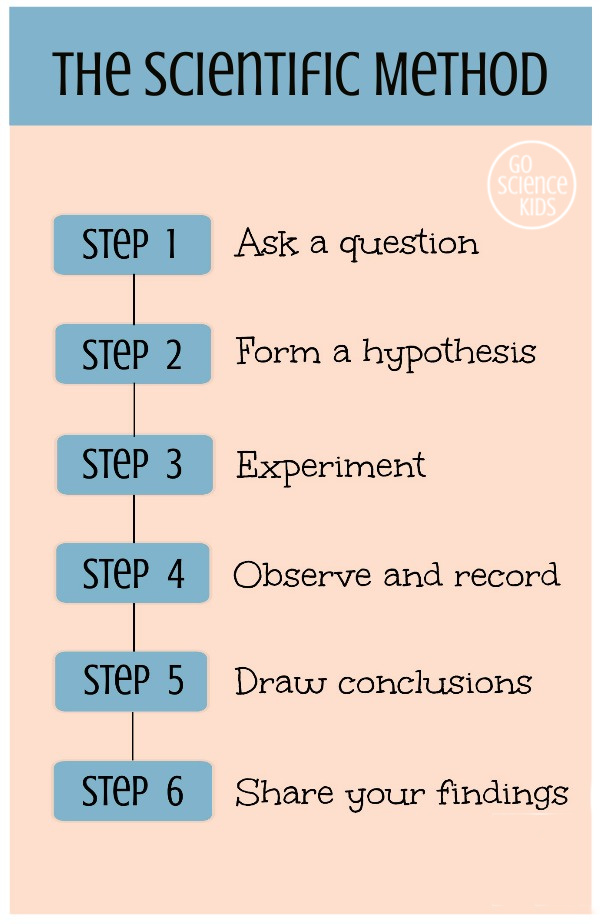
The scientific method provides a logical, objective framework for testing ideas and solving complex technical challenges. By applying these six steps to software engineering, digital security, and artificial intelligence, tech professionals can minimize risk, optimize performance, and drive genuine innovation. This guide explores how the traditional 6-step scientific method is re-imagined for the digital age.
The Foundation: Why the Scientific Method is Essential in the Digital Age
Before diving into the specific steps, it is crucial to understand the synergy between scientific inquiry and technological progress. In a tech ecosystem defined by “big data” and hyper-connectivity, intuition is no longer sufficient. Engineers and developers must move beyond guesswork to embrace a methodology that rewards empirical evidence.
Bridging the Gap Between Hypothesis and Code
In software development, we often encounter bugs or performance bottlenecks that seem inexplicable. Without a structured method, a developer might randomly change lines of code hoping for a fix—a process known as “shotgun debugging.” The scientific method replaces this chaotic approach with targeted inquiry. It forces the developer to treat their code as a series of hypotheses that must be validated or refuted through controlled testing. This transition from “hacking” to “engineering” is what allows tech companies to scale complex systems without them collapsing under their own technical debt.
The Shift from Intuition to Data-Driven Development
In the era of AI and Machine Learning (ML), the scientific method is more relevant than ever. AI models are not explicitly programmed in the traditional sense; they are trained. This training process is essentially a massive, automated scientific experiment. Data scientists must observe patterns, form hypotheses about feature importance, and conduct experiments to see which parameters yield the highest accuracy. By grounding tech development in these six steps, organizations ensure that their digital products are built on a foundation of verifiable data rather than the subjective preferences of a design team.
Steps 1 & 2: Observation and Questioning in Tech Development
Every technological breakthrough begins with a keen observation. In the tech world, this often takes the form of identifying a gap in the market, a flaw in a security protocol, or a lag in a user interface.
Identifying System Inefficiencies and User Pain Points
Observation in technology is often synonymous with monitoring. High-performance tech teams use sophisticated tools like Datadog, New Relic, or Google Analytics to observe how their systems behave in the real world. For example, a DevOps engineer might observe that server latency increases significantly every Tuesday at 2:00 PM. This is the “Observation” phase. It involves gathering raw data and noticing a pattern that deviates from the expected norm.
In the realm of software products, observation involves UX (User Experience) research. By watching how users interact with an app, designers might observe that 40% of users drop off at the payment screen. This empirical observation provides the necessary “spark” for the next phase of the method.
Formulating the Central Research Problem
Once an observation is made, it must be distilled into a specific, actionable question. A vague question like “Why is my app slow?” is difficult to solve. A scientific approach refines this into: “Does the third-party API integration increase our page load time by more than 500ms during peak hours?”
The quality of the question determines the quality of the technological solution. In cybersecurity, a researcher might ask: “Can a SQL injection bypass our new encryption layer if the input is sanitized using our current library?” By asking focused questions, tech professionals can narrow their focus, ensuring that their experimental resources are used efficiently.
Steps 3 & 4: Constructing Hypotheses and Rigorous Tech Experimentation
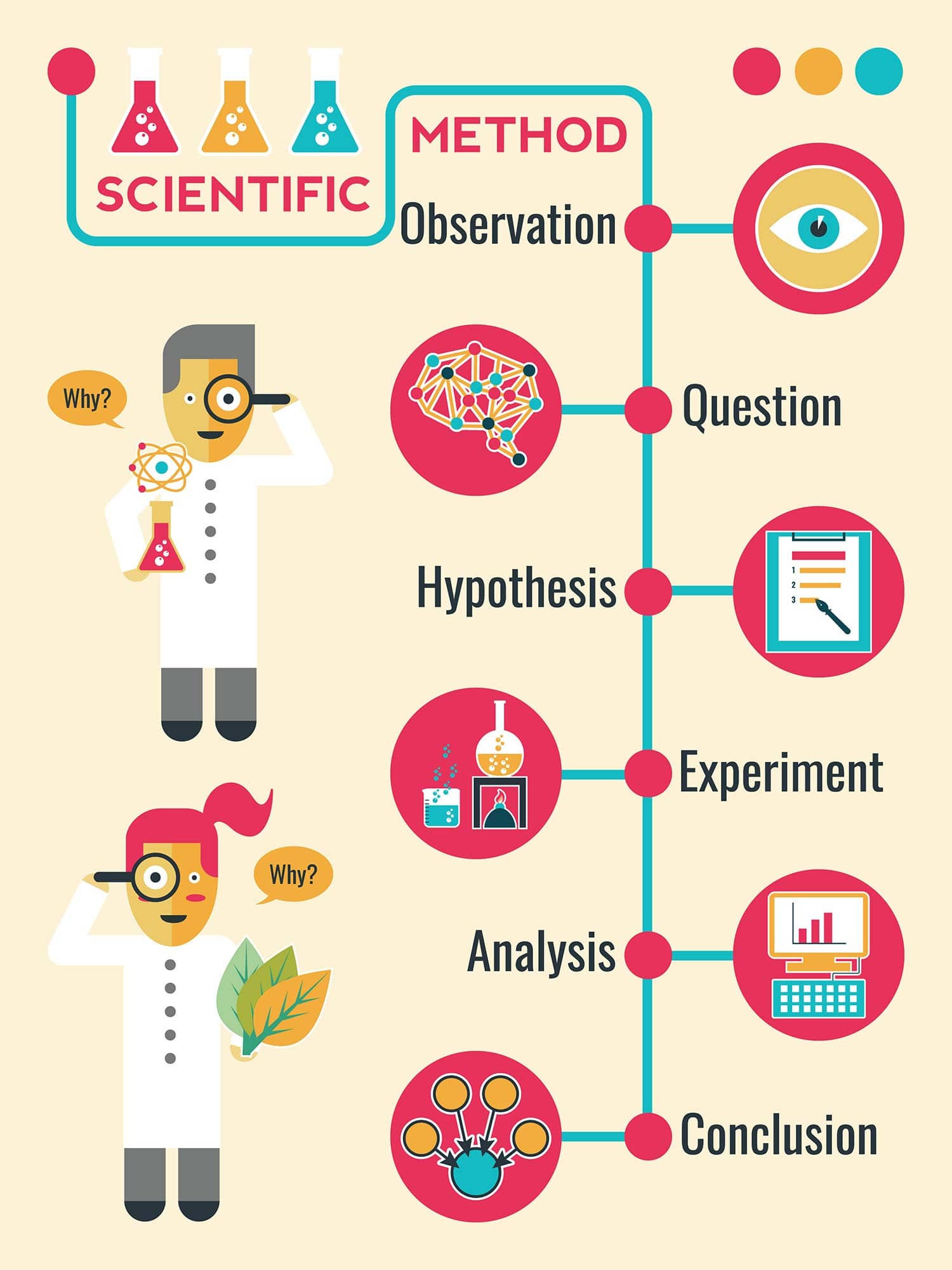
With a clear question in hand, the next phase is to predict an outcome and test it in a controlled environment. This is where the theoretical meets the practical.
Developing Testable Tech Assumptions (The Minimum Viable Hypothesis)
A hypothesis in technology is an educated guess about why a problem is occurring or how a new feature will perform. It must be “falsifiable,” meaning there must be a way to prove it wrong. For instance, a cloud architect might hypothesize: “Moving our database from a relational model to a NoSQL model will reduce query latency by 30% for our unstructured data sets.”
This hypothesis provides a clear roadmap. It specifies the change (moving to NoSQL) and the expected metric (30% reduction in latency). In the tech industry, this is often linked to the concept of the “Minimum Viable Product” (MVP), where a small-scale version of a tool is built specifically to test a core hypothesis before committing full resources to its development.
Designing the Sandbox: A/B Testing, QA, and Beta Environments
Experimentation in tech requires a “sandbox”—a controlled environment where variables can be manipulated without crashing the live system. This is the essence of Quality Assurance (QA) and staging environments.
One of the most common forms of experimentation in modern tech is A/B testing. If a software company wants to test a new algorithm for their recommendation engine, they will show “Version A” to 50% of users and “Version B” to the other 50%. The experiment is strictly controlled: the only variable that changes is the algorithm itself. This allows the team to isolate the cause-and-effect relationship between the code change and user behavior. Similarly, in hardware reviews or gadget testing, researchers use “benchmarking” to conduct experiments under standardized conditions, ensuring that a CPU’s performance is tested against consistent workloads.
Steps 5 & 6: Data Analysis and Iterative Deployment
The final stages of the scientific method involve making sense of the experimental results and deciding on the next steps. In technology, this is rarely a “one and done” process; it is a cycle of continuous improvement.
Deciphering Metrics: Performance, Scalability, and UX Data
Once the experiment (or test) is complete, tech professionals must analyze the resulting data. This involves more than just looking at a single number. If an experiment was designed to test a new cybersecurity firewall, the analysis would look at false positives, false negatives, latency overhead, and resource consumption.
Modern AI tools have revolutionized this step. Data scientists use statistical analysis software and visualization tools (like Tableau or PowerBI) to find correlations that might not be visible to the naked eye. The goal is to determine if the data supports the hypothesis. Did the NoSQL database actually reduce latency by 30%? If the data shows only a 5% improvement but a 50% increase in cost, the hypothesis—while technically supported—might lead to a different strategic conclusion.
Drawing Conclusions and the Continuous Integration/Continuous Deployment (CI/CD) Loop
The final step is to draw a conclusion and communicate the findings. In a tech company, this usually results in a “Go/No-Go” decision. If the experiment was successful, the new code is merged into the main branch and deployed to users. If it failed, the team learns why and starts the cycle again with a new hypothesis.
This iterative nature is perfectly encapsulated in the CI/CD pipeline of modern software engineering. Technology is never “finished”; it is constantly being refined through the scientific method. Every update, patch, and version release is essentially a conclusion drawn from a previous round of observations and experiments. By documenting these conclusions, tech teams build a “knowledge base” that prevents them from repeating past mistakes and allows for faster innovation in the future.
The Future of Innovation: AI and Automated Scientific Discovery
As we look toward the future of technology, the scientific method is being integrated directly into the software itself. We are entering an era where technology doesn’t just benefit from the scientific method; it executes it autonomously.
How Machine Learning Accelerates the Experimental Cycle
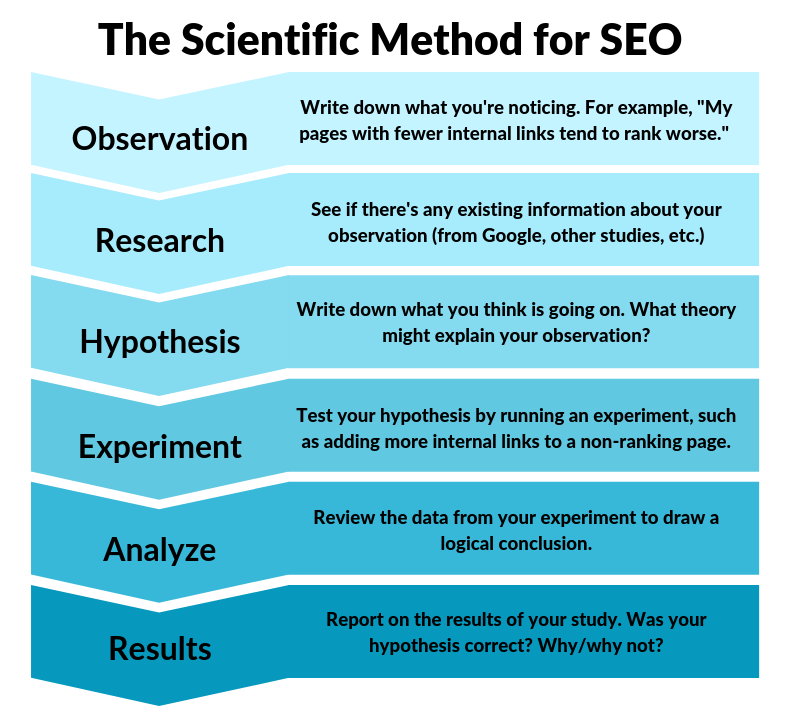
Machine learning models are essentially engines of experimentation. They perform millions of “mini-experiments” per second, adjusting their internal weights (hypotheses) based on the error rate (data analysis) of their predictions. This represents a massive scaling of the scientific method. In fields like drug discovery or materials science, AI is being used to hypothesize new molecular structures and simulate experiments at speeds impossible for human researchers.
Furthermore, “Automated Machine Learning” (AutoML) tools are now being used to design the experiments themselves. These systems can observe a dataset, propose a model architecture, test it, and iterate until they find the optimal solution. While the scale and speed have changed, the underlying logic remains the same 6-step framework. Whether it is a developer fixing a bug or an AI optimizing a neural network, the scientific method remains the most reliable path to technological excellence. By adhering to this disciplined approach, the tech industry ensures that its innovations are not just novel, but robust, secure, and truly effective.
aViewFromTheCave is a participant in the Amazon Services LLC Associates Program, an affiliate advertising program designed to provide a means for sites to earn advertising fees by advertising and linking to Amazon.com. Amazon, the Amazon logo, AmazonSupply, and the AmazonSupply logo are trademarks of Amazon.com, Inc. or its affiliates. As an Amazon Associate we earn affiliate commissions from qualifying purchases.