
For anyone navigating the complex world of finance, the S&P 500 is a term that frequently arises, often discussed in the same breath as economic health, market performance, and investment opportunities. Yet, despite its pervasive presence in financial news and analyst reports, a clear understanding of what it truly represents, why it matters, and how it impacts your personal finances can often be elusive. Far more than just a random collection of companies, the S&P 500 is a sophisticated, market-capitalization-weighted index that serves as a vital barometer for the U.S. stock market and, by extension, the broader American economy. It encapsulates the performance of 500 of the largest publicly traded companies in the United States, offering a snapshot of corporate America’s prowess and an indispensable benchmark for investors worldwide.

This article will demystify the S&P 500, delving into its core definition, historical context, rigorous selection criteria, and its profound significance for individual investors and the global financial landscape. We will explore how this powerful index provides a pathway to diversified investment, dissect the mechanics behind its construction, and offer practical insights into incorporating it into a robust financial strategy.
Unpacking the S&P 500: A Definitive Overview
At its heart, the S&P 500 is an index. But what does that truly mean in the realm of financial markets? It’s not an asset you can directly buy, but rather a theoretical portfolio designed to track the performance of a specific segment of the market. Understanding its precise definition and historical evolution is the first step toward appreciating its immense influence.
More Than Just a Number: Defining the Index
The S&P 500, formally known as the Standard & Poor’s 500, is a stock market index that tracks the stock performance of 500 large companies listed on stock exchanges in the United States. It is maintained by S&P Dow Jones Indices, a joint venture majority-owned by S&P Global. The “500” isn’t an exact count; rather, it represents a curated selection of leading U.S. companies chosen to reflect the overall health and breadth of the large-cap U.S. equity market.
Crucially, the S&P 500 is a market-capitalization-weighted index. This means that companies with larger market capitalizations (stock price multiplied by the number of outstanding shares) have a greater impact on the index’s value and movements than smaller companies. For instance, a 1% rise in Apple’s stock price, given its massive market cap, will influence the S&P 500 more significantly than a 1% rise in a company with a comparatively smaller market cap, even if both are part of the 500. This weighting methodology ensures that the index accurately reflects the true scale and impact of its constituent companies within the economy. Its primary purpose is to provide investors and analysts with a clear, reliable, and standardized measure of the performance of the largest segment of the U.S. stock market and, by extension, a key indicator of the U.S. economy’s vitality.
A Legacy of Market Representation: Brief History
The concept of a broad market index is not new, but the S&P 500 as we know it today has a distinct lineage. Its origins trace back to 1923 when Standard Statistics Company began rating stocks and developing stock market indexes. In 1941, Standard Statistics merged with Poor’s Publishing Company, forming Standard & Poor’s. The modern S&P 500 was officially introduced on March 4, 1957, expanding from a previous index that only tracked 90 companies (the “S&P 90”).
The introduction of 500 companies represented a significant leap, offering a much broader and more representative sample of U.S. industrial strength and economic activity. Since its inception, the S&P 500 has evolved from a primarily industrial-focused index to one that encompasses a diverse array of sectors, reflecting the changing landscape of the American economy. Over the decades, it has solidified its position as the preeminent benchmark for large-cap U.S. equities, witnessing and chronicling every major economic boom and bust, from the post-war expansion to the dot-com bubble, the 2008 financial crisis, and the recent economic shifts induced by global events. Its continuous operation for over six decades provides an invaluable historical perspective on market performance.
Why the S&P 500 is Indispensable for Investors
Beyond its definition and history, the true power of the S&P 500 lies in its utility for investors. It serves multiple crucial roles, from being a performance yardstick to an economic bellwether and a foundational component of many diversified portfolios.
The Ultimate Benchmark for U.S. Equities
For portfolio managers, financial advisors, and individual investors alike, the S&P 500 is often considered the gold standard against which the performance of U.S. equity portfolios is measured. If an active mutual fund manager boasts about their returns, the immediate question is often, “How did it perform relative to the S&P 500?” This is because the S&P 500 represents the market’s collective performance. Consistently outperforming it is a significant challenge, which is why many professional investors struggle to beat the index over the long term.
For the retail investor, understanding this benchmark is equally vital. It provides a realistic expectation for broad market returns and helps evaluate the effectiveness of their own investment choices. If your diversified portfolio of U.S. stocks is significantly underperforming the S&P 500 over several years, it might signal a need to re-evaluate your strategy or consider passive investments that track the index more closely.
A Proxy for Economic Health
Given that the S&P 500 includes 500 of the largest and most influential companies across various sectors—from technology and finance to healthcare and consumer goods—its movements are often seen as a strong indicator of the overall health of the U.S. economy. When the S&P 500 is rising, it generally suggests that corporate earnings are growing, consumer confidence is high, and economic activity is robust. Conversely, a prolonged decline in the index can signal looming economic challenges, such as recessions or periods of slower growth.
While it’s important to remember that the stock market is not the economy itself, and can be influenced by sentiment and expectations, the S&P 500 serves as a critical proxy. Its performance is analyzed by economists, policymakers, and businesses to gauge prevailing economic conditions and forecast future trends. This broader economic insight is invaluable, as it can influence everything from interest rate decisions by central banks to corporate investment strategies.
Instant Diversification for the Savvy Investor
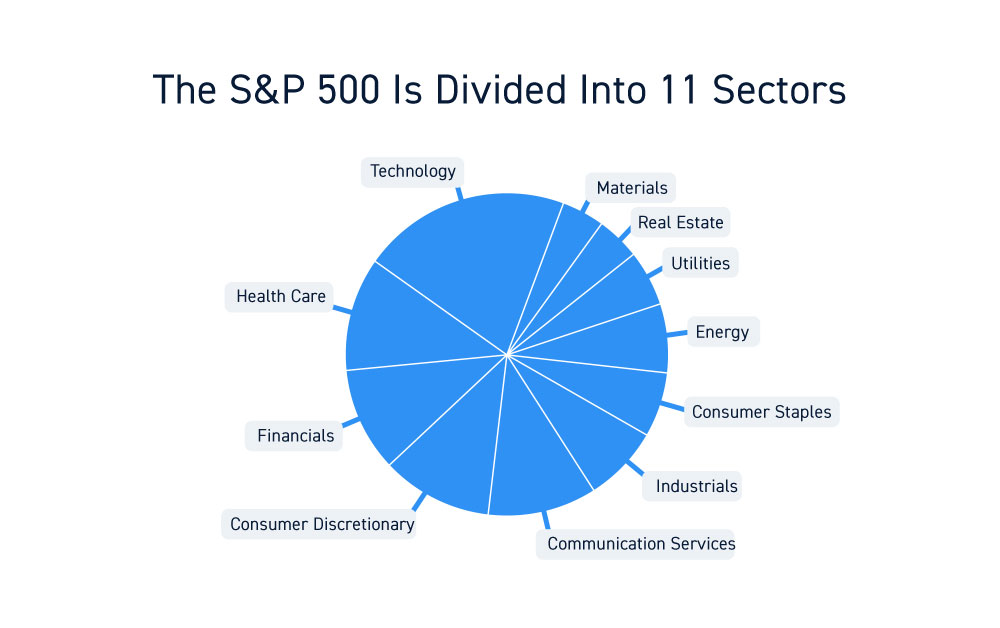
One of the most compelling advantages of the S&P 500, particularly for individual investors, is the immediate diversification it offers. Investing in a single company carries significant risk; if that company falters, your investment could be severely impacted. By tracking 500 different companies across 11 major sectors (e.g., Information Technology, Healthcare, Financials, Consumer Discretionary), the S&P 500 significantly mitigates this single-stock risk.
When you invest in a fund that tracks the S&P 500, you are simultaneously gaining exposure to a broad swath of the American economy. If one sector or company underperforms, the strong performance of others can help offset those losses. This inherent diversification helps create a more stable and resilient investment portfolio, smoothing out the inevitable volatility that comes with equity investing. It allows investors to participate in the growth of leading U.S. corporations without having to painstakingly research and select individual stocks.
The Mechanics Behind the Index: Company Selection and Weighting
The S&P 500 is not a static list of companies. It is a dynamically managed index, with a rigorous process governing which companies are included and how they influence the index’s value. This meticulous methodology ensures its continued relevance and accuracy as a market benchmark.
Rigorous Criteria for Inclusion
S&P Dow Jones Indices employs a committee that makes qualitative and quantitative decisions about which companies to include in the S&P 500. While the “500” is a target, the committee may deviate slightly if necessary to maintain sector balance or other strategic considerations. Key criteria for inclusion include:
- Market Capitalization: A company must have an unadjusted market capitalization of at least $14.6 billion (this threshold changes over time and is subject to committee discretion).
- U.S. Company: The company must be a U.S. company.
- Liquidity: There must be sufficient liquidity (trading volume) for its stock, ensuring that it can be easily traded without significant price impact.
- Public Float: A substantial portion (at least 50%) of the company’s shares must be available for public trading, ensuring that the index reflects investable shares.
- Profitability: The sum of the company’s GAAP (Generally Accepted Accounting Principles) earnings over the most recent four consecutive quarters must be positive.
- Sector Representation: While not a strict quota, the committee considers sector representation to ensure the index broadly reflects the U.S. economy.
These criteria are designed to ensure that only large, established, financially stable, and liquid companies that truly represent the U.S. market are included, preventing smaller, speculative, or illiquid companies from distorting the index.
Understanding Market-Cap Weighting
As mentioned earlier, the S&P 500 is a market-capitalization-weighted index. This means that a company’s influence on the index’s performance is directly proportional to its market value. Companies with larger market caps, like Apple, Microsoft, Amazon, Alphabet (Google), and Nvidia, will naturally have a greater “weight” in the index. Consequently, their stock price movements will exert a more significant impact on the overall S&P 500’s daily fluctuations than those of smaller constituents.
For example, if Apple’s stock price increases by 2%, it will contribute more to the S&P 500’s rise than if a company ranked 400th by market cap saw a 2% increase. This weighting scheme naturally favors highly successful, large-cap companies, reflecting their outsized impact on the economy and market. While this can lead to periods where the index’s performance is heavily influenced by a few mega-caps (sometimes referred to as market concentration risk), it also means the index is dynamically adjusting to reflect which companies are currently the most dominant forces in the U.S. market.

Regular Rebalancing and Index Committee Decisions
The S&P 500 is not a “set it and forget it” index. The S&P Dow Jones Indices committee regularly reviews its constituents. Quarterly rebalancing occurs to adjust the weights of existing companies based on changes in their market capitalization. Additionally, the committee meets periodically to decide on changes to the index’s composition.
Companies may be added to or removed from the index for various reasons, including mergers and acquisitions, bankruptcies, delistings, or if they no longer meet the established criteria (e.g., falling below the market cap threshold or failing to meet profitability requirements). These changes, while sometimes causing short-term price volatility for the affected stocks, ensure that the S&P 500 remains a relevant and accurate representation of the large-cap U.S. equity market over time.
Smart Ways to Invest in the S&P 500
For individual investors, the S&P 500 is more than just an abstract concept; it’s a powerful tool for wealth creation. While you cannot directly “buy” the S&P 500, several accessible and efficient investment vehicles allow you to track its performance.
Exchange-Traded Funds (ETFs): The Popular Choice
Exchange-Traded Funds (ETFs) are arguably the most popular and convenient way for investors to gain exposure to the S&P 500. An S&P 500 ETF is an investment fund that holds the stocks of the companies in the S&P 500 in the same proportions as the index itself. When you buy shares of an S&P 500 ETF, you are effectively buying a tiny piece of all 500 companies.
Key advantages of S&P 500 ETFs include:
- Diversification: Instant exposure to 500 companies across various sectors.
- Low Expense Ratios: Because they are passively managed (simply track an index), S&P 500 ETFs typically have very low management fees (expense ratios) compared to actively managed mutual funds.
- Liquidity: ETFs trade like stocks on major exchanges throughout the trading day, allowing for flexible buying and selling.
- Accessibility: You can buy S&P 500 ETFs through any standard brokerage account.
Prominent examples of S&P 500 ETFs include SPDR S&P 500 ETF Trust (SPY), iShares Core S&P 500 (IVV), and Vanguard S&P 500 ETF (VOO). These are often considered foundational elements of a core investment portfolio.
Index Mutual Funds: A Traditional Approach
Similar to ETFs, S&P 500 index mutual funds also aim to replicate the performance of the S&P 500 by holding its constituent stocks. The main differences lie in their structure and trading mechanism. Mutual funds are typically bought and sold at the end of the trading day at their net asset value (NAV), rather than throughout the day like ETFs.
Advantages of S&P 500 index mutual funds include:
- Automated Investing: Many investors find mutual funds convenient for setting up automatic contributions.
- Diversification: Provides the same broad market exposure as ETFs.
- Simplicity: Often a preferred choice for investors who prefer a “set it and forget it” approach and aren’t concerned with intra-day trading.
Vanguard 500 Index Fund Admiral Shares (VFIAX) is a well-known example. While some S&P 500 index mutual funds may have slightly higher expense ratios or higher minimum initial investment requirements than their ETF counterparts, they remain an excellent choice for long-term investors focused on passive market-tracking.
Strategic Considerations for S&P 500 Investors
When investing in the S&P 500, it’s crucial to adopt a strategic, long-term mindset:
- Dollar-Cost Averaging: Consider investing a fixed amount regularly, regardless of market fluctuations. This strategy, known as dollar-cost averaging, helps mitigate risk by averaging out your purchase price over time.
- Long-Term Horizon: The S&P 500 has demonstrated impressive returns over the long term, but it also experiences significant short-term volatility. Maintaining a long-term investment horizon (10+ years) allows you to ride out market downturns and benefit from the power of compounding.
- Part of a Diversified Portfolio: While the S&P 500 offers excellent internal diversification, it still represents only large-cap U.S. equities. For true portfolio diversification, consider combining S&P 500 investments with other asset classes like bonds, international stocks, and potentially small-cap or emerging market funds, based on your risk tolerance and financial goals.
The S&P 500’s Performance and Future Outlook
The S&P 500’s historical performance offers compelling reasons for its popularity, but understanding its cyclical nature and the factors influencing its future is equally important for prudent financial planning.
A History of Resilient Returns
Over its long history, the S&P 500 has delivered impressive average annual returns, typically cited in the range of 10-12% before inflation, when reinvesting dividends. This remarkable track record is a testament to the enduring growth and innovation of American corporations and the resilience of the U.S. economy. While past performance is not indicative of future results, this historical trend underscores the power of long-term equity investing and the magic of compounding.
However, these average returns mask significant periods of volatility. The index has weathered numerous market crashes and corrections—from the Black Monday crash of 1987 to the dot-com bubble burst in the early 2000s, the 2008 financial crisis, and the rapid downturn and recovery during the COVID-19 pandemic. Each downturn presented significant challenges, yet the S&P 500 has consistently demonstrated its capacity to recover and reach new highs over time.
Navigating Market Cycles
Successful S&P 500 investing requires an understanding of market cycles: bull markets (periods of sustained growth) and bear markets (periods of sustained decline). Emotional reactions during bear markets, such as panic selling, can be detrimental to long-term wealth accumulation. A key lesson from the S&P 500’s history is the importance of staying invested through downturns. Those who maintain their positions are typically rewarded when the market eventually recovers.
Market downturns, while unsettling, can also present opportunities for investors using a dollar-cost averaging strategy, as they effectively buy shares at lower prices. The S&P 500’s long-term upward trajectory is a powerful argument for maintaining a disciplined, patient approach to investing.
What Lies Ahead: Factors Influencing Future Performance
The future performance of the S&P 500 will, as always, be shaped by a confluence of economic, corporate, and geopolitical factors:
- Economic Growth: Broad economic indicators like GDP growth, employment rates, inflation, and interest rate policies by the Federal Reserve will continue to significantly impact corporate earnings and investor sentiment.
- Corporate Earnings: Ultimately, stock prices are driven by corporate profitability. The ability of the S&P 500’s constituent companies to generate strong, sustainable earnings growth will be paramount.
- Technological Innovation: Ongoing advancements in technology, particularly in areas like artificial intelligence, biotechnology, and renewable energy, will likely drive growth in various sectors and reshape the index’s composition.
- Geopolitical Events: Global conflicts, trade policies, and international relations can introduce uncertainty and volatility, affecting investor confidence and corporate operations.
The S&P 500 will continue to adapt to these changing dynamics, with new companies rising to prominence and others falling away. The debate between active versus passive investing will persist, but the S&P 500’s track record of robust, diversified returns at a low cost will likely ensure its continued dominance as a foundational investment for many.
Conclusion
The S&P 500 stands as a cornerstone of modern finance, providing an unparalleled lens through which to view the health and dynamism of the U.S. economy and its leading corporations. It is more than just a list of stocks; it is a meticulously constructed benchmark, a powerful tool for diversification, and a historically reliable vehicle for long-term wealth accumulation.
For anyone looking to engage with the stock market, understanding “what is the S&P 500” is not just academic; it is a practical necessity. Whether through low-cost ETFs or index mutual funds, gaining exposure to this index allows investors to participate in the growth of some of the world’s most innovative and successful companies, providing a robust foundation for personal finance and a strategic pathway toward achieving financial independence. By embracing its principles and investing with a disciplined, long-term perspective, individuals can harness the enduring power of the S&P 500 to build a resilient and prosperous financial future.
aViewFromTheCave is a participant in the Amazon Services LLC Associates Program, an affiliate advertising program designed to provide a means for sites to earn advertising fees by advertising and linking to Amazon.com. Amazon, the Amazon logo, AmazonSupply, and the AmazonSupply logo are trademarks of Amazon.com, Inc. or its affiliates. As an Amazon Associate we earn affiliate commissions from qualifying purchases.