
The S&P 500, often referred to simply as “the S&P,” stands as one of the most widely recognized and influential stock market indices in the world. Far more than just a list of companies, it serves as a critical barometer for the health of the U.S. stock market and, by extension, the broader American economy. For investors, economists, and financial analysts alike, understanding the S&P 500 is fundamental to grasping market dynamics, evaluating investment performance, and making informed financial decisions. It represents a carefully curated snapshot of 500 leading publicly traded companies, selected by S&P Dow Jones Indices, that are considered bellwethers of their respective industries and the U.S. market at large.

This index is not merely a collection of the biggest companies; it’s a dynamic benchmark that reflects shifts in economic power, technological innovation, and corporate profitability. Its construction, methodology, and historical performance offer deep insights into market cycles, investment strategies, and the ebb and flow of national wealth. In the following sections, we will delve into the intricacies of the S&P 500, exploring its definition, selection criteria, significance, and practical implications for investors.
Understanding the Foundation: What the S&P 500 Represents
At its core, the S&P 500 is an equity index that tracks the performance of 500 large companies listed on U.S. stock exchanges. However, its importance extends far beyond this simple definition. It is a sophisticated tool designed to offer a comprehensive, representative view of the large-cap segment of the U.S. equities market.
A Benchmark for U.S. Stock Market Performance
The S&P 500 is widely regarded as the best single gauge of large-cap U.S. equities. This isn’t just a marketing claim; it’s due to its comprehensive coverage and rigorous methodology. Unlike other indices that might focus on a smaller number of companies or specific sectors, the S&P 500 aims for broad representation across various industries. This makes it an excellent benchmark against which professional money managers measure their performance and individual investors gauge the health of their portfolios. When financial news reports mention “the market is up” or “the market is down,” they are often implicitly referring to the S&P 500’s movement. Its daily fluctuations are a direct reflection of investor confidence, corporate earnings, and macroeconomic trends that shape the financial landscape.
The “500” and Beyond: A Look at the Components
While the name suggests exactly 500 companies, the S&P 500 typically includes around 500 leading companies, though the exact number can sometimes fluctuate slightly due to mergers, acquisitions, or other corporate actions. These companies span across all major sectors of the U.S. economy, including technology, healthcare, financials, industrials, consumer discretionary, and more. This sectoral diversity is crucial for providing a well-rounded representation. The companies included are not just large; they are established leaders, often household names, that collectively represent a significant portion of the total market value of all publicly traded U.S. stocks. This selection ensures that the index reflects the performance of the most influential economic engines in the country.
Market-Cap Weighting: Why Size Matters
A critical aspect of the S&P 500’s construction is its market-capitalization weighting (often shortened to “market-cap weighting”). This means that companies with larger market capitalizations (stock price multiplied by the number of outstanding shares) have a greater impact on the index’s value than companies with smaller market caps. For example, if Apple, a company with a very large market cap, sees its stock price rise by 1%, it will have a more significant upward push on the S&P 500 than if a smaller company in the index, say FedEx, experiences a similar percentage gain.
This methodology reflects the reality of the market: larger companies typically wield more economic influence and often represent a greater share of investor capital. While this weighting system accurately portrays the collective wealth of the market, it also means the index can be heavily influenced by the performance of a few very large companies. Understanding market-cap weighting is key to interpreting the index’s movements and appreciating why certain sectors or companies can disproportionately affect its overall trajectory.
The Criteria for Inclusion: How Companies Join the Elite
Gaining entry into the S&P 500 is a significant achievement for any company, often signaling its maturity, stability, and dominant position within its industry. It comes with increased visibility, liquidity, and investor confidence. However, the path to inclusion is not simply about being “big”; it involves meeting a stringent set of criteria established by the S&P Dow Jones Indices Committee.
Eligibility Requirements: Beyond Just “Big”
The S&P Dow Jones Indices Committee maintains strict guidelines for a company to be considered for inclusion. These include:
- Market Capitalization: A minimum market cap threshold is set, which changes periodically but is typically in the multi-billion dollar range. This ensures that only large-cap companies are considered.
- U.S. Company: The company must be domiciled in the U.S.
- Public Float: A substantial portion of the company’s shares must be available for public trading (not held by insiders or restricted stock). This ensures liquidity.
- Liquidity: The company’s stock must be actively traded, with sufficient volume to ensure that index funds and other large investors can buy and sell shares without significantly impacting the price.
- Profitability: Companies must demonstrate a track record of positive earnings in the most recent quarter and, crucially, positive aggregate earnings over the past four consecutive quarters. This is a key differentiator, ensuring financial health and stability.
- Sector Representation: The committee also considers the company’s sector to maintain balance and ensure the index accurately reflects the broader economy, avoiding over-concentration in any single industry.
- Listing: The stock must be listed on a major U.S. exchange (NYSE or NASDAQ).
These criteria ensure that the S&P 500 remains a robust and reliable indicator of the U.S. large-cap market, composed of financially sound and actively traded entities.
The Role of the S&P Dow Jones Indices Committee
While the eligibility criteria provide a quantitative framework, the final decision on whether to add or remove a company rests with the S&P Dow Jones Indices Committee. This committee is composed of a team of analysts and economists who use their discretion to ensure the index remains representative. Their decisions are not purely formulaic; they consider qualitative factors, market trends, and potential impacts on the index’s stability and accuracy. This human element ensures that the S&P 500 can adapt to evolving market structures and incorporate companies that genuinely reflect the leading edge of the U.S. economy, even if they don’t perfectly fit every single numerical threshold in unusual circumstances. The committee’s independence and expertise are vital to maintaining the index’s integrity.
Regular Rebalancing and Adjustments
The S&P 500 is not static; it is a dynamic index that undergoes regular rebalancing and adjustments. Companies can be added or removed for various reasons. A company might be added if it meets the criteria and is deemed a suitable replacement for an outgoing member, or if the committee decides to broaden the index’s representation. Conversely, a company might be removed due to:
- Mergers and Acquisitions: If a component company is acquired, it will typically be removed.
- Bankruptcy or Financial Distress: Companies that face severe financial trouble or delist from exchanges are removed.
- Failure to Meet Criteria: If a company’s market cap shrinks significantly, its profitability declines, or its liquidity diminishes, it may no longer meet the index’s standards.
- Strategic Decisions by the Committee: The committee might decide to replace a company to improve sector balance or enhance the index’s overall representativeness.
These adjustments typically occur on a quarterly basis, though unscheduled changes can happen. This continuous refinement ensures that the S&P 500 remains relevant and truly reflects the leading edge of the U.S. stock market.
Why the S&P 500 Matters to Investors and the Economy
The S&P 500’s significance extends far beyond its technical definition and selection criteria. It is a vital tool and indicator for a multitude of reasons, influencing everything from individual investment choices to national economic policy.
A Proxy for the Broader Economy
Because it comprises 500 of the largest and most influential U.S. companies across diverse sectors, the S&P 500 acts as a highly effective proxy for the overall health and direction of the American economy. Strong performance in the S&P 500 often correlates with robust corporate earnings, consumer confidence, and economic growth, while downturns can signal recessions or periods of economic contraction. Policymakers, economists, and business leaders closely monitor the S&P 500 for insights into economic trends, job growth, and inflationary pressures. Its broad representation across industries makes it a more comprehensive economic indicator than, say, an index focused on a single sector.
Diversification and Risk Management
For individual investors, the S&P 500 offers a built-in level of diversification. Instead of buying individual stocks and betting on the success of a few companies, investing in the S&P 500 (via index funds or ETFs) provides exposure to 500 different companies. This inherent diversification significantly reduces the idiosyncratic risk associated with holding single stocks. If one company in the index performs poorly, its impact on the overall index is mitigated by the performance of the other 499 companies. This spread of risk is a cornerstone of prudent investment strategy, making the S&P 500 an attractive option for those seeking broad market exposure without deep individual stock analysis.

Performance Benchmark and Historical Returns
The S&P 500 is frequently used as the benchmark against which actively managed mutual funds and individual portfolios are measured. If a fund manager claims to beat the market, they are typically referring to outperforming the S&P 500. Historically, the S&P 500 has delivered impressive long-term average annual returns, often cited as around 10-12% before inflation over multi-decade periods. While past performance is no guarantee of future results and volatility is a constant, this track record underscores its appeal as a wealth-building vehicle over the long run. Its consistent growth, driven by the innovation and expansion of American corporations, has made it a cornerstone of many retirement savings plans.
Identifying Market Trends and Investor Sentiment
The S&P 500’s movements can provide valuable insights into prevailing market trends and overall investor sentiment. For example, if technology stocks within the index are outperforming, it might signal a broader shift towards growth-oriented investments. Conversely, if defensive sectors like utilities or consumer staples are leading, it could indicate a more cautious investor mood. By observing which sectors or large-cap companies are driving the index’s performance, analysts can glean information about broader economic narratives, emerging industries, and investor psychology, helping them anticipate future market directions.
How to Invest in the S&P 500: Practical Approaches
Investing in the S&P 500 directly is not possible as it is an index, not a traded security. However, investors can gain exposure to its performance through various financial instruments designed to replicate its movements. These methods offer accessible and cost-effective ways to participate in the growth of the U.S. large-cap market.
Index Funds: The Direct Approach
One of the most popular ways to invest in the S&P 500 is through an S&P 500 index mutual fund. These funds pool money from many investors to buy shares of all 500 companies in the index, in the same proportions as they are weighted in the index. The goal of an index fund is not to “beat” the market but to match its performance as closely as possible, minus a small expense ratio. Index funds are known for their simplicity, broad diversification, and generally lower fees compared to actively managed funds, which attempt to outperform the market (often with mixed success and higher costs). Many major financial institutions offer S&P 500 index funds, making them widely available to investors.
Exchange-Traded Funds (ETFs): Flexibility and Accessibility
Exchange-Traded Funds (ETFs) that track the S&P 500 offer another highly popular and flexible option. Like index mutual funds, S&P 500 ETFs hold the underlying stocks in the index. The key difference is that ETFs trade like individual stocks on an exchange throughout the day. This offers greater liquidity and flexibility for investors who might want to buy or sell shares at market prices during trading hours, as opposed to mutual funds which are priced once a day after the market closes. ETFs also typically boast very low expense ratios, making them a cost-efficient choice for long-term investing. Popular S&P 500 ETFs include SPY, IVV, and VOO.
Understanding Costs and Fees
When investing in S&P 500 index funds or ETFs, it’s crucial to understand the associated costs, primarily the expense ratio. This is an annual fee charged as a percentage of your total investment and covers the fund’s operational costs. Since index funds are passively managed, their expense ratios are generally very low, often ranging from 0.03% to 0.10% per year. Over decades, even small differences in expense ratios can significantly impact your total returns due to compounding. Additionally, ETFs might incur trading commissions if your brokerage charges them, although many modern brokerages offer commission-free trading for ETFs.
Long-Term Strategy and Dollar-Cost Averaging
For most investors, a long-term strategy coupled with dollar-cost averaging (DCA) is recommended when investing in the S&P 500. Dollar-cost averaging involves investing a fixed amount of money at regular intervals (e.g., $100 every month), regardless of market fluctuations. This strategy helps mitigate the risk of investing a large sum at a market peak. By consistently investing, you buy more shares when prices are low and fewer when prices are high, averaging out your purchase price over time. Given the S&P 500’s historical long-term upward trend despite short-term volatility, this disciplined approach can be highly effective for building wealth over decades.
Beyond the Basics: Common Misconceptions and Nuances
While the S&P 500 is a powerful investment vehicle and a vital economic indicator, it’s important for investors to understand its limitations and common misunderstandings to make truly informed decisions.
Not a Guarantee of Returns
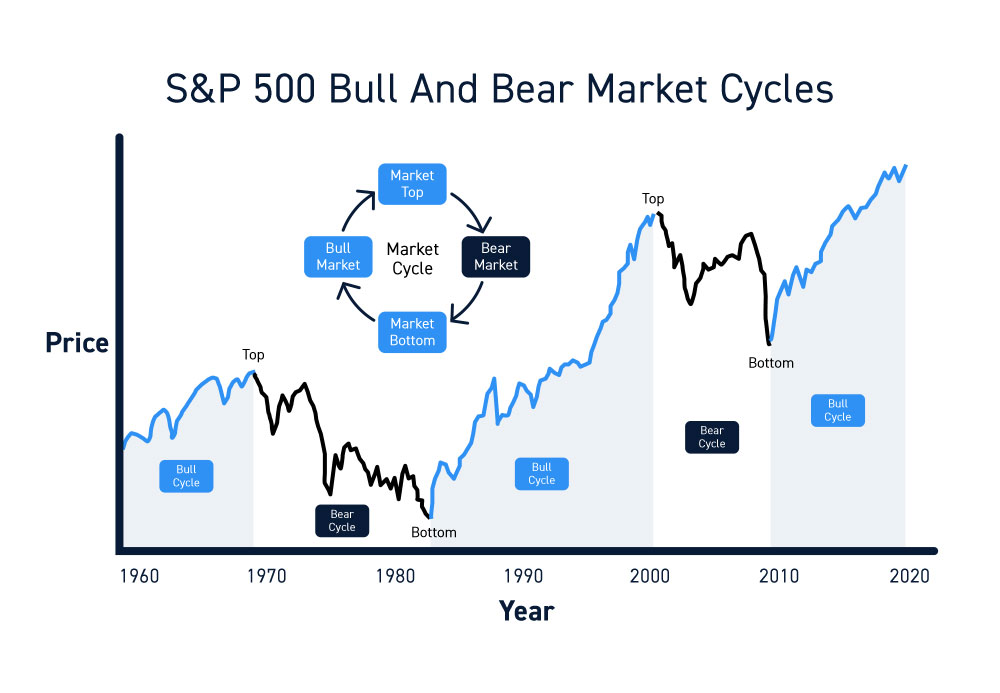
Despite its impressive historical performance, investing in the S&P 500 is not without risk, and there is no guarantee of returns. The stock market is inherently volatile, and while the S&P 500 has generally trended upwards over the long term, it experiences significant downturns and corrections. Investors should be prepared for periods where their S&P 500 investments may lose value, sometimes substantially, as seen during financial crises or major economic shocks. A long-term perspective and a clear understanding of one’s risk tolerance are essential.
The Impact of Individual Stock Performance
Due to its market-cap weighting, the S&P 500’s performance can be disproportionately influenced by a handful of very large companies. For instance, tech giants like Apple, Microsoft, Amazon, and Google (Alphabet) often command the largest weights in the index. Strong performance by these companies can significantly lift the entire index, even if many smaller component companies are struggling. Conversely, a sharp decline in one or two of these behemoths can drag down the S&P 500 even if the broader market is otherwise stable. This concentration risk within the index itself is a nuance that astute investors acknowledge.
Diversification Within the S&P 500 vs. Broader Diversification
While investing in the S&P 500 offers excellent diversification within the large-cap U.S. equities segment, it does not provide complete portfolio diversification. It primarily focuses on U.S. large-cap stocks. For true diversification, investors might consider adding:
- International Stocks: Exposure to developed and emerging markets outside the U.S.
- Small-Cap and Mid-Cap Stocks: Smaller U.S. companies that might behave differently than large caps.
- Bonds: Fixed-income securities to reduce overall portfolio volatility and provide income.
- Real Estate or Commodities: Alternative assets that can further diversify risk.
A well-rounded portfolio typically combines the S&P 500 with other asset classes to spread risk more broadly across different markets and investment types.
Comparing S&P 500 to Other Indices (Dow Jones, NASDAQ)
It’s common to hear the S&P 500 mentioned alongside other major indices like the Dow Jones Industrial Average (DJIA) and the NASDAQ Composite. While all track segments of the U.S. stock market, they differ significantly:
- Dow Jones Industrial Average (DJIA): Tracks 30 large, “blue-chip” U.S. companies. It’s price-weighted, meaning stocks with higher prices have a greater impact, irrespective of their market cap. It’s a narrower, less representative index than the S&P 500.
- NASDAQ Composite: Tracks virtually all stocks listed on the NASDAQ exchange, with a heavy weighting towards technology and growth companies. While broader than the Dow, it’s sectorally concentrated compared to the S&P 500.
The S&P 500’s blend of broad market representation, market-cap weighting, and rigorous selection criteria often makes it the preferred benchmark for economists and diversified investors seeking a comprehensive view of the large-cap U.S. stock market.
In conclusion, the S&P 500 is more than just a numerical indicator; it is a profound reflection of the American economic spirit, corporate innovation, and investor sentiment. As a robust benchmark for U.S. large-cap equities, it offers unparalleled insights into market health, facilitates diversified investment strategies, and serves as a cornerstone for long-term wealth accumulation. By understanding its construction, significance, and the various ways to invest in it, individuals can harness the power of this iconic index to navigate the complex world of finance with greater confidence and clarity. While it embodies the potential for significant growth, it also reminds investors of the inherent risks and the importance of a diversified, long-term approach to financial planning.
aViewFromTheCave is a participant in the Amazon Services LLC Associates Program, an affiliate advertising program designed to provide a means for sites to earn advertising fees by advertising and linking to Amazon.com. Amazon, the Amazon logo, AmazonSupply, and the AmazonSupply logo are trademarks of Amazon.com, Inc. or its affiliates. As an Amazon Associate we earn affiliate commissions from qualifying purchases.