
In the intricate world of modern finance, where money flows digitally across institutions at lightning speed, a seemingly simple nine-digit number holds immense power: the routing number. For customers of TD Bank, understanding what their routing number is, where to find it, and why it’s so crucial is not just a matter of convenience but a cornerstone of efficient financial management. This guide delves into the essential details of TD Bank routing numbers, demystifying their purpose and empowering you with the knowledge to navigate your financial transactions with confidence.
Often referred to as an ABA (American Bankers Association) routing transit number (RTN), this unique identifier serves as a digital address for your bank. It ensures that when you send or receive money electronically, the funds arrive at the correct financial institution. For TD Bank account holders, knowing your specific routing number is indispensable for a wide array of financial activities, from setting up direct deposits to initiating wire transfers.

Understanding Routing Numbers: The Foundation of Financial Transactions
At its core, a routing number is a nine-digit code that identifies the specific financial institution participating in a transaction. It acts like a postal code for banks, directing funds to the right place within the vast network of the U.S. financial system. Without it, the seamless flow of electronic funds transfers (EFTs) would be impossible.
The Purpose and Structure of an ABA Routing Number
The American Bankers Association established the routing number system in 1910 to process paper checks. While its origins lie in paper-based transactions, its role has evolved dramatically with the advent of digital banking. Today, routing numbers are critical for electronic transactions such, as ACH (Automated Clearing House) transfers and wire transfers.
Each of the nine digits in a routing number carries specific information. The first four digits identify the Federal Reserve routing symbol, indicating the Federal Reserve Bank region. The next four digits specify the ABA institution identifier, unique to the bank. The final digit is a check digit, used to validate the accuracy of the preceding eight digits through a mathematical algorithm. This structure ensures a high degree of precision and security in financial transactions.
Routing Numbers vs. Account Numbers: A Critical Distinction
It’s crucial not to confuse your bank’s routing number with your personal account number. While both are vital for transactions, they serve distinct purposes:
- Routing Number: Identifies your bank or financial institution. It is generally the same for all customers of a particular branch or region of a bank.
- Account Number: Identifies your specific account within that bank. This number is unique to you and your individual checking or savings account.
Think of it this way: the routing number gets your mail to the correct post office (your bank), and the account number directs it to your specific mailbox (your account) at that post office. Providing the wrong account number means your funds might go to someone else’s account, while a wrong routing number means they might go to an entirely different bank, or be rejected outright.
Finding Your TD Bank Routing Number: Multiple Avenues
TD Bank, like many large financial institutions, operates across various regions, and it’s important to note that a bank might have different routing numbers depending on the state or specific branch where the account was opened. This regional variation is common, particularly for banks that have grown through mergers and acquisitions, integrating different systems. Therefore, finding your specific TD Bank routing number is paramount.
1. On Your Checks
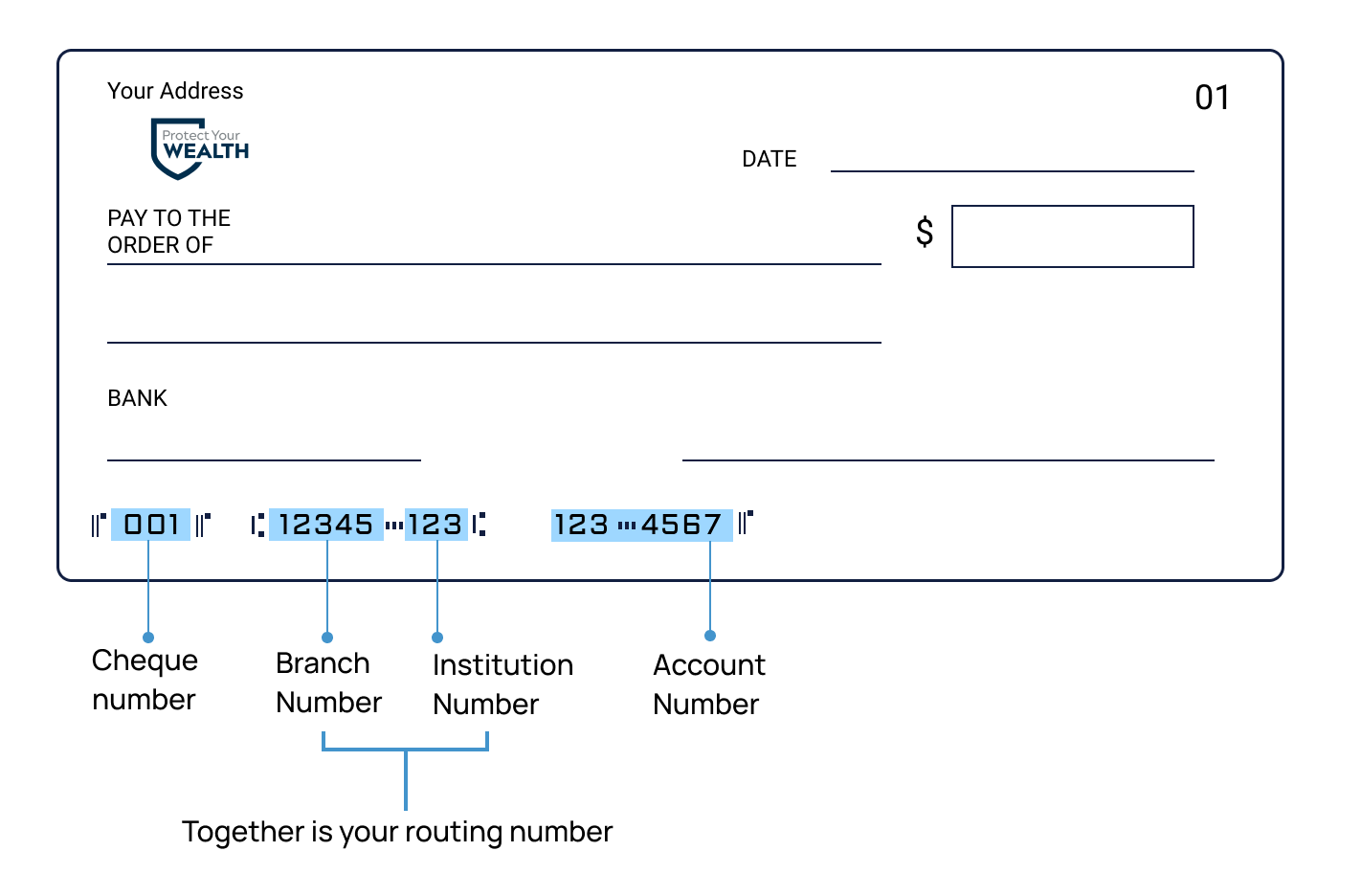
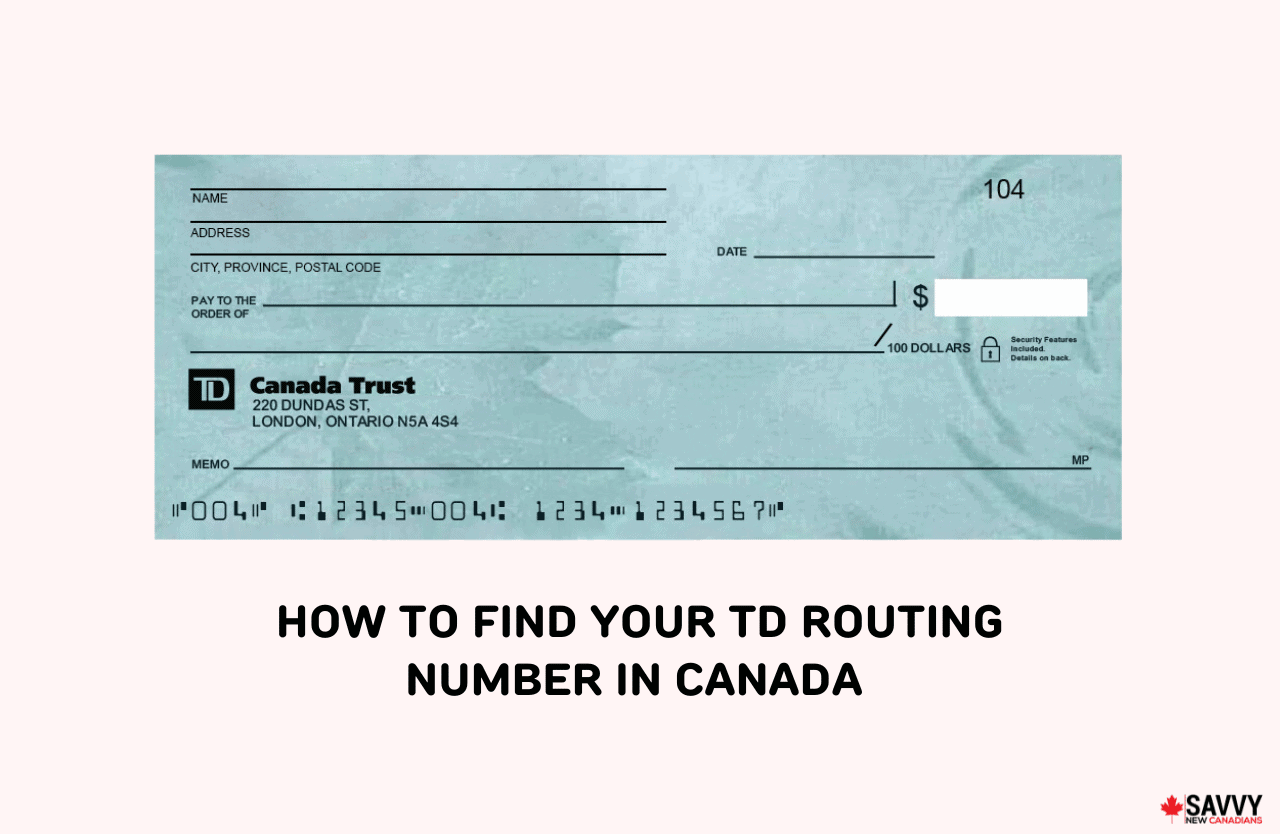
The most traditional and often easiest place to find your TD Bank routing number is on your personal checks. Look at the bottom of a check. You’ll typically see three sets of numbers printed in magnetic ink (MICR line). From left to right, these are usually:
- Routing Number (9 digits): The first set of numbers.
- Account Number (variable length): The second set of numbers.
- Check Number (3-4 digits): The third set of numbers.
Always verify that the routing number on your check matches the one provided by TD Bank through other official channels, especially if you have accounts in different states or branches.
2. Through Online Banking and the TD Bank Mobile App
For most modern banking customers, online platforms offer the quickest and most reliable way to access account information. TD Bank’s online banking portal and mobile app are excellent resources:
- Online Banking: Log in to your TD Bank online account. Navigate to your account details or profile section. Often, the routing number is displayed prominently alongside your account number. You might need to click on a specific account (e.g., checking or savings) to view its details.
- Mobile App: Open the TD Bank mobile app and log in. Similar to online banking, tap on the relevant account. The routing number is usually listed under “Account Details” or a similar section.
These digital methods are generally the most up-to-date and personalized ways to find the correct routing number for your specific account.
3. On Your Bank Statements
Whether you receive paper statements by mail or view e-statements online, your bank statement is another reliable source for your TD Bank routing number. It is typically printed near your account number and other essential account information. For e-statements, log into your online banking, access your statements, and then locate the routing number within the document.
4. Contacting TD Bank Customer Service
If you’re unable to find the routing number through the methods above or prefer to speak with a representative, TD Bank’s customer service can provide this information. You can:
- Call Customer Service: Dial TD Bank’s official customer service number. Be prepared to verify your identity to ensure the security of your account information.
- Visit a Branch: Head to your nearest TD Bank branch. A teller or customer service representative can assist you in finding the correct routing number for your account.
When contacting customer service, explicitly state the type of transaction (e.g., direct deposit, wire transfer) you’re performing, as this might sometimes influence the specific routing number required, especially for international transfers.
Why Your TD Bank Routing Number Matters: Key Use Cases
Your TD Bank routing number is not just a passive identifier; it’s an active participant in a multitude of financial transactions that form the backbone of modern money management. Its correct usage is paramount for ensuring your funds go where they need to go, securely and efficiently.
Direct Deposit Setup
One of the most common applications of your routing number is setting up direct deposit for your paycheck, government benefits (like Social Security), or tax refunds. When you start a new job or wish to receive regular payments directly into your TD Bank account, your employer or the paying agency will require both your TD Bank routing number and your specific account number. Providing accurate information ensures that your funds are automatically deposited without delay, enhancing convenience and security.
Automated Payments and Transfers
Many individuals and businesses rely on automated clearing house (ACH) transactions to manage recurring payments. This includes:
- Automatic Bill Payments: Paying utilities, loan installments (mortgage, car), credit card bills, or insurance premiums automatically from your TD Bank account.
- Recurring Transfers: Setting up automatic transfers between your own TD Bank accounts (e.g., from checking to savings) or to accounts at other financial institutions.
For all these automated processes, the correct routing number is essential to direct the payments to or from your TD Bank account accurately.
Initiating Wire Transfers
Wire transfers are used for sending larger sums of money quickly, often across different banks or even internationally. When sending a domestic wire transfer from your TD Bank account or receiving one into it, the sender will need your TD Bank routing number. For international wire transfers, you’ll often need a SWIFT/BIC (Society for Worldwide Interbank Financial Telecommunication / Bank Identifier Code) code in addition to, or sometimes instead of, a domestic routing number, depending on the specifics of the transaction. TD Bank’s SWIFT code is typically TDOMCATTTOR for its Canadian operations and various codes for its US operations. Always verify the specific code required for international transfers with TD Bank directly.
Tax Refunds and Other Government Payments
When filing your taxes, choosing direct deposit for your refund requires providing your TD Bank routing number and account number to the IRS or relevant tax authority. Similarly, for various government benefits, grants, or reimbursements, accurate routing information ensures timely and hassle-free electronic receipt of funds.
Ensuring Security and Accuracy with Your Routing Information
While routing numbers are designed for public identification of financial institutions, their connection to your personal account via your account number makes their accurate and secure handling crucial. Mistakes can lead to significant delays, fees, and even potential fraud.
The Ramifications of Incorrect Routing Numbers
Entering an incorrect routing number can have several undesirable consequences:
- Delayed Transactions: Funds may be held up for days or weeks as the banks attempt to correct the error or return the funds.
- Returned Payments/Deposits: Your payment might be returned to the sender, potentially incurring late fees or penalties from the recipient. Similarly, a direct deposit could be rejected, delaying access to your funds.
- Misdirected Funds (Rare but Possible): In some cases, if the incorrect routing number happens to belong to another valid bank, and the account number also matches an existing account there, funds could be misdirected. This is less common due to the unique combination of routing and account numbers, but highlights the importance of accuracy.
- Fees: Banks may charge fees for returned items or for initiating corrections to transactions.
Safeguarding Your Financial Information
While a routing number alone is not enough for someone to access your account, it is a piece of your financial puzzle. Always be vigilant about where and to whom you share your banking details:
- Legitimate Sources Only: Only provide your routing and account numbers to trusted entities like your employer, government agencies, or reputable billers.
- Secure Platforms: Use secure, encrypted websites or apps when entering banking information. Look for “https://” in the URL and a padlock icon.
- Beware of Phishing: Be wary of unsolicited emails, texts, or calls asking for your banking information. TD Bank will never ask for your full account details via unsecure communication channels.
- Regular Monitoring: Regularly check your bank statements and online banking activity to identify any unauthorized transactions promptly.
Beyond the Basics: Routing Numbers in the Digital Age
The role of routing numbers continues to evolve with advancements in financial technology and the increasing interconnectedness of the global economy. While the fundamental purpose remains the same, their application is expanding.
Routing Numbers and Digital Wallets
Many digital wallets and payment apps (e.g., PayPal, Venmo, Zelle) allow you to link your bank account directly using your routing and account numbers. This integration facilitates instant transfers between your digital wallet and your TD Bank account, blurring the lines between traditional banking and fintech services. When setting these up, ensure you’re using the correct TD Bank routing number for seamless transfers.
The Future of Bank Identifiers
While routing numbers are deeply embedded in the U.S. financial system, global trends suggest an evolving landscape for bank identifiers. Countries in Europe, for instance, extensively use IBANs (International Bank Account Numbers), which combine bank and account information into a single, standardized format. SWIFT codes continue to be the standard for international wire transfers. As financial systems become more integrated globally, there may be ongoing discussions about universal identifiers or enhanced interoperability between different systems, but for domestic U.S. transactions, the routing number remains supreme.
Conclusion
The TD Bank routing number is far more than just a sequence of digits; it is a critical component of your financial identity and a gateway to a multitude of essential banking services. From ensuring your paycheck lands promptly in your account to enabling seamless bill payments and secure money transfers, its importance cannot be overstated.
By understanding what a routing number is, where to find your specific TD Bank routing number (whether on checks, through online banking, or by contacting customer service), and why its accuracy and security are paramount, you empower yourself to manage your finances effectively. Always verify the correct routing number for your specific TD Bank account and transaction type to avoid delays, fees, and potential complications. In the sophisticated world of financial tools and services, knowing your numbers is truly knowing your money.
aViewFromTheCave is a participant in the Amazon Services LLC Associates Program, an affiliate advertising program designed to provide a means for sites to earn advertising fees by advertising and linking to Amazon.com. Amazon, the Amazon logo, AmazonSupply, and the AmazonSupply logo are trademarks of Amazon.com, Inc. or its affiliates. As an Amazon Associate we earn affiliate commissions from qualifying purchases.