
In the intricate world of personal finance, certain strings of numbers act as the silent architecture supporting every transaction we make. While most consumers are intimately familiar with their debit card digits or their primary account numbers, the bank routing number remains a slightly more mysterious, yet equally vital, component of the banking ecosystem. Often described as the “address” of a financial institution, a routing number ensures that money moving through the global financial network reaches the correct destination without delay or error.
Whether you are setting up a direct deposit for a new job, paying your monthly utility bills online, or sending a wire transfer to a family member, the routing number is the primary identifier that makes these movements possible. Understanding what this number is, how it functions, and where to find it is foundational to managing your personal and business finances effectively.
What is a Routing Number and Why Does It Exist?
A routing number, officially known as an ABA Routing Transit Number (RTN), is a nine-digit code used to identify a specific financial institution within the United States. This system was developed by the American Bankers Association (ABA) in 1910 to simplify the processing of paper checks. Before this standardization, the manual sorting of checks was a logistical nightmare, often leading to significant delays in the clearing process.
Today, the routing number serves as the backbone of the electronic banking era. It identifies the bank responsible for the funds in a transaction, allowing the Federal Reserve and other clearinghouses to direct payments with surgical precision.
The Anatomy of a Routing Number
A routing number is not a random sequence of digits; it is a structured code designed for machine readability and error detection. Each segment of the nine-digit string carries specific information:
-
The First Four Digits: These digits represent the Federal Reserve routing symbol. Specifically, the first two digits indicate which of the twelve Federal Reserve districts the bank is located in, while the third digit identifies the specific Federal Reserve check processing center assigned to that institution.
-
The Middle Four Digits: These numbers represent the specific financial institution’s unique identifier. Each bank, credit union, or savings and loan association is assigned its own unique four-digit code within the ABA system.
-
The Ninth Digit: This is known as the “checksum” or check digit. It is calculated using a complex mathematical formula involving the first eight digits. When a computer processes a routing number, it runs this calculation to verify that the number is valid. If the checksum does not match, the transaction is flagged as an error, preventing funds from being sent to a non-existent or incorrect location.
Different Numbers for Different Purposes
It is a common misconception that a single bank has only one routing number. In reality, large national banks often have dozens of routing numbers based on the geographic region where the account was opened or the specific type of transaction being performed. For instance, a bank may use one routing number for Automated Clearing House (ACH) transfers—such as direct deposits and automatic bill payments—and an entirely different routing number for domestic wire transfers. Using the wrong number for a specific type of transfer can result in rejected payments or significant delays.
How to Find Your Bank’s Routing Number
Locating your routing number is a straightforward process, but it requires knowing where to look among the various documents and digital portals provided by your bank. Because the routing number is public information for the bank (unlike your private account number), it is relatively accessible.
Locating the Number on a Paper Check
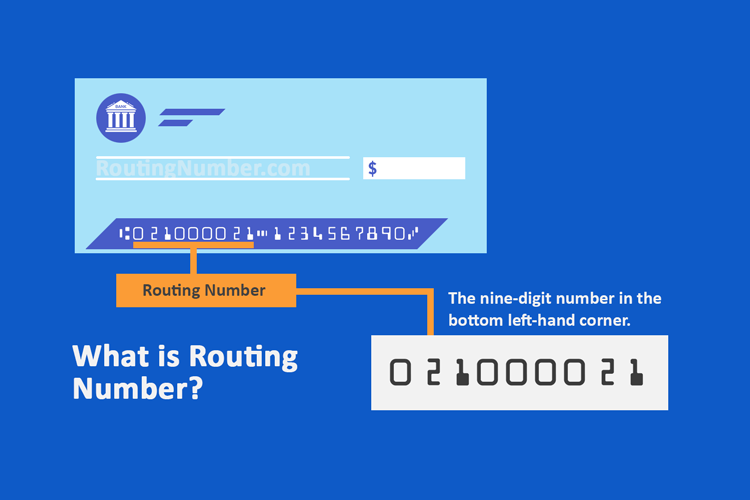
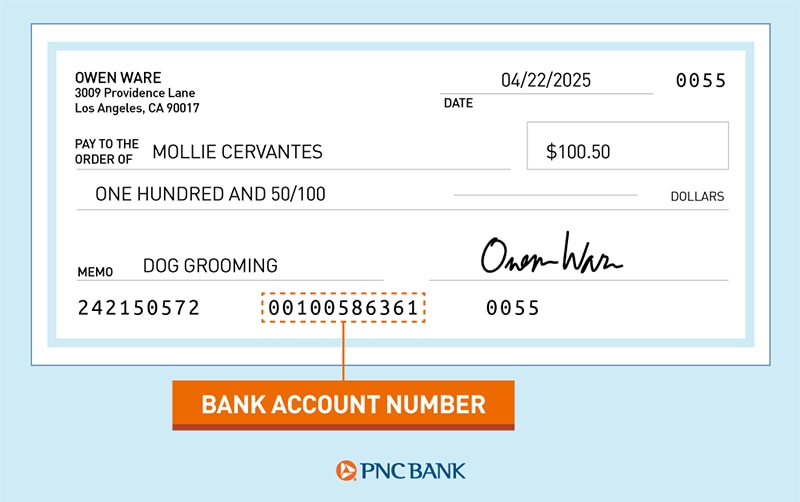
The most traditional way to find a routing number is by looking at a physical check. At the bottom of every check is a string of numbers printed in a specialized font known as MICR (Magnetic Ink Character Recognition). This line typically contains three distinct sets of numbers:
-
The Routing Number: This is the first set of nine digits located on the far left of the bottom line. It is always bracketed by a specific symbol that looks like a vertical bar and a colon.
-
The Account Number: Usually located in the middle, this identifies your specific personal or business account.
-
The Check Number: Found on the far right, this matches the number in the upper right-hand corner of the check.
Using Online Banking and Mobile Apps
As paper checks become less common, most consumers find their routing numbers through digital channels. Once logged into your bank’s online portal or mobile app, you can typically find the routing number under “Account Details,” “Direct Deposit Information,” or “Settings.” Many banks now provide a “copy” button next to the routing and account numbers to help users avoid transcription errors when pasting the information into external payment forms.
Verifying via the ABA and Bank Websites
If you do not have access to your checks or online banking, you can often find the routing number on the bank’s public website. Most institutions have a dedicated “Frequently Asked Questions” (FAQ) page or a “Contact Us” section that lists their routing numbers by state or transaction type. Additionally, the American Bankers Association maintains a searchable online directory of routing numbers, which serves as the official source of truth for these identifiers.

The Critical Role of Routing Numbers in Modern Finance
The routing number is more than just a label; it is the fundamental “on-ramp” for several key financial services that power the modern economy. Without these numbers, the speed and convenience we associate with digital banking would vanish.
Direct Deposits and Automated Clearing House (ACH)
The most frequent use of a routing number is for ACH transactions. This includes the direct deposit of your paycheck, tax refunds from the IRS, and the automated payment of recurring bills like mortgages or insurance premiums. In an ACH transaction, the routing number tells the ACH network exactly which bank to pull funds from or push funds to. Because these transactions are processed in batches, accuracy is paramount. An incorrect digit in a routing number can cause an entire batch of payments to fail, leading to late fees or missed payroll for employees.
Wire Transfers vs. ACH
While often confused, ACH transfers and wire transfers are distinct processes with different requirements. A wire transfer is an individual, real-time communication between two banks, often used for large sums such as a down payment on a home. Because wire transfers move through the Fedwire Funds Service, many banks require a specific “Wire Routing Number” that is separate from their standard ACH routing number. When initiating a wire, always confirm with the receiving institution which specific number should be used to ensure the immediate availability of funds.
Electronic Bill Pay and Peer-to-Peer Apps
When you use a bank’s “Bill Pay” feature, the bank uses the routing number of the utility company or service provider’s bank to send the funds. Similarly, when you link your bank account to peer-to-peer (P2P) payment apps like Venmo, PayPal, or Cash App, you are required to provide your routing and account numbers. This creates a secure bridge between the app’s interface and the regulated banking system.
Security and Management of Your Banking Information
In an era of increasing digital fraud and identity theft, many consumers worry about the security of their routing numbers. It is important to distinguish between information that is “public” and information that is “private.”
Is Sharing Your Routing Number Safe?
Generally speaking, a routing number is not sensitive information on its own. It is public knowledge which bank uses which routing number. However, the combination of your routing number and your specific account number is highly sensitive. This combination is essentially the “key” to your financial vault. With these two pieces of information, an unauthorized party could theoretically initiate an ACH withdrawal from your account.
To protect yourself, you should only provide your routing and account numbers to trusted entities, such as your employer’s HR department, government agencies, or established service providers. Always ensure that the website where you enter this information is secure (look for the “https” and the padlock icon in the browser address bar).
What Happens During a Bank Merger?
The banking industry is characterized by frequent mergers and acquisitions. When one bank buys another, the routing numbers often change to consolidate the two institutions under a single identifier. During these transitions, banks typically allow a “grace period” of several months or even years where the old routing numbers remain active. This gives customers time to update their direct deposit and automatic bill pay settings. If your bank merges, pay close attention to correspondence regarding your “new” routing number to avoid any disruption in service.
Correcting Errors
If you accidentally provide the wrong routing number for a transaction, the outcome depends on the validity of the number. If the number is mathematically invalid (fails the checksum), the transaction will likely be rejected immediately. If the routing number is valid but belongs to the wrong bank, the funds may be sent to that institution, where they will eventually be returned because they cannot be matched to a valid account number. However, this “bounce back” process can take several business days, during which your funds may be in limbo. Always double-check every digit before confirming a transfer.
The Future of Routing in a Real-Time World
As the financial landscape evolves, the way we route money is also changing. While the ABA routing number remains the standard for domestic transactions in the U.S., the rise of real-time payment (RTP) networks and international fintech solutions is introducing new identifiers.
For international transactions, the world uses the SWIFT/BIC (Bank Identifier Code) or the IBAN (International Bank Account Number). These codes serve a similar purpose to the domestic routing number but are designed to navigate the complexities of cross-border regulations and currency exchange.
Domestically, the Federal Reserve’s “FedNow” service, launched in 2023, represents a shift toward instant payments. While FedNow still utilizes the existing routing number infrastructure, it operates on a 24/7/365 basis, removing the delays traditionally associated with the ACH network. As these technologies mature, the routing number will continue to serve its primary purpose: ensuring that in a world of trillions of digital signals, your money always finds its way home.
By mastering the basics of the routing number—what it is, how to find it, and how it differs from other identifiers—you empower yourself to navigate the financial world with confidence and precision. It is a small piece of data with a massive responsibility, acting as the glue that holds the modern financial system together.
aViewFromTheCave is a participant in the Amazon Services LLC Associates Program, an affiliate advertising program designed to provide a means for sites to earn advertising fees by advertising and linking to Amazon.com. Amazon, the Amazon logo, AmazonSupply, and the AmazonSupply logo are trademarks of Amazon.com, Inc. or its affiliates. As an Amazon Associate we earn affiliate commissions from qualifying purchases.