
When we hear the word “surfactant,” the mind often drifts toward household cleaners, detergents, or biological processes in the human lungs. However, in the realm of high-end technology, surfactants—short for “surface-active agents”—play a role so critical that much of our modern digital infrastructure would cease to function without them. From the cleanrooms of semiconductor fabrication to the cooling systems of massive AI data centers, surfactants act as the invisible chemical “software” that manages physical interactions at the molecular level.
In the tech industry, a surfactant is more than just a chemical additive; it is a precision tool used to manipulate surface tension, facilitate wetting, and stabilize complex nanomaterials. As we push toward smaller transistors, faster processors, and more efficient energy systems, understanding the role of surfactants is essential for any deep dive into the future of hardware and materials science.

1. Surfactants in Semiconductor Fabrication and Photolithography
The heart of the tech world is the silicon chip. As the industry moves toward 3nm and 2nm process nodes, the physical challenges of manufacturing these microscopic structures become immense. This is where surfactants become indispensable.
Enhancing Wetting and Coverage in Nanoscale Etching
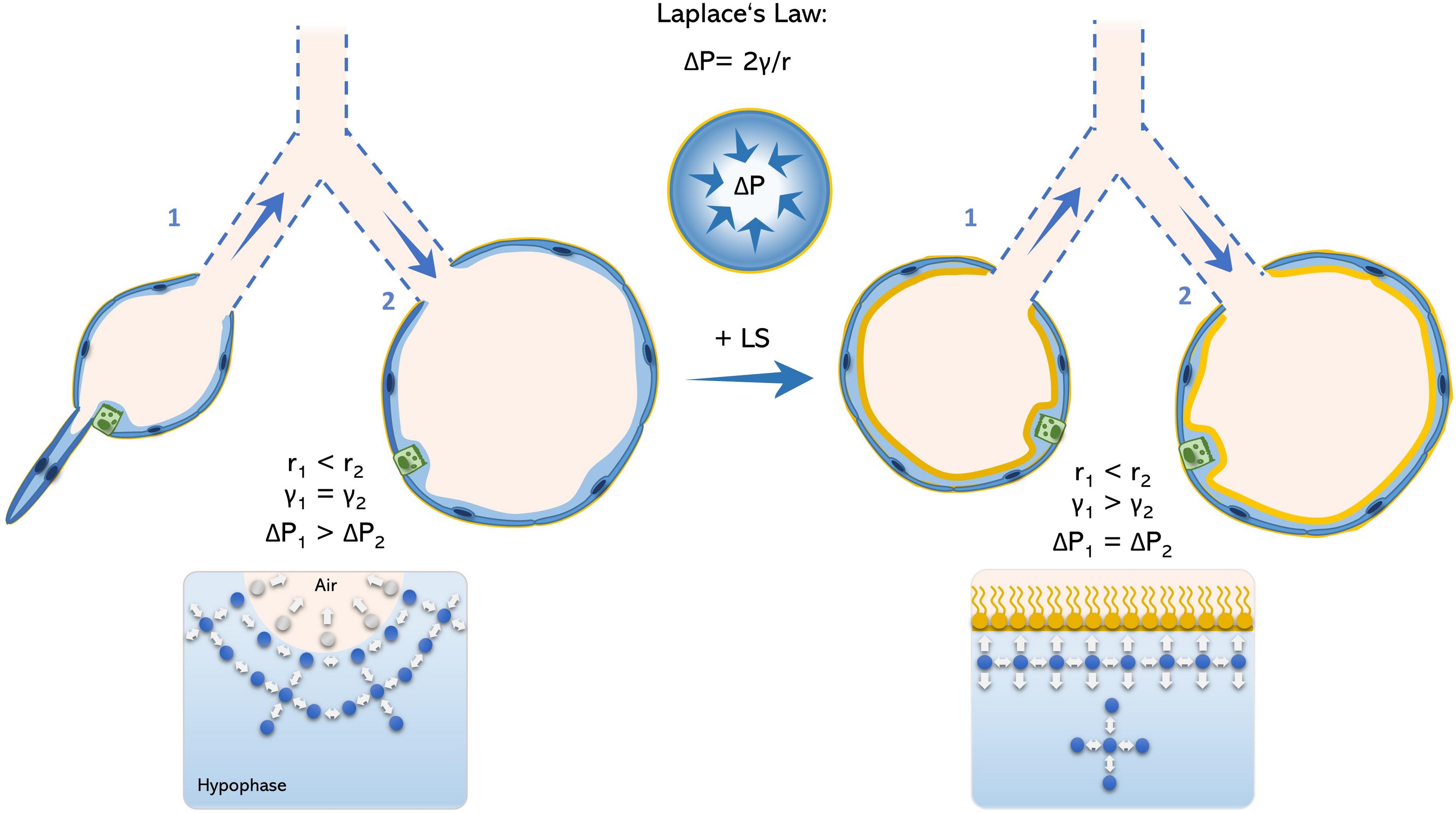
In semiconductor manufacturing, silicon wafers undergo a process called photolithography, where light is used to etch intricate patterns. For these patterns to be precise, various chemical developers and rinses must be applied to the wafer. At the nanoscale, water and other solvents often have high surface tension, causing them to bead up rather than spread evenly. Surfactants are added to these chemical solutions to lower the surface tension, ensuring that the liquids “wet” the surface perfectly. Without this, air bubbles or dry spots could lead to “pitting” or incomplete etching, effectively ruining a multi-thousand-dollar wafer.
Preventing Pattern Collapse in Next-Gen Chips
As transistors become taller and thinner (high aspect ratio), they become incredibly fragile. During the drying phase of the lithography process, the surface tension of a standard rinsing agent can actually pull these tiny structures toward each other, causing them to lean or snap—a phenomenon known as “pattern collapse.” Tech-grade surfactants are engineered to reduce these capillary forces during the drying process, allowing the structures to remain upright and intact. This role is a primary enabler of the Moore’s Law progression we see in modern CPUs and GPUs.
Defect Reduction and Contamination Control
In an environment where a single speck of dust is a catastrophe, surfactants are used in “megasonic cleaning” processes. They help encapsulate microscopic particles and prevent them from re-attaching to the wafer surface. By modifying the zeta potential—the electrical charge at the interface between the particle and the liquid—surfactants ensure that contaminants are washed away rather than stuck to the delicate circuitry.
2. The Role of Surfactants in Data Center Thermal Management
As artificial intelligence and high-performance computing (HPC) demand more power, the heat generated by servers has exceeded the capabilities of traditional air cooling. The tech industry is rapidly pivoting toward liquid cooling and immersion cooling, where surfactants play a vital functional role.
Optimizing Two-Phase Immersion Cooling
In two-phase immersion cooling, server components are submerged in a dielectric fluid that boils at a low temperature, carrying heat away as it turns to vapor. Surfactants are often used to treat the surfaces of the heat sinks or are added to the fluids themselves to manage bubble nucleation. By controlling how and where bubbles form, surfactants increase the “critical heat flux,” allowing the system to transfer more heat more quickly. This prevents “hot spots” that could lead to hardware failure in high-density AI clusters.
Enhancing Thermal Interface Materials (TIMs)
Between a processor and its cooling block lies the Thermal Interface Material (TIM). Modern TIMs often consist of a polymer matrix filled with thermally conductive particles like liquid metal or carbon nanotubes. Surfactants are used to disperse these conductive particles evenly within the matrix. If the particles clump together, the material’s thermal conductivity drops. Surfactants ensure a homogenous mixture, resulting in a tech product that can sustain higher “boost” clock speeds without thermal throttling.
Corrosion Inhibition in Liquid Loops
In closed-loop liquid cooling systems used in high-end workstations and gaming PCs, surfactants serve as protective agents. They form a molecular film over metal surfaces (like copper or aluminum), preventing oxidation and galvanic corrosion. This extends the lifespan of the hardware and ensures that the cooling efficiency doesn’t degrade over years of continuous operation.
3. Surfactants in Additive Manufacturing and 3D Printing Tech

The evolution of 3D printing from a prototyping tool to a legitimate manufacturing tech depends heavily on the fluid dynamics of resins and inks. Surfactants are the secret ingredient that makes high-resolution additive manufacturing possible.
Inkjet Stability in Multi-Jet Fusion
Technologies like HP’s Multi-Jet Fusion or traditional 2D inkjet printing rely on the precise ejection of droplets. Surfactants regulate the “viscoelastic” properties of the ink. They ensure that the droplet breaks away from the nozzle cleanly without forming “satellite droplets”—tiny rogue splashes that blur the edges of a print or cause electrical shorts in printed electronics. By controlling the surface tension, surfactants allow for a higher frequency of droplet ejection, directly increasing the speed of the printer.
Resin Flow and Layer Adhesion in SLA/DLP
In Stereolithography (SLA) printing, a laser or light source cures a liquid resin into a solid. For a print to be successful, the resin must flow back over the build plate quickly and smoothly after each layer is cured. Surfactants act as “leveling agents,” ensuring the resin forms a perfectly flat, thin film. Furthermore, they can be used to improve the interlaminar bonding, making the final 3D-printed tech component stronger and more durable.
Precision in Printed Electronics
One of the most exciting frontiers in tech is “printed electronics,” where circuit boards are printed onto flexible substrates like plastic or fabric. The “inks” used here are often loaded with silver or copper nanoparticles. Surfactants are critical for keeping these metal particles in suspension. Without the right surfactant balance, the metal would settle out of the ink, clogging the printer heads and resulting in a non-conductive circuit.
4. Nanotechnology and the Stabilization of Advanced Materials
Nanotechnology is the backbone of the next generation of gadgets, from OLED screens with better color accuracy to batteries with higher energy density. At the nanoscale, materials behave differently, and surfactants are the primary tools used to manage this behavior.
Dispersing Carbon Nanotubes and Graphene
Carbon nanotubes (CNTs) and graphene are the “wonder materials” of the tech world, prized for their strength and conductivity. However, they are naturally hydrophobic and tend to clump together into “bundles” due to van der Waals forces. To use them in tech applications, scientists use surfactants to “wrap” the nanotubes. This makes them soluble in water or organic solvents, allowing them to be spun into fibers, coated onto sensors, or integrated into composite materials for aerospace and mobile device chassis.
Quantum Dot Technology
Modern high-end displays (QLED) use Quantum Dots—nanoscale semiconductor particles that emit specific colors of light. During the synthesis of these dots, surfactants act as “ligands.” They attach to the surface of the quantum dot to control its growth size. Because the color of the light depends on the size of the dot, the precision provided by these surfactants is what allows a TV to produce billions of distinct colors.
Enhancing Battery Tech and Energy Storage
In the quest for better EV batteries and longer-lasting laptop cells, surfactants are used in the slurry that coats the battery electrodes. They help the active materials (like lithium or cobalt) adhere more uniformly to the current collector. This leads to a more stable internal structure, reducing the internal resistance of the battery and allowing for faster charging cycles and a longer overall lifespan.
5. The Future: “Smart” Surfactants and Green Tech
As the tech industry faces increasing pressure to become more sustainable, the role of surfactants is shifting toward green chemistry and “smart” responsive systems.
Biodegradable Surfactants in E-Waste Management
Traditional industrial surfactants can be persistent in the environment. The tech sector is now investing in bio-based surfactants derived from fermentation or agricultural waste. These are being used in the “urban mining” of e-waste, helping to leach precious metals like gold and copper from old circuit boards in a way that is less toxic than traditional acid baths.
Stimuli-Responsive Systems
The next wave of tech will likely feature “smart” surfactants that change their properties in response to external stimuli like pH, temperature, or light. In advanced microfluidic chips (lab-on-a-chip tech), these surfactants could be used to move microscopic droplets of fluid around a circuit using nothing but light. This opens the door to portable medical diagnostic tools and advanced chemical sensors integrated directly into wearable tech.
Reducing the Carbon Footprint of Tech Manufacturing
By lowering the surface tension of liquids, surfactants allow industrial processes to occur at lower temperatures and pressures. In the massive manufacturing plants of East Asia and North America, this translates to significant energy savings. As tech giants like Apple, Google, and Intel strive for carbon neutrality, the optimization of chemical processes through advanced surfactant technology is a small but vital piece of the puzzle.
In conclusion, while the average consumer may never see a surfactant, its role in the tech ecosystem is foundational. Whether it is ensuring the perfection of a 2nm transistor, keeping a massive AI server from melting, or enabling the vibrant colors of a smartphone screen, surfactants are the silent enablers of the digital age. As we continue to push the boundaries of what is physically possible in hardware and materials science, these surface-active agents will remain at the forefront of technological innovation.
aViewFromTheCave is a participant in the Amazon Services LLC Associates Program, an affiliate advertising program designed to provide a means for sites to earn advertising fees by advertising and linking to Amazon.com. Amazon, the Amazon logo, AmazonSupply, and the AmazonSupply logo are trademarks of Amazon.com, Inc. or its affiliates. As an Amazon Associate we earn affiliate commissions from qualifying purchases.