
In the complex ecosystem of global finance, the debate over the “proper” size and scope of government is eternal. However, from the perspective of money, investment, and business stability, the government is far more than a mere regulator; it is the fundamental architect of the marketplace. Without the framework provided by a central authority, the concepts of personal finance, corporate growth, and long-term investing would lack the stability required to flourish.
To understand the role of a government through the lens of money is to understand the balance between the “invisible hand” of the market and the “visible hand” of policy. From managing the value of the currency in your pocket to creating the legal structures that allow side hustles and multinational corporations to exist, the government’s economic role is multifaceted. This article explores the essential functions of a government in maintaining a healthy financial environment.
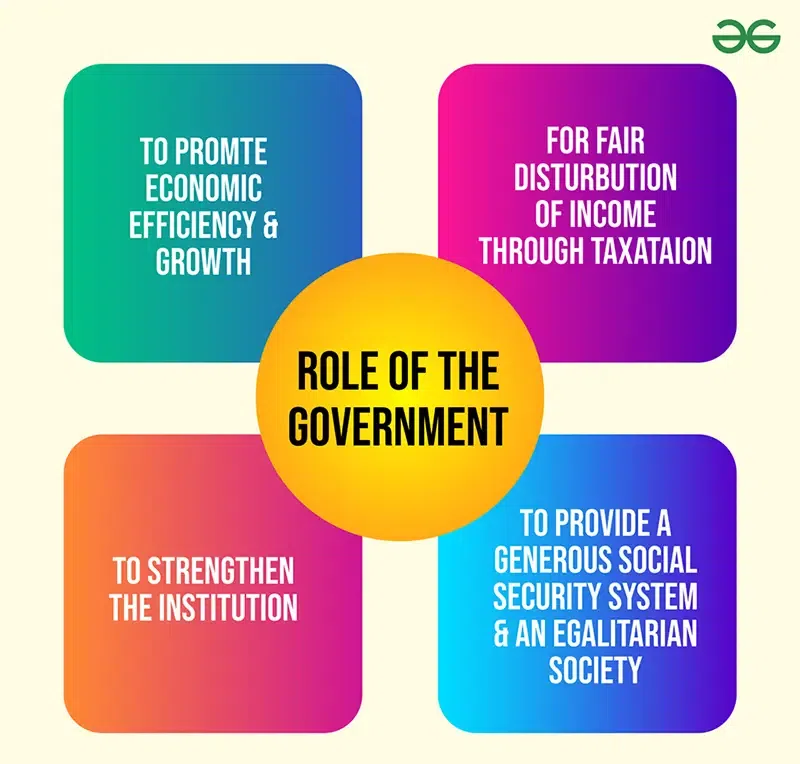
1. Macroeconomic Stability and the Management of Fiscal Policy
The most visible role of a government in the realm of money is its responsibility for macroeconomic stability. Investors and business owners crave predictability. When the economy is volatile, with runaway inflation or deep recessions, capital flees, and growth stalls. The government acts as the primary steward of economic health through two main levers: fiscal policy and its relationship with monetary authorities.
The Power of Fiscal Policy and Taxation
Fiscal policy refers to the government’s use of spending and taxation to influence the economy. By adjusting tax rates, the government can stimulate consumer spending or cool down an overheated market. For the individual, this dictates how much of their hard-earned income remains available for personal finance goals and private investment.
Taxation is not merely a tool for revenue; it is a tool for social and economic engineering. Through tax credits for research and development or deductions for retirement savings (like the 401(k) or IRA systems), the government incentivizes specific financial behaviors that lead to long-term national wealth. Conversely, “sin taxes” or carbon taxes are used to discourage activities that create negative externalities, ensuring that the true cost of business is reflected in the market.
Managing Inflation and the National Debt
While central banks often operate with a degree of independence to manage interest rates, they do so under a mandate granted by the government. The government’s role is to ensure that the currency remains a reliable store of value. Hyperinflation destroys personal savings and renders long-term business planning impossible. By managing the national debt and setting responsible budgets, the government ensures that the nation remains creditworthy on the global stage. This stability keeps interest rates manageable for everyone, from the first-time homebuyer to the entrepreneur seeking a small business loan.
2. Market Regulation and the Protection of Financial Integrity
A free market does not mean a lawless market. For money to flow efficiently, there must be a high level of trust between participants. The government serves as the referee of the economic game, ensuring that competition is fair and that the vulnerable are protected from predatory practices.
Preventing Monopolies and Ensuring Fair Competition
In a purely laissez-faire environment, successful companies often seek to eliminate their competitors to gain a monopoly. Monopolies are generally detrimental to the “Money” ecosystem because they lead to higher prices for consumers and less innovation. The government’s role in antitrust regulation is to ensure that the barriers to entry remain low enough for new businesses and side hustles to emerge. By fostering competition, the government ensures that capital is allocated to the most efficient and innovative players, rather than just the most established ones.
Consumer Protection and Financial Oversight
The role of government in financial oversight became painfully clear during the 2008 financial crisis. Agencies like the Securities and Exchange Commission (SEC) or the Consumer Financial Protection Bureau (CFPB) exist to ensure transparency. When you invest in the stock market, you do so with the expectation that the financial statements provided by corporations are accurate. The government enforces these reporting standards, reducing “information asymmetry” and allowing the average investor to participate in wealth creation with confidence. Without these protections, the “Online Income” and “Investing” niches would be rife with fraud, discouraging the public from putting their capital to work.
3. The Provision of Public Goods and Economic Infrastructure
There are certain services that the private sector is often unable or unwilling to provide at scale because they are not immediately profitable, yet they are essential for the movement of money. These are known as public goods. The government’s role in providing this “soft” and “hard” infrastructure is what allows the private sector to operate with high efficiency.

Investing in Human Capital and Social Safety Nets
A nation’s greatest economic asset is its people. By funding education and public health, the government is essentially investing in “human capital.” A well-educated workforce is more productive, earns higher wages, and contributes more to the tax base.
Furthermore, social safety nets—such as unemployment insurance and social security—play a vital role in business finance. These programs act as “automatic stabilizers.” During an economic downturn, they provide citizens with a baseline of purchasing power, preventing a total collapse in consumer demand. From a personal finance perspective, these safety nets reduce the “tail risk” for individuals, allowing them to take the calculated risks necessary to start businesses or pivot to new career paths without the fear of absolute destitution.
Funding Physical and Digital Infrastructure
Modern commerce relies on the movement of goods, people, and data. When a government builds a highway system, a port, or high-speed internet infrastructure, it is lowering the “transaction costs” for every business in the country. For the modern entrepreneur operating in the “Online Income” or “Side Hustle” space, government-funded digital infrastructure is the very ground they stand on. These investments create a multiplier effect: every dollar spent on infrastructure can lead to several dollars of private-sector economic growth, as it opens up new markets and increases the speed of trade.
4. Wealth Redistribution and the Mitigation of Inequality
While the market is excellent at producing wealth, it is not always effective at distributing it in a way that maintains social cohesion. Excessive wealth inequality can lead to political instability, which is the ultimate enemy of the investor. Therefore, a key role of the government is to manage the distribution of resources to ensure a sustainable economic environment.
Balancing Equity and Incentive
The challenge for any government is to find the “Goldilocks zone” of redistribution. If taxes are too high, they stifle the incentive for business finance and personal investment. If they are too low, the gap between the wealthy and the poor can become so wide that social mobility ceases. Through progressive taxation and targeted social programs, the government aims to provide a “floor” for its citizens while maintaining a “ladder” that allows for upward mobility. This ensures that the economy benefits from the talents of all its citizens, not just those born into wealth.
Addressing Market Failures and Externalities
Sometimes, the market gets the “price” of something wrong. Pollution is a classic example. A factory might make a high profit by dumping waste into a river, but the cost is borne by the public. The government intervenes through regulation or “Pigouvian taxes” to ensure that companies internalize these costs. By doing so, the government protects the long-term value of public assets (like clean water and air), which are essential for a sustainable economy and the long-term health of the “Money” ecosystem.
5. Global Economic Strategy and International Trade
In an interconnected world, no government operates in a vacuum. The role of the state extends beyond its borders to negotiate the terms of international trade and maintain the country’s standing in the global financial system.
Navigating Trade Agreements and Currency Stability
The government negotiates trade deals that open up foreign markets for domestic businesses. These agreements protect intellectual property and lower tariffs, making it easier for companies to scale globally. Additionally, the government works to maintain a stable exchange rate. For those involved in international investing or cross-border e-commerce, currency stability is paramount. Sudden devaluations can wipe out profit margins overnight; government-led diplomacy and central bank cooperation work to mitigate these risks.
Attracting Foreign Direct Investment (FDI)
A proactive government acts as a brand ambassador for its economy, seeking to attract foreign capital. By maintaining a transparent legal system, a stable political environment, and a skilled workforce, the government makes the country an attractive destination for Foreign Direct Investment. This influx of capital creates jobs, spurs technological transfer, and boosts the overall financial health of the nation, providing more opportunities for local businesses and individual investors.

Conclusion
The role of a government in the context of money is to provide the foundation upon which the edifice of private wealth is built. It is the provider of the currency, the enforcer of the contracts, the builder of the infrastructure, and the protector of the market’s integrity. While the debate over the specific degree of intervention will always continue, the necessity of these core functions is indisputable.
For the individual focused on personal finance or the entrepreneur building a business, understanding the government’s role is essential. Policy shifts in taxation, regulation, and infrastructure spending are not just “political” issues—they are the primary drivers of financial opportunity and risk. By creating a stable, fair, and forward-looking environment, the government enables individuals to save, invest, and grow their wealth with confidence, ensuring that the wheels of the economy continue to turn for the benefit of all.
aViewFromTheCave is a participant in the Amazon Services LLC Associates Program, an affiliate advertising program designed to provide a means for sites to earn advertising fees by advertising and linking to Amazon.com. Amazon, the Amazon logo, AmazonSupply, and the AmazonSupply logo are trademarks of Amazon.com, Inc. or its affiliates. As an Amazon Associate we earn affiliate commissions from qualifying purchases.