
The reserve requirement is a fundamental concept in monetary policy, wielded by central banks to influence the lending capacity and money supply within an economy. It dictates the minimum amount of reserves that commercial banks must hold, either in their vaults or at the central bank, against their deposit liabilities. While seemingly a technical detail, its implications ripple through the financial system, impacting everything from interest rates to economic growth. Understanding the reserve requirement is crucial for anyone seeking a deeper comprehension of how money circulates and how monetary authorities manage economic stability.
The Mechanics of Reserve Requirements
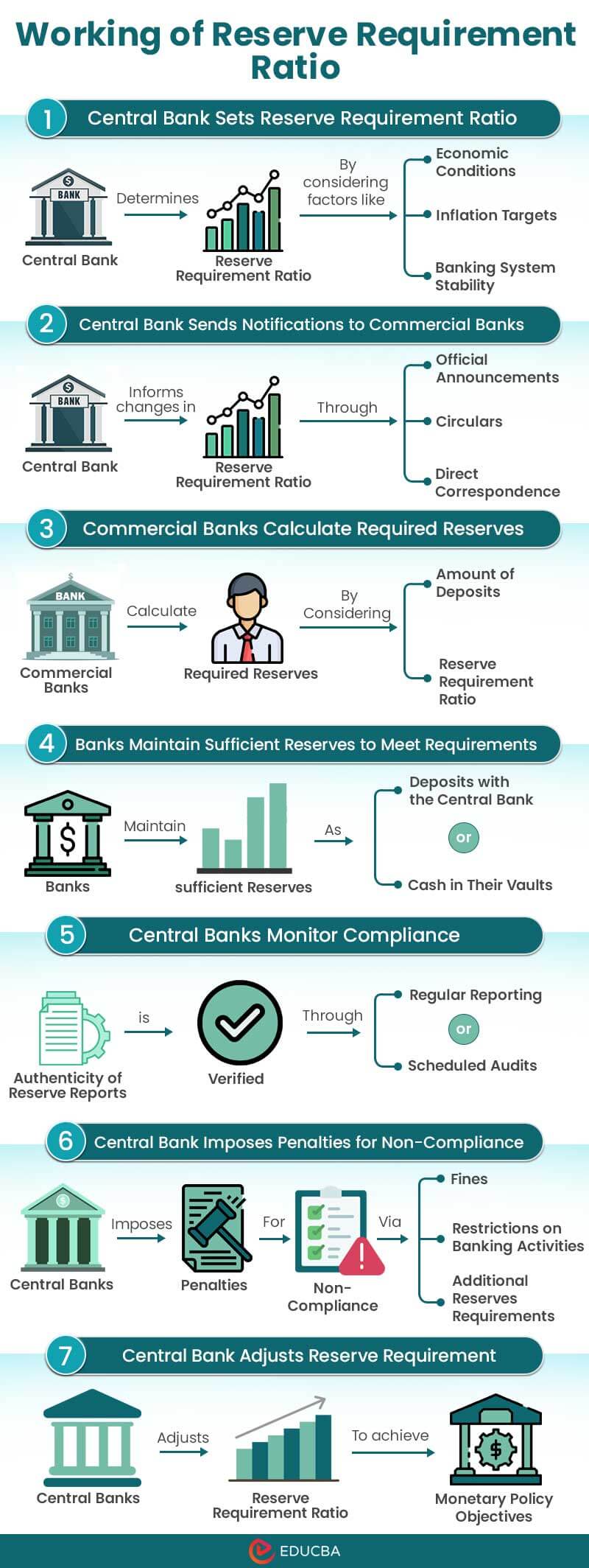
At its core, the reserve requirement is a regulatory mechanism designed to ensure that banks maintain a certain level of liquidity. This liquidity serves multiple purposes, primarily to meet the daily withdrawal needs of depositors and to provide a buffer against unexpected financial shocks. The exact percentage of the reserve requirement is determined by the central bank, often varying across different types of deposits and even for different financial institutions.

Defining Reserves
Reserves are not simply the cash a bank holds in its till. They encompass a broader definition, typically including:
- Vault Cash: This refers to the physical currency held by the bank within its premises.
- Deposits at the Central Bank: Commercial banks are required to maintain accounts with their nation’s central bank. Funds held in these accounts are considered reserves.
These reserves are a fraction of the bank’s total deposit liabilities – the money deposited by individuals and businesses. For instance, if a bank has $1 billion in deposits and the reserve requirement is 10%, it must hold at least $100 million in reserves.
Calculating the Reserve Requirement
The calculation is generally straightforward:
Reserve Requirement = Reserve Ratio × Deposit Liabilities
The reserve ratio is the percentage set by the central bank. Deposit liabilities are the sum of all deposits a bank has taken from its customers. This calculation is performed regularly, and banks must demonstrate compliance to the central bank.
Types of Deposits and Requirements
It’s important to note that reserve requirements can be tiered. Central banks may impose different ratios on different types of deposits. For example, demand deposits (checking accounts) might have a higher reserve requirement than savings accounts or time deposits (certificates of deposit) because they are more liquid and prone to immediate withdrawal. The rationale behind this differentiation is to ensure that banks have adequate funds readily available for immediate customer needs.
The Purpose and Impact of Reserve Requirements
The reserve requirement is not merely an administrative burden; it’s a powerful tool used by central banks to achieve macroeconomic objectives. Its primary purposes revolve around managing liquidity, influencing credit creation, and acting as a lever for monetary policy.
Ensuring Bank Liquidity and Solvency
One of the most fundamental objectives of the reserve requirement is to ensure that banks have sufficient liquid assets to meet their short-term obligations. When depositors want to withdraw their funds, banks must be able to provide them. By mandating a minimum level of reserves, central banks reduce the risk of bank runs – situations where a large number of depositors withdraw their money simultaneously, potentially leading to a bank’s collapse. This inherent stability contributes to public confidence in the banking system.
Controlling the Money Supply
The reserve requirement plays a critical role in controlling the money supply through the money multiplier effect. When a bank receives a deposit, it can lend out a portion of it, retaining only the required reserves. The loaned-out amount becomes a deposit in another bank, which in turn can lend out a portion of that. This process of lending and redepositing creates new money in the economy.
The money multiplier is calculated as:
Money Multiplier = 1 / Reserve Ratio
If the reserve ratio is 10% (0.1), the money multiplier is 10. This means that an initial deposit of $1 could theoretically lead to a total increase of $10 in the money supply. Conversely, increasing the reserve requirement reduces the money multiplier and constricts the money supply, while decreasing it expands the money multiplier and the money supply. Central banks can thus influence the amount of credit available in the economy by adjusting the reserve requirement.
Influencing Interest Rates
By controlling the amount of lendable funds available to banks, the reserve requirement indirectly influences interest rates. When the reserve requirement is high, banks have less money to lend, which can lead to higher borrowing costs (interest rates) as demand for loans outstrips supply. Conversely, a lower reserve requirement increases the pool of lendable funds, potentially driving down interest rates. This mechanism is a key component of how central banks steer the economy towards their inflation and employment targets.
Historical Evolution and Modern Applications
The concept of reserve requirements has a long history, evolving alongside the development of banking and monetary systems. Its implementation and the specific ratios have varied significantly over time and across different jurisdictions.
Early Banking Practices
In the nascent stages of banking, reserve requirements were often more informal or driven by the practical needs of banks to hold enough specie (gold and silver coins) to meet customer demands. As formal banking systems emerged, central banks began to formalize these requirements as a means of supervision and control.
The Role of the Federal Reserve
In the United States, the Federal Reserve has historically used reserve requirements as a monetary policy tool. However, its prominence has shifted over time. In the past, changes in reserve requirements were a more frequent and significant lever for monetary policy. For example, during periods of high inflation, the Fed might have increased reserve requirements to curb lending and slow down the economy.
Shifts in Modern Monetary Policy
In recent decades, many central banks, including the Federal Reserve, have moved away from actively using reserve requirements as a primary tool for day-to-day monetary policy management. Other tools, such as open market operations (buying and selling government securities) and the setting of benchmark interest rates (like the federal funds rate), have become more dominant. These alternative tools offer greater flexibility and precision in influencing credit conditions.
In fact, in March 2020, the Federal Reserve reduced reserve requirement ratios to zero percent. This was a significant departure, reflecting a recognition that other monetary policy tools were more effective in managing the economy and that maintaining explicit reserve requirements was no longer necessary to ensure bank liquidity, especially in an environment of abundant reserves. Banks now hold reserves primarily for operational needs and to meet regulatory capital requirements, rather than as a direct consequence of a mandated reserve ratio.
International Perspectives
While the trend towards de-emphasizing explicit reserve requirements for monetary policy is widespread, some countries still utilize them, albeit often with modifications. The specific ratios and how they are applied can vary considerably, reflecting different economic structures and policy priorities. Some countries might use reserve requirements to manage capital flows or to promote financial stability in ways that differ from traditional monetary policy objectives.
Challenges and Criticisms of Reserve Requirements
Despite its historical significance, the reserve requirement has faced several challenges and criticisms regarding its effectiveness, efficiency, and potential unintended consequences.
Inefficiency and Distortions
One of the main criticisms is that reserve requirements can be an inefficient way to manage the money supply. Holding non-interest-bearing reserves means that banks cannot lend out those funds, which represents an opportunity cost. This can reduce a bank’s profitability and potentially lead to less competitive lending practices. It can also create distortions in the financial markets by favoring institutions or activities that are less affected by reserve requirements.
Limited Effectiveness in Certain Environments
In environments where banks hold significant excess reserves – reserves above the mandated minimum – changes in the reserve requirement may have little to no impact on lending and the money supply. This was a key reason behind the Federal Reserve’s decision to reduce reserve requirements to zero. When the supply of reserves is ample, the binding constraint on lending is not the reserve requirement but rather other factors like capital adequacy, credit risk, and the demand for loans.
Potential for Procyclicality
There’s also a concern that reserve requirements can be procyclical, meaning they can exacerbate economic booms and busts. During economic downturns, banks might struggle to meet higher reserve requirements if their deposit base shrinks or if they are hesitant to lend. Conversely, during booms, they might be compelled to lend more aggressively to meet demand, potentially fueling inflation.
Administrative Complexity
For regulators and banks, managing and complying with reserve requirements can involve significant administrative complexity. Calculating, monitoring, and reporting reserve levels require robust systems and personnel. This complexity can be a burden, particularly for smaller financial institutions.
Alternatives and Modern Monetary Policy Tools
The evolution of financial markets and monetary policy thinking has led to the development and greater reliance on alternative tools that are often considered more effective and efficient than reserve requirements.
Open Market Operations
Open market operations (OMOs) are a cornerstone of modern monetary policy. They involve the central bank buying or selling government securities in the open market.
- Buying Securities: When the central bank buys securities, it injects money into the banking system, increasing the reserves held by commercial banks. This tends to lower short-term interest rates and encourage lending.
- Selling Securities: When the central bank sells securities, it withdraws money from the banking system, decreasing bank reserves. This tends to raise short-term interest rates and curb lending.
OMOs offer a more granular and continuous way to influence liquidity and interest rates compared to the more blunt instrument of reserve requirement changes.
Interest Rate on Reserves
Many central banks now pay interest on reserves held by commercial banks. This tool has become increasingly important, especially in an environment of abundant reserves.
- Interest on Required Reserves: This is the interest paid on the mandatory reserves banks must hold.
- Interest on Excess Reserves: This is the interest paid on reserves held above the required minimum.
By adjusting the interest rate on reserves, central banks can directly influence the incentive for banks to hold reserves or to lend them out. A higher interest rate on reserves can encourage banks to hold more reserves, while a lower rate can incentivize lending. This tool provides a powerful way to steer short-term market interest rates.
Discount Window Lending
The discount window is a facility provided by the central bank where commercial banks can borrow money directly, usually on a short-term basis, to meet temporary liquidity shortages. The interest rate charged on these loans, known as the discount rate, serves as a signaling mechanism for monetary policy and a backstop for the banking system. While historically a more significant tool, its role has evolved, and it’s often seen as a safety valve rather than a primary policy lever.

Forward Guidance and Quantitative Easing
More recently, central banks have employed tools like forward guidance (communication about future policy intentions) and quantitative easing (large-scale asset purchases beyond typical OMOs) to manage economic conditions, particularly during periods of economic distress or when interest rates are already at or near zero. These tools aim to influence market expectations and provide liquidity through less conventional channels.
In conclusion, while the reserve requirement was once a central pillar of monetary policy, its direct use has diminished in many advanced economies. Central banks now possess a more sophisticated toolkit for managing liquidity and influencing the money supply, with a focus on greater precision, flexibility, and efficiency in achieving their macroeconomic objectives. Understanding the historical context and the evolution of these tools provides valuable insight into the complex workings of modern finance.
aViewFromTheCave is a participant in the Amazon Services LLC Associates Program, an affiliate advertising program designed to provide a means for sites to earn advertising fees by advertising and linking to Amazon.com. Amazon, the Amazon logo, AmazonSupply, and the AmazonSupply logo are trademarks of Amazon.com, Inc. or its affiliates. As an Amazon Associate we earn affiliate commissions from qualifying purchases.