
In the architecture of modern technology, functions serve as the invisible connective tissue that powers everything from the simplest mobile application to the most complex neural networks. While many view the concepts of “range” and “domain” as relics of high school algebra, they are, in fact, the fundamental constraints that define how software operates, how data is processed, and how artificial intelligence learns to make predictions. To understand the range and domain of a function is to understand the boundaries of computational logic itself.
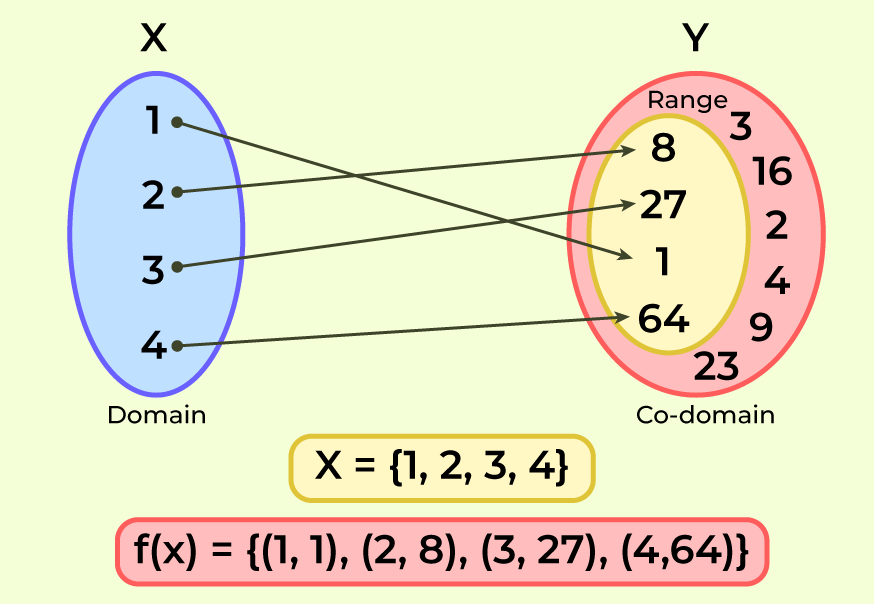
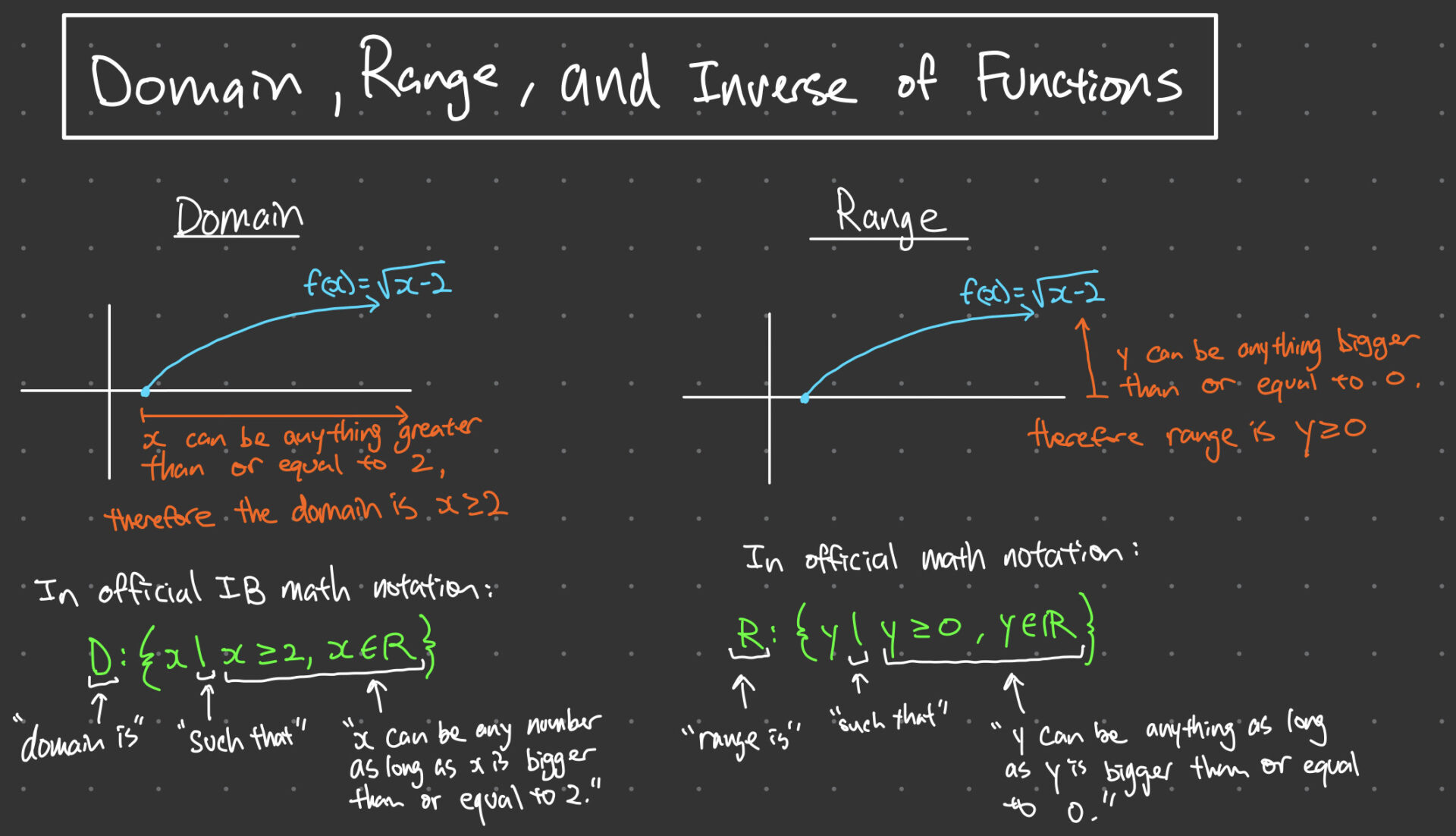
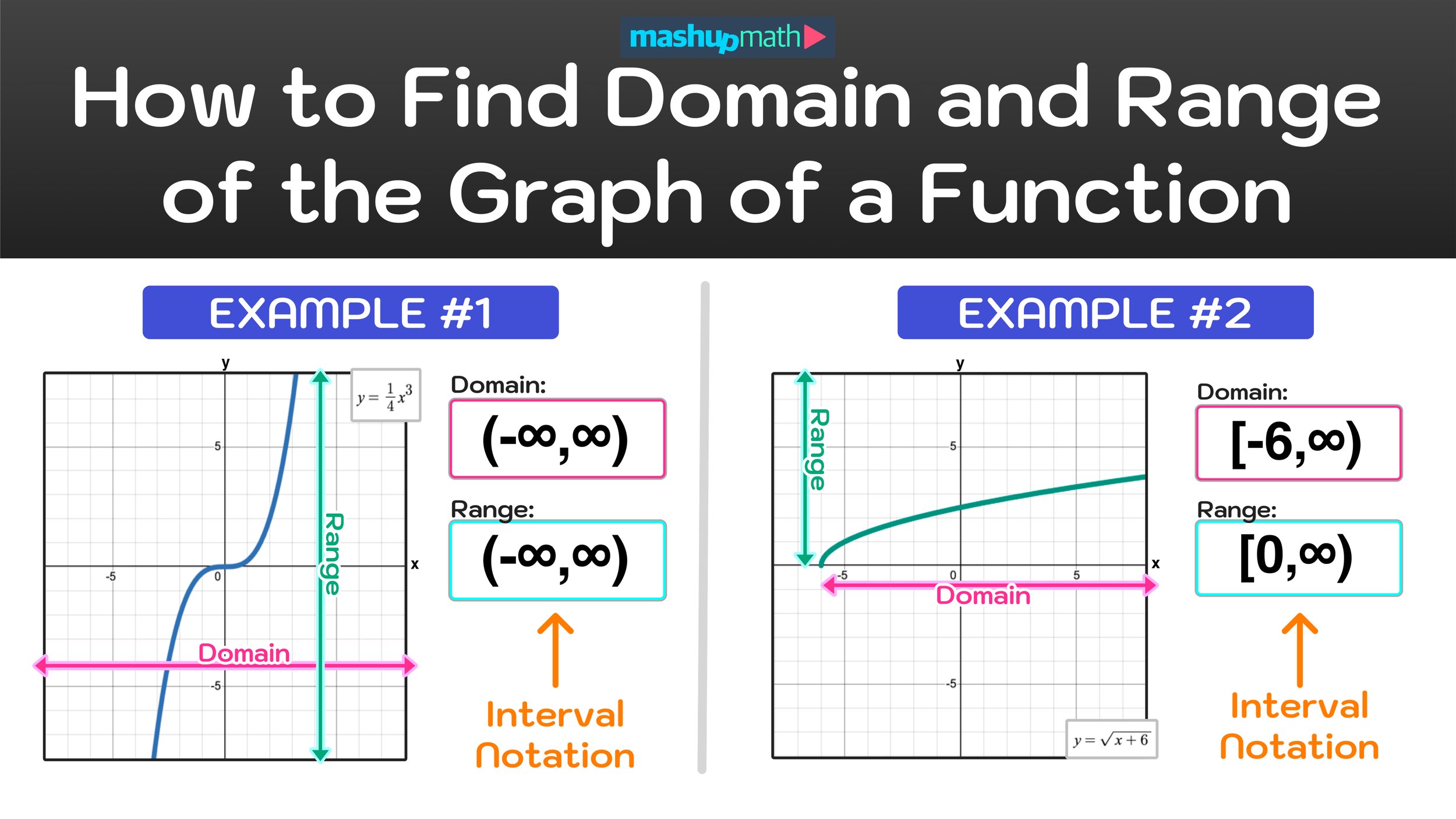
In a technical context, a function is a mapping mechanism. It takes a set of inputs and transforms them into a specific output based on a predefined set of rules. The domain represents the “input space”—the total set of all possible values that the function is capable of accepting without resulting in an error or an undefined state. Conversely, the range represents the “output space”—the set of all actual values that the function can produce after processing the inputs from the domain.
The Fundamental Logic of Digital Architecture
At the heart of every software program lies the principle of predictable transformation. When a developer writes a block of code, they are essentially defining the domain and range of a digital process. In modern software engineering, failing to properly define these parameters is a leading cause of system vulnerabilities and runtime exceptions.
Defining Domain and Range in a Computational Context
In mathematics, we might say the domain of a function $f(x) = 1/x$ is all real numbers except zero. In technology, we apply this same logic to data types and API endpoints. If you are developing a digital payment gateway, the domain of the “transaction” function is limited by specific constraints: the currency must be valid, the amount must be a positive number, and the user ID must exist in the database.
The range, in this instance, is the set of possible outcomes: a “success” message with a transaction ID, a “declined” status, or a “timeout” error. By strictly defining the range, developers ensure that the UI/UX can handle every possible scenario. If a function were to return a value outside its expected range—such as a null value when a string was expected—the application would likely crash.
Why Input Constraints Matter for Software Stability
Modern digital security relies heavily on the concept of domain restriction. Consider the “Buffer Overflow” attack, one of the most persistent threats in cybersecurity. This occurs when a program receives an input (domain value) that exceeds the memory allocated for it. By failing to validate the domain of the input—ensuring it is within the correct length and format—the system allows malicious code to be executed in parts of the memory it shouldn’t access.
Robust software architecture uses “Sanitization” and “Validation” to enforce domain rules. Every time you fill out a web form that requires an email address, the backend is running a function that checks if your input falls within the valid domain of email strings (containing an ‘@’ symbol and a valid TLD). If the input is outside this domain, the function rejects it, protecting the database from corrupted data.
Mapping Data in Modern Software Development
As we move toward more complex systems, such as distributed cloud computing and microservices, the relationship between domain and range becomes a tool for managing complexity.
Type Systems and Domain Constraints
The rise of “Strongly Typed” languages like TypeScript, Rust, and Go is a direct response to the need for better domain and range management. In these languages, the developer explicitly declares the domain of every function. For example, a function defined as function calculateDensity(mass: number, volume: number): number tells the compiler that the domain consists only of numeric values and the range will strictly be a numeric value.
This explicit declaration prevents a category of bugs known as “Type Errors.” In more flexible languages like JavaScript, a function might inadvertently accept a “string” as an input when it expects a “number,” leading to unpredictable ranges (like the infamous NaN or “Not a Number” result). By utilizing strict type systems, tech organizations can ensure that their data pipelines remain consistent across different modules of a global application.
Functions as Mappers in Reactive Programming
In the world of front-end development and reactive frameworks like React or Angular, functions are used to map the “State” (domain) to the “View” (range). This is known as declarative programming. The developer defines a function where the domain is any possible change in user data, and the range is the visual representation of that data on the screen.
When the domain changes—perhaps a user clicks a button to change a theme from “Light” to “Dark”—the function re-calculates the range (the CSS properties of the page). Understanding the mathematical precision of these mappings allows developers to create smoother, more performant user interfaces that respond instantly to input without memory leaks.
Domain and Range in Machine Learning and AI
In the field of Artificial Intelligence, the concepts of domain and range take on a new level of importance. Deep learning models are essentially massive chains of nested functions. To make these models work, engineers must meticulously manage the scales of their inputs and outputs.
Activation Functions: Controlling the Output Range
In a neural network, each “neuron” is a function. To prevent the data from exploding into infinitely large numbers as it passes through the network, AI researchers use “Activation Functions” to squash the output into a specific range.
- Sigmoid Function: This function takes any real number as its domain and maps it to a range between 0 and 1. This is crucial for probability-based models, where the output needs to represent the likelihood of a specific result (e.g., “There is a 0.85 probability this image is a cat”).
- Tanh (Hyperbolic Tangent): This maps the domain to a range between -1 and 1, which is often used in the hidden layers of a network to keep the data centered around zero, aiding in faster convergence during training.
- ReLU (Rectified Linear Unit): This function has a domain of all real numbers but a range of [0, ∞). It effectively “turns off” negative inputs, allowing the model to focus only on significant features.
Feature Scaling: Normalizing the Input Domain
Machine learning models are highly sensitive to the domain of their input data. If you are building a model to predict housing prices, one input (domain) might be the number of bedrooms (ranging from 1 to 5), while another might be the square footage (ranging from 500 to 10,000).
Because these domains operate on vastly different scales, the model might incorrectly prioritize the square footage simply because the numbers are larger. To fix this, data scientists use “Normalization” or “Standardization” to transform all input domains into a common range, usually [0, 1] or [-1, 1]. This ensures that the function—the AI model—treats each feature with the appropriate weight, leading to more accurate predictions.
Practical Applications in Cybersecurity and Cryptography
The most rigid applications of domain and range are found in cryptography, which provides the foundation for digital privacy, blockchain technology, and secure communications.
Hash Functions and Fixed Ranges
A cryptographic hash function, such as SHA-256, is a unique type of function designed with a very specific domain and range. The domain is effectively infinite; you can input a single character, a 500-page book, or a 10GB video file. However, the range is strictly fixed. No matter how large the input, the output (the hash) will always be a 256-bit string of characters.
This “Many-to-One” mapping is what makes the internet secure. Because the range is fixed and the function is deterministic, you can verify the integrity of a file by checking its hash. If even a single bit of the input domain changes, the output range value changes drastically, alerting the system to a potential security breach or file corruption.
Digital Signatures and Valid Input Domains
Digital signatures also rely on these concepts to verify identity. When a software update is released, it is “signed” using a function where the domain includes the software’s code and a private key. The resulting range is a signature that can be verified by your computer using a public key. If a hacker tries to inject a malicious file into the update, the domain of the signature function is altered. Since the resulting output will no longer match the expected range of the public key verification function, your computer will reject the update as untrusted.
The Future of Range and Domain in Quantum Computing
As we look toward the horizon of quantum computing, the way we define domain and range is set to shift yet again. Traditional binary functions operate on a domain of 0s and 1s. Quantum functions, however, operate on “Qubits,” which exist in a superposition of states.
In this new paradigm, the domain is not just a discrete set of values but a complex probability space. The range of a quantum function is not a single output but a “collapse” of probabilities. Understanding how to map these multi-dimensional domains into ranges that we can interpret as classical data is the current frontier of computer science.
Whether you are a software developer, a data scientist, or a tech enthusiast, recognizing the range and domain within the tools you use is essential. These are not just mathematical abstractions; they are the boundaries of what is possible within a digital system. By mastering these constraints, we build faster, more secure, and more intelligent technology.
aViewFromTheCave is a participant in the Amazon Services LLC Associates Program, an affiliate advertising program designed to provide a means for sites to earn advertising fees by advertising and linking to Amazon.com. Amazon, the Amazon logo, AmazonSupply, and the AmazonSupply logo are trademarks of Amazon.com, Inc. or its affiliates. As an Amazon Associate we earn affiliate commissions from qualifying purchases.