
At its core, a firearm safety is a mechanical or electronic mechanism designed to prevent the unintentional discharge of a weapon. Far from being a simple toggle switch, these intricate devices represent a crucial facet of firearm technology, embodying principles of precision engineering and user interface design aimed at enhancing security. In a world increasingly reliant on sophisticated technology for protection, understanding the technical underpinnings and operational nuances of firearm safeties is paramount for both designers and users. They are physical security features, much like a digital firewall protects data, a safety mechanism protects against unintended activation of a potentially hazardous device.
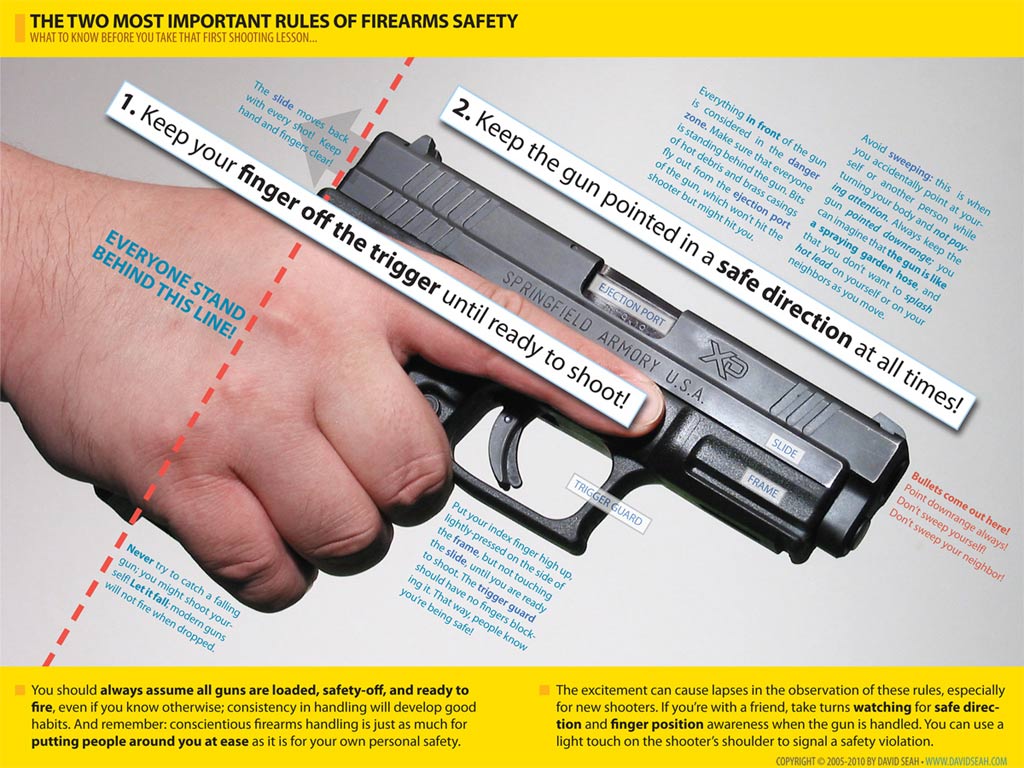
The Engineering Behind Prevention: Understanding Firearm Safety Mechanisms
The development of firearm safeties has evolved significantly, reflecting centuries of mechanical innovation focused on enhancing user security and operational reliability. These mechanisms are not merely add-ons but are often integral to a firearm’s design, employing clever engineering to interrupt the firing sequence under specific conditions.
Mechanical Design Principles for Secure Operation
Firearm safeties operate on various mechanical principles, each engineered to physically block or disengage a critical component required for firing. Common designs involve pins, levers, and blocks that physically prevent the hammer or striker from reaching the primer, or that disconnect the trigger from the sear. For instance, a common type of manual safety physically blocks the sear from releasing the hammer, or blocks the hammer itself from moving forward. The precision in manufacturing these components is crucial; even a minute deviation could compromise the safety’s integrity. Materials science also plays a role, with hardened steels and alloys chosen for their durability and resistance to wear, ensuring the safety mechanism remains reliable over countless cycles of engagement and disengagement. The goal is to create a “positive” safety – one that physically locks parts rather than merely relying on friction or spring tension, offering a robust barrier to accidental discharge. This involves intricate camming surfaces, precise detents for tactile feedback, and springs calibrated to ensure consistent engagement.
The “Fail-Safe” Philosophy in Firearm Technology
A significant design philosophy in firearm safeties is the “fail-safe” approach. This principle dictates that in the event of a component failure or an unintended external force (like a drop), the firearm should default to a safe state, preventing discharge. A prime example is the firing pin block safety, common in many modern pistols. This mechanism typically consists of a small plunger that blocks the firing pin’s forward movement. It is only depressed out of the way when the trigger is fully pulled, ensuring that if the firearm is dropped or impacted, the firing pin cannot move forward and detonate a primer unless the trigger has been deliberately activated. Similarly, some designs incorporate drop safeties that ensure the weapon will not fire if dropped onto its muzzle or butt. This engineering foresight into potential failure modes is a cornerstone of modern firearm safety design, akin to error handling in robust software systems, where the aim is to gracefully prevent critical failures.
A Spectrum of Security Features: Different Types of Firearm Safeties
Just as different digital security protocols exist for varying levels of data protection, firearms employ a variety of safety mechanisms, each representing a distinct technological approach to preventing unintended operation. These can be broadly categorized by how they are engaged and their mode of operation.
Manual Safeties: Intentional User Engagement
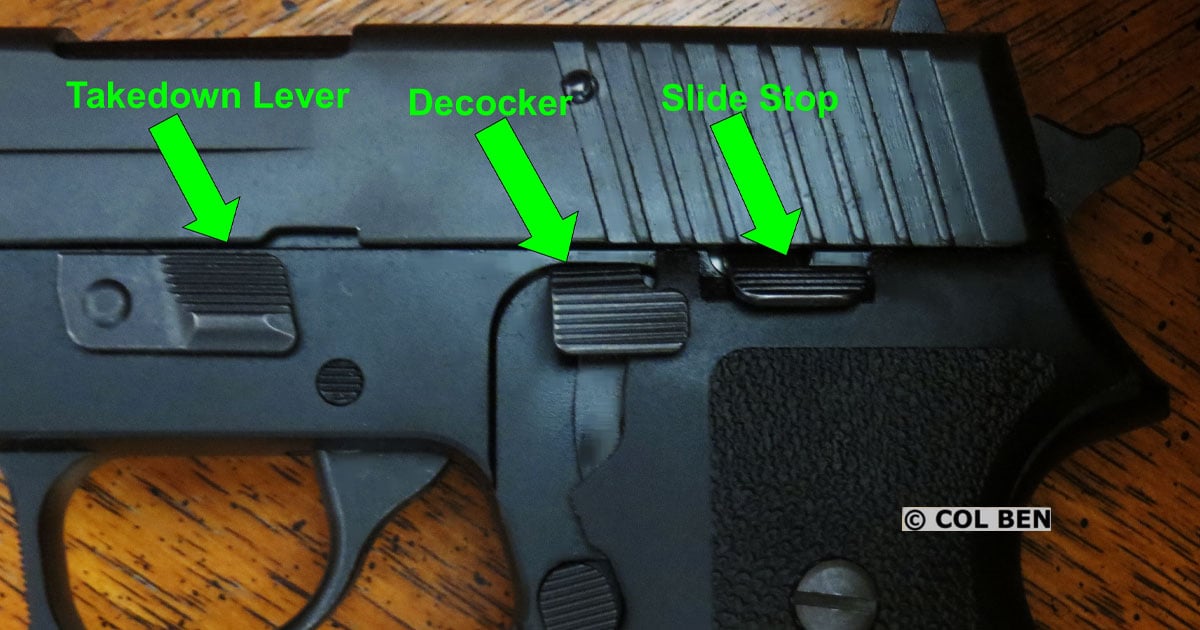
Manual safeties are perhaps the most recognizable type, requiring a conscious action by the user to engage or disengage them. These act as a direct “on/off” switch for the firing mechanism. Examples include:
- Thumb Safeties: Often found on 1911-style pistols and many rifles, these are levers located on the side of the frame, easily actuated by the shooter’s thumb. Their ergonomic placement is a key design consideration for quick, intuitive operation.
- Cross-Bolt Safeties: Common in shotguns and some rifles, these are push-button mechanisms that traverse the trigger guard. Pushing the button from one side to the other physically blocks the trigger or sear.
- Decockers: While not strictly a safety mechanism in the sense of preventing firing, a decocker lever safely lowers a cocked hammer without discharging the firearm, transitioning it to a double-action mode where a heavier trigger pull is required, thereby reducing the risk of an accidental discharge.
- Grip Safeties: Prominently featured on some pistol designs (e.g., 1911), these require the shooter to firmly grasp the pistol’s grip before the trigger can be fully depressed. This prevents firing unless the weapon is properly held, acting as an integrated sensor for user intent.
These manual safeties represent distinct user interface elements, demanding deliberate interaction, much like a two-factor authentication prompt requires explicit user confirmation.
Automatic and Passive Safeties: Integrated Protective Gadgetry
In contrast to manual safeties, automatic or passive safeties operate without direct user intervention, constantly working in the background to prevent discharge. They are “always-on” protective gadgetry embedded within the firearm’s operational logic.
- Firing Pin Blocks (or Plunger Safeties): As discussed, these prevent the firing pin from moving forward unless the trigger is fully pulled. They are ubiquitous in modern pistol designs and act as an internal, dynamic barrier.
- Drop Safeties: Designed to prevent accidental discharge if the firearm is dropped. These can be integrated into the firing pin block mechanism or involve separate components that ensure the hammer or striker cannot move forward unless the trigger is activated.
- Trigger Safeties: Found on many striker-fired pistols (e.g., Glock), these involve a small lever integrated into the trigger itself. The trigger cannot be pulled unless this inner lever is depressed first, ensuring a deliberate and proper trigger pull. This acts as a secondary layer of interaction required for activation.
These passive systems are crucial for making firearms inherently safer, acting as default security protocols that don’t rely on the user remembering to engage them.

Disconnectors and Other Internal Technologies
Beyond primary safeties, other internal mechanisms play a vital role in safe operation. A disconnector, for instance, is a critical component in semi-automatic firearms. Its purpose is to prevent the firearm from firing more than one shot with a single pull of the trigger. After a round is fired, the disconnector temporarily separates the trigger from the sear until the slide cycles forward and returns to battery, resetting the firing mechanism. This mechanical interaction is a sophisticated timing device, ensuring controlled, single-shot operation. Another important internal technology includes out-of-battery safeties, which prevent the firearm from firing if the slide or bolt is not fully closed and locked. This is a crucial safety measure to prevent potentially catastrophic failures or damage to the firearm and shooter.
User Interaction and Operational Protocols: Mastering the Safety Interface
The effectiveness of any safety mechanism, whether mechanical or digital, hinges on its intuitive design and the user’s understanding of its operation. For firearm safeties, this translates into critical user interaction protocols and an appreciation for ergonomic design.
The “On/Off” of Protection: Engaging and Disengaging Safeties
Learning the specific “on/off” mechanism of a firearm’s safety is a fundamental aspect of firearm handling. This involves not just knowing where the safety is located but developing the muscle memory to instinctively engage it when the firearm is not actively being fired, and disengage it smoothly when preparing to shoot. For many platforms, this engagement provides a clear tactile and sometimes visual indicator of its status (e.g., a red dot indicating “fire”). Proper training emphasizes that the safety is a tool, not a substitute for safe gun handling practices, but an essential layer of technological protection. Mastering this interface ensures that the safety serves its intended purpose without causing fumbling or delay in critical situations.
Ergonomics and Human-Machine Interface in Firearm Design
The placement, shape, and resistance of a safety lever or button are all considerations in firearm ergonomics and human-machine interface (HMI) design. A well-designed safety should be easy to manipulate quickly and positively, even under stress, without requiring the user to break their grip or shift their focus significantly. The tactile feedback should be clear enough to indicate positive engagement or disengagement. Poor ergonomic design can lead to fumbled operations, potentially compromising safety or readiness. Manufacturers often iterate on safety designs based on user feedback and extensive testing to optimize this critical interface, making it as intuitive and reliable as possible for the target demographic.
The Future of Firearm Security: Integrating Advanced Technologies
The evolution of firearm safeties is not static. As technology advances, particularly in fields like biometrics and smart device integration, the potential for increasingly sophisticated firearm security features grows, marking an exciting frontier in personal and operational safety.
Biometric Safeties: Leveraging Personal Identification Tech
One of the most discussed future technologies for firearms is the integration of biometric identification. Imagine a firearm that can only be fired by its authorized owner, authenticated via a fingerprint scanner or facial recognition system embedded directly into the weapon. This leverages personal identification technology, much like unlocking a smartphone or accessing a secure database. Prototypes incorporating fingerprint scanners in grips have been developed, aiming to prevent unauthorized use entirely. Such systems could significantly reduce accidental shootings by children, theft-related violence, and use by individuals prohibited from possessing firearms. The challenge lies in ensuring robust reliability, speed of authentication, and imperviousness to environmental factors (e.g., gloves, dirt, extreme temperatures) that might hinder rapid access in a critical scenario.
Smart Guns and Digital Locks: The Next Frontier in Access Control
Building on biometric concepts, the broader category of “smart guns” represents the integration of digital locks and other advanced technologies. These could include RFID (Radio-Frequency Identification) systems where the firearm only operates when in close proximity to a specific wristband or ring worn by the authorized user. Other concepts involve PIN codes, magnetic keys, or even network-enabled systems that could track usage or remotely disable a firearm if stolen. These technologies treat the firearm as a connected “gadget,” applying digital security principles to a physical device. The objective is to provide multiple layers of access control, ensuring that only the intended user can operate the weapon, and only when authorized. While still in early stages of development and facing significant adoption challenges, smart gun technologies represent a fundamental shift towards enhancing firearm security through sophisticated digital means.
Emerging Material Science and Design Innovations
Beyond electronics, advancements in material science and manufacturing processes (like additive manufacturing or 3D printing) could lead to entirely new forms of integrated safety features. Lighter, stronger, and more durable materials might allow for more complex and robust internal safety mechanisms without increasing the firearm’s weight or bulk. Innovative design could lead to safeties that are seamlessly integrated into the firearm’s form factor, perhaps even automatically adapting to user grip or orientation. The continuous drive for innovation in these areas promises to further refine and enhance the inherent security of firearms, ensuring that their mechanical and electronic safeguards remain at the cutting edge of prevention technology.
In conclusion, the purpose of a safety on a firearm is multifaceted, rooted deeply in engineering principles and evolving with technological advancements. It serves as a critical mechanical or electronic barrier against unintentional discharge, acting as a crucial security feature. From precision-machined levers and pins to future biometric authentication and smart gun technologies, safeties embody a commitment to enhancing user protection and operational control, ensuring that a powerful tool remains safely under the deliberate command of its operator.
aViewFromTheCave is a participant in the Amazon Services LLC Associates Program, an affiliate advertising program designed to provide a means for sites to earn advertising fees by advertising and linking to Amazon.com. Amazon, the Amazon logo, AmazonSupply, and the AmazonSupply logo are trademarks of Amazon.com, Inc. or its affiliates. As an Amazon Associate we earn affiliate commissions from qualifying purchases.