
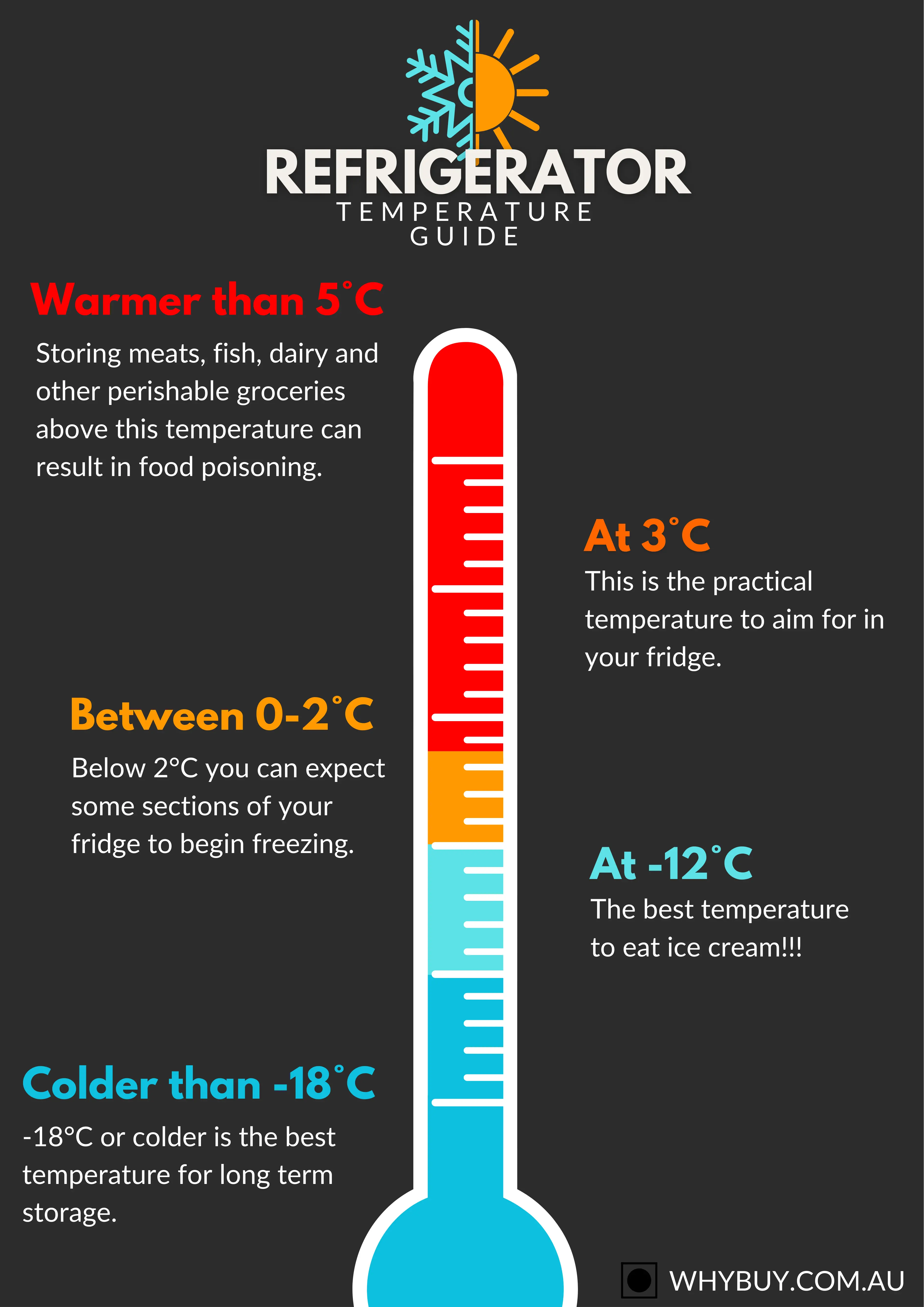
In the modern smart home, few appliances have undergone as significant a technological transformation as the refrigerator. Once a simple insulated box cooled by blocks of ice, the contemporary refrigerator is now a sophisticated piece of thermal engineering, integrated with sensors, digital processors, and internet-of-things (IoT) connectivity. While the fundamental goal remains food preservation, the precision required to achieve this has shifted from manual dials to algorithmic control. To understand the proper temperature for a refrigerator—which is widely recognized by food scientists and engineers as 37°F (3°C)—one must look at the hardware and software that make this precision possible.
Maintaining this specific thermal threshold is not merely a matter of convenience; it is a complex technological challenge involving thermodynamics, sensor accuracy, and energy management. In this deep dive, we explore the technology behind refrigerator temperature regulation and how modern gadgets ensure your cold chain remains unbroken.
The Engineering of Thermal Precision: Why 37°F is the Tech Standard
The “sweet spot” for refrigeration—between 35°F and 38°F—is a calculation based on the biological activity of bacteria and the physical properties of water. From a technological standpoint, the refrigerator must act as a precise climate-controlled chamber. If the temperature rises above 40°F, the appliance enters the “Danger Zone,” a term used by food safety experts to describe the thermal window where microbial growth accelerates exponentially. Conversely, dropping to 32°F risks freezing the water content in fresh produce, causing cellular rupture and degrading the quality of the items.
The Role of Thermistors and Microcontrollers
Older refrigerators utilized bimetallic strips—a mechanical solution that was prone to drift and lacked precision. Modern high-tech units have replaced these with thermistors. A thermistor is a type of resistor whose resistance is significantly reduced as the temperature increases.
In a high-end smart fridge, multiple thermistors are placed in strategic zones. These sensors feed data back to a central microcontroller. The software on this chip uses Proportional-Integral-Derivative (PID) control logic to adjust the cooling output. Rather than simply turning the cooling system on or off, the tech calculates the rate of change in temperature, allowing the appliance to “anticipate” thermal spikes (such as when the door is opened) and adjust the compressor speed accordingly.
Digital Inverter Compressors
The heartbeat of temperature regulation is the compressor. Traditional compressors are single-speed; they are either 100% on or 100% off. This results in a “sawtooth” temperature profile where the internal environment fluctuates significantly.
Tech-forward brands have moved toward Digital Inverter Compressors. This technology uses variable-speed motors that can run at numerous speeds depending on the cooling demand. This allows the refrigerator to maintain a much tighter temperature variance—often within 0.5 degrees of the set point. This level of precision is essential for the “set it and forget it” user experience that modern consumers expect from their kitchen tech.
IoT and the Connected Kitchen: Monitoring Temps via the Cloud
As we move further into the era of the Smart Home, the “proper temperature” is no longer just a setting on a physical dial; it is a data point accessible via smartphone apps and desktop dashboards. The integration of Wi-Fi modules into refrigeration units has fundamentally changed how we interact with our appliances.
Real-Time Telemetry and Alerts
Through ecosystems like Samsung SmartThings, LG ThinQ, or Home Assistant, users can monitor the internal temperature of their refrigerator in real-time. This tech provides a layer of security that was previously impossible. If a door is left ajar or if a component fails, the IoT module sends a push notification to the user’s device.
For tech enthusiasts, this data can be logged over time. Analyzing temperature fluctuations through a mobile app can reveal the efficiency of the appliance’s location or the impact of ambient room temperature on its performance. Some advanced models even offer “Smart Grid” integration, allowing the fridge to communicate with utility companies to optimize cooling cycles during off-peak energy hours, saving money through algorithmic efficiency.
Remote Calibration and Software Updates
The ability to adjust the temperature remotely is more than a novelty. It allows for “Pre-Cooling” cycles. For example, if you are at the grocery store and know you will be loading the fridge with room-temperature items, some apps allow you to trigger a “Power Cool” mode. This instructs the software to drop the temperature temporarily to compensate for the thermal load that is about to be introduced, ensuring the overall environment stays below the 40°F threshold.

Furthermore, Firmware Over-The-Air (FOTA) updates enable manufacturers to improve the cooling algorithms of the refrigerator after it has been installed in your home. This means the “proper temperature” management can actually get smarter and more efficient over the lifespan of the hardware.
Advanced Cooling Architectures: Multi-Zone Technology
One of the greatest challenges in refrigeration tech is that different items require different thermal environments. While 37°F is the general standard, it is not optimal for everything. This has led to the development of multi-zone cooling architectures, driven by independent evaporators and sophisticated airflow management.
Dual and Triple Evaporator Systems
Standard refrigerators often use a single evaporator to cool both the fridge and the freezer. This is inefficient because it forces dry, freezing air from the freezer into the fresh food compartment, which can lead to “freezer burn” or localized freezing of produce.
High-tech refrigerators utilize Dual or Triple Evaporator systems. This allows the appliance to maintain two or three distinct climate zones. In these systems, the refrigerator compartment can be kept at a humid 37°F, while the freezer is kept at a bone-dry 0°F. The tech behind this involves a series of electronic valves and dampers that route refrigerant and airflow with surgical precision based on the readings from the internal thermistors.
Dedicated Flex Zones
Many modern units feature a “Flex Zone” or “Convertible Drawer.” These sections are controlled by their own dedicated microcontroller settings, allowing the user to switch the niche from “Chilled Wine” (approx. 41°F) to “Soft Freeze” (23°F) or “Meat/Fish” (30°F) with the touch of a button. This level of customization demonstrates how far refrigeration has moved from a basic utility to a high-performance tech gadget.
The Future of Cold Tech: AI and Predictive Cooling
As we look toward the next generation of kitchen technology, the “proper temperature” will be managed by Artificial Intelligence. We are already seeing the emergence of AI-driven cooling systems that learn a household’s patterns.
Learning User Behavior
An AI-enabled refrigerator tracks “door-open events.” If the system learns that the door is frequently opened at 5:00 PM for dinner preparation, it will proactively lower the temperature at 4:45 PM. This predictive cooling tech ensures that the inevitable loss of cold air during peak usage hours does not push the internal temp into the Danger Zone.
Computer Vision and Thermal Mapping
Future iterations of smart fridges are experimenting with internal cameras and computer vision. By identifying the specific items inside—such as a gallon of milk versus a head of lettuce—the AI can adjust the airflow to specific shelves. If the tech detects that the milk is placed near the door (the warmest part of the fridge), it can increase the localized fan speed to ensure that specific item stays at the proper 37°F.
Energy-Efficient Insulation Tech
Hardware innovation is also keeping pace with software. Vacuum Insulation Panels (VIPs) are replacing traditional foam insulation. These panels are thinner and more efficient, allowing for more internal storage space while maintaining a more stable thermal barrier. When combined with low-emissivity (Low-E) glass on “view-through” doors, the tech ensures that the refrigerator has to work less to maintain its set point, extending the life of the electronic components and the compressor.

Maintaining the Tech: Ensuring Accuracy Over Time
Even the most advanced cooling system requires proper maintenance to ensure the digital readings match the physical reality. Over time, sensors can lose calibration, and dust can impede the efficiency of the cooling hardware.
- Sensor Calibration: Tech-savvy users often use independent digital thermometers or “data loggers” to verify their fridge’s internal display. If the digital readout says 37°F but the independent sensor says 41°F, it may indicate a need for a sensor recalibration or a check of the door seals.
- Cleaning the Condenser Coils: The compressor and coils are the “engine” of the system. If the coils are coated in dust, the system cannot shed heat efficiently. This forces the microcontroller to run the compressor longer, leading to hardware fatigue and potential software errors.
- Airflow Management: A refrigerator is essentially a giant heat exchanger. Overloading the shelves can block the air vents, creating “dead zones” where the temperature rises. Modern “Multi-Air Flow” technology uses a series of vents on every shelf level to mitigate this, but hardware can only compensate so much for physical obstruction.
The “proper temperature” for a refrigerator is the result of a delicate dance between software logic and mechanical engineering. By setting your appliance to 37°F, you are engaging with a complex ecosystem designed to maximize shelf life through digital precision. As IoT and AI continue to integrate into our appliances, the refrigerator will stop being a passive box and start being an active, intelligent guardian of our health and resources.
aViewFromTheCave is a participant in the Amazon Services LLC Associates Program, an affiliate advertising program designed to provide a means for sites to earn advertising fees by advertising and linking to Amazon.com. Amazon, the Amazon logo, AmazonSupply, and the AmazonSupply logo are trademarks of Amazon.com, Inc. or its affiliates. As an Amazon Associate we earn affiliate commissions from qualifying purchases.