
In the world of finance, business management, and personal investing, the concept of “trust” is often backed by legal frameworks and contracts. However, even with the most robust agreements in place, a fundamental tension exists whenever one person delegates decision-making power to another. This tension is known as the Principal-Agent Problem.
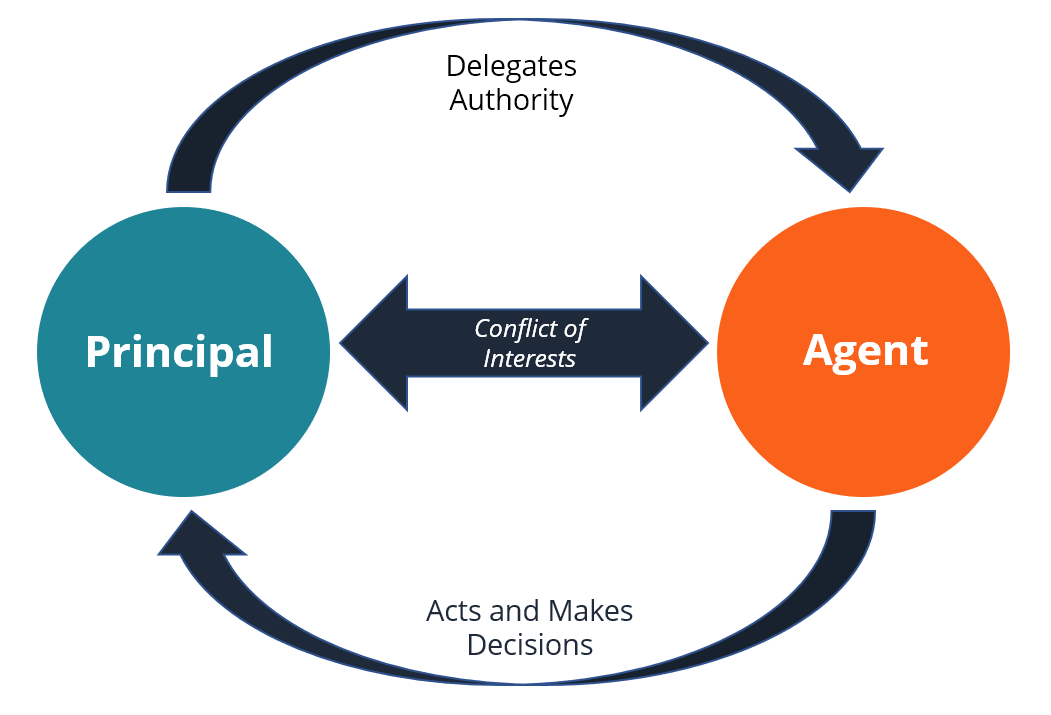
At its core, the principal-agent problem (also known as the agency dilemma) occurs when one person or entity (the “agent”) is able to make decisions and/or take actions on behalf of, or that impact, another person or entity: the “principal.” The conflict arises because the agent may be motivated to act in their own best interests, which are often contrary to those of the principal. In the “Money” niche—encompassing corporate finance, wealth management, and individual investing—this problem is the primary driver behind how contracts are written, how CEOs are paid, and why financial regulations exist.
Understanding the Mechanics of the Principal-Agent Relationship
To grasp why this problem is so pervasive in financial systems, one must first understand the structural components that allow it to flourish. It is not merely a matter of “bad actors”; rather, it is a structural byproduct of delegating authority.
Defining the Roles: Principal vs. Agent
In a financial context, the principal is typically the owner of an asset or the person with the capital. For example, a shareholder in a publicly-traded company is a principal. The agent is the person hired to manage that asset or capital. In that same company, the CEO and the Board of Directors are the agents.
The relationship is built on the premise that the agent possesses specialized knowledge, skills, or time that the principal lacks. You hire a financial advisor (agent) because they understand the markets better than you do; a corporation hires a manager (agent) because the thousands of individual shareholders cannot possibly run the day-to-day operations themselves.
The Information Asymmetry Gap
The primary catalyst for the principal-agent problem is “information asymmetry.” This occurs when the agent has more or better information than the principal regarding the task at hand. Because the agent is “on the ground” managing the funds or the business, they know more about the risks being taken and the true value of the work being performed.
The principal cannot perfectly monitor the agent’s every move without incurring massive costs. This “information gap” creates an environment where the agent can prioritize their own utility—such as personal wealth, job security, or prestige—over the principal’s financial gain, often without the principal realizing it until the damage is done.
Divergent Goals and Risk Tolerance
The final mechanical piece of the puzzle is the divergence of interests. A principal (investor) generally seeks to maximize the return on their investment relative to a specific risk profile. An agent (manager), however, might have different priorities.
A manager might be more risk-averse than the shareholders because their entire livelihood depends on the company’s survival (shirking risky but profitable ventures), or they might be more risk-seeking if their bonus is tied to short-term gains regardless of long-term stability. When goals do not align, the financial outcome for the principal is rarely optimal.
The Principal-Agent Problem in Corporate Finance and Investing
The financial sector is perhaps the most prominent arena for the principal-agent problem. From the boardrooms of Wall Street to the office of a local tax preparer, the misalignment of incentives can lead to significant financial loss.
Management vs. Shareholders
This is the most “classic” version of the problem. Shareholders (principals) want the company’s stock price to rise and dividends to be paid. The executives (agents) might prefer to use company profits for “empire building”—acquiring other companies to increase their own power and prestige—even if those acquisitions destroy shareholder value.
In other instances, management may pursue “perks” or “perquisite consumption.” This includes lavish office renovations, private jets, or expensive retreats. While these are billed as business expenses, they effectively transfer wealth from the shareholders to the agents without providing a proportional return on investment.
Investment Advisors and Fiduciary Duty
In personal finance, the principal-agent problem manifests in the relationship between an individual investor and their broker or financial advisor. If an advisor is paid on commission, their incentive is to churn the account (buy and sell frequently) to generate fees, regardless of whether those trades benefit the client.

This led to the rise of the “fiduciary standard,” a legal obligation for agents to act solely in the interest of the principal. However, not all financial professionals are fiduciaries. Many operate under a “suitability standard,” which allows them to recommend products that are “suitable” but pay the advisor a higher commission than a better, lower-cost alternative. This is a direct financial cost of the agency problem.
The Impact on Market Efficiency and Dividends
When the principal-agent problem is rampant within a sector, it can lead to market inefficiencies. Investors, wary of being exploited by managers, may demand a higher “risk premium” before investing. This raises the cost of capital for businesses. Furthermore, the agency problem often dictates dividend policy; shareholders often demand high dividends not just for the income, but as a way to “force” cash out of the hands of managers, preventing them from wasting it on low-return projects.
Economic Costs: Identifying “Agency Costs”
The financial impact of the principal-agent problem is quantified by economists as “Agency Costs.” These are the internal costs incurred from an attempt to minimize the conflict between the two parties. In any business finance setting, these costs are subtracted from the potential total profit.
Monitoring Expenditures
To ensure agents are acting appropriately, principals must spend money on monitoring. In corporate finance, this includes the cost of hiring external auditors to verify financial statements, the cost of establishing a Board of Directors, and the cost of implementing internal compliance software. While these measures are necessary, they are technically “unproductive” capital—money that could have been used for growth but is instead used to ensure the agent isn’t mismanaging the existing funds.
Bonding Costs
Sometimes, the agent themselves will take on costs to prove they are acting in good faith; these are known as bonding costs. An example would be a fund manager who agrees to keep a significant portion of their own personal wealth invested in the fund they manage. By “bonding” their fate to the principal’s, they signal their commitment. However, the agent will often demand higher base pay to compensate for this restricted liquidity and increased personal risk.
Residual Loss
Despite the best monitoring and bonding, the interests of the principal and agent will never align 100%. The remaining discrepancy—the loss of potential wealth that occurs because the agent’s decisions still slightly favor themselves or are simply not as diligent as the owner’s would be—is called the “residual loss.” In large-scale investing, even a residual loss of 0.5% can equate to billions of dollars over time.
Mitigation Strategies: Aligning Incentives for Financial Success
While the principal-agent problem can never be fully eliminated, the financial world has developed sophisticated tools to mitigate its effects. The goal is to create a “convergence of interests” where the agent’s easiest path to personal wealth is to create wealth for the principal.
Performance-Based Compensation and Stock Options
The most common solution in corporate finance is the use of equity-based compensation. By giving managers stock options or restricted stock units (RSUs), the manager becomes a partial owner (a principal). When the stock price goes up, the manager gets rich alongside the shareholders.
However, this must be structured carefully. If options vest too quickly, the agent might engage in “earnings management” or accounting tricks to pump the stock price temporarily, sell their shares, and leave the principals with the long-term fallout. Long-term vesting schedules and “clawback” provisions (where bonuses can be taken back if fraud is discovered) are essential financial safeguards.
Direct Oversight and Transparency
In the digital age, transparency has become a powerful tool for reducing information asymmetry. Real-time financial reporting, blockchain-based ledgers, and frequent shareholder communications allow principals to monitor agents more closely at a lower cost. In personal finance, the shift toward fee-only advisory models (where the advisor takes a flat percentage of assets rather than commissions) has done much to align the advisor’s growth with the client’s portfolio growth.
Contractual Safeguards and Debt as a Disciplinarian
Contracts can be written with “covenants” that restrict what an agent can do with the principal’s money. For example, a loan agreement might prevent a CEO from taking on more debt or paying out dividends until certain financial milestones are met. Interestingly, debt itself is often used to solve the agency problem. By taking on high levels of debt, a company’s management is forced to be efficient and disciplined with cash flow to meet interest payments, leaving them less “free cash” to waste on vanity projects.

Conclusion: The Perpetual Balance of Money Management
The principal-agent problem is an inherent feature of modern finance. As long as we require specialists to manage our money, the risk of misaligned incentives will persist. For the individual investor, understanding this problem is the first step toward better financial decision-making. It highlights the importance of asking how an advisor is compensated, reading the fine print of management fees, and favoring companies with high levels of transparency and “insider” ownership.
In the broader scope of business finance, the ongoing battle to solve the agency dilemma drives innovation in corporate governance and compensation. While it represents a constant cost to the global economy, the strategies used to mitigate it—transparency, equity alignment, and rigorous auditing—are what ultimately provide the stability and trust necessary for capital markets to function. By acknowledging that agents will always have their own interests, principals can build financial structures that turn that self-interest into a powerful engine for mutual prosperity.
aViewFromTheCave is a participant in the Amazon Services LLC Associates Program, an affiliate advertising program designed to provide a means for sites to earn advertising fees by advertising and linking to Amazon.com. Amazon, the Amazon logo, AmazonSupply, and the AmazonSupply logo are trademarks of Amazon.com, Inc. or its affiliates. As an Amazon Associate we earn affiliate commissions from qualifying purchases.