
In the complex ecosystem of global finance, few numbers carry as much weight for the average consumer and business owner as the “prime rate.” Whether you are looking to buy a home, expand a small business, or simply manage your monthly credit card balance, the prime rate acts as the invisible hand guiding your borrowing costs. As of late 2024, we find ourselves in a pivotal economic transition. After a historic series of interest rate hikes designed to combat post-pandemic inflation, the financial landscape is finally beginning to shift.
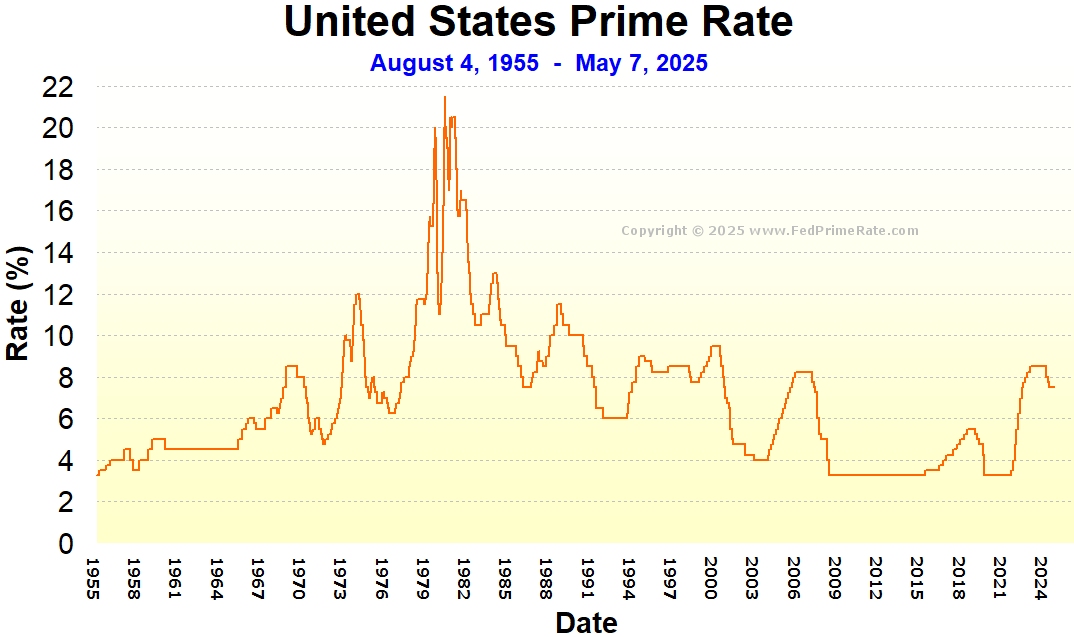
Currently, the U.S. Prime Rate stands at 8.00%. This follows the Federal Reserve’s recent decision to lower the federal funds target range, marking a departure from the 8.50% peak that held steady for over a year. While a fraction of a percentage point might seem negligible, in the world of high-stakes finance, it represents a monumental shift in how money moves through the economy. Understanding what this rate is, how it is determined, and why it matters right now is essential for anyone looking to optimize their personal or business finances.
The Fundamentals of the Prime Rate: More Than Just a Number
To navigate the current financial climate, one must first understand what the prime rate actually represents. It is not a rate set by a government agency, nor is it a law. Instead, it is a benchmark used by commercial banks to set interest rates for their most creditworthy customers—typically large corporations with impeccable financial standing.
How the Prime Rate is Determined
While individual banks could theoretically set their own prime rates, the industry almost universally follows the lead of the Wall Street Journal (WSJ), which surveys the 30 largest banks in the United States. When at least 23 of these 30 banks change their base lending rate, the WSJ updates its published prime rate.
Historically, there is a fixed mathematical relationship between the prime rate and the Federal Funds Rate (the rate at which banks lend to each other overnight). For decades, the prime rate has been calculated as the Federal Funds Target Rate plus 3%. Therefore, when the Federal Reserve moves the needle, the prime rate moves in lockstep, usually within days.
The Relationship Between the Fed and the Prime Rate
The Federal Open Market Committee (FOMC) meets eight times a year to assess the health of the U.S. economy. Their primary tools are the manipulation of interest rates to achieve a “dual mandate”: stable prices (low inflation) and maximum sustainable employment.
When the Fed perceives that inflation is rising too quickly, they raise the federal funds rate to “cool” the economy by making borrowing more expensive. Conversely, when the economy slows down, they lower rates to encourage spending and investment. The recent drop in the prime rate to 8.00% is a direct signal that the Federal Reserve believes inflation is sufficiently under control to begin easing the “restrictive” pressure on the economy.
The Direct Impact on Consumer Borrowing
The prime rate is often referred to as a “base” rate because most consumer lending products are “Prime + X.” For example, if you have a credit card with an APR of “Prime + 12%,” and the prime rate is 8.00%, your interest rate is 20.00%.
Credit Cards and Variable APRs
Credit cards are perhaps the most immediate point of contact between the prime rate and the consumer. Unlike fixed-rate mortgages, most credit card agreements are tied to variable rates. When the prime rate drops by 0.50%, your credit card issuer typically adjusts your APR downward by the same amount within one or two billing cycles. In an era where the average American household carries significant revolving debt, these incremental shifts can result in hundreds of dollars in interest savings over the course of a year.
Home Equity Lines of Credit (HELOCs)
For homeowners, the prime rate is the primary driver of the cost of a Home Equity Line of Credit (HELOC). Unlike a standard 30-year fixed mortgage, a HELOC functions more like a credit card secured by your home. The interest rate is almost always tied directly to the prime rate. As the rate begins to descend from its 8.50% peak, homeowners with existing HELOC balances will see their monthly interest-only payments decrease, providing more breathing room in the household budget or allowing for faster principal repayment.
Personal and Small Business Loans
Small business owners are particularly sensitive to fluctuations in the prime rate. Many commercial lines of credit and Small Business Administration (SBA) loans use the prime rate as their index. When the rate is high, the cost of capital for inventory, payroll, or expansion increases, which can lead to higher prices for consumers. The current shift toward a lower prime rate is a welcome relief for entrepreneurs who have been hesitant to take on debt for growth over the past 24 months.

Navigating the Economic Landscape of High Interest Rates
Even with recent cuts, an 8.00% prime rate is significantly higher than the near-zero rates experienced during the 2010s. We are currently in what economists call a “higher-for-longer” transition period. Understanding the macro-economic forces at play helps in making informed long-term financial decisions.
Why the Prime Rate is Currently Elevated
To understand why the prime rate is at 8.00% today, we must look back at the 2022–2023 period. To combat inflation that peaked at over 9%, the Federal Reserve engaged in the most aggressive rate-hiking cycle in 40 years. This pushed the prime rate from 3.25% in early 2022 to 8.50% by mid-2023. The “right now” rate of 8.00% indicates that while the tightening cycle is over, the Fed is cautious about cutting too quickly, fearing that a premature drop could cause inflation to rebound.
The Role of Inflation Control
The prime rate is the primary “brake” on the economy. High rates discourage consumers from making big-ticket purchases (like cars or appliances) on credit and discourage businesses from aggressive expansion. This reduction in demand helps stabilize prices. For investors and savers, this environment is a double-edged sword: while borrowing is expensive, the “yield” on cash—such as in Money Market Accounts or CDs—remains attractively high because those rates are also influenced by the prime rate’s proximity to the federal funds rate.
Strategic Financial Moves for the Current Interest Climate
In an environment where the prime rate is 8.00%, your financial strategy should focus on efficiency and agility. Whether you are a borrower or a saver, there are specific actions you can take to leverage the current rate.
Prioritizing High-Interest Debt Repayment
With the prime rate at 8.00%, credit card APRs are hovering near 21–25%. This makes “debt an emergency.” If you have extra capital, the “return on investment” you get from paying down a 20% interest debt is far higher than any return you are likely to find in the stock market. Using the “avalanche method”—targeting the highest interest rate first—is particularly effective right now.
Locking in Fixed Rates
If the prime rate continues to drop, it may eventually be an ideal time to refinance variable-rate debt into fixed-rate debt. For those with HELOCs or variable-rate personal loans, keep a close eye on the 10-year Treasury yield and the prime rate. When the rate reaches a level you find “comfortable,” moving to a fixed-rate loan can protect you if inflation flares up again and the Fed is forced to raise rates in the future.
Maximizing High-Yield Savings Opportunities
The silver lining of an 8.00% prime rate is the interest earned on savings. High-yield savings accounts (HYSAs) and Certificates of Deposit (CDs) are currently offering some of the best returns in two decades. For the first time in a generation, “cash is not trash.” If you have an emergency fund, ensure it is sitting in an account that is yielding at least 4.5% to 5.0%. As the prime rate begins to fall, these savings rates will also decline, so “locking in” a high-rate CD now might be a prudent move for conservative portions of your portfolio.
Future Outlook: What to Expect from the Prime Rate in the Coming Months
Predicting the exact movement of interest rates is notoriously difficult, but we can look at “forward-looking” indicators to estimate where the prime rate is headed. The consensus among many financial analysts is that we have entered a “thawing” period.
Economic Data Points to Watch
The Federal Reserve’s decisions are “data-dependent.” The two most important metrics to watch are the Consumer Price Index (CPI), which measures inflation, and the monthly Jobs Report. If inflation continues to cool toward the Fed’s 2% target, and the labor market shows signs of softening, we can expect further cuts to the federal funds rate, which will lead to a lower prime rate. Analysts currently speculate that the prime rate could settle into a “neutral” range of 6.5% to 7.5% by late 2025.

Preparing for a Lower-Rate Environment
A lower prime rate generally boosts the stock market and real estate, as borrowing becomes cheaper and corporate profits are less hampered by interest expenses. However, for the individual, the goal remains the same: maintain a high credit score to ensure you qualify for the “prime” part of the prime rate, and stay diversified.
In conclusion, while the prime rate “right now” sits at 8.00%, its story is one of gradual decline from a historic peak. For the savvy financial mind, this is a time for optimization—paying down high-cost variable debt, securing high-yield savings while they last, and preparing for a more favorable borrowing environment on the horizon. By staying informed about this critical benchmark, you can turn a simple percentage point into a powerful tool for building and protecting your wealth.
aViewFromTheCave is a participant in the Amazon Services LLC Associates Program, an affiliate advertising program designed to provide a means for sites to earn advertising fees by advertising and linking to Amazon.com. Amazon, the Amazon logo, AmazonSupply, and the AmazonSupply logo are trademarks of Amazon.com, Inc. or its affiliates. As an Amazon Associate we earn affiliate commissions from qualifying purchases.