
The prime interest rate is a cornerstone of the financial system, acting as a crucial benchmark that influences borrowing costs across the economy. For individuals managing personal finances or businesses seeking capital, understanding the prime rate isn’t just an academic exercise; it’s essential for making informed decisions about debt, savings, and investments. While its specific value can fluctuate, its impact is consistently far-reaching. As of early 2024, reflecting the Federal Reserve’s efforts to combat inflation, the prime rate in the United States stands at 8.50%. This figure, though seemingly simple, is the culmination of complex economic forces and policy decisions, and it carries significant implications for various financial products and services, from credit cards and mortgages to business loans and lines of credit.
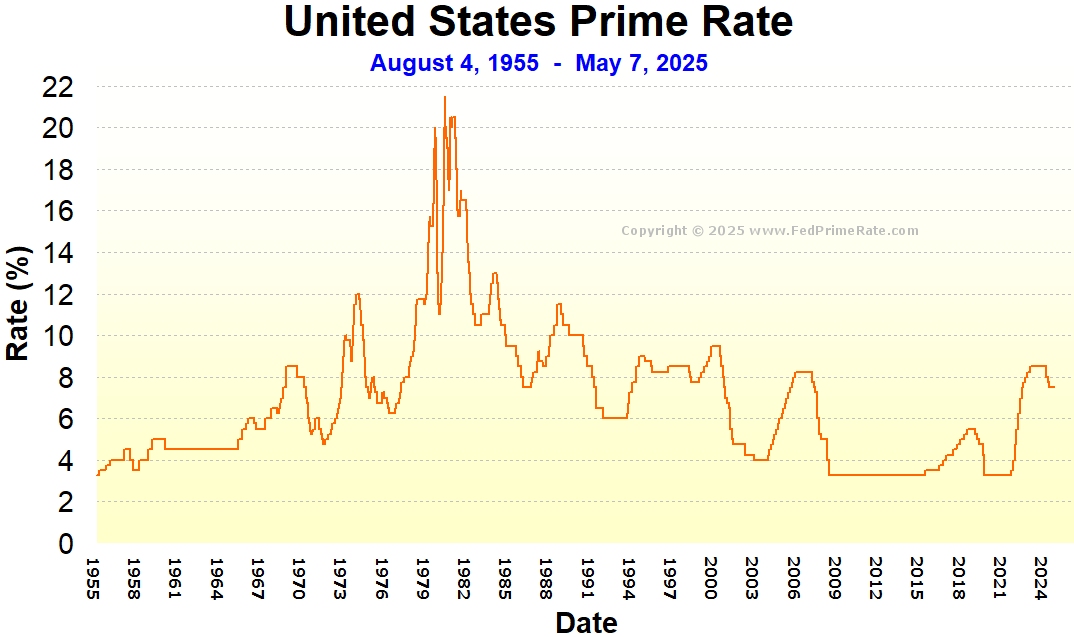
Understanding this key rate is vital for anyone navigating the financial landscape. It serves as a direct indicator of the broader cost of money in the economy, signaling lending conditions and influencing strategic financial planning. Delving into its definition, its broad economic impact, how it’s determined, and its current trajectory provides a comprehensive view for consumers, entrepreneurs, and investors alike.
Understanding the Prime Rate: A Core Financial Indicator
At its heart, the prime interest rate represents the interest rate that commercial banks charge their most creditworthy corporate customers for short-term loans. While this definition might suggest a narrow focus on big business, its ripple effect extends to nearly every facet of personal and corporate finance. It’s not an arbitrary number set by individual banks but rather a figure that closely tracks the monetary policy set by the nation’s central bank.
Defining the Prime Rate
The prime rate is essentially a base lending rate. For instance, in the U.S., major banks typically set their prime rate at approximately 3 percentage points above the federal funds rate. The federal funds rate is the target rate that the Federal Open Market Committee (FOMC) of the Federal Reserve sets for overnight borrowing between banks. When the Fed adjusts the federal funds rate, usually in increments of 0.25%, the prime rate almost immediately follows suit. This direct linkage makes the prime rate a powerful, real-time indicator of the central bank’s stance on monetary policy. It reflects the cost of money at its fundamental level before individual banks add their own risk assessments and profit margins for different types of borrowers.
The Federal Funds Rate’s Influence
The Federal Reserve plays a pivotal role in the economy primarily through its control over the federal funds rate. By raising or lowering this rate, the Fed aims to influence overall economic activity, managing inflation, promoting maximum employment, and ensuring stable long-term interest rates. When the Fed raises the federal funds rate, it becomes more expensive for banks to borrow from each other, a cost they then pass on to their customers by increasing the prime rate. This makes borrowing more expensive for everyone, which can slow down economic growth by discouraging spending and investment. Conversely, lowering the federal funds rate reduces the prime rate, making borrowing cheaper and stimulating economic activity. This mechanism highlights why tracking the Fed’s actions is synonymous with understanding potential movements in the prime rate.
Why the Prime Rate Matters: Its Broad Economic Impact
The prime rate isn’t just a theoretical number; it translates into tangible costs and opportunities for millions of individuals and businesses. Its fluctuations can significantly alter financial landscapes, making some financial products more appealing and others less so. Understanding these impacts is key to strategic financial planning.
Impact on Consumer Lending
For the average consumer, the prime rate directly influences the cost of a wide array of variable-rate loans. Products like credit cards, home equity lines of credit (HELOCs), and certain personal loans are often tied to the prime rate, meaning their interest rates fluctuate as the prime rate changes. For example, a credit card might advertise an APR of “Prime + 10%.” If the prime rate increases, the interest rate on the card’s outstanding balance will also rise, leading to higher monthly payments and greater overall interest costs for borrowers. Similarly, adjustable-rate mortgages (ARMs) can see their rates reset based on the prime rate, affecting homeowners’ monthly housing expenses. This direct correlation underscores the importance for consumers to monitor the prime rate, especially if they carry significant variable-rate debt.
Effects on Business Borrowing
Businesses, particularly small and medium-sized enterprises (SMEs), are heavily impacted by the prime rate. Lines of credit, working capital loans, and term loans often use the prime rate as a baseline, adding a specific margin based on the company’s creditworthiness. A higher prime rate means increased borrowing costs for businesses, which can cut into profit margins, deter expansion plans, or make it more challenging to manage cash flow. Conversely, a lower prime rate can incentivize businesses to invest, expand, and hire, contributing to economic growth. For entrepreneurs, understanding the current prime rate and its potential trajectory is crucial for capital budgeting, forecasting interest expenses, and making strategic decisions about funding growth initiatives.
Influence on Savings and Investments
While higher interest rates typically mean higher borrowing costs, they can be beneficial for savers and certain investors. When the prime rate—and by extension, the federal funds rate—rises, banks often respond by offering higher interest rates on savings accounts, money market accounts, and certificates of deposit (CDs). This provides a better return on parked cash, encouraging savings. For investors, the bond market is particularly sensitive to interest rate changes. Rising rates typically lead to falling bond prices for existing bonds but offer new bonds with higher yields. The stock market can also react to prime rate changes; higher rates can make borrowing more expensive for companies, potentially reducing their earnings, and can also make fixed-income investments more attractive relative to riskier equities. Savvy investors must consider the prime rate environment when constructing diversified portfolios.
How the Prime Rate is Determined and Tracked
The journey from a macroeconomic policy decision to the specific interest rate on your credit card or business loan involves a carefully orchestrated process. Understanding this mechanism is key to appreciating the stability and responsiveness of the prime rate as a financial benchmark.
The Federal Reserve’s Role
The Federal Reserve, through its Federal Open Market Committee (FOMC), is the primary driver behind prime rate movements. The FOMC meets eight times a year (and sometimes more frequently if economic conditions warrant) to assess the economic landscape, including inflation, employment, and overall economic growth. Based on this assessment, they decide whether to raise, lower, or maintain the target range for the federal funds rate. Their decisions are based on a dual mandate: achieving maximum employment and maintaining price stability (i.e., controlling inflation). These monetary policy decisions are meticulously communicated to the public, providing transparency and allowing financial markets to anticipate and react.
Bank Reactions and Spreads

Once the Federal Reserve adjusts its target for the federal funds rate, commercial banks quickly update their prime rate. As mentioned, it’s typically set at a fixed spread (historically 300 basis points or 3%) above the upper bound of the federal funds rate target. This consistency across major banks makes the prime rate a reliable and widely accepted benchmark. However, while the prime rate is consistent, the final interest rate offered to a customer will vary based on additional factors like the borrower’s credit score, loan type, and the bank’s internal risk assessment. Banks add a “spread” or “margin” to the prime rate to cover their operational costs, credit risk, and profit.
Where to Find the Current Prime Rate
Given its significance, accessing accurate and up-to-date information on the prime rate is straightforward. Reliable sources include:
- Major financial news outlets: Bloomberg, The Wall Street Journal, Reuters, and reputable financial websites frequently report the current prime rate and any changes.
- The Federal Reserve’s website: While the Fed directly sets the federal funds rate, its publications and press releases provide the context and official stance that drives the prime rate.
- Individual bank websites: Most commercial banks prominently display their current prime rate, as it forms the basis for many of their lending products.
- Financial data providers: Services like Bankrate.com or various economic data aggregators also track and publish the prime rate.
Staying informed by regularly checking these sources is a simple yet effective way to remain abreast of this critical financial indicator.
The Current Landscape and Future Outlook for the Prime Rate
As of early 2024, the prime rate is at a relatively high level compared to the decade preceding 2022, largely due to the Federal Reserve’s aggressive interest rate hikes aimed at taming persistent inflation. Understanding this current environment and the factors that could shape its future trajectory is essential for both immediate financial decisions and long-term planning.
Analyzing the Current Rate Environment
The current prime rate of 8.50% reflects a period where the Federal Reserve has actively raised the federal funds rate to bring inflation down to its 2% target. This elevated rate environment means borrowing is more expensive across the board, impacting everything from credit card balances to business expansion loans. For consumers, this translates to higher costs on variable-rate debt. For businesses, it means a more cautious approach to capital investment and debt financing. However, it also presents opportunities for savers, who can enjoy higher yields on deposit accounts. The current landscape is characterized by the Fed’s vigilance against inflation, suggesting that rates might remain elevated for some time until there is clear and sustained evidence that inflation is under control.
Factors Influencing Future Changes
The future direction of the prime rate hinges primarily on the Federal Reserve’s assessment of economic conditions. Key factors the FOMC monitors include:
- Inflation data: The Consumer Price Index (CPI) and Personal Consumption Expenditures (PCE) index are crucial. If inflation proves sticky or reaccelerates, the Fed may opt to keep rates higher for longer or even consider further hikes. If inflation consistently moves towards the 2% target, it could pave the way for rate cuts.
- Employment figures: A strong labor market, characterized by low unemployment and robust wage growth, can support higher rates without fear of significant economic slowdown. Conversely, a weakening job market might prompt the Fed to consider rate cuts to stimulate employment.
- GDP growth: The overall health and growth trajectory of the economy influence the Fed’s decisions. A robust economy can absorb higher rates, while signs of a recession might necessitate cuts.
- Global economic conditions and geopolitical events: International developments, such as global supply chain disruptions, energy price shocks, or geopolitical conflicts, can also influence the Fed’s outlook and, consequently, the prime rate.
Market participants closely watch these indicators and the Fed’s forward guidance for clues on future rate movements.
Strategies for Navigating a Dynamic Rate Environment
Given the dynamic nature of the prime rate, both consumers and businesses should adopt proactive strategies:
- For Consumers: Review variable-rate debt (credit cards, HELOCs). Consider consolidating or refinancing into fixed-rate loans if current rates are still favorable compared to expected future increases. Prioritize paying down high-interest debt. Maximize savings by taking advantage of higher yields on CDs and high-yield savings accounts.
- For Businesses: Re-evaluate borrowing strategies. If planning significant investments, consider locking in fixed rates for loans where possible. Optimize cash flow management and maintain healthy liquidity to minimize reliance on high-interest short-term borrowing. Analyze the impact of higher interest expenses on profitability and adjust pricing or operational efficiency accordingly.
- For Investors: Consider diversifying portfolios to include assets that perform well in different interest rate environments. For fixed-income investors, shorter-duration bonds might be preferable to mitigate interest rate risk. Equity investors should scrutinize companies with high debt loads, as they will be more susceptible to rising interest costs.
Practical Implications and Strategic Financial Planning
Beyond understanding the mechanics, the real value in tracking the prime interest rate lies in its application to strategic financial planning. It’s a critical input for making optimal decisions in personal finance, business growth, and investment management.
Optimizing Personal Debt Management
In a high-prime-rate environment, aggressive debt management becomes paramount. Individuals carrying balances on credit cards, which are almost universally tied to the prime rate, will see their interest costs rise. This makes paying down these high-interest debts a top priority. Exploring debt consolidation options, such as a personal loan with a fixed interest rate, can shield borrowers from future prime rate increases and simplify repayment. For homeowners with HELOCs, monitoring the prime rate is crucial for budgeting monthly payments. If rates are expected to continue rising, converting a HELOC balance into a fixed-rate home equity loan could be a prudent move to secure predictable payments.
Business Growth and Capital Management
For businesses, the prime rate significantly impacts the cost of capital, which in turn influences investment decisions, expansion plans, and overall profitability. Businesses planning to borrow for capital expenditures, inventory, or expansion should factor the current and projected prime rate into their financial models. Locking in fixed-rate loans when rates are perceived to be at a peak or nearing a peak can provide certainty and protect against future increases. Conversely, in a declining rate environment, businesses might consider refinancing existing debt to lower their interest expenses. Effective cash flow management, including maintaining sufficient working capital, helps reduce reliance on variable-rate lines of credit and mitigate the impact of rising rates.

Investment Portfolio Adjustments
Investors must also adapt their portfolios to the prevailing prime rate environment. In periods of rising rates, fixed-income investments like bonds can see their prices decline, although new bond issuances will offer higher yields. This makes short-duration bonds or bond funds potentially more attractive, as they are less sensitive to interest rate fluctuations. For equity investors, sectors with high debt levels or those heavily reliant on consumer borrowing (e.g., housing, auto) might face headwinds. Conversely, financial institutions or companies with strong cash flows and low debt could be more resilient. Higher rates also increase the opportunity cost of holding cash, making it more appealing to invest in high-yield savings accounts or short-term CDs for liquidity needs. Diversification and regular portfolio rebalancing become even more critical to navigate these shifting dynamics effectively.
In conclusion, the prime interest rate, currently at 8.50%, is far more than just a number; it’s a dynamic reflection of economic health and monetary policy that profoundly shapes the cost of borrowing and the returns on savings. By understanding its definition, its broad economic impact, how it’s determined, and its current trajectory, individuals and businesses can make more informed financial decisions, optimizing debt management, capitalizing on savings opportunities, and strategically positioning their investments for future success. Staying abreast of this core financial indicator is an indispensable component of sound financial planning in today’s intricate economic landscape.
aViewFromTheCave is a participant in the Amazon Services LLC Associates Program, an affiliate advertising program designed to provide a means for sites to earn advertising fees by advertising and linking to Amazon.com. Amazon, the Amazon logo, AmazonSupply, and the AmazonSupply logo are trademarks of Amazon.com, Inc. or its affiliates. As an Amazon Associate we earn affiliate commissions from qualifying purchases.