
In the landscape of modern digital communication, mastering the nuances of language is as vital as mastering the software we use to facilitate global collaboration. For professionals and language enthusiasts alike, the present perfect tense in Spanish—known as the pretérito perfecto compuesto—serves as a critical bridge between the past and the present. Understanding how to deploy this tense effectively is akin to optimizing an algorithm; it requires precise input, a consistent structure, and an understanding of its specific functional utility within the broader architecture of communication.
The Structural Mechanics: Constructing the Present Perfect
The beauty of the Spanish present perfect lies in its modularity. Much like building a scalable digital application, you only need two core components to construct this tense: the auxiliary verb haber (to have) and the past participle of the primary action verb.
The Role of the Auxiliary Verb “Haber”
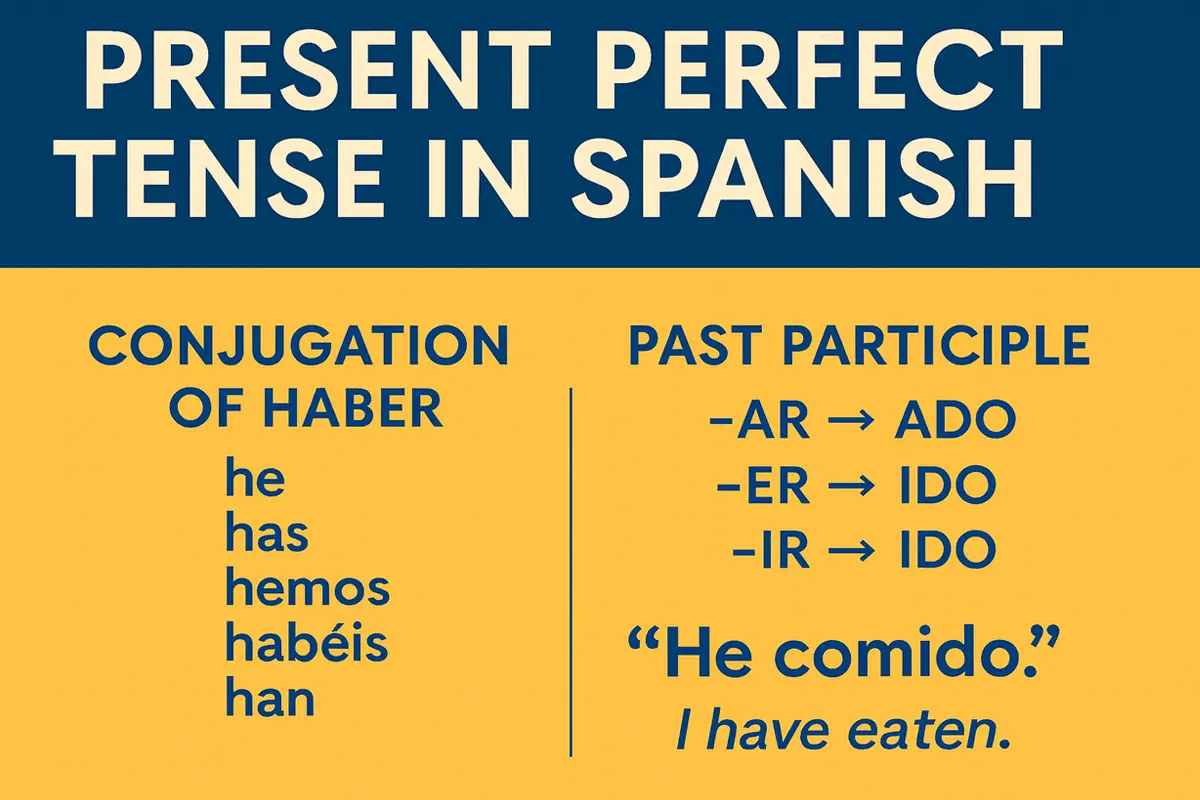
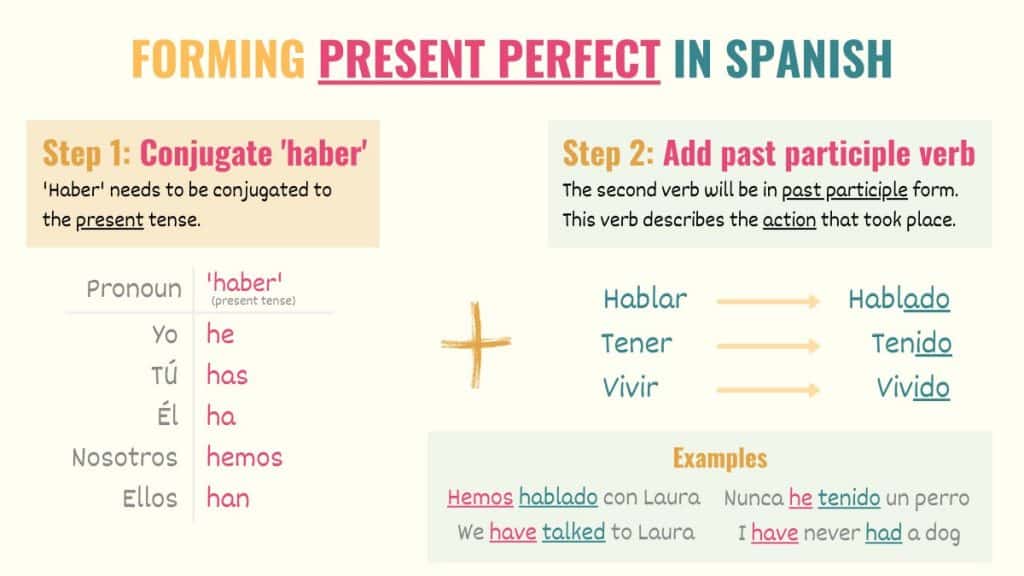
To form the present perfect, you must conjugate the verb haber in the present tense. It is essential to recognize that in this specific context, haber does not mean “to have” in the sense of possession (that would be tener); rather, it functions solely as an auxiliary, or “helper,” verb. The conjugations are:
- Yo he
- Tú has
- Él/Ella/Usted ha
- Nosotros hemos
- Vosotros habéis
- Ellos/Ellas/Ustedes han
Formulating the Past Participle
The second component is the past participle. For regular verbs, the conversion process is straightforward and formulaic:
- -ar verbs: Replace the ending with -ado (e.g., hablar becomes hablado).
- -er and -ir verbs: Replace the ending with -ido (e.g., comer becomes comido; vivir becomes vivido).
When combined—he hablado (I have spoken), hemos comido (we have eaten)—you create a functional unit that conveys an action that holds relevance in the current moment.
Functional Utility: When to Deploy the Tense
In language, as in software development, the “when” is as important as the “how.” The pretérito perfecto compuesto is used to describe actions that occurred at an unspecified time in the past or actions that began in the past and continue into the present. It acts as a status update for your narrative.
Connecting Past Actions to Present Relevance
The primary function of this tense is to bridge the gap between history and the current state of affairs. If you say, “He terminado el informe” (I have finished the report), the focus is not on the specific hour you completed the task, but rather on the current state of the report: it is finished. This makes the present perfect an ideal tool for corporate communication, project management updates, and status reporting.
Unspecified Timeframes
Spanish speakers use this tense when the temporal markers are intentionally broad or inclusive of the present period. Phrases like hoy (today), esta semana (this week), este mes (this month), or últimamente (lately) are natural companions to the present perfect. These indicators signify that the window of time is still open.
- Esta semana he trabajado en el nuevo diseño del sitio web. (This week I have worked on the new website design.)
If you were to use a completed timeframe, such as ayer (yesterday), you would revert to the simple past (pretérito indefinido), because the timeframe is closed, much like a completed sprint in an agile development cycle.
Identifying Irregular Patterns and Debugging Common Errors
Just as digital systems have edge cases that deviate from standard logic, the Spanish present perfect features a set of irregular past participles that must be memorized to ensure linguistic accuracy. These are the “exceptions to the rule” that demand manual verification.
Managing Irregular Past Participles
Many high-frequency verbs in Spanish do not follow the standard -ado or -ido suffix rule. Recognizing these is essential for professional fluency:
- Abrir (to open) becomes abierto
- Decir (to say) becomes dicho
- Escribir (to write) becomes escrito
- Hacer (to do/make) becomes hecho
- Morir (to die) becomes muerto
- Poner (to put) becomes puesto
- Romper (to break) becomes roto
- Ver (to see) becomes visto
- Volver (to return) becomes vuelto
Integrating these into your vocabulary ensures that your communication remains polished and grammatically sound, avoiding the common “bug” of applying regular rules to irregular roots.
The “False Friend” of Direct Translation
A frequent point of friction for English speakers learning Spanish is the temptation to translate directly from English to Spanish. In English, we often use the present perfect for events in the distant past that have no connection to the present. In Spanish, however, the pretérito perfecto compuesto remains strictly tethered to current relevance or a current timeframe.
If a project was completed last year, a native Spanish speaker would never use the present perfect; they would use the pretérito indefinido (terminé). Misusing these tenses is a common “syntax error” that can confuse the listener regarding the timeline of your actions.
Strategic Application in Professional Environments
Understanding the present perfect is not merely an academic exercise; it is a tool for professional efficacy. Whether you are drafting an email to a global team, participating in a video conference with international stakeholders, or documenting technical requirements, the ability to accurately reflect the status of your work is paramount.
Enhancing Clarity in Global Workflows
When working in international teams, the clarity of your communication dictates the efficiency of the workflow. Utilizing the present perfect allows you to communicate the current status of a deliverable clearly.
- Hemos implementado la nueva actualización. (We have implemented the new update.)
This statement signals to your team that the task is complete and the current system environment is updated. By choosing the correct tense, you eliminate ambiguity regarding whether the action is still in progress or has been finalized.

The Value of Linguistic Precision
As the global economy relies more heavily on AI-driven translation tools and digital connectivity, the nuances of human language remain the ultimate differentiator. Algorithms may translate words, but they do not always capture the contextual weight of a tense. By mastering the present perfect, you elevate your communication from a series of disjointed statements to a coherent narrative. You demonstrate that you understand not just the “what” of an action, but its temporal significance.
In summary, the present perfect tense in Spanish is a fundamental component of the language’s logical framework. It allows you to link your past contributions to your present accomplishments with precision. By learning the structure of haber plus the past participle, respecting the irregular exceptions, and knowing exactly when to deploy the tense based on the “openness” of a timeframe, you gain a powerful asset in your linguistic toolkit. Much like maintaining a robust software stack, keeping your Spanish grammar sharp ensures that your message is received, understood, and effectively executed by those with whom you collaborate. As you continue to practice, view each sentence as an opportunity to refine your output and sharpen your connection with the Spanish-speaking world.
aViewFromTheCave is a participant in the Amazon Services LLC Associates Program, an affiliate advertising program designed to provide a means for sites to earn advertising fees by advertising and linking to Amazon.com. Amazon, the Amazon logo, AmazonSupply, and the AmazonSupply logo are trademarks of Amazon.com, Inc. or its affiliates. As an Amazon Associate we earn affiliate commissions from qualifying purchases.