
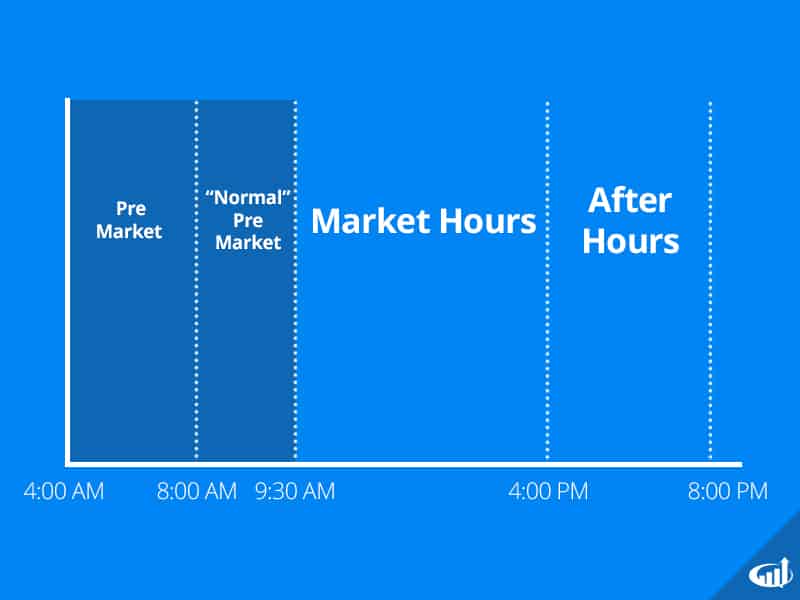
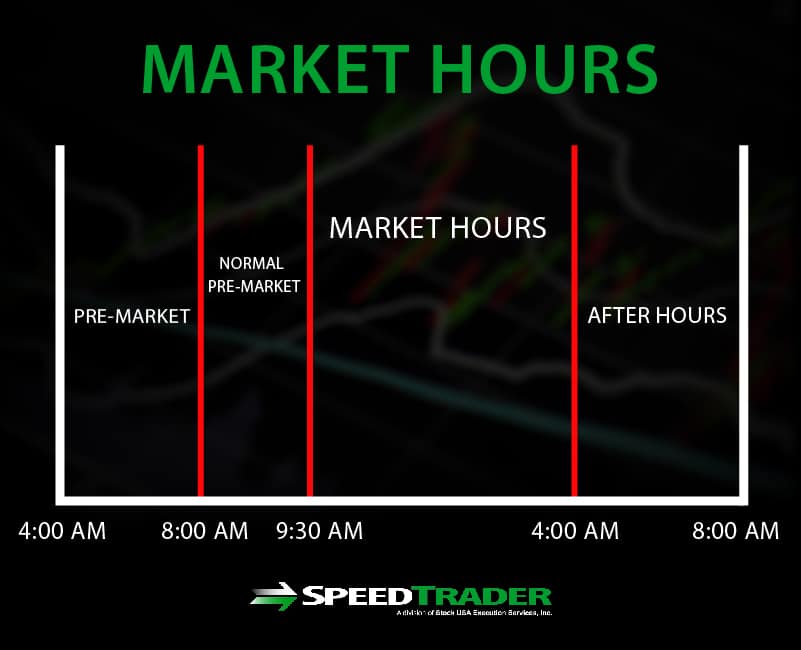
In the dynamic world of stock market investing, the traditional nine-to-five workday often feels like an anachronism. While standard market hours have long dictated when investors can buy and sell securities, the advent of electronic trading has expanded these boundaries significantly. Among the most pivotal of these extensions is pre-market trading, a period that allows investors to execute trades before the opening bell rings on major exchanges. This early window, often starting as early as 4:00 AM EST, is not merely an extended convenience; it’s a distinct trading environment characterized by unique opportunities, challenges, and dynamics. For both seasoned day traders and long-term investors, understanding pre-market trading is crucial for navigating modern financial markets effectively, offering insights into market sentiment, potential volatility, and strategic positioning before the mainstream rush begins.

This comprehensive guide delves into the intricacies of pre-market trading, demystifying its mechanisms, exploring its benefits, highlighting its inherent risks, and outlining practical strategies for those looking to engage in this less conventional, yet potentially highly impactful, segment of the trading day. From reacting to breaking news and earnings reports to identifying early price movements, pre-market trading offers a compelling glimpse into the market’s pulse, albeit one that demands a sophisticated understanding of its unique landscape.
Understanding the Trading Day Cycle
To fully grasp the significance of pre-market trading, it’s essential to first understand the traditional framework of the stock market day and how extended hours fit into this established rhythm. The market’s structure is designed to facilitate orderly trading, but technological advancements have increasingly blurred the lines between official operating times.
The Traditional Market Hours
For decades, the stock market operated within a well-defined schedule. In the United States, the New York Stock Exchange (NYSE) and Nasdaq, the two primary equity exchanges, typically open at 9:30 AM Eastern Standard Time (EST) and close at 4:00 PM EST. These “regular trading hours” are characterized by maximum liquidity, narrow bid-ask spreads, and the most robust participation from both institutional and retail investors. During this period, market data is widely available, order execution is generally efficient, and the majority of market activity occurs. This is the benchmark against which all extended-hours trading is compared, offering a predictable and usually more stable environment for trading and investing.
Introduction to Extended-Hours Trading
The concept of restricting trading to specific hours was largely a product of a less interconnected world, where physical trading floors and manual order processing were the norms. With the advent of computerized trading systems and the rise of electronic communication networks (ECNs) in the late 20th century, the technical barriers to trading outside these hours began to erode. Extended-hours trading encompasses both pre-market trading and after-hours trading (which occurs after the 4:00 PM close). This evolution has allowed investors to react to global events, company announcements, and economic data almost instantaneously, rather than waiting for the next market open. While offering flexibility, these extended periods operate under different rules and conditions, necessitating a distinct approach from traders.
The Mechanics of Pre-Market Trading
Pre-market trading isn’t simply an earlier start to the regular trading day; it’s a distinct operational environment with its own set of rules, participants, and infrastructure. Understanding these mechanics is vital for anyone considering participating.
Who Can Participate?
Historically, extended-hours trading was predominantly the domain of institutional investors, hedge funds, and professional traders with access to specialized trading desks and direct market access. These entities could afford the necessary technology and staffing to monitor and trade during off-hours. However, with the proliferation of online brokerage platforms and advancements in trading technology, pre-market access has become widely available to retail investors. Most major brokerage firms now offer their clients the ability to place orders during pre-market hours, though the specific hours and available tools can vary from one broker to another. While the access is democratized, the competitive landscape often still favors larger, more sophisticated players due to their resources and information access.
How Pre-Market Trading Works (ECNs and Brokers)
Unlike regular trading hours, where orders are routed to central exchanges like the NYSE or Nasdaq, pre-market trading primarily occurs through Electronic Communication Networks (ECNs). ECNs are automated trading systems that match buy and sell orders electronically. When you place a pre-market order through your brokerage, it’s typically routed to one or more ECNs that are open for extended-hours trading. These ECNs essentially create a decentralized marketplace outside of the main exchanges. Brokers act as intermediaries, connecting retail traders to these ECNs. The orders are processed and matched based on price and time priority, much like regular market orders, but within a smaller, less liquid pool of participants. This structure means that a stock might trade on multiple ECNs simultaneously, leading to potential price discrepancies across different platforms.
Order Types and Execution in Pre-Market
The types of orders available and how they are executed in pre-market can differ significantly from regular hours. Generally, limit orders are the standard and often the only sensible choice for pre-market trading. A limit order specifies the maximum price you’re willing to pay to buy or the minimum price you’re willing to accept to sell. Given the lower liquidity and higher volatility, market orders (which execute at the best available price) are generally ill-advised and can lead to unexpected and unfavorable execution prices, a phenomenon known as “slippage.” Furthermore, orders placed during pre-market often have specific time-in-force instructions, such as “Good-Til-Canceled” (GTC) or “Day” orders that specify whether the order should remain active until the market open or beyond. Due to the fragmented nature of ECNs, full order book depth may not always be visible, and partial fills can occur, further complicating execution.
Why Traders Engage in Pre-Market Activities
Despite the inherent challenges, pre-market trading attracts a significant number of participants for compelling reasons, primarily centered around information arbitrage and early positioning.
Reacting to News and Earnings Reports
One of the most powerful drivers of pre-market activity is the release of market-moving news. Companies frequently schedule the release of their quarterly earnings reports, product announcements, mergers and acquisitions news, or regulatory updates either before the market opens or after it closes. Pre-market trading provides an immediate opportunity for investors to react to this information. Traders who can quickly digest and analyze these announcements can take positions before the broader market has a chance to react, potentially capitalizing on significant price movements that occur in the minutes and hours following the news release. This “first-mover advantage” can be incredibly valuable, as a stock’s price can consolidate or reverse once regular trading hours begin and more participants enter the market.
Price Discovery and Early Positioning
Pre-market trading plays a critical role in price discovery. The trading activity during these hours helps to establish an initial price range for a stock before the market officially opens. This “pre-market indication” can give valuable clues about how a stock might perform during regular hours, signaling potential strong opens or significant gaps up or down. For investors with a long-term strategy, pre-market trading can be used to establish or adjust positions based on new information, ensuring they are positioned correctly for the upcoming trading day without having to wait for the crowded regular hours. For day traders, identifying these early trends and momentum can be key to formulating their strategies for the rest of the day, allowing them to ride early waves of buying or selling pressure.
Volatility and Potential for Quick Gains
While often seen as a risk, the increased volatility in pre-market trading can also present opportunities for quick gains for skilled traders. Lower liquidity means that fewer shares need to be traded to cause significant price swings. For stocks reacting to major news, these swings can be dramatic. Traders employing short-term strategies, such as scalping or momentum trading, might target these volatile movements. The potential for a stock to gap up or down significantly on news can be a goldmine for those who correctly anticipate the market’s reaction and can execute trades swiftly. However, this same volatility is a double-edged sword, carrying an equally high risk of rapid losses if market sentiment turns or an initial reaction proves to be overblown.
Risks and Challenges of Pre-Market Trading
While attractive for its opportunities, pre-market trading is undeniably a high-risk environment. It presents several unique challenges that can disproportionately affect less experienced traders.
Lower Liquidity and Wider Spreads
The most significant risk in pre-market trading is the dramatically lower liquidity compared to regular hours. With fewer buyers and sellers participating, it can be challenging to execute trades at desired prices, especially for larger orders. This reduced liquidity also leads to wider bid-ask spreads. The “spread” is the difference between the highest price a buyer is willing to pay (the bid) and the lowest price a seller is willing to accept (the ask). In a low-liquidity environment, this spread can widen considerably, meaning you might buy at a much higher price than the last trade or sell at a much lower price, effectively losing money on the transaction itself before any market movement.
Increased Volatility and Price Swings
As discussed, volatility can be an opportunity, but it is primarily a risk. The lack of depth in the order book means that relatively small trades can cause significant price fluctuations. A single large buy or sell order can send a stock’s price soaring or plummeting in a matter of minutes. This amplified volatility makes price predictions more difficult and increases the risk of stop-loss orders being triggered prematurely or limit orders being bypassed entirely, leading to unexpected losses or missed opportunities. Traders must be prepared for swift and sometimes irrational price movements driven by limited participation.
Limited Order Types and Execution Uncertainty
While most brokers offer pre-market trading, the range of available order types might be more restricted. Complex conditional orders or advanced algorithmic strategies may not be supported. Furthermore, the fragmented nature of ECNs means that a comprehensive view of the market’s depth across all platforms might not be available. This “dark pool” aspect can lead to execution uncertainty, where an order might be placed but not filled, or only partially filled, especially during periods of high demand or supply. The lack of a consolidated order book makes it harder to gauge true buying or selling pressure, adding another layer of complexity.
Professional vs. Retail Trader Disadvantage
Despite retail access, pre-market trading still favors institutional and professional traders. They often have access to faster data feeds, sophisticated trading algorithms, and direct market access that allows for superior execution speed. Moreover, they possess extensive analytical resources and established networks to gather and interpret news quickly. Retail traders, using standard brokerage platforms, might be at a significant disadvantage in terms of information latency and execution speed, making it harder to consistently profit in such a fast-paced and competitive environment.
Strategies and Best Practices for Pre-Market Trading
Navigating the complexities of pre-market trading requires a disciplined approach and adherence to specific strategies to mitigate risks and capitalize on opportunities.
Focus on High-Volume, News-Driven Stocks
The most prudent approach is to focus only on stocks that are genuinely active and liquid during pre-market hours, typically driven by significant news events like earnings reports, FDA approvals, or major corporate announcements. Avoid trying to trade illiquid stocks in pre-market, as the wider spreads and low volume will almost guarantee unfavorable execution. Look for stocks with considerable pre-market trading volume (e.g., hundreds of thousands or millions of shares) to ensure there’s enough liquidity to enter and exit positions without excessive slippage.
Utilize Limit Orders Exclusively
Under no circumstances should market orders be used in pre-market trading. Always employ limit orders. A limit order guarantees your execution price (or better), though it does not guarantee execution. This is critical for controlling your risk, especially when liquidity is thin and volatility is high. By setting your precise entry and exit points, you protect yourself from adverse price swings that could otherwise wipe out your capital in seconds with a market order.
Monitor Pre-Market Scanners and News Feeds
Successful pre-market traders are often glued to their screens, monitoring real-time news feeds (such as financial newswires like Bloomberg, Reuters, or specific financial news aggregators) and pre-market scanners. These scanners identify stocks that are experiencing unusual volume, significant price movements, or breaking news, signaling potential trading opportunities. Rapidly assessing the impact of news on a company’s fundamentals and market sentiment is paramount. Tools that provide real-time level 2 data (showing bid/ask depth) can also be invaluable, though less comprehensive than during regular hours.
Start Small and Manage Risk Effectively
For those new to pre-market trading, it is crucial to start with very small position sizes. This allows you to gain experience and understand the dynamics without risking significant capital. Implement strict risk management rules, including clear stop-loss levels. Given the volatility, pre-market trading can be unforgiving, and capital preservation should always be the top priority. Consider risking only a tiny percentage of your trading capital on any single pre-market trade and be prepared to cut losses quickly if a trade moves against you. Emotional discipline is particularly vital in this fast-paced environment.
In conclusion, pre-market trading offers a fascinating and potentially profitable dimension to stock market investing, allowing participants to react to information and position themselves before the conventional market opens. However, it is an arena fraught with increased risks due to lower liquidity, higher volatility, and a less transparent trading environment. For the informed, disciplined, and technologically adept trader, it can provide unique opportunities for price discovery and capital appreciation. For others, it serves as a crucial indicator of market sentiment that informs their regular-hours trading. Regardless of your participation level, a thorough understanding of pre-market trading is an indispensable asset for navigating the complexities of modern financial markets.
aViewFromTheCave is a participant in the Amazon Services LLC Associates Program, an affiliate advertising program designed to provide a means for sites to earn advertising fees by advertising and linking to Amazon.com. Amazon, the Amazon logo, AmazonSupply, and the AmazonSupply logo are trademarks of Amazon.com, Inc. or its affiliates. As an Amazon Associate we earn affiliate commissions from qualifying purchases.