
The allure of a massive lottery jackpot is a powerful motivator, drawing millions of hopeful players to purchase tickets for games like Powerball. While the dream of winning big is universal, understanding the nuances of how these games operate—especially optional features like PowerPlay—is crucial for making informed financial decisions. The PowerPlay feature in Powerball is more than just an add-on; it’s a strategic element that can significantly alter the non-jackpot prize structure, impacting your potential winnings and the overall cost of your participation. For anyone engaging with lotteries as a form of entertainment or a speculative financial venture, deciphering the PowerPlay mechanism is key to comprehending the full scope of their investment and potential returns.
The Core Mechanics of Powerball and the PowerPlay Concept
To truly grasp the essence of PowerPlay, one must first understand the fundamental structure of the Powerball lottery itself. Powerball is a multi-state lottery game renowned for its colossal jackpots, often soaring into hundreds of millions, and sometimes even over a billion dollars. Players select five numbers from a pool of 69 white balls and one number from a pool of 26 red Powerballs. Matching certain combinations of these numbers yields various prize tiers, with the ultimate goal being to match all six for the grand jackpot.
Understanding Powerball’s Foundation
The foundational appeal of Powerball lies in its simplicity combined with the astronomical odds. The game’s structure is designed to create substantial jackpots, which in turn drive ticket sales and public excitement. There are nine ways to win a prize in Powerball, ranging from simply matching the red Powerball for a $4 prize to matching all five white balls plus the Powerball for the jackpot. The odds of winning the jackpot are roughly 1 in 292.2 million, underscoring the lottery’s nature as a game of chance with a very low probability of hitting the top prize.
The prize tiers below the jackpot are fixed amounts. For instance, matching all five white balls but not the Powerball typically wins $1 million. Matching four white balls and the Powerball usually nets $50,000, and so on. These fixed prize amounts are where the PowerPlay feature comes into play, offering an intriguing twist for those looking to amplify their winnings without necessarily hitting the jackpot.
Introducing the PowerPlay Multiplier
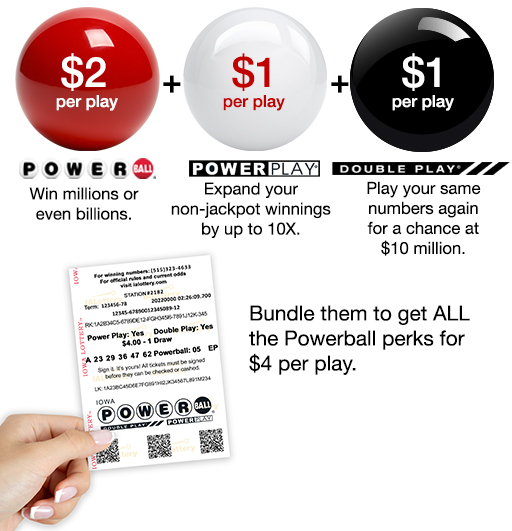
The PowerPlay is an optional add-on feature that players can choose to include with their Powerball ticket. For an additional cost per play, typically $1, the PowerPlay option can multiply any non-jackpot prize won by 2x, 3x, 4x, 5x, or even 10x. This means that if you match enough numbers to win a non-jackpot prize, and you’ve opted for PowerPlay, your winnings could be significantly larger than the standard prize amount. The specific multiplier for each drawing is randomly selected just before the Powerball numbers are drawn.
The introduction of PowerPlay fundamentally alters the financial landscape for secondary prize winners. While it doesn’t improve your odds of winning any prize, it does enhance the potential payout for those prizes. This creates an interesting dynamic for players, weighing the additional cost against the prospect of a boosted windfall, making it a key consideration for anyone with a strategic approach to lottery play.
How PowerPlay Works: Deciphering the Multiplier Mechanism
The mechanics of PowerPlay are straightforward once you understand the core concept, yet there are specific rules and exceptions that players must be aware of. This feature is designed to add an extra layer of excitement and potential financial gain to the Powerball experience, but it’s crucial to understand its limitations and specific applications.
The Cost and Activation of PowerPlay
Activating the PowerPlay feature is simple: when purchasing your Powerball ticket, you simply select the PowerPlay option. It typically adds an extra $1 to the cost of each Powerball play. So, if a standard Powerball ticket costs $2, a ticket with PowerPlay would cost $3. This additional dollar is a direct financial investment that needs to be weighed against the potential enhancement of winnings.
It’s important to remember that the PowerPlay is an “all or nothing” proposition for your selected numbers. If you play multiple lines on a single ticket, you must choose to activate PowerPlay for all lines or none. You cannot selectively apply PowerPlay to just one line out of several. This commitment means that the financial decision to add PowerPlay extends to your entire ticket or specific plays, influencing your total outlay.
The Multiplier Values and Selection Process
Before each Powerball drawing, a PowerPlay multiplier (2x, 3x, 4x, 5x, or 10x) is randomly selected. This multiplier applies to all non-jackpot prizes won by players who opted for PowerPlay. The 10x multiplier is usually only available when the advertised jackpot is $150 million or less, adding an interesting strategic element to when players might consider activating PowerPlay. When the jackpot is higher, only the 2x, 3x, 4x, and 5x multipliers are in play.
For example, if you match four white balls and the Powerball, the standard prize is $50,000. If you purchased the PowerPlay option and the multiplier drawn was 3x, your prize would jump to $150,000 ($50,000 x 3). This dramatic increase in potential winnings is the primary appeal of PowerPlay, turning modest prizes into substantial sums. The randomness of the multiplier selection means players cannot predict which multiplier will be active for their drawing, introducing an element of pure chance even to the multiplier itself.
Exceptions to the Multiplier Rule (Jackpot & Match 5)
While PowerPlay can significantly boost most non-jackpot prizes, there are two critical exceptions:
-
The Grand Jackpot: The PowerPlay feature never applies to the Powerball grand jackpot. If you match all five white balls and the red Powerball, you win the advertised jackpot amount, regardless of whether you opted for PowerPlay. This is a fundamental rule, as the jackpot is already a variable, often multi-million dollar prize, and multiplying it further would distort the game’s financial model.
-
Match 5 Prize (Five White Balls): The prize for matching all five white balls but not the Powerball is typically $1 million. When PowerPlay is activated for this prize tier, it is only ever doubled to $2 million, regardless of the randomly drawn multiplier (e.g., even if a 5x or 10x multiplier is drawn, the Match 5 prize will only increase to $2 million). This is a fixed enhancement and represents a cap on the multiplier for this specific, high-tier prize. This exception is vital for players to understand, as it limits the potential upside for what is arguably the second-most coveted prize in the game.
Understanding these exceptions is crucial for managing expectations and making informed financial decisions about purchasing the PowerPlay option. It highlights that PowerPlay is primarily designed to enhance the smaller to mid-range prizes rather than the top two tiers.
The Financial Implications: Is PowerPlay a Worthwhile Investment?
For many, playing the lottery is a form of entertainment, and the extra dollar for PowerPlay might be seen as part of the fun. However, from a purely financial perspective, considering PowerPlay involves weighing additional cost against the enhanced potential returns. This analysis delves into the economic rationale behind adding PowerPlay to your ticket.
Analyzing the Odds vs. Enhanced Payouts
The fundamental financial decision revolves around the additional $1 cost for PowerPlay. It’s imperative to reiterate that PowerPlay does not improve your odds of winning any prize. The probability of matching numbers remains exactly the same whether you pay $2 or $3 for your ticket. What PowerPlay does is change the payout for certain wins.
For smaller prizes, such as matching three white balls and the Powerball (standard prize $10), a 5x multiplier would turn that into $50. For the $50,000 prize (matching four white balls and the Powerball), a 5x multiplier yields $250,000. These are substantial increases. The question then becomes, what are the odds of hitting a prize that would be significantly enhanced by PowerPlay, and is the extra dollar “worth it” in terms of expected value?
Given the extremely low odds of winning any significant Powerball prize, the extra dollar for PowerPlay does not dramatically alter the overall expected value calculation for the vast majority of players. However, for those who do manage to win a non-jackpot prize, the PowerPlay can offer a welcome and substantial boost. The “worth” is subjective, balancing the marginal increase in cost against the potential for a non-marginal increase in payout, albeit for an improbable event.
The Opportunity Cost of the Extra Dollar
Every dollar spent on a lottery ticket, including the PowerPlay add-on, represents an opportunity cost. That $1 could have been saved, invested, or used for other purposes. While a dollar might seem insignificant, consistently purchasing PowerPlay over time can add up. For a regular player who buys one ticket with PowerPlay twice a week, that’s an extra $104 per year spent purely on the multiplier feature.
Over a decade, this could amount to over $1,000. While this sum might not be life-changing, it’s a non-trivial amount that, if invested even conservatively, could grow. This perspective encourages players to consider their lottery spending within their broader personal finance strategy, understanding that even small, regular expenditures can have long-term financial implications.
Psychological Impact and Decision-Making
The decision to add PowerPlay often taps into psychological biases. The “what if” factor is powerful: what if you win a prize, and you didn’t add PowerPlay, missing out on a potentially much larger sum? This fear of missing out (FOMO) can be a strong driver for players to consistently add PowerPlay, even if a strict probabilistic analysis might suggest otherwise.
The appeal of multiplying a $1 million prize to $2 million, or turning a $50,000 win into a $250,000 windfall, is highly attractive. This psychological pull can override purely rational financial calculations, leading players to perceive the extra $1 as a low-cost insurance policy for higher payouts, despite the incredibly long odds against winning any prize in the first place. Understanding this psychological aspect is crucial for players to make choices that align with their personal financial goals and risk tolerance.
Strategic Considerations for Powerball Players
For individuals who participate in Powerball, approaching the game with a degree of strategy, even within the confines of a game of chance, can be beneficial. This involves not only understanding the mechanics but also how PowerPlay fits into a responsible and financially aware playing style.
When PowerPlay Makes Financial Sense
From a purely mathematical standpoint, adding PowerPlay generally does not change the game’s negative expected value (meaning, on average, you expect to lose money). However, if one does win a non-jackpot prize, the PowerPlay offers a substantial increase in payout for a relatively small additional investment. For the serious player, if their budget allows for the extra dollar, it might be considered a worthwhile enhancement, particularly when the 10x multiplier is in play (for jackpots below $150 million), as this significantly boosts the potential return on smaller prizes.
The decision can also be influenced by the size of the secondary prizes. If the excitement of winning a $50,000 prize is amplified by the prospect of it becoming $250,000 or more, then the extra dollar may feel like a worthwhile gamble for some. Ultimately, it’s about individual risk appetite and what level of potential reward feels satisfying for the additional cost.
Budgeting for Lottery Play
Responsible financial management dictates that any form of gambling, including lottery play, should be treated as an entertainment expense within a strictly defined budget. This means allocating a specific, non-essential amount of money that you are prepared to lose. Whether you opt for PowerPlay or not, this core principle remains paramount.
If your lottery budget for a single drawing is $2, then adding PowerPlay means you cannot play an additional line. If your budget is $3, you can play one line with PowerPlay or one additional line without. These seemingly small decisions accumulate and are vital components of a personal finance strategy. Integrating PowerPlay into your budget means explicitly accounting for the additional cost and understanding how it affects your overall lottery spending limit.
Understanding Expected Value (briefly)
For those mathematically inclined, the concept of expected value (EV) can inform decisions. In Powerball, the EV of a ticket is overwhelmingly negative due to the low odds and the house edge. Adding PowerPlay slightly alters the EV for non-jackpot prizes, increasing the potential payout for those rare wins, but it does not shift the overall EV into positive territory.
A simplified way to think about it is that PowerPlay offers a higher payout for very improbable events. If you’re going to play anyway, and you can afford the extra dollar, the marginal increase in EV for non-jackpot prizes might be seen as justifiable by some, especially for the lower tier prizes where multipliers can have a significant proportional impact. However, it’s a choice made within the context of a game that is, by design, not a profitable financial endeavor for the player.
Beyond the Numbers: Responsible Lottery Participation
While the financial aspects of PowerPlay and Powerball are compelling, it’s critical to emphasize the broader context of responsible gaming. Lotteries are a form of entertainment, and understanding their mechanisms, including PowerPlay, should always be coupled with a healthy perspective on risk and financial well-being.
Setting Limits and Managing Expectations
The dream of winning big can be intoxicating, but it’s essential for players to maintain realistic expectations. The odds of winning the Powerball jackpot, or even a significant secondary prize, remain astronomically low, even with PowerPlay. Setting strict financial limits for lottery play and sticking to them is the cornerstone of responsible participation. Never spend money you can’t afford to lose, and never view lottery tickets as an investment or a viable path to financial stability.
The PowerPlay feature, while adding excitement, should not entice players to exceed their pre-set budget. It’s an enhancement to a game, not a guarantee of improved financial outcomes. Managing expectations also means understanding the specific rules, like the $2 million cap on the Match 5 prize with PowerPlay, to avoid disappointment.
Resources for Responsible Gaming
For some individuals, the allure of the lottery can evolve into problem gambling, leading to significant financial and personal distress. It’s crucial to be aware of the signs of problem gambling and to seek help if necessary. Numerous resources are available for responsible gaming, including national helplines and websites dedicated to providing support and guidance. Organizations like the National Council on Problem Gambling offer confidential support and resources for individuals and families affected by gambling addiction.
Understanding “what is the PowerPlay in Powerball” goes beyond just the mechanics of the game. It’s about making an informed financial decision within the broader context of personal finance and responsible entertainment. While PowerPlay offers an exciting twist and the potential for larger non-jackpot winnings, it should always be considered a supplemental part of a well-thought-out budget for leisure activities, emphasizing responsible play above all else.
aViewFromTheCave is a participant in the Amazon Services LLC Associates Program, an affiliate advertising program designed to provide a means for sites to earn advertising fees by advertising and linking to Amazon.com. Amazon, the Amazon logo, AmazonSupply, and the AmazonSupply logo are trademarks of Amazon.com, Inc. or its affiliates. As an Amazon Associate we earn affiliate commissions from qualifying purchases.