
Understanding the poverty percentage in America requires moving beyond a simple singular figure to look at the underlying financial structures that define the U.S. economy. According to the most recent data released by the U.S. Census Bureau, the official poverty rate stands at approximately 11.5%. However, when utilizing the Supplemental Poverty Measure (SPM)—which accounts for government assistance and the varying cost of living across geographic regions—the figure often fluctuates significantly, reflecting the complex reality of American financial health.
For investors, policymakers, and personal finance enthusiasts, these numbers are not just social indicators; they are vital economic metrics. They signal the health of the consumer market, the stability of the labor force, and the long-term sustainability of the American middle class. To truly grasp what it means to live below the poverty line in the world’s largest economy, one must dissect how these figures are calculated, the financial triggers that drive them, and the macroeconomic consequences of persistent income inequality.

Decoding the Numbers: The Current Landscape of Poverty in the United States
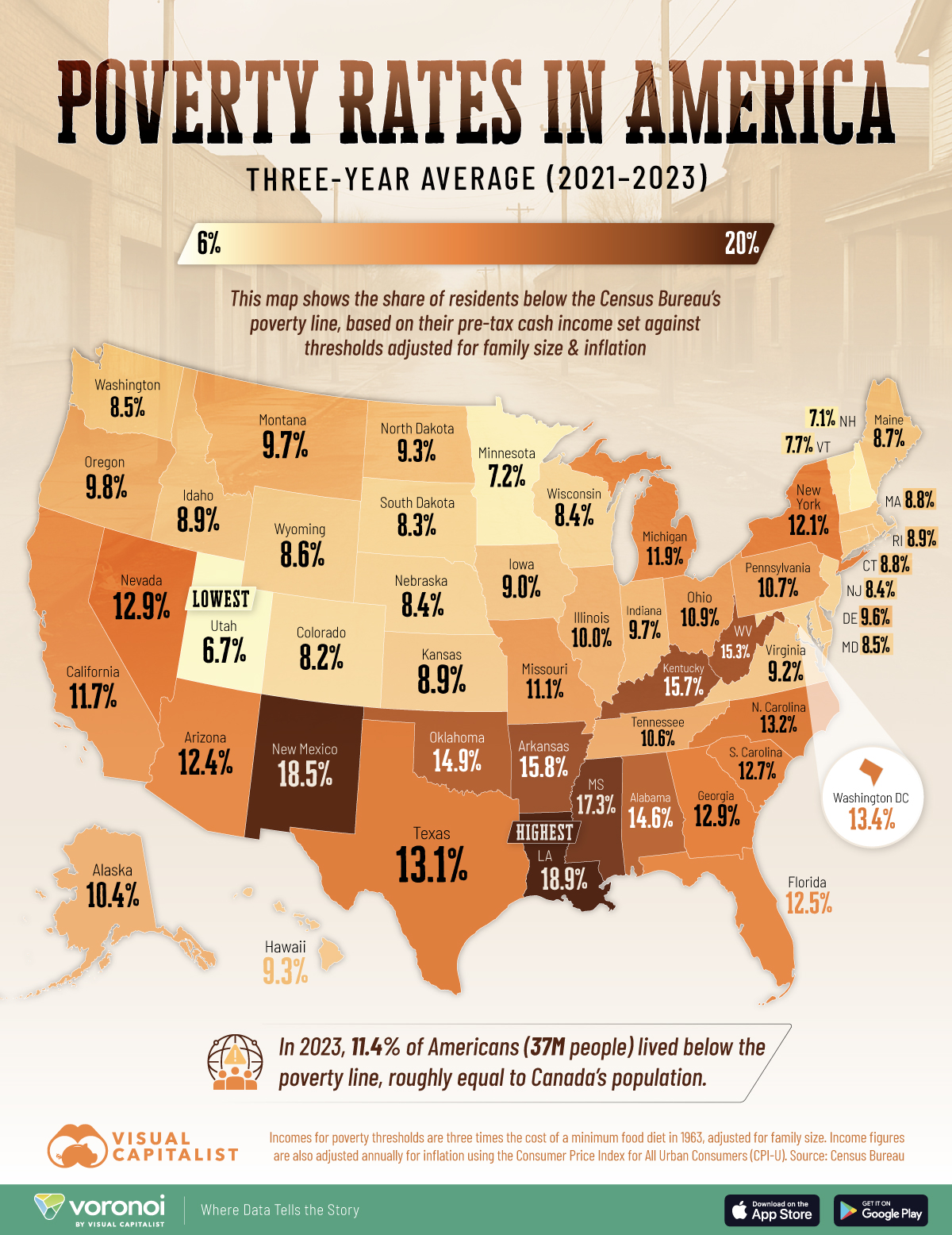
The “official” poverty rate in the United States is calculated by comparing pre-tax cash income against a threshold that is set at three times the cost of a minimum food diet in 1963, updated annually for inflation. While this provides a consistent historical benchmark, many economists argue that it is an outdated financial tool that fails to reflect modern expenses like childcare, healthcare, and high-speed internet.
Official Poverty Measure (OPM) vs. Supplemental Poverty Measure (SPM)
The OPM focuses strictly on gross cash income. As of the most recent census, this leaves millions of Americans categorized as “impoverished” because they earn less than the federal threshold (approximately $30,000 for a family of four). However, the OPM does not account for the “hidden income” provided by the Earned Income Tax Credit (EITC), SNAP benefits, or housing subsidies.
In contrast, the Supplemental Poverty Measure (SPM) provides a more nuanced financial portrait. It adds the value of non-cash benefits and subtracts necessary expenses like taxes and out-of-pocket medical costs. Interestingly, while the OPM has remained relatively stable over the last decade, the SPM can swing wildly based on federal policy. For instance, during the expansion of the Child Tax Credit, the SPM dropped to record lows, demonstrating how direct financial intervention can immediately alter the poverty percentage.
Geographic Disparities in Financial Stability
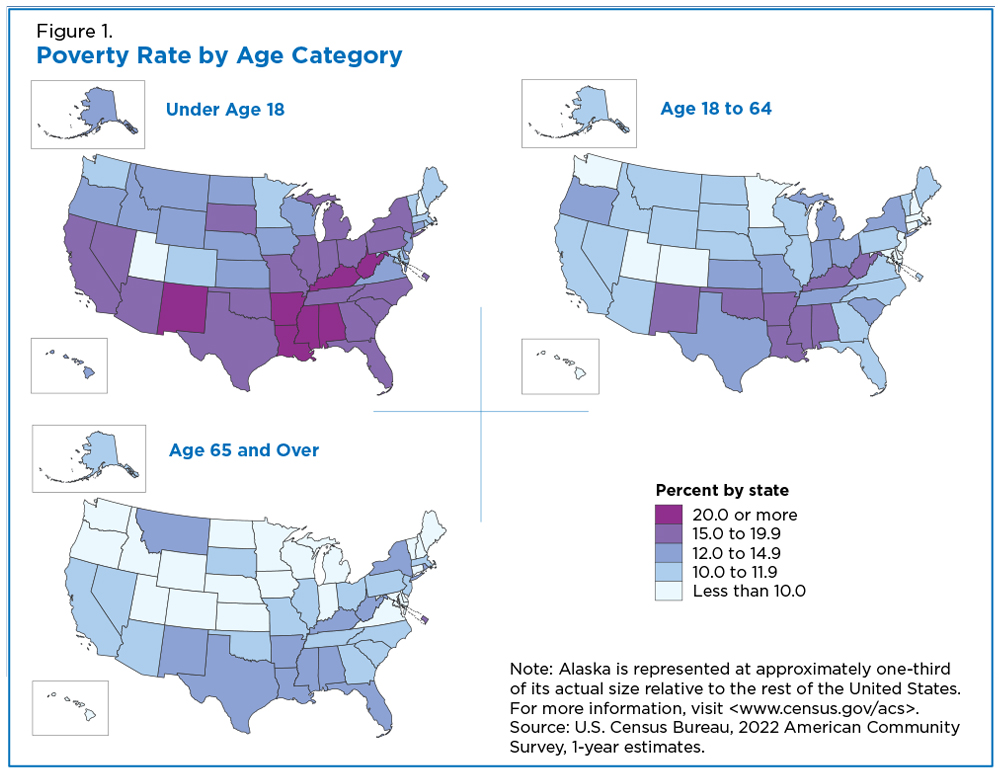
Poverty in America is not distributed evenly. From a personal finance perspective, the “percentage” changes drastically depending on your zip code. States in the Deep South, such as Mississippi and Louisiana, consistently report poverty rates exceeding 16%, driven by lower median wages and less diversified industrial bases. Conversely, states in the Northeast and the West Coast often show lower official poverty rates but higher costs of living, which can lead to a phenomenon known as being “asset limited, income constrained, employed” (ALICE). In these regions, an individual may technically earn above the poverty line but remain financially insolvent due to the exorbitant costs of housing and transportation.
The Financial Ecosystem of Poverty: Why the Percentage Remains Persistent
If the United States is home to the world’s most robust capital markets, why does more than 11% of its population remain in a state of financial deficit? The answer lies in the structural mechanics of the modern economy, specifically the widening gap between productivity and wage growth.
The Stagnation of Real Wages
For the bottom 20% of earners, wage growth has failed to keep pace with the rising costs of essential services. While the stock market has seen historic bull runs over the last two decades, the real purchasing power of the average hourly wage has remained relatively flat when adjusted for inflation. This creates a “poverty trap” where individuals are working full-time or multiple jobs but cannot accumulate enough surplus capital to invest in assets—such as real estate or equities—that build generational wealth.
Inflation and the Eroding Value of Savings
Inflation acts as a regressive tax. For those living near the poverty line, an increase in the Consumer Price Index (CPI) for groceries and fuel is not a mere inconvenience; it is a financial catastrophe. When the poverty percentage rises, it is often a direct reflection of “sticky” prices in the housing and energy sectors. When a household spends 50% or more of its income on rent, there is zero margin for error. A single medical emergency or an unexpected car repair can bridge the gap between being “lower-middle class” and being officially impoverished.
The “Cliff Effect” in Social Finance
One of the most significant hurdles to reducing the poverty percentage is the “Cliff Effect.” This occurs when a low-income earner receives a modest raise that disqualifies them from government assistance programs—such as subsidized childcare or healthcare—resulting in a net loss of total financial resources. From a business finance perspective, this creates a disincentive for labor force advancement, keeping a significant portion of the population stuck just below or just above the poverty threshold.
The Macroeconomic Impact of Domestic Poverty
Poverty is not an isolated financial issue; it is a drag on the entire U.S. economy. When 11.5% of the population lacks discretionary income, the velocity of money slows down, and the tax base is weakened.
Impact on Consumer Spending and GDP
The American economy is roughly 70% driven by consumer spending. When a significant percentage of the population is living in poverty, they are effectively removed from the cycle of discretionary consumption. They do not buy new cars, they do not upgrade appliances, and they do not participate in the services economy. This limits the total addressable market for American businesses and slows the growth of Gross Domestic Product (GDP).
The High Cost of Poverty to the Taxpayer
From a public finance standpoint, poverty is incredibly expensive. Lower health outcomes associated with financial instability lead to increased costs for the public healthcare system (Medicaid). Additionally, the lack of private investment in impoverished communities often leads to higher crime rates and increased expenditures on the legal system. Economists estimate that child poverty alone costs the U.S. economy over $1 trillion annually in lost productivity and increased social spending.
Breaking the Cycle: Strategies for Financial Mobility and Wealth Accumulation
Reducing the poverty percentage requires more than just social programs; it requires a focus on financial literacy, access to capital, and the democratization of investment tools.
The Role of Financial Literacy and Education
One of the key drivers of poverty is a lack of “financial capitalization.” Many households in the bottom quintile are “unbanked” or “underbanked,” meaning they rely on high-interest predatory lending services like payday loans. By integrating financial education into the core curriculum and providing low-cost banking alternatives, individuals can begin to manage their debt-to-income ratios more effectively, eventually moving from a state of debt to a state of saving.
Building Emergency Funds and Micro-Investing
For those living on the edge of the poverty line, the concept of “investing” can feel out of reach. However, the rise of fintech and fractional share investing has lowered the barrier to entry. Transitioning a household from a poverty mindset to a wealth-building mindset starts with the creation of a “starter” emergency fund. Financial experts suggest that even a $500 buffer can prevent the majority of low-income families from falling into a cycle of high-interest debt when an emergency occurs.
Closing the Digital and Capital Divide
In the modern economy, poverty is often a reflection of a lack of access to digital tools. High-speed internet and computing power are no longer luxuries; they are the infrastructure required to participate in the “side hustle” economy or the remote work market. By expanding digital access and providing small-business grants to underserved communities, the economy can unlock the latent entrepreneurial potential of those currently counted in the poverty statistics.
Policy and the Future of the American Financial Safety Net
The trajectory of the poverty percentage in the coming decade will largely be determined by how the U.S. handles shifts in the labor market, specifically regarding automation and AI.
The Earned Income Tax Credit (EITC) as a Wealth Lever
The EITC is widely considered one of the most effective financial tools for reducing poverty. By providing a refundable tax credit for low-to-moderate-income working individuals and couples, particularly those with children, the government encourages labor participation while providing a direct infusion of capital. Expanding such credits could provide the “seed money” necessary for families to transition into more stable financial brackets.
Automation and the Workforce of Tomorrow
As automation threatens low-skill service jobs—the very positions often held by those in the 11% poverty bracket—the financial landscape will undergo a massive transformation. To prevent the poverty percentage from spiking, there must be a concerted effort toward “upskilling” the workforce. This involves significant private and public investment in technical training and vocational education, ensuring that the labor force remains competitive in a tech-driven global market.
Ultimately, the poverty percentage in America is a dynamic figure that reflects the ongoing struggle between rising costs and stagnating opportunities. By analyzing this percentage through the lens of money, finance, and investment, we see that the solution lies not just in temporary relief, but in structural changes that allow every American to participate in the growth of the national economy. Reducing poverty is the ultimate “value play” for the United States, promising a future of higher productivity, increased stability, and a more robust financial ecosystem for all.
aViewFromTheCave is a participant in the Amazon Services LLC Associates Program, an affiliate advertising program designed to provide a means for sites to earn advertising fees by advertising and linking to Amazon.com. Amazon, the Amazon logo, AmazonSupply, and the AmazonSupply logo are trademarks of Amazon.com, Inc. or its affiliates. As an Amazon Associate we earn affiliate commissions from qualifying purchases.