
Since its inception in 2008 by the pseudonymous Satoshi Nakamoto, Bitcoin has sparked intense debate and fascination. More than just a digital curiosity, it has profoundly impacted the global financial landscape, challenging conventional wisdom about money, banking, and value. For many, the fundamental question remains: what exactly is the point of Bitcoin? Is it merely a speculative asset, a revolutionary technology, or something more? From a financial perspective, Bitcoin’s “point” lies in its multifaceted roles as a decentralized digital currency, a scarce store of value, and a catalyst for financial innovation, all while presenting unique opportunities and challenges to both personal and business finance.

Bitcoin as a Decentralized Digital Currency
At its core, Bitcoin was conceived as an answer to the perceived flaws of traditional fiat money systems, particularly the centralized control wielded by governments and financial institutions. Its primary “point” initially was to offer an alternative, a form of money that operates without intermediaries.
A Peer-to-Peer Electronic Cash System
Satoshi Nakamoto’s whitepaper introduced Bitcoin as a “peer-to-peer electronic cash system,” a bold vision to enable online payments to be sent directly from one party to another without going through a financial institution. This fundamental design choice empowers individuals, removing the need for trust in third-party entities that can censor transactions, levy high fees, or freeze accounts. In a world where financial freedom is increasingly valued, Bitcoin offers censorship resistance, ensuring that transactions, once validated on the blockchain, cannot be reversed or blocked by external authorities. This characteristic is particularly appealing in regions with authoritarian regimes or unstable financial systems, providing a lifeline for individuals to transact independently.
Global Accessibility and Borderless Transactions
One of Bitcoin’s most compelling financial points is its inherent global accessibility. Unlike traditional banking, which is often constrained by geographical borders, operating hours, and complex international transfer protocols, Bitcoin transactions can be initiated and received anywhere in the world, 24/7, with just an internet connection. This borderless nature significantly reduces the friction and costs associated with cross-border payments, making it a powerful tool for remittances, international trade, and simply moving capital across different jurisdictions without cumbersome bureaucratic processes or exorbitant fees from SWIFT or other legacy systems. For businesses and individuals engaged in global commerce, Bitcoin offers an efficient and often cheaper alternative for international transfers, bypassing traditional correspondent banking networks.
Protection Against Inflation and Currency Devaluation
A significant “point” of Bitcoin, especially for those concerned about macroeconomics, is its fixed supply. Capped at 21 million coins, Bitcoin is inherently deflationary, in stark contrast to fiat currencies which can be printed in unlimited quantities by central banks. This scarcity is a crucial hedge against inflation and currency devaluation. In countries experiencing hyperinflation or severe economic instability, local currencies can rapidly lose their purchasing power. Bitcoin offers an escape hatch, a way for individuals to preserve their wealth in an asset whose supply cannot be arbitrarily increased by political decisions. This “sound money” principle appeals to investors seeking a long-term store of value that is resistant to governmental monetary policy.
Bitcoin as a Store of Value and Investment Asset
Beyond its utility as a transactional currency, Bitcoin has cemented its role as a significant investment asset, often dubbed “digital gold.” Its unique economic characteristics make it a compelling component of modern investment portfolios.
“Digital Gold” – A Scarcity-Driven Asset
The comparison to gold is not accidental. Like gold, Bitcoin is scarce, difficult to produce (through mining), and divisible. Its fixed supply, coupled with increasing demand, has led many investors to view it as a superior form of gold for the digital age. In times of economic uncertainty or geopolitical instability, investors often flock to safe-haven assets. While Bitcoin’s volatility makes it a riskier proposition than gold, its limited supply and independence from central banks offer a similar appeal as a hedge against systemic financial risks. For investors, the “point” is clear: it’s an asset that offers potential appreciation based on its scarcity and a hedge against the debasement of fiat currencies.
Portfolio Diversification and Risk Management
For financial planners and savvy investors, Bitcoin presents an opportunity for portfolio diversification. Its price movements historically have shown low correlation with traditional asset classes like stocks and bonds, meaning it doesn’t always move in the same direction as the broader market. This non-correlation can be valuable for reducing overall portfolio risk. By allocating a small portion of a portfolio to Bitcoin, investors can potentially enhance returns and mitigate the impact of downturns in traditional markets. However, its nascent stage and inherent volatility necessitate a careful, risk-aware approach to allocation, often recommended as a smaller, high-growth component within a broader, diversified strategy.
The Volatility Paradox: Opportunity and Caution
Bitcoin’s notorious price volatility is a double-edged sword, representing both a significant opportunity for rapid gains and a substantial risk of substantial losses. For day traders and speculative investors, volatility is the “point” – it creates ample opportunities to profit from price swings. However, for long-term investors, the significant drawdowns can be unsettling. Understanding the underlying drivers of this volatility, such as market sentiment, regulatory news, macroeconomic factors, and technological developments, is crucial. The point for investors is to approach Bitcoin with a clear understanding of their risk tolerance and investment horizon, often favoring a “buy and hold” strategy to weather short-term fluctuations, or utilizing dollar-cost averaging to mitigate the impact of price swings.
Bitcoin’s Role in Financial Innovation and Inclusion
Bitcoin isn’t just a digital currency or an investment; it’s a foundational technology that has catalyzed an entirely new wave of financial innovation, fostering greater inclusion and pointing towards future financial paradigms.
Driving Blockchain Adoption and Web3 Development
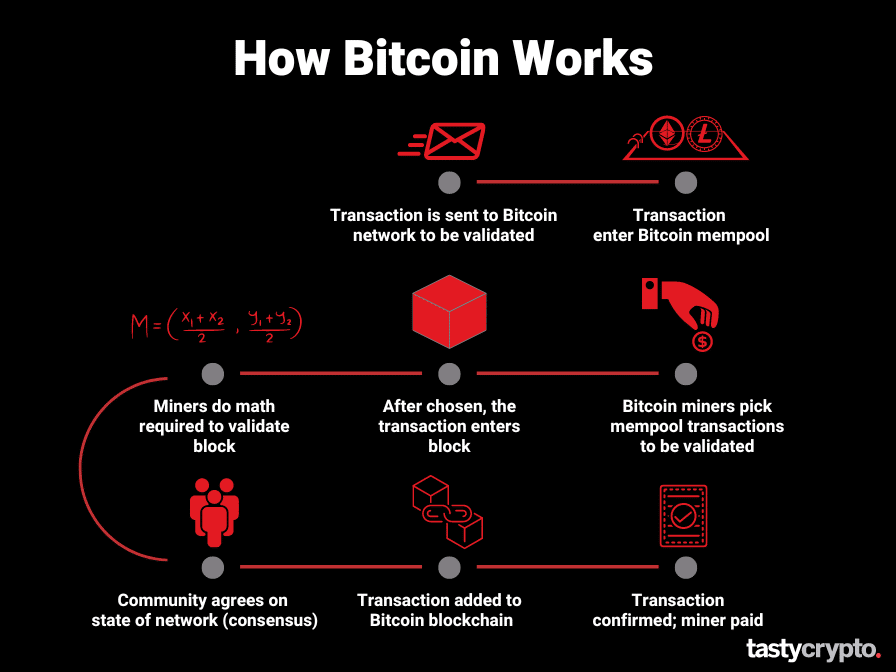
The innovation inherent in Bitcoin’s blockchain technology is perhaps its most profound “point.” Bitcoin pioneered the concept of a decentralized, immutable public ledger, which has since inspired countless other blockchain projects and the broader Web3 movement. While Bitcoin itself primarily serves as a transactional network and store of value, its underlying principles have been extended to create smart contracts, decentralized finance (DeFi) applications, non-fungible tokens (NFTs), and entirely new digital economies. For the financial world, Bitcoin demonstrated the power of distributed ledger technology, opening doors to more transparent, efficient, and secure ways of managing assets and executing agreements, fundamentally changing how we think about digital trust.
Empowering the Unbanked and Underbanked
A critical societal “point” of Bitcoin lies in its potential for financial inclusion. Globally, billions of people remain unbanked or underbanked, lacking access to basic financial services like bank accounts, loans, or secure savings mechanisms. Bitcoin, accessible with just a smartphone and an internet connection, can bridge this gap. It provides a means for individuals in developing countries to receive remittances, save value outside of volatile local currencies, and participate in the global economy without needing traditional bank accounts. For entrepreneurs in regions with limited financial infrastructure, Bitcoin offers a direct path to receive payments from international clients, fostering economic growth and opportunity where traditional systems have failed to reach.
Programmable Money and Future Financial Paradigms
While Bitcoin itself has a relatively simple scripting language compared to more advanced blockchains, its open-source nature and underlying cryptographic security have laid the groundwork for “programmable money.” The concept that money can be integrated directly into software applications, automated processes, and smart contracts represents a significant leap forward. While other cryptocurrencies have pushed this concept further, Bitcoin’s existence validated the feasibility and security of decentralized digital assets. This points to a future where financial services are more automated, customizable, and integrated into our digital lives, potentially revolutionizing everything from escrow services to micro-lending and beyond.
Challenges and Criticisms: Understanding the Nuances
Despite its revolutionary potential, Bitcoin is not without its challenges and faces significant criticism. A balanced understanding of its “point” requires acknowledging these hurdles.
Regulatory Uncertainty and Geopolitical Implications
The decentralized nature of Bitcoin, while a strength, also poses challenges for traditional regulatory frameworks. Governments worldwide are grappling with how to classify, tax, and regulate Bitcoin, leading to a patchwork of laws that vary significantly from country to country. This regulatory uncertainty can deter institutional adoption and create compliance headaches for businesses. Furthermore, Bitcoin’s ability to facilitate cross-border transactions outside traditional financial controls raises concerns about illicit activities and its potential impact on national monetary sovereignty. The ongoing tension between innovation and regulation will continue to shape Bitcoin’s trajectory.
Scalability and Environmental Concerns
Early criticisms focused on Bitcoin’s scalability – its limited transaction processing capacity compared to traditional payment networks like Visa. While layer-2 solutions like the Lightning Network are addressing this, the base layer still faces limitations. Another significant point of contention is its energy consumption. The “proof-of-work” mining mechanism, while securing the network, uses substantial electricity, leading to environmental concerns. While the energy mix for mining is increasingly trending towards renewables, and the economic incentive for efficient mining continues to drive innovation, this remains a key area of scrutiny and an ongoing challenge for Bitcoin’s broader acceptance.
Security Risks and User Responsibility
Unlike traditional banking, where institutions bear the brunt of security failures, Bitcoin places the onus of security largely on the individual. If users lose their private keys, their Bitcoin is irretrievably lost. Hacks of exchanges or personal wallets, phishing scams, and lack of technical understanding pose significant risks. The “point” here is that with great financial freedom comes great responsibility. Users must educate themselves on proper security practices, including secure storage solutions (hardware wallets), strong passwords, and vigilance against scams, making Bitcoin a less forgiving system for the financially unsophisticated.
The Future Trajectory: What Lies Ahead?
The journey of Bitcoin has been marked by skepticism, booms, and busts, yet its persistence and growing adoption suggest a significant role in the evolving financial landscape.
Growing Institutional Adoption and Mainstream Integration
The past few years have seen a marked shift from Bitcoin being a fringe asset to gaining increasing institutional acceptance. Major financial institutions, corporations, and even some countries are exploring or directly integrating Bitcoin into their operations. This includes publicly traded companies adding Bitcoin to their balance sheets, the launch of Bitcoin ETFs, payment processors enabling Bitcoin transactions, and sovereign states adopting it as legal tender. This growing mainstream integration points to a future where Bitcoin is less of an esoteric investment and more a recognized and accessible asset class within the broader financial ecosystem.
Evolving Use Cases Beyond Speculation
While speculation currently drives much of Bitcoin’s market activity, its “point” is evolving beyond mere trading. We are witnessing the emergence of more practical use cases: as a global payment rail for businesses seeking cheaper and faster international transfers, as collateral for loans in decentralized finance, and as a component in various Web3 applications. Its foundational security also makes it attractive for time-stamping data or providing censorship-resistant messaging. As the ecosystem matures, its utility as a practical financial tool is expected to broaden significantly, moving beyond its initial digital gold narrative.
A Paradigm Shift in Global Finance?
Ultimately, the “point” of Bitcoin might be to fundamentally challenge and reshape global finance. It presents a viable, decentralized alternative to central bank-controlled fiat currencies and traditional banking systems. While it may not entirely replace existing financial structures, it certainly provides a powerful check and balance, forcing traditional institutions to innovate and adapt. Whether it becomes the dominant global currency or remains a significant alternative asset, Bitcoin has irrevocably opened our eyes to the possibilities of truly digital, borderless, and permissionless money, pushing us toward a more inclusive, transparent, and potentially equitable financial future. The journey of understanding Bitcoin’s point is ongoing, but its impact on personal finance, investing, and the very concept of money is undeniable and growing.
aViewFromTheCave is a participant in the Amazon Services LLC Associates Program, an affiliate advertising program designed to provide a means for sites to earn advertising fees by advertising and linking to Amazon.com. Amazon, the Amazon logo, AmazonSupply, and the AmazonSupply logo are trademarks of Amazon.com, Inc. or its affiliates. As an Amazon Associate we earn affiliate commissions from qualifying purchases.