
In the vast lexicon of cultural phenomena, some names transcend their literal meaning to embody a complex tapestry of history, tradition, and identity. “Easter” is one such name, a word so deeply ingrained in the global consciousness that its origins often go unexamined. Yet, for those keen on understanding the genesis of powerful cultural “brands,” the etymology of Easter offers profound insights into naming conventions, cultural adaptation, and the lasting impact of historical roots. From a brand strategy perspective, uncovering the origin of “Easter” is akin to delving into the foundational naming process of a venerable, enduring entity whose recognition spans millennia and continents.

Unpacking the Ancient Branding: The Etymological Roots of Easter
Every powerful brand has an origin story, and often, its name is the first chapter. For “Easter,” this story is steeped in ancient European traditions, showcasing how a name can emerge from a confluence of linguistic heritage and cultural shifts. Understanding this etymological journey is crucial to appreciating the unique “branding” of the holiday in certain parts of the world.
The Anglo-Saxon “Eostre”: A Pagan Precedent for a Christian Brand Name
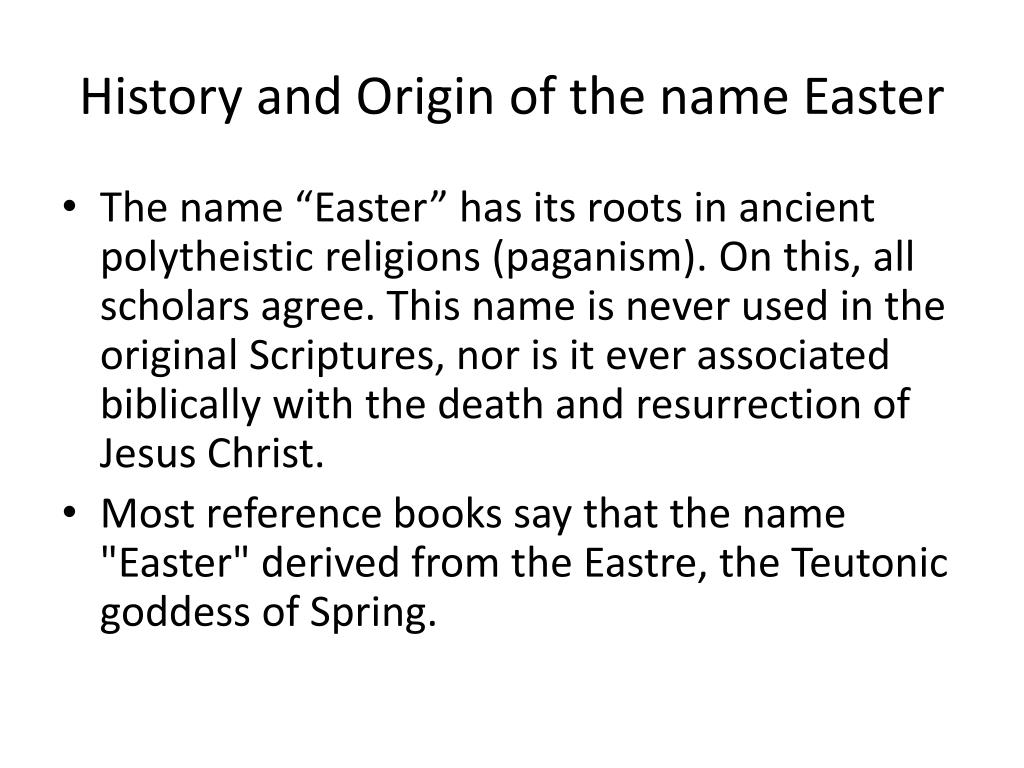
The most widely accepted theory concerning the origin of the word “Easter” points to the Anglo-Saxon goddess Eostre (also spelled Ostara). She was a Germanic divinity associated with spring, dawn, and fertility, celebrated with festivals around the vernal equinox. The English historian Bede, writing in the 8th century, noted that the Anglo-Saxons called the month of April “Eosturmonath” (Easter Month) after this goddess, during which feasts were held in her honor.
From a branding perspective, this suggests a fascinating process of brand association and strategic adoption. As Christianity spread across Anglo-Saxon lands, missionaries encountered deeply entrenched pagan customs and festivals. Rather than enforcing a complete rupture, there was often a clever integration of existing cultural touchstones. By aligning the Christian celebration of the resurrection with a familiar, existing spring festival, and by retaining a version of its name, the early Church effectively leveraged pre-existing cultural “brand recognition.” The new Christian “brand” was introduced within a familiar framework, making its adoption more seamless. This was not an act of mere compromise but a sophisticated form of cultural marketing, allowing the new faith to resonate by speaking in the cultural idiom of the time. The name “Easter” thus became a bridge, subtly linking the new religious message with the ancient human connection to rebirth and renewal embodied by Eostre.
Linguistic Evolution and Brand Adoption: From Germanic to Global Recognition
The journey of the word “Easter” from its Anglo-Saxon roots to its current global recognition is a testament to the power of linguistic evolution in shaping a brand’s reach. While “Easter” is predominantly used in English and German-speaking cultures (e.g., Ostern in German), it stands in contrast to the names used in most Romance languages and many other linguistic groups. These languages typically derive their names for the holiday from “Pesach,” the Hebrew word for Passover (e.g., Pâques in French, Pasqua in Italian, Pascua in Spanish). This divergence highlights a critical aspect of brand localization and cultural specificity in naming.
The word “Easter” specifically rooted itself in the Germanic linguistic sphere, demonstrating how a particular cultural context can adopt and retain a unique nomenclature for a globally celebrated event. This wasn’t a universal re-branding, but a regional adaptation that stuck. The adoption of “Easter” solidified its brand identity within these cultures, giving it a distinctive name that evoked local seasonal traditions while simultaneously embracing the Christian narrative. This linguistic pathway showcases how brand names, even for cultural entities, evolve and solidify within specific markets, demonstrating that a universal brand can maintain distinct identities through localized naming strategies that resonate most effectively with their target audience.
The Branding Challenge: Distinguishing Easter in a Crowded Calendar of Festivals
In an ancient world teeming with festivals, rituals, and seasonal celebrations, any new significant event faced the challenge of establishing its own distinct identity. The naming of Easter, therefore, was not merely an accident of history but a strategic act of differentiation, allowing the Christian celebration to carve out its unique space.
Crafting a Unique Identity: The Role of Naming in Brand Differentiation
For the early Christian Church, distinguishing its holy days from both pagan festivals and the Jewish Passover was a crucial branding exercise. The Paschal mystery – Christ’s suffering, death, and resurrection – was the cornerstone of the new faith, and its annual commemoration needed a name that reflected its profound significance and unique theological underpinnings. While the Paschal imagery was central, adopting a name directly from “Pesach” might have risked confusion or an insufficient separation for new converts eager to fully embrace Christianity.
The decision to adopt “Easter” (or its Germanic equivalent) in certain regions served as a powerful act of brand differentiation. By choosing a name that, while perhaps rooted in pagan spring festivals, was distinct from “Passover,” it allowed the Christian celebration to cultivate its own clear identity. This was particularly important for a burgeoning religion seeking to establish a clear, separate cultural and theological “brand.” The name provided a unique identifier, ensuring that when people referred to “Easter,” there was no ambiguity about which celebration was being discussed, setting it apart from other spiritual and seasonal observances. It offered a fresh name for a transformative event, signaling a new chapter in spiritual history.
Cultural Resonance and Brand Equity: Why the Name Stuck
The longevity and widespread acceptance of the name “Easter” in Germanic cultures is a testament to its strong cultural resonance and the brand equity it accrued over centuries. The name, with its associations of spring, rebirth, and the dawn, naturally harmonized with the themes of resurrection and new life central to the Christian message. This synergy allowed the “Easter” brand to tap into pre-existing cultural metaphors and emotional connections.
The name wasn’t just descriptive; it was evocative. It facilitated a deep connection between the religious narrative and the cyclical rhythms of nature that were intrinsically understood by ancient peoples. Over time, as generations embraced the holiday, the name became synonymous with the celebration, building an immense reservoir of brand equity. This equity ensured that despite subsequent cultural shifts or attempts at re-naming, “Easter” remained the indelible identifier. It highlights how a brand name that organically connects with deep-seated cultural values and aspirations can achieve unparalleled staying power, becoming an irreplaceable part of a collective identity.
Modern Implications for Brand Strategy: Lessons from Easter’s Etymology
The historical evolution of the word “Easter” offers surprisingly relevant insights for modern brand strategists. The principles of naming, cultural adaptation, and building enduring recognition seen in its origins continue to be vital in today’s dynamic market.
The Power of Legacy Naming: Building Brands with Historical Depth
The “Easter” story demonstrates the profound impact of legacy naming. Its association with ancient spring traditions lends it a sense of historical depth and continuity, even as it primarily celebrates a Christian event. For contemporary brands, this teaches the value of names that can carry a rich narrative or evoke a sense of heritage. A name that hints at history, tradition, or a deeper meaning can instantly imbue a brand with gravitas and authenticity, setting it apart from ephemeral trends.
Consider brands that cleverly reference mythology, historical figures, or traditional crafts. Such names are not just labels; they are gateways to stories, inviting consumers to connect on a deeper, often emotional, level. Like “Easter,” which subtly weaves together pagan roots with Christian meaning, a modern brand name can be designed to convey layers of significance, building a powerful narrative framework that resonates with its audience and establishes a timeless appeal. This approach moves beyond mere descriptive naming to embrace evocative storytelling through a brand’s very identity.
Brand Adaptability and Cultural Translation: The Global Reach of a Name
Despite its specific Germanic origins, the holiday of Easter is celebrated globally, often under different names that reflect local languages and cultural nuances. This phenomenon illustrates the importance of brand adaptability and cultural translation for global entities. While the core “brand message” (the celebration of resurrection) remains universal, the linguistic packaging adapts to resonate with diverse audiences.
For global corporations, this means understanding that a single brand name might not always translate perfectly or have the same impact across all markets. While some brands achieve universal phonetic recognition, others might require localized names or clever trans-creations to ensure cultural relevance and avoid unintended connotations. The divergence between “Easter” and “Pesach”-derived names highlights that truly global branding requires a flexible approach, acknowledging that successful cultural integration sometimes necessitates linguistic adaptation without compromising the core identity or message of the “brand.” It’s about maintaining consistency in meaning while allowing for flexibility in expression.
The Enduring Brand Story: What Easter’s Name Tells Us About Identity
Ultimately, the origin of the word “Easter” is more than an academic linguistic exercise; it’s a profound case study in how names shape and reflect identity, offering enduring lessons for brand architects across all sectors.
Storytelling Through Naming: The Narrative Power of “Easter”
The name “Easter” itself is a compact story, a testament to the convergence of ancient nature worship and profound religious revelation. It embodies adaptation, cultural synthesis, and the human need to mark significant transitions. This narrative power is a cornerstone of effective brand strategy. A compelling brand name doesn’t just identify; it narrates. It suggests history, values, and a unique perspective, encapsulating the brand’s core essence in a single word.
Like a strong brand name that instantly evokes its purpose and promise, “Easter” tells a story of new beginnings, hope, and transformation. Its very existence in the English language speaks to a specific lineage and cultural journey, enriching the holiday with layers of meaning. For brand builders, this emphasizes the importance of selecting names that are not only memorable but also pregnant with meaning, capable of carrying a rich narrative that resonates with their target audience and strengthens their overall brand proposition.

Protecting Brand Heritage: The Unchanging Core of a Timeless Name
Despite millennia of change, theological evolution, and shifting cultural practices, the name “Easter” in English-speaking cultures has remained steadfast. This enduring stability underscores the critical importance of a stable brand heritage and a consistent core identity for any lasting entity. Once established, a powerful name becomes an anchor, providing continuity and recognition across generations.
In the fast-paced world of modern branding, where trends come and go, the story of “Easter” reminds us of the value of timelessness. While marketing strategies may evolve, and brand expressions can adapt, the foundational name, when chosen wisely and nurtured consistently, can serve as an unshakeable pillar. It safeguards the brand’s legacy, ensuring that its core identity remains recognizable and respected, regardless of how its manifestations might change over time. The origin of “Easter” is thus a powerful reminder that some names are not merely labels, but living legacies that continue to define, differentiate, and resonate across the ages.
aViewFromTheCave is a participant in the Amazon Services LLC Associates Program, an affiliate advertising program designed to provide a means for sites to earn advertising fees by advertising and linking to Amazon.com. Amazon, the Amazon logo, AmazonSupply, and the AmazonSupply logo are trademarks of Amazon.com, Inc. or its affiliates. As an Amazon Associate we earn affiliate commissions from qualifying purchases.