
In the contemporary landscape of corporate identity and marketing strategy, the phrase “brand spanking new” is often used to describe the launch of a fresh product, the unveiling of a redesigned logo, or the debut of a revolutionary service. While we use it today to denote something in its most pristine, untouched state, the origins of this idiom are deeply rooted in the history of trade, craftsmanship, and the literal application of fire. Understanding the etymology of “brand spanking new” provides profound insights into how we perceive value, ownership, and the lifecycle of a brand’s identity.

From the Forge to the Marketplace: The Etymology of Brand
To understand the full idiom, one must first dissect its primary component: “brand.” In the modern professional context, a brand is an intangible asset—a collection of perceptions, emotions, and expectations in the mind of the consumer. However, the linguistic ancestor of the word is far more visceral.
The Literal Fire
The word “brand” originates from the Old English brand or brond, meaning “fire,” “flame,” or “a piece of burning wood.” For centuries, to “brand” something was to mark it with a hot iron. This was a functional necessity in agricultural societies where livestock from different owners grazed on communal lands. A brand was a permanent, indelible mark of ownership. It was the first iteration of a corporate logo—a visual shorthand that communicated who the “producer” or owner was.
When something was “brand new,” it meant it was fresh from the fire or the forge. Imagine a blacksmith finishing a blade or a tool; it was literally “brand-new” because the heat of the forge had only just left it. In the 16th century, the phrase “fire-new” was also common, used by Shakespeare in Richard III to describe someone whose honors were recently granted.
The Mark of Quality and Trust
As trade expanded during the Industrial Revolution, branding shifted from a mark of ownership to a mark of quality. A manufacturer would “brand” their crates or products to signal to the buyer that the goods met a certain standard. If a product was “brand new,” it hadn’t yet been weathered by the elements or worn down by use. It possessed its maximum utility and aesthetic appeal. In the world of brand strategy, this remains a core tenet: the “newness” of a brand often correlates with its perceived innovation and potential.
Decoding the “Spanking”: An Intensifier of Novelty
If “brand new” refers to the heat of the forge, where does the “spanking” come in? This addition transformed a simple descriptor into a vibrant, rhythmic idiom. The term “spanking” was added as an intensifier in the late 18th and early 19th centuries, but its roots are more about energy and speed than physical discipline.
The Linguistic Evolution of Vitality
In the 1700s, “spanking” was used to describe something that was remarkably large, fast, or energetic. A “spanking breeze” was a strong, favorable wind that moved a ship quickly. A “spanking horse” was one that moved with vigor and spirit. When coupled with “brand new,” the word “spanking” serves to amplify the freshness. It suggests a product that isn’t just new, but is strikingly, remarkably, and energetically new.
Linguists also point to the older phrase “span-new,” which dates back to Middle English and Old Norse (spán-nýr). “Span” referred to a chip of wood. Something that was span-new was as fresh as a wood chip recently hewn from a log. Over time, “brand-new” and “span-new” likely merged in the popular consciousness, with “spanking” eventually stepping in to provide a phonetic flourish that emphasized vigor.
Why “New” Isn’t Enough in Branding
From a marketing perspective, the word “new” is one of the most powerful tools in a copywriter’s arsenal. However, “new” can be static. “Brand spanking new” implies a sense of motion and excitement. It captures the “honeymoon phase” of a product launch. When a brand strategist aims to create buzz, they aren’t just looking for a “new” identity; they are looking for that “spanking” quality—the ability to grab attention and signal a high-energy shift in the market.
The Strategic Application of the “Brand New” Concept in Marketing
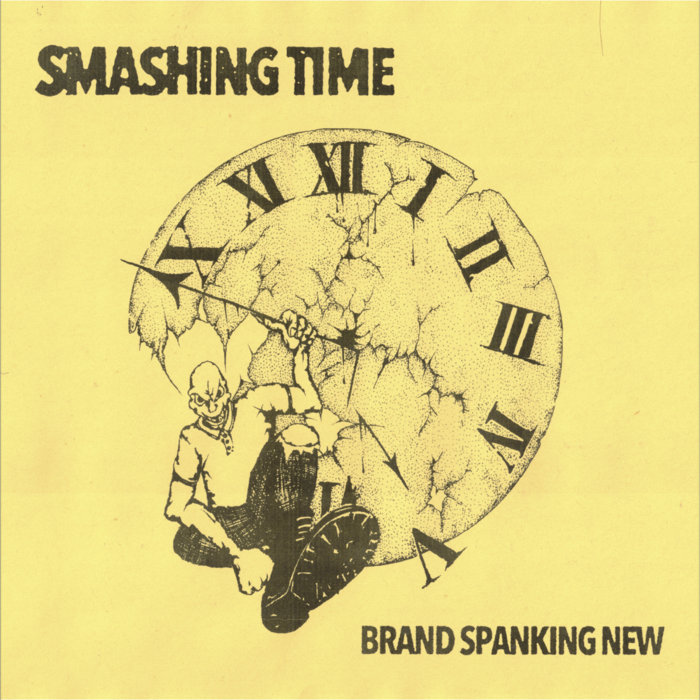
In the realm of brand strategy and corporate identity, the concept of being “brand spanking new” is a double-edged sword. It represents the pinnacle of excitement, but it also highlights the challenge of maintaining relevance over time. Strategic “newness” is a deliberate choice used to reset consumer perceptions.
The Power of the Rebrand
A rebrand is the corporate equivalent of making something “brand spanking new.” Companies often undergo this process when their current identity feels “fire-old”—weathered, outdated, or disconnected from their audience. By changing a visual identity, a mission statement, or a product lineup, a company attempts to recapture the energy of its original forge.
However, a successful rebrand requires more than a new coat of paint. It requires a “spanking” level of energy—a radical departure or a significant evolution that justifies the “new” label. If a company claims to be new but retains old, sluggish processes, the idiom fails to land. The “brand” (the mark of quality) must be backed by the “spanking” (the vigor of execution).
First Impressions and the Psychology of Newness
Psychologically, humans are wired to seek out novelty. This “neophilia” is what makes “brand spanking new” products so appealing. A new identity triggers the release of dopamine; it promises a solution to old problems or a status boost. In brand strategy, the “launch” is the moment where this psychological pull is strongest. This is why luxury car manufacturers, tech giants, and fashion houses invest so heavily in reveal events. They are selling the “brand spanking new” experience—the smell of the leather, the speed of the processor, the pristine nature of the design.
Maintaining the Shine: How Brands Stay Relevant
The tragedy of the “brand spanking new” status is its inherent transience. Once a product is used, once a logo is seen a thousand times, it loses that initial spark. Strategy, therefore, must focus on how to sustain the brand’s perceived value long after the “newness” has faded.
Innovation as a Brand Pillar
To keep a brand feeling “spanking new,” a company must commit to a cycle of continuous innovation. This doesn’t always mean a total overhaul; it can mean incremental updates that signal the brand is still moving with a “spanking breeze.” Software companies do this through version updates (v2.0, v3.0), while consumer goods brands do it through “new and improved” formulations. The goal is to keep the “fire” of the brand burning, ensuring it never feels like a cold, extinguished coal.
Case Studies in Sustained Vitality
Look at brands like Apple or Nike. They have existed for decades, yet they manage to make every seasonal launch feel “brand spanking new.” They achieve this by:
- Visual Consistency: Keeping the core “brand” (the logo) stable while revolving the “new” (the product) around it.
- Emotional Storytelling: Connecting the novelty of the product to timeless human aspirations.
- Scarcity and Exclusivity: Ensuring that the “new” remains a coveted state.
By contrast, brands that fail to innovate become “dated.” They lose the “spanking” energy and eventually, the “brand” itself loses its mark of quality. The fire goes out, and the identity becomes a relic of the past rather than a leader of the future.
The Future of Brand Identity in a Rapidly Evolving Market
As we look toward the future of branding, the idiom “brand spanking new” continues to evolve. In a digital-first world, the “fire” of the forge has been replaced by the “light” of the screen.
The Digital Forge
Today, a brand is often forged in the fires of social media and digital interaction. A “brand spanking new” app or platform can reach millions in seconds. The speed—the “spanking” element—has reached a velocity that the 19th-century originators of the phrase could never have imagined. In this environment, corporate identity must be more fluid. A brand must be able to refresh itself almost instantaneously to keep up with shifting cultural trends.

Conclusion: The Enduring Flame
While the literal act of branding cattle with fire is largely a thing of the past, the metaphorical fire remains at the heart of every successful business. To be “brand spanking new” is to possess the energy of the start-up, the quality of the craftsman, and the excitement of the reveal. For brand strategists and marketing professionals, the goal is always to recapture that moment of the forge—where the mark is fresh, the heat is palpable, and the possibilities are endless. Understanding the origin of this idiom reminds us that at its core, branding is about leaving an indelible mark that signifies both ownership and excellence.
aViewFromTheCave is a participant in the Amazon Services LLC Associates Program, an affiliate advertising program designed to provide a means for sites to earn advertising fees by advertising and linking to Amazon.com. Amazon, the Amazon logo, AmazonSupply, and the AmazonSupply logo are trademarks of Amazon.com, Inc. or its affiliates. As an Amazon Associate we earn affiliate commissions from qualifying purchases.