
Determining the “correct” order to experience the Lord of the Rings franchise is no longer just a matter of narrative preference; it is a complex intersection of metadata management, streaming platform algorithms, and the evolution of digital cinematography. For tech enthusiasts and home cinema aficionados, the sequence in which these films are consumed dictates the technical trajectory of visual effects, sound engineering, and data processing power. Whether you are organizing a local Plex server or navigating the library of a global streaming giant, understanding the technical structure of Middle-earth is essential for the modern viewer.
The Metadata Challenge: Sorting Release Order vs. Chronological Narrative
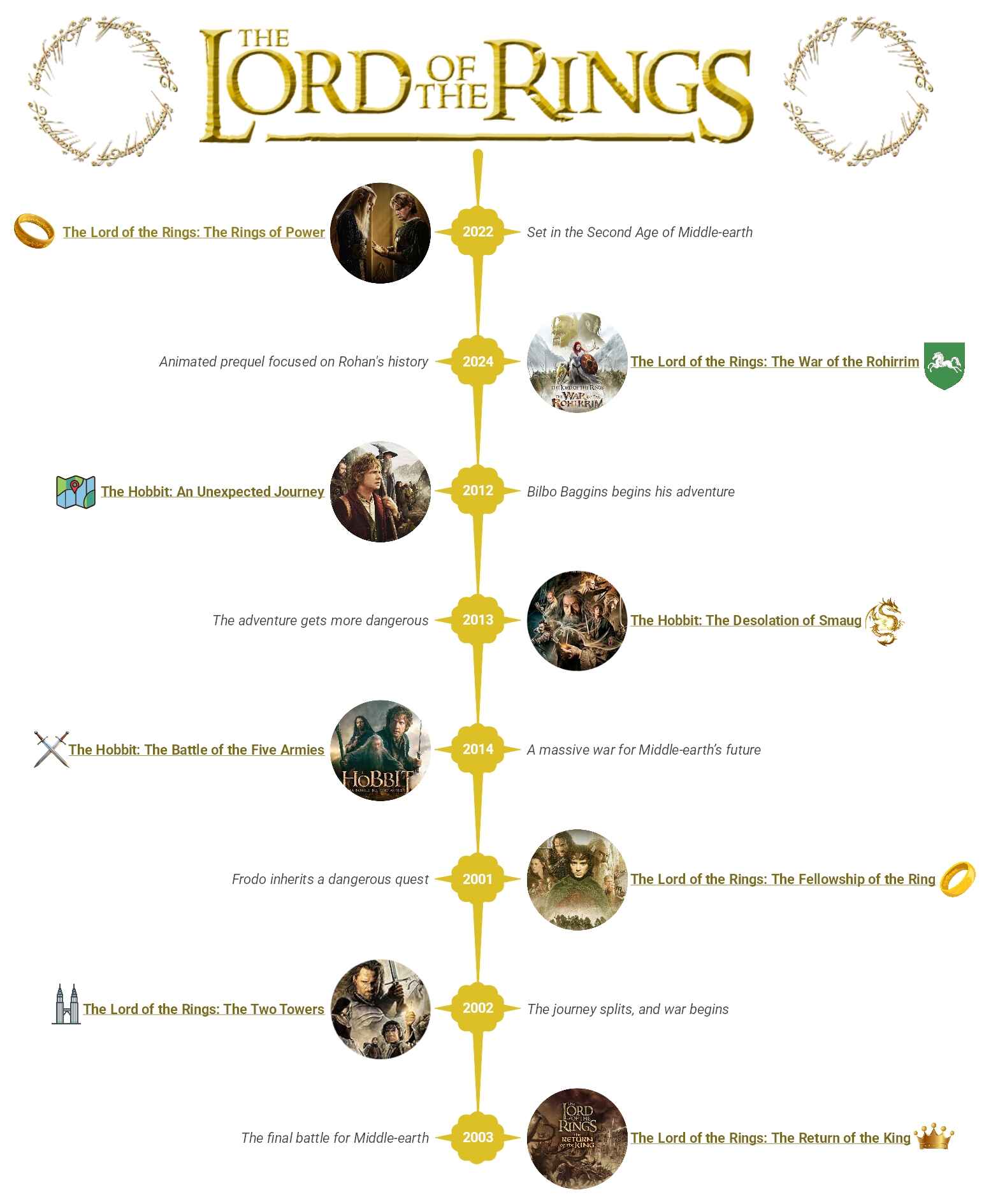
In the realm of digital asset management, the Lord of the Rings franchise presents a unique challenge for databases. There are two primary ways to categorize these films: by their theatrical release date or by their internal narrative chronology. From a technical standpoint, the release order serves as a timeline of hardware capabilities, while the chronological order offers a seamless narrative flow that ignores the decade of technological advancement between the two trilogies.
The Theatrical Release Timeline (2001–2014)
Following the release order is essentially a masterclass in the history of modern CGI and digital compositing. Starting with The Fellowship of the Ring (2001) and ending with The Hobbit: The Battle of the Five Armies (2014), this order allows the viewer to witness the rapid scaling of rendering power.
- The Lord of the Rings: The Fellowship of the Ring (2001)
- The Lord of the Rings: The Two Towers (2002)
- The Lord of the Rings: The Return of the King (2003)
- The Hobbit: An Unexpected Journey (2012)
- The Hobbit: The Desolation of Smaug (2013)
- The Hobbit: The Battle of the Five Armies (2014)
The Narrative Chronological Order
For those prioritizing story over technical evolution, the chronological order places the prequels first. In this configuration, the digital artifacts and higher frame rates of the newer films precede the more traditional film-stock aesthetics of the original trilogy.
- The Hobbit Trilogy
- The Lord of the Rings Trilogy
When these titles are ingested into streaming services like Amazon Prime Video or HBO Max, the algorithms often prioritize “Trending” or “Recently Added” rather than logical sequencing. For a tech-savvy user, manually adjusting the metadata or creating a specific playlist is necessary to ensure the bitrate and resolution remain consistent across the viewing experience.
The Evolution of Visual Computing: From MASSIVE to HFR
To understand why the “order” matters, one must look at the software and hardware used during the production of these films. The technical gap between the 2001 release and the 2012 prequel series is staggering, representing a total shift in how digital worlds are constructed.
The Innovation of MASSIVE Software
During the production of the original trilogy, Weta Digital developed “MASSIVE” (Multiple Agent Simulation System in Virtual Environment). This was a groundbreaking AI tool designed to simulate large-scale battles. Each digital “agent” was given a set of rules and a limited form of artificial intelligence, allowing them to react to their environment independently. Watching the films in release order shows the refinement of this AI technology, from the relatively simple movements in the Prologue of Fellowship to the complex, multi-layered sieges in The Return of the King.
The Leap to 48fps and 5K Acquisition
When the production shifted to The Hobbit series, the technology had moved from 35mm film and early digital intermediate processes to 5K Red Epic cameras. Most notably, director Peter Jackson opted for a High Frame Rate (HFR) of 48 frames per second, doubling the industry standard of 24fps. If you watch the films in chronological order, starting with The Hobbit, you are beginning with a hyper-digital, ultra-smooth visual style that can make the transition to the more “cinematic” look of the original trilogy feel jarring. This technical discrepancy is a major point of discussion in digital cinema circles, as the “soap opera effect” of 48fps remains a divisive technological experiment.
High-Dynamic Range and the 4K Remastering Process
In 2020, the entire hexalogy underwent a massive technical overhaul for the 4K Ultra HD release. This project aimed to unify the look of all six films, effectively bridging the decade-long gap in visual effects technology. For the modern consumer, the “order” of the movies is now heavily influenced by the availability of Dolby Vision and HDR10+ metadata.
Harmonizing the Visual Aesthetic
The remastering team used modern AI-assisted upscaling and noise reduction tools to sharpen the 2K digital intermediates of the original trilogy. By applying a consistent color grade across both trilogies, the technical team attempted to make The Fellowship of the Ring look as though it were filmed alongside The Hobbit. For viewers using high-end OLED displays, this remastering makes the “order” less about technical degradation and more about a unified digital experience.
The Impact of Dolby Atmos
Audio engineering also plays a role in how these films are organized on a media server. The 4K remasters introduced Dolby Atmos tracks to all six films. This object-based audio technology allows sound engineers to place “audio objects” in a three-dimensional space. From a technical perspective, the consistency of the Atmos tracks across both trilogies means that the sonic experience is now uniform, regardless of which film you start with. This is a significant leap from the original DVD and Blu-ray releases, where the audio codecs varied wildly between titles.
Storage Requirements and Bitrate Management for Extended Editions
For users maintaining a home media server (such as Unraid or TrueNAS), the “order” of Lord of the Rings movies is often a question of storage optimization. The Extended Editions of these films are notorious for their massive file sizes and high bitrates, posing a challenge for network bandwidth.
Navigating File Sizes
A high-quality 4K Blu-ray rip of a single Extended Edition film can exceed 100GB. When planning a marathon in the “correct” order, the technical infrastructure must be capable of sustaining high sequential read speeds.
- Total Storage Requirement: A complete collection of the six films in 4K HDR can easily consume nearly 1TB of storage.
- Bitrate Spikes: Certain scenes, such as the Battle of Pelennor Fields, feature high-frequency detail that can cause bitrate spikes exceeding 100 Mbps.
For those streaming over a local network via Plex or Jellyfin, the order of the movies may be dictated by the server’s ability to transcode or direct-play these massive files. A common tech-pro tip is to ensure that the playback device (such as an Nvidia Shield or Apple TV 4K) is hardwired via Gigabit Ethernet to prevent buffering during the transition from one film to the next in the sequence.
Digital Rights and Platform Availability
Finally, the “order” is often limited by the digital rights ecosystem. Depending on your geographic location, The Hobbit might be on one streaming service while The Lord of the Rings is on another. This fragmentation forces users to interact with different UI/UX designs and different streaming engines. The technical quality—such as whether a platform supports “Match Frame Rate” or “Match Dynamic Range”—can vary between apps, further complicating the chronological viewing experience.

The Future of Middle-earth Tech: AI Upscaling and Beyond
As we look toward the future of the franchise, including new technical entries like the high-frame-rate animations and streaming series, the order of the Lord of the Rings movies will continue to be a benchmark for home theater testing. We are already seeing the integration of AI-driven frame interpolation on modern televisions, which can “fictionalize” a high frame rate for the original trilogy, mimicking the look of The Hobbit.
Ultimately, whether you choose release order to track the history of CGI or chronological order to follow the lore, the Lord of the Rings remains a foundational text in the world of digital media. It is a franchise that pushed the boundaries of what was possible with silicon and code, and it remains the gold standard for testing the limits of modern consumer technology. As displays move toward 8K and beyond, the technical “order” of these films will likely undergo yet another transformation, as AI continues to bridge the gap between the practical effects of the past and the digital frontiers of the future.
aViewFromTheCave is a participant in the Amazon Services LLC Associates Program, an affiliate advertising program designed to provide a means for sites to earn advertising fees by advertising and linking to Amazon.com. Amazon, the Amazon logo, AmazonSupply, and the AmazonSupply logo are trademarks of Amazon.com, Inc. or its affiliates. As an Amazon Associate we earn affiliate commissions from qualifying purchases.