
In the intricate, high-stakes world of pharmaceuticals, where innovation meets regulation and public health intersects with corporate profit, a seemingly unassuming document holds immense power: the FDA’s “Approved Drug Products with Therapeutic Equivalence Evaluations.” Universally known as The Orange Book, this publication is far more than a simple listing; it is a critical financial compass, guiding investment decisions, shaping market competition, and dictating revenue streams for pharmaceutical companies worldwide. For anyone looking to understand the economic drivers of the drug industry – from investors and analysts to business strategists and healthcare economists – deciphering the Orange Book is not merely an academic exercise, but a prerequisite for informed financial planning and strategic insight.

At its core, The Orange Book is the definitive public source for information on drug products approved on the basis of safety and effectiveness by the U.S. Food and Drug Administration (FDA). Crucially, it also identifies whether certain multisource (generic) drug products are therapeutically equivalent to their reference listed drug (RLD). This determination of therapeutic equivalence is where its profound financial implications lie. In a market where patent protection can bestow monopoly power for years, the entry of therapeutically equivalent generic alternatives often marks a seismic shift, unleashing fierce competition and reshaping the economic calculus for both originator and generic drug manufacturers. Understanding its nuances is paramount for anyone navigating the financial currents of this multi-trillion-dollar industry.
The Orange Book’s Core Function and Financial Implications
The FDA’s Orange Book serves as the authoritative catalogue for all prescription and over-the-counter (OTC) drug products approved for marketing in the United States, alongside the crucial evaluations of therapeutic equivalence for generic versions. Far from a dry regulatory document, its contents are the lifeblood of market dynamics, directly influencing profitability, investment returns, and strategic financial planning within the pharmaceutical sector.
Defining Therapeutic Equivalence and Market Entry
The cornerstone of The Orange Book’s financial impact lies in its concept of “therapeutic equivalence.” For a generic drug to be listed as therapeutically equivalent to a brand-name reference listed drug (RLD), it must meet several criteria: it must be pharmaceutically equivalent (same active ingredient, dosage form, strength, route of administration), bioequivalent (same rate and extent of absorption), adequately labeled, and manufactured in compliance with Good Manufacturing Practices (GMPs).
The FDA assigns an “A” or “B” code to each generic drug product in relation to its RLD. An “A” rating signifies therapeutic equivalence, meaning the generic is expected to produce the same clinical effect and safety profile as the brand-name drug when administered under the conditions specified in the labeling. A “B” rating, conversely, indicates that therapeutic equivalence has not been established or is currently unknown. From a financial perspective, the “A” rating is gold. It empowers pharmacists to substitute the generic for the brand-name drug without physician intervention (in most states), opening the floodgates for market penetration and significantly increasing sales volume. Without this designation, a generic drug’s market prospects are severely limited, restricting its financial viability and potential return on investment.
The Hatch-Waxman Act: A Regulatory-Financial Framework
The legal framework underpinning The Orange Book’s financial significance is the Drug Price Competition and Patent Term Restoration Act of 1984, famously known as the Hatch-Waxman Act. This landmark legislation struck a delicate balance between encouraging innovation in brand-name drugs and facilitating the timely entry of affordable generic alternatives. For brand-name manufacturers, Hatch-Waxman extended patent terms to compensate for FDA approval delays, incentivizing costly R&D. For generic manufacturers, it streamlined the approval process for generics through the Abbreviated New Drug Application (ANDA) pathway, eliminating the need to repeat expensive clinical trials.
Financially, Hatch-Waxman introduced several critical provisions:
-
Patent Listing: Brand-name companies must list their patents related to the drug product in The Orange Book. This publicly accessible information dictates the landscape for generic challenges.
-
Paragraph IV Certifications: Generic companies can challenge the validity or infringement of these patents through a “Paragraph IV” certification. A successful challenge can lead to accelerated market entry.
-
180-Day Exclusivity: This is a crucial financial incentive. The first generic applicant to successfully challenge a brand-name drug’s patent and gain FDA approval is granted 180 days of market exclusivity, during which no other generic version of that drug can be approved. This period offers an enormous, temporary monopoly, allowing the first-to-market generic manufacturer to capture substantial market share and realize significant profits before further competition erodes prices. This exclusivity is a key driver of investment in challenging brand-name patents, turning legal battles into potential financial windfalls.
Understanding these provisions through the lens of The Orange Book is vital for anticipating market shifts and making astute investment decisions in pharmaceutical stocks. The expiration of patents, successful Paragraph IV challenges, and the awarding of 180-day exclusivity periods are all events that can profoundly impact a company’s stock valuation and future earnings.
Navigating Generic Drug Competition and Market Share
The pharmaceutical market, particularly the generic segment, is fiercely competitive. The Orange Book serves as a battlefield map, delineating opportunities and threats that directly impact market share, revenue, and profitability for both originator and generic drug companies.
The Economics of Patent Expiry and Generic Entry
For brand-name pharmaceutical companies, the expiration of patent protection for their blockbuster drugs is a highly anticipated and often dreaded financial event. When a patent expires, and a therapeutically equivalent generic enters the market, the brand-name drug typically experiences a drastic and rapid decline in sales. This phenomenon, often termed “patent cliff,” can wipe billions off a company’s revenue overnight. For example, a drug that once commanded premium prices can see its market share plummet as generic versions, sometimes priced 80-90% lower, quickly gain traction. The Orange Book clearly signals these impending patent expirations, allowing investors and analysts to forecast potential revenue erosion for brand-name companies and identify growth opportunities for generic manufacturers.
Conversely, for generic drug manufacturers, patent expiry and subsequent FDA approval for an “A”-rated generic are moments of significant financial opportunity. The ability to manufacture and market a therapeutically equivalent drug at a fraction of the cost, leveraging an established patient base, guarantees a strong initial market entry. The Orange Book’s listing of multiple “A”-rated generics for a single brand drug indicates a mature generic market with intense price competition, often leading to slimmer profit margins for all players involved. Thus, the number of “A”-rated equivalents listed is a direct indicator of the competitive intensity and potential profitability of a generic drug market.
Strategic Implications for Business Finance
Generic drug entry triggers a cascade of strategic financial decisions. Brand-name companies must decide whether to launch an authorized generic (their own generic version) to capture some residual market share, or to focus resources on new drug development to offset lost revenue. They may also explore life-cycle management strategies, such as developing new formulations or indications to extend patent life, often seeking new patent listings in The Orange Book to protect these innovations.
Generic manufacturers, on the other hand, must make critical investment decisions regarding which brand-name drugs to target for generic development, weighing the cost of R&D and regulatory filings against the potential for market share and profit, especially considering the potential for 180-day exclusivity. They must also manage the costs of legal challenges to brand-name patents, which can be substantial but offer the promise of lucrative returns. The Orange Book provides the necessary intel to assess patent strength, identify potential Paragraph IV opportunities, and estimate the financial viability of such ventures. Therefore, it is a crucial tool for mergers and acquisitions (M&A) in the pharmaceutical sector, as acquiring a company with a strong pipeline of pending generic applications or existing Orange Book listings can be a significant value driver.
Investment Strategies and Risk Management
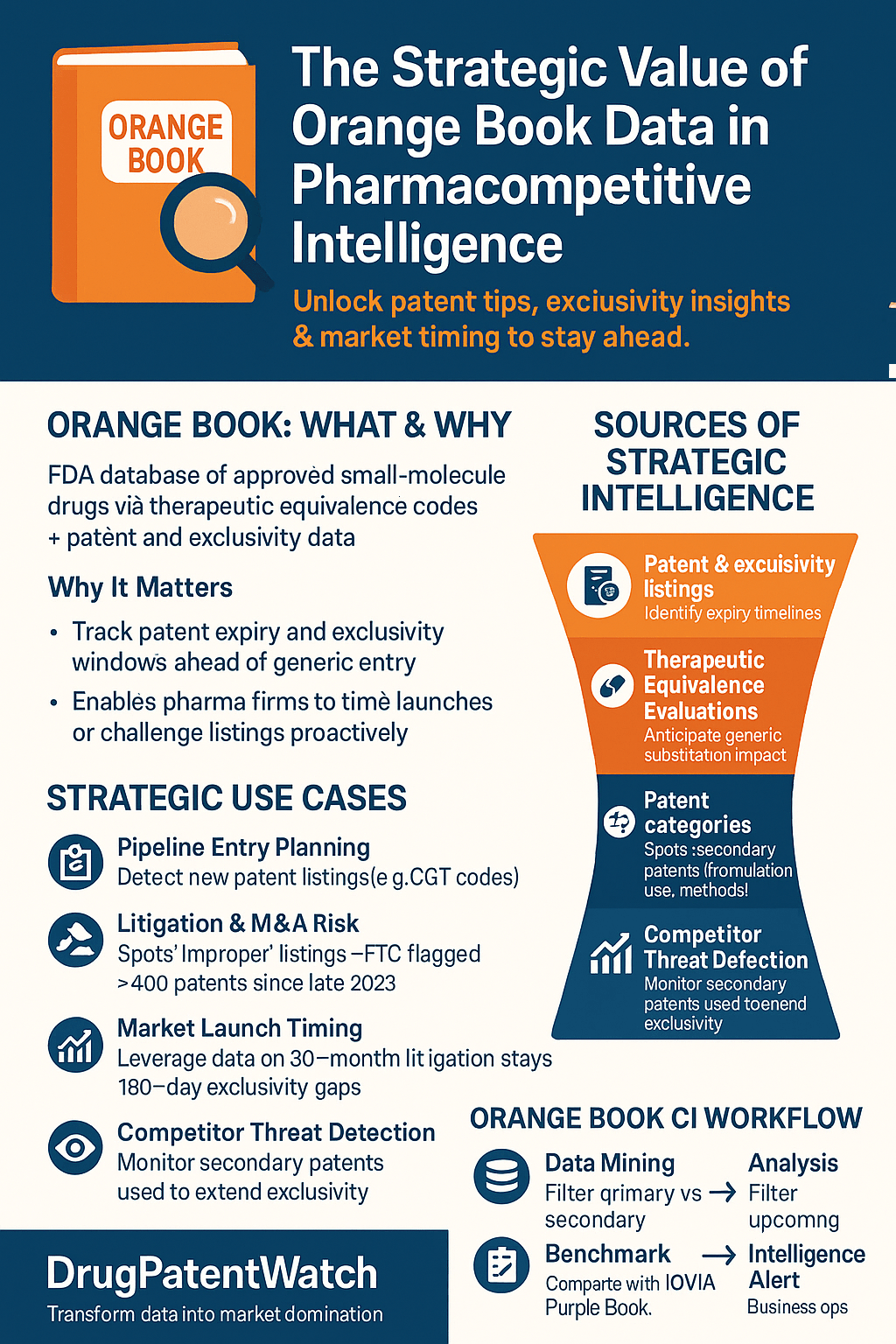
For investors and financial institutions, The Orange Book is a critical resource for due diligence, risk assessment, and identifying investment opportunities within the pharmaceutical sector. Its data can inform everything from stock picks to venture capital allocations.
Informing Investment Decisions
Sophisticated investors meticulously track The Orange Book for several key indicators:
-
Patent Expiration Dates: These are critical for forecasting revenue declines for brand-name companies and anticipating growth for generic firms. An impending patent expiry for a blockbuster drug can signal a significant downturn for the originator company’s stock, while simultaneously highlighting a potential upside for generic challengers.
-
Paragraph IV Filings and Settlements: News of a generic company filing a Paragraph IV certification, or reaching a settlement with a brand-name company, can cause significant stock fluctuations. A successful challenge or favorable settlement can unlock massive revenue potential for the generic company, while a brand-name company might face a shorter-than-expected period of market exclusivity.
-
180-Day Exclusivity Awards: The announcement of a generic company being granted 180-day exclusivity is typically met with a sharp positive reaction in its stock price, reflecting the temporary monopoly and anticipated high profit margins.
-
Number of Approved Generics: A growing number of “A”-rated generics for a particular drug indicates increasing competition and likely price erosion, which can affect the profitability of all generic players in that market. This information helps investors assess the long-term viability and growth potential of generic portfolios.
By integrating Orange Book data into their financial models, investors can make more accurate projections of future earnings, assess competitive landscapes, and gauge the intrinsic value of pharmaceutical companies, thus informing buy, sell, or hold recommendations.
Mitigating Financial Risks
For brand-name pharmaceutical companies, The Orange Book is a vital tool for risk management. They use it to track competitor filings, assess patent vulnerabilities, and plan defensive legal strategies. Understanding the details of their listed patents, including claims and expiry dates, helps them prepare for generic challenges and potentially negotiate “pay-for-delay” settlements (though these are under increasing scrutiny). From a financial reporting perspective, the information in The Orange Book directly impacts revenue forecasts and can necessitate adjustments to financial statements, especially when major patent expirations are imminent.
For generic manufacturers, the financial risk often revolves around the high upfront costs of R&D and legal battles for Paragraph IV certifications. A failed patent challenge or an inability to gain therapeutic equivalence can result in substantial financial losses. The Orange Book, by providing clarity on patent status and FDA approvals, helps these companies assess the likelihood of success and manage their R&D budgets and legal expenses more effectively, ensuring capital is allocated to the most promising opportunities. The decision to invest in developing a generic version of a drug requires a meticulous financial analysis, heavily reliant on the intelligence gleaned from The Orange Book regarding market size, patent longevity, and potential for exclusivity.
Impact on Healthcare Costs and Patient Economics
Beyond corporate finance, The Orange Book plays a pivotal role in the broader economic landscape of healthcare, directly influencing drug prices, patient access to affordable medicines, and the overall financial burden of healthcare systems.
Driving Down Drug Prices
The core economic benefit of The Orange Book, from a societal perspective, is its contribution to reducing drug prices. Generic drugs, because they do not bear the initial research and development costs of the brand-name drug and benefit from competition, are typically sold at significantly lower prices. The FDA’s listing of therapeutically equivalent generics in The Orange Book facilitates this competition, pushing down the cost of medications. This leads to substantial savings for patients, insurance companies, and government healthcare programs like Medicare and Medicaid. Studies have consistently shown that generic drugs save the U.S. healthcare system hundreds of billions of dollars annually. For individual patients, the availability of Orange Book-approved generics can mean the difference between affording life-saving medication and going without, thereby directly impacting personal finance and health outcomes.
Policy and Public Health Economics
Governments and healthcare payers actively leverage The Orange Book to manage pharmaceutical expenditures. Formulary committees, which decide which drugs insurance plans will cover, heavily rely on the therapeutic equivalence ratings to prioritize generic options, knowing they offer the same clinical benefit at a fraction of the cost. This directly impacts the financial sustainability of healthcare systems and helps contain the rising tide of medical expenses.
Furthermore, the data within The Orange Book informs regulatory policy and legislative efforts aimed at increasing generic drug competition and lowering costs. Policy discussions around issues like “evergreening” (brand-name companies making minor changes to drugs to extend patent life) or “product hopping” are often contextualized by how these strategies manipulate patent listings in The Orange Book to delay generic entry, thereby affecting overall healthcare spending. Therefore, The Orange Book is not just a tool for industry; it is a vital instrument for public health economists and policymakers striving to balance innovation incentives with affordability and access.
Strategic Business Planning and Risk Mitigation
In the highly regulated and capital-intensive pharmaceutical industry, robust business planning and effective risk mitigation are essential for long-term financial health. The Orange Book is an indispensable resource in this regard, offering clarity and foresight that can translate into competitive advantage and sustained profitability.
Forecasting Market Evolution and Revenue Streams
For any pharmaceutical company, understanding where a drug stands in its life cycle—from patent protected blockbuster to generic commodity—is paramount for financial forecasting. The Orange Book provides the detailed intelligence required for this. Brand-name companies can track their remaining patent exclusivity, forecast the “patent cliff” and its impending revenue loss, and strategically plan for post-exclusivity market dynamics. This foresight allows them to diversify their pipeline, invest in new R&D, or plan for strategic acquisitions to offset future revenue declines.
Generic manufacturers, conversely, use The Orange Book to identify attractive market opportunities. They analyze drugs nearing patent expiration, assess the potential for Paragraph IV challenges, and estimate the financial returns from being an early entrant. The anticipated market size, the number of potential generic competitors, and the likelihood of securing 180-day exclusivity all feed into complex financial models that determine which generic products to pursue and how much to invest in their development and legal defense. This proactive planning, grounded in Orange Book data, helps companies secure future revenue streams and optimize their R&D spending.

Portfolio Management and Capital Allocation
For both established pharmaceutical giants and emerging biotech firms, efficient portfolio management and astute capital allocation are critical for financial success. The Orange Book plays a key role in this by helping companies evaluate the strength and value of their intellectual property (IP) assets and assess potential targets for M&A. A company’s list of Orange Book-listed patents directly contributes to its enterprise value, particularly for brand-name companies. For generic companies, a strong portfolio of “A”-rated generics and pending ANDAs represents a clear path to future revenue.
In terms of capital allocation, decisions about where to invest R&D dollars—whether in novel drug discovery, new formulations, or generic drug development—are heavily influenced by Orange Book data. Investing in a new drug whose patents are easily circumvented or where generic entry is imminent due to existing Orange Book listings would be a poor financial decision. Conversely, investing in a generic product with high barriers to entry or a strong chance of 180-day exclusivity offers a clear financial upside. By providing a transparent view of the regulatory and competitive landscape, The Orange Book ensures that capital is deployed strategically, maximizing the likelihood of a strong financial return and mitigating the risk of costly missteps.
In conclusion, The Orange Book, while ostensibly a regulatory document, is a powerful financial instrument. It shapes market competition, influences investment decisions, defines revenue trajectories, and ultimately impacts the affordability of healthcare. For anyone operating within or investing in the pharmaceutical industry, a deep understanding of its contents and implications is not merely advantageous but absolutely essential for navigating the complex financial currents and securing a prosperous future.
aViewFromTheCave is a participant in the Amazon Services LLC Associates Program, an affiliate advertising program designed to provide a means for sites to earn advertising fees by advertising and linking to Amazon.com. Amazon, the Amazon logo, AmazonSupply, and the AmazonSupply logo are trademarks of Amazon.com, Inc. or its affiliates. As an Amazon Associate we earn affiliate commissions from qualifying purchases.