
In the highly competitive landscape of professional careers, your resume is far more than a mere chronology of your work history; it is the cornerstone of your personal brand. Just as a company’s mission statement articulates its core purpose and value proposition, the objective or summary section of your resume serves as the critical introduction to your professional brand. It’s your chance to make an indelible first impression, to immediately communicate your value, aspirations, and fit for a role, all within the strategic framework of personal branding.
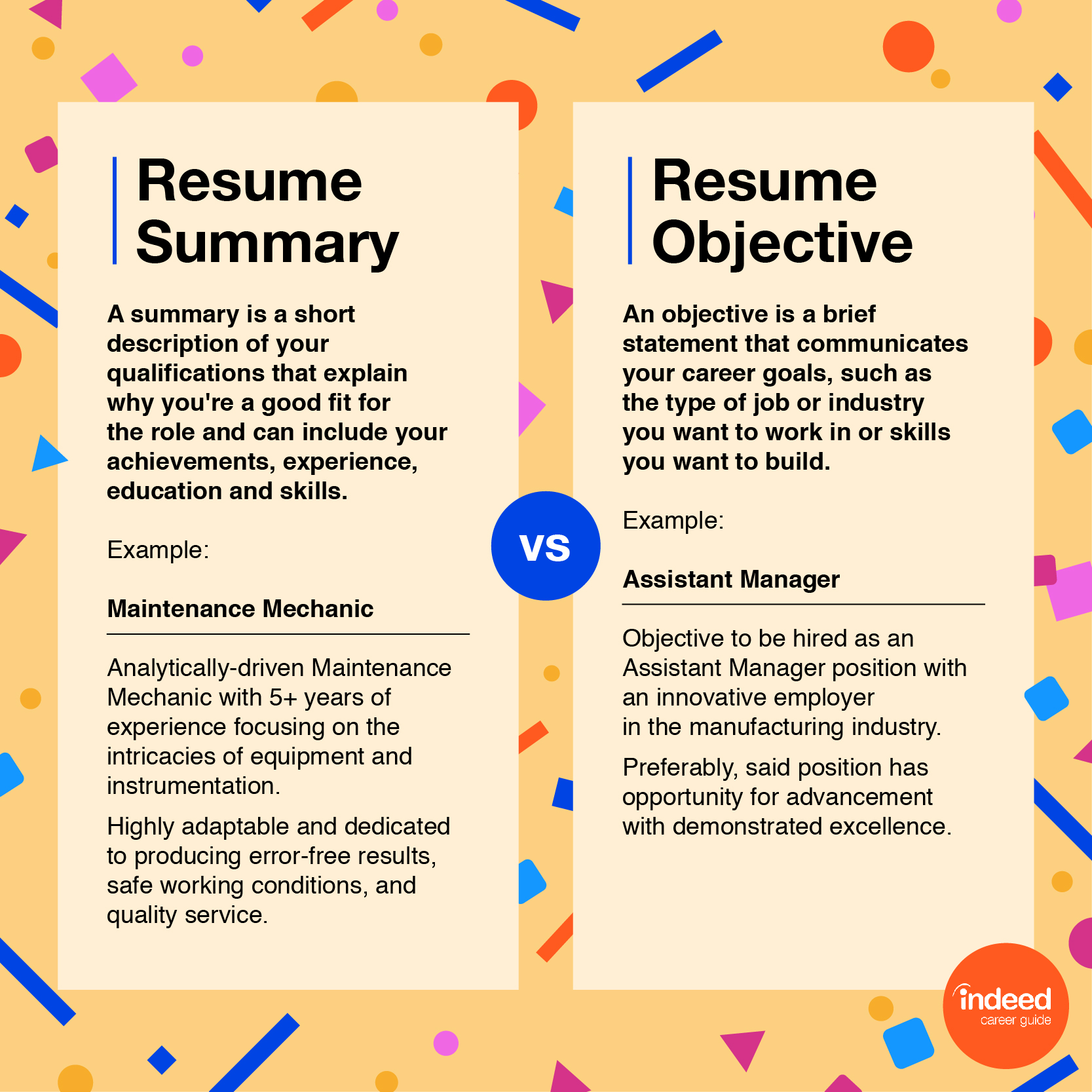
For decades, the “objective statement” was a ubiquitous feature of resumes, typically a brief declaration of what the job seeker aimed to achieve. However, as the professional world evolved, so did the expectations for this introductory section. Today, while the term “objective” might conjure images of an outdated resume format, its essence—to declare intent and value—remains profoundly relevant, albeit often reshaped into a more sophisticated “professional summary” or “profile.” This article will explore the strategic importance of this opening statement through the lens of personal branding, guiding you on how to craft an introduction that effectively markets your unique professional identity.
The Evolution of the Resume Objective in Personal Branding
The journey of the resume’s introductory statement mirrors the advancements in marketing and communication strategies for individuals. Understanding this evolution is key to positioning your personal brand effectively in today’s job market.
From Aspirational Statements to Strategic Brand Positioning
Traditionally, a resume objective was straightforward, often self-focused: “To obtain an entry-level position in marketing where I can utilize my communication skills.” While clear, this statement primarily communicated what the applicant wanted, rather than what value they could bring to an employer. It was a rudimentary form of branding, focusing on self-definition but lacking a direct connection to market needs.
As personal branding became more sophisticated, professionals recognized the need to shift their focus. The modern approach emphasizes strategic brand positioning. Instead of merely stating an aspiration, the introduction now aims to position the individual as the ideal solution to an employer’s specific needs. This involves understanding the “market” (the industry, the company, the role) and articulating how your unique skills, experiences, and professional identity (your brand) align perfectly with their requirements. This transition is akin to a company moving from “we want to sell products” to “we offer solutions that enhance our customers’ lives.”
Shifting Focus: What Your Brand Offers vs. What Your Brand Seeks
The most significant change in this introductory section is the fundamental shift in perspective. An outdated objective tells the employer what you seek (a job, experience, growth). A powerful, brand-centric professional summary, however, tells the employer what your brand offers. It highlights your core competencies, quantifiable achievements, and unique selling propositions right upfront.
This shift is rooted in basic marketing principles: successful branding focuses on the consumer (the employer) and their needs. By immediately showcasing your value proposition—what problems you can solve, what successes you can replicate, what unique contributions you can make—you effectively market yourself as an asset rather than just an applicant. This proactive communication of value distinguishes your personal brand in a crowded market, compelling the recruiter to delve deeper into your resume to understand the full scope of your professional identity.
Developing Your Unique Professional Brand Statement
Creating an impactful brand statement for your resume requires introspection, market understanding, and precise articulation. It’s about distilling your entire professional journey into a compelling, concise narrative.
Identifying Your Core Professional Identity (Your USP)
Every strong brand has a Unique Selling Proposition (USP)—what makes it stand out from the competition. For your personal brand, identifying your USP means pinpointing the unique combination of skills, experiences, passions, and working styles that define your professional identity. Are you an innovative problem-solver? A meticulous project manager? A visionary leader with a knack for team building?
To uncover your USP, reflect on your career highlights, the compliments you’ve received, and the types of challenges you most enjoy solving. Consider what makes you uniquely qualified for the roles you seek. This isn’t just a list of skills; it’s about understanding the value those skills create. Once you identify this core professional identity, it becomes the central theme of your resume’s introductory statement, forming the essence of your personal brand message.
Tailoring Your Brand Message for Specific Audiences
A universal brand message is rarely effective. Just as a marketing campaign is segmented for different demographics, your resume’s introductory statement must be tailored for each specific audience—the hiring manager and company for a particular job. This customization is crucial for demonstrating alignment and relevance.
Read the job description meticulously. Identify the key skills, responsibilities, and company values. Then, rephrase your professional summary to highlight the aspects of your personal brand that directly address these requirements. Use keywords from the job description to signal immediately that you are a strong match. This isn’t about fabricating experience but about emphasizing the most relevant facets of your genuine professional brand. A tailored message demonstrates genuine interest, meticulousness, and an understanding of the employer’s needs, all strong indicators of a desirable professional.
Weaving Aspirations and Alignment into Your Brand Narrative
While the modern summary focuses on what you offer, it can also subtly incorporate your aspirations and how they align with the prospective company’s goals. This isn’t about listing your personal desires, but rather about articulating how your professional growth trajectory naturally intersects with the opportunities and challenges presented by the role and the organization.
For example, instead of saying, “I want to grow into a leadership role,” a brand-centric statement might say, “Driven professional with a proven track record in [X] and a commitment to fostering team success, eager to apply leadership acumen to contribute to [Company’s] innovative initiatives.” This subtly conveys your aspirations while linking them directly to how you can benefit the employer, reinforcing the idea that your personal brand is a strategic fit for their organizational brand.
Strategic Placement: When Your Brand Needs an Objective vs. a Summary
The decision between using an “objective” or a “summary” isn’t merely semantic; it’s a strategic branding choice dependent on your career stage and goals.
The Niche Case for a Traditional Objective
In certain, specific scenarios, a concise objective statement can still be a powerful branding tool:
-
Entry-Level Candidates: If you have limited work experience, an objective can clearly state your career goals and enthusiasm for a particular field, showing direction and purpose. For example: “Motivated recent Marketing graduate seeking an Associate position at [Company Name] to leverage analytical skills and contribute to dynamic digital campaigns.”
-
Career Changers: When transitioning into a new industry or role, an objective can succinctly explain your pivot and highlight transferable skills. For example: “Experienced Project Manager transitioning into Data Science, seeking a Junior Data Analyst role to apply strong analytical skills and problem-solving abilities in a data-driven environment.”
-
Highly Specialized Roles (with clear requirements): For very specific, niche positions where the requirements are unambiguous, an objective can serve as a direct, no-nonsense declaration of intent.
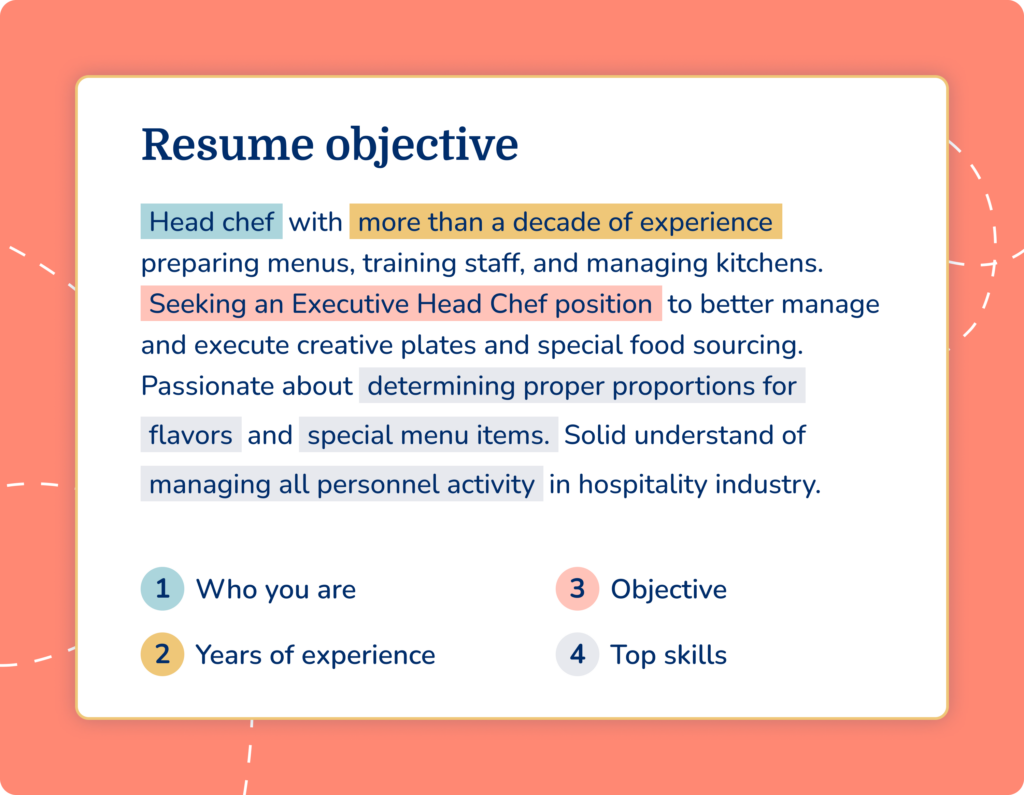
In these cases, the objective is less about an exhaustive brand profile and more about a direct, targeted declaration of intent and primary value, acting as a quick signpost for recruiters.
The Dominance of the Professional Summary as a Brand Profile
For most experienced professionals, the professional summary (or profile) has superseded the objective. It functions as a mini-marketing brochure for your personal brand, offering a more comprehensive and persuasive introduction.
A strong professional summary is typically 3-5 sentences or a short bulleted list that highlights:
-
Your professional title or primary expertise.
-
Your core competencies and key skills.
-
Quantifiable achievements and contributions.
-
Your unique value proposition and career aspirations (linked to the employer’s needs).
This section acts as a compelling elevator pitch, immediately conveying your brand’s essence and value. It’s designed to grab attention, communicate impact, and entice the reader to explore the rest of your resume, much like a well-crafted brand slogan encourages further engagement with a company’s offerings. It positions you as a strategic asset from the very first glance.
Crafting an Impactful Brand Introduction: Best Practices
Regardless of whether you choose an objective or a summary, certain best practices ensure your brand introduction is powerful, effective, and memorable.
Keywords and Brand Visibility (ATS Optimization)
In today’s digital age, many resumes are first screened by Applicant Tracking Systems (ATS) before reaching human eyes. For your personal brand to be visible, your resume introduction must be optimized with relevant keywords. These keywords often come directly from the job description and industry-specific terminology.
Integrate these keywords naturally into your summary or objective. This not only helps your resume pass initial ATS screening but also signals to human readers that you possess the exact qualifications they are seeking. Think of keywords as essential tags that connect your personal brand to the employer’s needs, enhancing your digital discoverability and relevance.
Conciseness and Clarity: Maximizing Brand Impact
Your brand introduction is a high-impact, low-word-count zone. Every word must count. Aim for conciseness and absolute clarity. Avoid jargon unless it’s standard industry terminology, and steer clear of vague statements.
The goal is to convey maximum value in minimum space. A concise and clear message not only respects the recruiter’s time but also demonstrates your ability to communicate effectively—a highly valued professional attribute. It reflects a confident and well-defined personal brand that knows how to get straight to the point.
Quantifying Your Brand’s Achievements
Numbers speak volumes. Whenever possible, quantify your achievements in your professional summary. Instead of saying, “Increased sales,” say, “Increased sales by 15% in Q3 2023.” Instead of “Managed projects,” say, “Managed 10+ concurrent projects, consistently delivering on time and under budget.”
Quantifiable achievements provide tangible evidence of your capabilities and the impact your brand can make. They add credibility and weight to your claims, making your professional brand more compelling and persuasive. This is akin to a company publishing impressive sales figures or customer satisfaction scores to bolster its market position—it provides concrete evidence of success.
Integrating Your Resume Introduction into Your Holistic Personal Brand Strategy
Your resume’s objective or summary is not a standalone element; it’s an integral part of your broader personal brand strategy. Its effectiveness is amplified when it aligns seamlessly with all other aspects of your professional identity.
Consistency Across All Brand Touchpoints
Ensure that the core message, tone, and key selling points highlighted in your resume introduction are consistent across all your professional touchpoints. This includes your LinkedIn profile, personal website, portfolio, and even how you present yourself in networking events.
Inconsistent branding can confuse recruiters and dilute your professional message. A consistent brand narrative across all platforms reinforces your identity, builds trust, and makes your personal brand more recognizable and credible. It tells a unified story about who you are professionally and what you offer.
The Objective/Summary as a Foundation for Interview Storytelling
Your resume introduction serves as a powerful primer for interviews. It sets the stage for the stories you will tell, providing the overarching theme of your professional narrative. During an interview, you can expand upon the claims made in your summary, providing detailed examples and anecdotes that further illustrate your skills and achievements.
The summary helps frame the conversation, guiding the interviewer towards your strengths and areas of expertise. It allows you to control the initial perception of your personal brand, making it easier to steer the interview towards topics where you can shine, demonstrating the full depth and breadth of your professional identity.
Conclusion
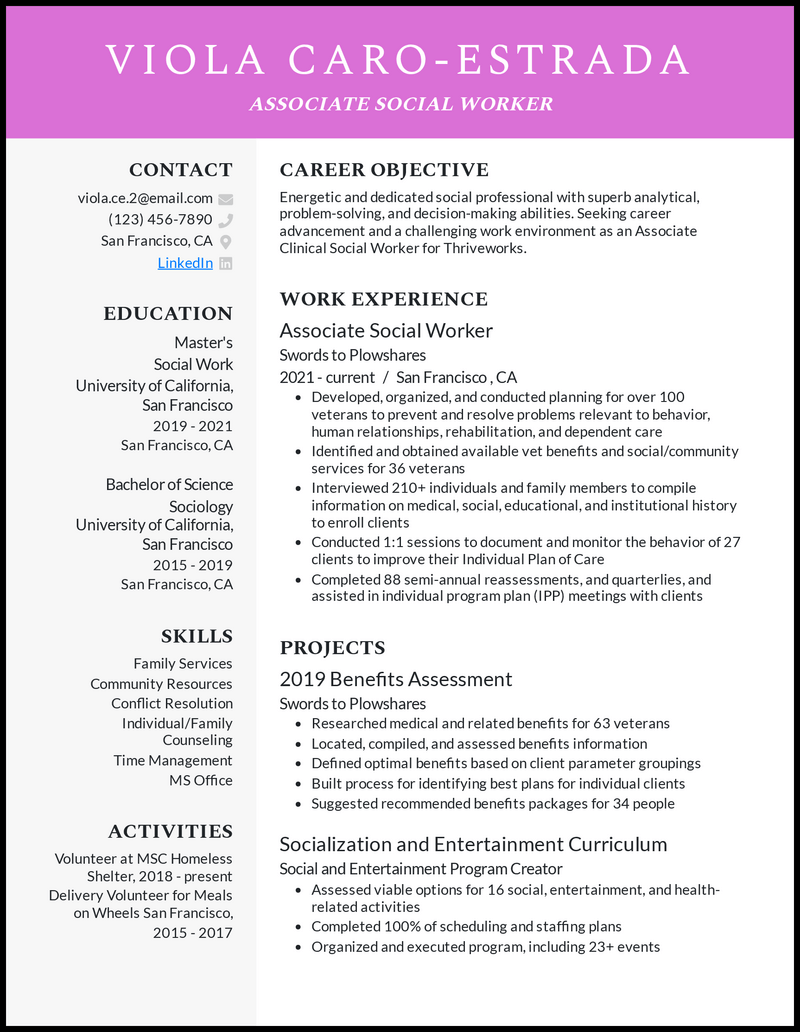
The question “what is the objective on a resume” today transcends its traditional definition. It has evolved into a strategic inquiry: “How do I best introduce and market my personal brand on my resume?” Whether you opt for a concise objective or a comprehensive professional summary, this opening statement is your prime real estate for making an immediate, powerful impact.
It is your opportunity to distill your professional essence, articulate your value proposition, and align your aspirations with the needs of your target employer. By approaching this section with a keen understanding of personal branding principles—identifying your USP, tailoring your message, optimizing for visibility, and demonstrating impact—you transform a simple introductory paragraph into a compelling marketing tool. In doing so, you not only grab attention but also lay a solid foundation for your professional brand, positioning yourself as the ideal candidate for the opportunities you seek.
aViewFromTheCave is a participant in the Amazon Services LLC Associates Program, an affiliate advertising program designed to provide a means for sites to earn advertising fees by advertising and linking to Amazon.com. Amazon, the Amazon logo, AmazonSupply, and the AmazonSupply logo are trademarks of Amazon.com, Inc. or its affiliates. As an Amazon Associate we earn affiliate commissions from qualifying purchases.