
In the world of finance, wealth management, and entrepreneurship, we often focus on metrics like ROI, CAGR, and market volatility. However, beneath the surface of every transaction lies a fundamental ethical framework that dictates how markets function—or fail to function. At the heart of a free and prosperous society is the Non-Aggression Principle (NAP). While often discussed in legal and philosophical circles, the NAP is, in reality, the bedrock of modern capital accumulation and the primary driver behind the most significant innovations in decentralized finance (DeFi) and personal sovereignty today.
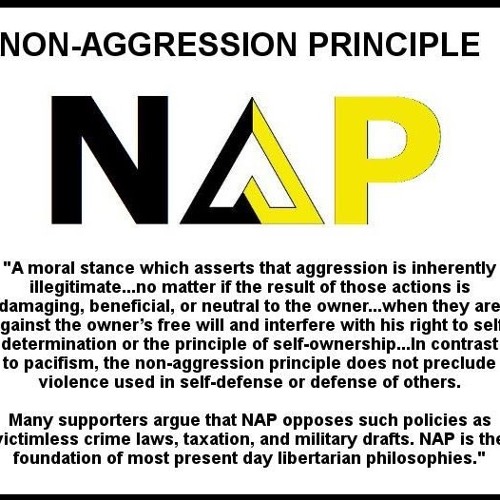
The Non-Aggression Principle is an ethical stance which asserts that “aggression” is inherently illegitimate. Aggression, in this context, is defined as the initiation of physical force, the threat of force, or fraud against the person or property of another. For the modern investor or business owner, the NAP provides a lens through which we can evaluate the legitimacy of wealth, the ethics of contracts, and the future of the global economy.
The Foundation of Private Property and Financial Autonomy
To understand the NAP in a financial context, one must first understand its relationship with property rights. Without the security of private property, there is no incentive to produce, save, or invest. The NAP provides the moral justification for why what you earn belongs to you and why no external entity has a rightful claim to the fruits of your labor without your explicit consent.
Self-Ownership as the Primary Asset
The NAP begins with the concept of self-ownership. In the niche of personal finance and wealth building, your most valuable asset is not your stock portfolio or your real estate holdings; it is your capacity to labor, innovate, and think. If you own yourself, it follows logically that you own the results of your time and energy.
When you participate in a “side hustle” or build a business, you are essentially converting your self-ownership into capital. The NAP protects this process by stating that any attempt to forcibly take that capital is an act of aggression. For the wealth-builder, this principle reinforces the importance of asset protection and jurisdictional diversification. By understanding that your wealth is an extension of your physical self, you become more diligent in shielding it from coercive forces, whether they be predatory legal actors or inflationary monetary policies that erode your purchasing power without your consent.
The Rejection of Financial Coercion
In traditional finance, coercion is often baked into the system. From mandatory participation in certain pension schemes to the “hidden tax” of inflation, many individuals find their financial autonomy compromised. The NAP offers a radical alternative: the voluntary economy.
A truly non-aggressive financial system is one based entirely on consent. This means that every contract you sign, every investment you make, and every service you pay for should be a “win-win” scenario. When we remove the element of force, we are left with a market that rewards value creation rather than rent-seeking. For entrepreneurs, embracing the NAP means building business models that rely on customer delight and voluntary loyalty rather than regulatory capture or monopolistic coercion.
Applying the NAP to Modern Business and Wealth Creation
Understanding the NAP is more than an intellectual exercise; it is a strategic advantage in business. In a hyper-connected digital economy, reputation is a form of currency. Businesses that operate on the principles of transparency, honesty, and non-aggression tend to build deeper trust with their client base, leading to higher lifetime value and more sustainable growth.
Value-for-Value: The Voluntary Exchange Model
The most successful businesses in the 21st century are those that master the “value-for-value” model. This is the practical application of the NAP. In this model, money is not “taken” from a customer; it is exchanged for something the customer perceives as more valuable than the cash they hold.
This distinction is vital for anyone looking to generate online income or launch a startup. Aggressive sales tactics—those that rely on deception, hidden fees, or making it impossible to cancel a subscription—are subtle violations of the NAP. While they may produce short-term gains, they destroy the brand’s long-term “social capital.” By contrast, businesses that prioritize the NAP ensure that every transaction is fully informed and mutually beneficial. This creates a feedback loop of prosperity where the business grows because it solves problems, not because it exploits people.
Avoiding Predatory Finance and Rent-Seeking

In the realm of investing, the NAP helps investors distinguish between “productive capital” and “extractive capital.” Productive capital involves investing in companies that create products, services, and infrastructure. Extractive capital, or rent-seeking, involves using the machinery of the state or coercive legal frameworks to gain wealth at the expense of others.
An investor guided by the NAP might look skeptically at industries that rely heavily on government subsidies or those that use lobbying to stifle competition. These practices are forms of indirect aggression against the taxpayer and the consumer. Instead, the NAP-aligned investor seeks out “anti-fragile” opportunities in the private sector where success is determined by market merit. This approach not only aligns with a higher ethical standard but often leads to a more resilient portfolio, as businesses built on voluntary value are less susceptible to the shifting winds of political favor.
The NAP and the Rise of Decentralized Finance (DeFi)
Perhaps the most significant intersection of the Non-Aggression Principle and money is found in the world of Bitcoin and Decentralized Finance (DeFi). For the first time in human history, we have a financial system that is fundamentally non-coercive by design.
Cryptography as Non-Aggressive Security
In the legacy financial system, your assets are often held by third-party intermediaries who can freeze your accounts or seize your funds under pressure from external authorities. This is a structural vulnerability that allows for aggression against your property.
Bitcoin and other decentralized protocols solve this through the use of cryptography. In a decentralized system, “your keys, your coins” is the ultimate expression of the NAP. Because the system is governed by math and code rather than the whims of a centralized board or government, no one can initiate force to take your assets without obtaining your private keys. This shifts the balance of power back to the individual, ensuring that financial sovereignty is not a privilege granted by a bank, but a right protected by mathematics.
Smart Contracts and the Future of Trustless Banking
The NAP is also the driving force behind the development of smart contracts. These are self-executing contracts with the terms of the agreement directly written into lines of code. They eliminate the need for a coercive middleman to enforce an agreement.
In traditional business finance, if one party breaches a contract, the other must resort to the legal system—a process that is often slow, expensive, and involves the threat of state force. In a DeFi environment, the contract is “trustless.” Both parties agree to the rules upfront, and the code executes the transaction automatically once conditions are met. This is the purest form of voluntary exchange, as it removes the possibility of fraud and ensures that all parties act according to their prior consent.
Building a Resilient Portfolio through Ethical Asset Allocation
Finally, the Non-Aggression Principle serves as a powerful tool for long-term financial planning and asset allocation. When you view the world through the lens of voluntary interaction, you begin to see where the real value is being created.
Identifying Aggression in the Market
When analyzing the markets, the NAP-conscious investor looks for signs of “monetary aggression.” One of the most common forms is the debasement of currency. When a central authority prints money, it devalues the savings of everyone holding that currency. This is essentially a transfer of wealth from the savers to the first recipients of the new money (the Cantillon Effect), performed without the consent of the savers.
To protect against this, investors often turn to “hard assets”—gold, real estate, and Bitcoin. These assets are resistant to the aggression of inflation because their supply cannot be easily manipulated by a centralized authority. Including these assets in a portfolio is a defensive strategy against the systemic violations of the NAP found in the modern fiat system.

Long-term Wealth vs. Short-term Exploitation
The NAP encourages a “low time preference” mindset. When you respect the property rights of others and focus on voluntary exchange, you are forced to think about the long-term sustainability of your income streams. You cannot rely on “quick wins” that involve cutting corners or misleading stakeholders.
Instead, you build wealth through the slow and steady accumulation of value. Whether you are managing your personal finance, growing a side hustle into a corporate entity, or navigating the complexities of the stock market, the Non-Aggression Principle provides a north star. It reminds us that true prosperity is not just about the amount of money in our bank accounts, but the integrity of the methods we used to get it there. By adhering to a philosophy of non-coercion, we contribute to a global economy that is not only more ethical but more efficient, innovative, and stable for everyone involved.
aViewFromTheCave is a participant in the Amazon Services LLC Associates Program, an affiliate advertising program designed to provide a means for sites to earn advertising fees by advertising and linking to Amazon.com. Amazon, the Amazon logo, AmazonSupply, and the AmazonSupply logo are trademarks of Amazon.com, Inc. or its affiliates. As an Amazon Associate we earn affiliate commissions from qualifying purchases.