
The investment landscape has always been a quest for the next big thing, a search for companies poised to deliver exponential returns and redefine their industries. In recent years, few companies have epitomized this pursuit more spectacularly than NVIDIA. From its origins as a pioneer in graphics processing units (GPUs) for gaming, NVIDIA has transformed into a critical enabler of artificial intelligence, data centers, and advanced computing, delivering staggering returns that have etched its name into the annals of stock market legends. Its journey has left many investors wondering: where can one find the “next NVIDIA”?
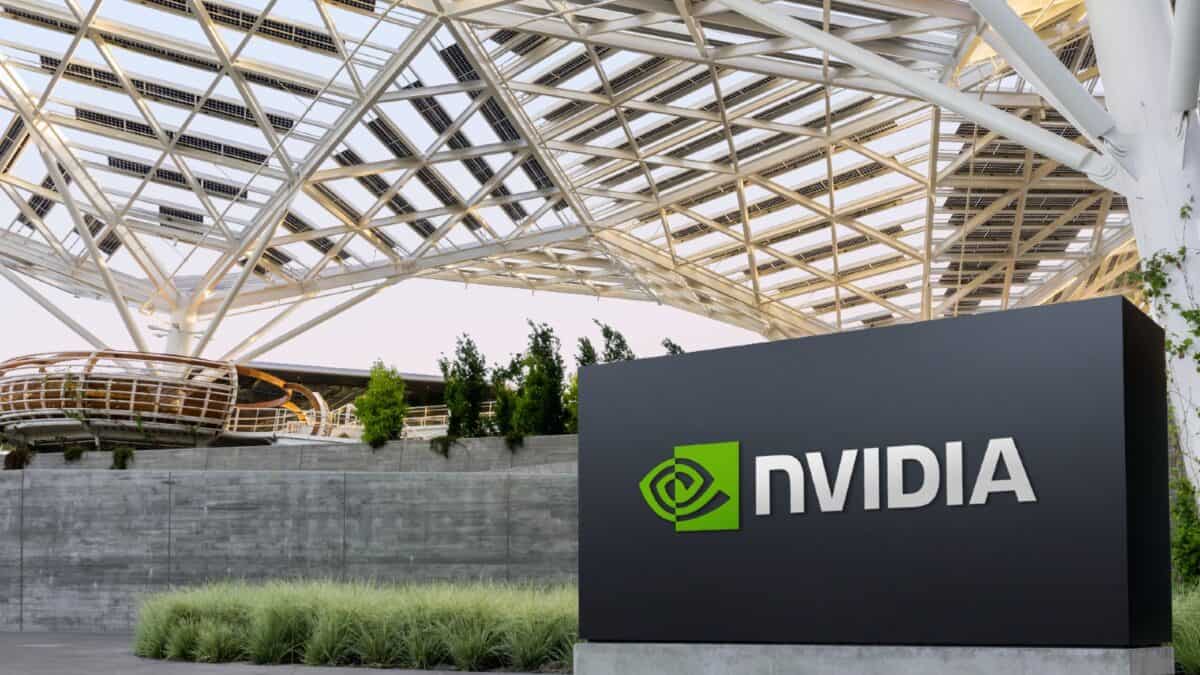
This isn’t a question with a simple answer, nor is it about identifying a single company that will precisely replicate NVIDIA’s trajectory. Instead, it’s a profound inquiry into the principles of identifying truly disruptive innovation, understanding emerging megatrends, and applying rigorous financial analysis to uncover companies with the potential for sustained, high-growth appreciation. Finding the next NVIDIA stock isn’t about chasing a fleeting trend; it’s about methodically dissecting what made NVIDIA so successful and applying those insights to future opportunities. It demands a blend of foresight, due diligence, and a keen understanding of both technological evolution and market dynamics. This article will explore the characteristics that propelled NVIDIA to its dominant position, outline the key criteria for identifying future growth powerhouses, pinpoint emerging sectors ripe for disruption, and discuss the essential strategies for navigating the risks inherent in seeking out the market’s next titans.
Deconstructing NVIDIA’s Success: A Blueprint for Future Growth
Understanding what made NVIDIA a stock market phenomenon is the first step in identifying potential successors. NVIDIA’s rise wasn’t accidental; it was the result of a confluence of technological superiority, market timing, and strategic vision.
Dominant Technology and Market Leadership
At its core, NVIDIA’s success is rooted in its unparalleled technological innovation, particularly in the realm of GPUs. Initially designed for rendering complex graphics in video games, GPUs evolved to become the ideal architecture for parallel processing tasks far beyond gaming. NVIDIA consistently pushed the boundaries of GPU performance, creating a technological lead that competitors struggled to match. This dominance wasn’t just about raw power; it was about designing a versatile architecture that could be adapted for new, demanding workloads. Their CUDA platform further solidified this lead, creating an ecosystem that made it easier for developers to leverage their GPUs, effectively locking in customers and fostering a robust community around their technology. This combination of superior hardware and an accessible software platform proved to be an insurmountable advantage.
Riding Megatrends: AI, Data Centers, and Beyond
Perhaps the most critical factor in NVIDIA’s exponential growth was its ability to identify and capitalize on burgeoning megatrends. While gaming provided a strong foundation, the company’s visionary pivot towards professional visualization, then data centers, and most importantly, artificial intelligence, proved prescient. As the demand for processing vast amounts of data for AI training and inference exploded, NVIDIA’s GPUs, with their parallel processing capabilities, became the essential engine. They weren’t just participating in the AI revolution; they were enabling it. This strategic alignment with the most transformative technological shifts of the 21st century—from big data to machine learning and autonomous systems—positioned NVIDIA as an indispensable partner for companies building the future. The company didn’t just sell chips; it sold the foundation for innovation.
Strategic Moats and Ecosystem Lock-in
NVIDIA built formidable competitive moats. Their technological superiority, patent portfolio, and continuous R&D investment created a barrier to entry for potential rivals. However, their most significant moat was arguably the development of the CUDA platform. This proprietary software layer, coupled with extensive developer tools and libraries, made it incredibly challenging for customers to switch to alternative hardware. Once developers and researchers invested significant time and resources into building applications on CUDA, the cost and effort of porting them to a different architecture became prohibitive. This ecosystem lock-in, combined with their brand reputation and manufacturing expertise, ensured a powerful competitive advantage that has been difficult to erode.
The Hunt for the “Next NVIDIA”: Key Investment Criteria
Finding a company with the potential to replicate NVIDIA’s trajectory requires a meticulous evaluation process, focusing on a specific set of characteristics that often precede explosive growth. Investors should look beyond surface-level metrics and delve into the fundamental drivers of long-term value creation.
Identifying Disruptive Innovation and Niche Dominance
The “next NVIDIA” will likely be a company that isn’t just incrementally improving an existing product but is instead introducing truly disruptive innovation. This means creating new markets, significantly improving upon current solutions, or solving previously intractable problems. Look for companies with proprietary technology, a strong intellectual property portfolio, and a clear vision for how their innovation will reshape an industry. Furthermore, true contenders often start by dominating a specific niche or segment before expanding their influence. NVIDIA began with high-end PC gaming GPUs before conquering data centers and AI. This niche dominance provides a strong foundation for future expansion and validates their technological superiority.
Strong Financials and Scalable Business Models
Exceptional technology must be backed by robust financial health and a scalable business model. Examine companies for consistent revenue growth, healthy profit margins, and a strong balance sheet. The ability to generate significant free cash flow is a major positive, indicating self-sustaining growth. A scalable business model means that as the company grows, its costs do not increase proportionally, allowing margins to expand. This often involves software, intellectual property licensing, or platform businesses with low marginal costs per additional user or unit. Capital-intensive hardware businesses can be scalable, but they require substantial ongoing investment, making careful evaluation of R&D and CAPEX crucial.
Visionary Leadership and Adaptable Culture
The quality of a company’s leadership team is paramount. Look for founders and executives with a clear, long-term vision, a proven track record of innovation, and the ability to navigate complex market shifts. A visionary leader can articulate where the industry is heading and how their company will not only participate but lead that evolution. Equally important is an adaptable corporate culture that encourages experimentation, embraces failure as a learning opportunity, and can pivot swiftly in response to technological advancements or market changes. NVIDIA’s ability to shift its focus from gaming to data centers and AI is a testament to strong leadership and an agile culture.
Addressing Large, Growing Total Addressable Markets (TAMs)
A brilliant product in a stagnant or small market will never achieve NVIDIA-like growth. The “next NVIDIA” will be operating in, or creating, a Total Addressable Market (TAM) that is massive and growing rapidly. This ensures that there is ample room for the company to expand its reach and scale its operations over many years. Consider companies positioned within industries experiencing secular tailwinds, such as aging populations, digital transformation, climate change mitigation, or the ongoing data explosion. The larger and faster-growing the market they can tap into, the greater their potential for long-term revenue and profit expansion.
Emerging Sectors and Technologies Poised for Explosive Growth

While past performance is not indicative of future results, understanding the sectors that are currently undergoing profound transformation can provide fertile ground for identifying future market leaders.
The Continued Revolution in Artificial Intelligence and Machine Learning
While NVIDIA already dominates the hardware layer, the AI revolution is far from over. Opportunities abound in specialized AI software, AI-as-a-Service platforms, edge AI, AI model development and deployment, and even new forms of AI hardware (e.g., neuromorphic chips, application-specific integrated circuits or ASICs). Companies that can democratize AI, make it more efficient, or solve specific industry problems using AI could become the next titans. Think about the companies building the tools for generative AI, the infrastructure for vast AI models, or novel applications in healthcare, finance, or logistics.
Quantum Computing: The Frontier of Computation
Quantum computing represents a nascent but potentially revolutionary field. While still in its early stages, breakthroughs in quantum hardware and software could unlock computational powers far beyond what classical computers can achieve, solving problems currently deemed impossible. Investing in this sector is high-risk, high-reward, with a very long time horizon. However, companies making fundamental advancements in qubit stability, error correction, or quantum algorithm development could eventually command immense value as the technology matures. This is a space for patient, speculative capital, akin to investing in early internet companies.
Biotechnology and Gene Editing: Reshaping Healthcare
The intersection of technology and biology is creating unprecedented opportunities. Advances in gene editing (e.g., CRISPR), synthetic biology, personalized medicine, and advanced diagnostics are poised to revolutionize healthcare. Companies developing new therapeutic modalities, precision diagnostics, or leveraging AI for drug discovery and development could see massive growth. The TAM for healthcare solutions is immense, and technological breakthroughs in this area have the potential for profound societal and financial impact. Look for companies with robust pipelines, strong clinical data, and strategic partnerships.
Renewable Energy and Sustainable Technologies: The Green Transition
The global imperative to combat climate change is driving massive investment into renewable energy, energy storage, electric vehicles, and sustainable technologies. Companies developing advanced battery technologies, next-generation solar panels, efficient hydrogen production, smart grid solutions, or carbon capture technologies are operating in a rapidly expanding market. The scale of the transition to a green economy implies a multi-trillion-dollar opportunity across various sub-sectors, creating an environment where innovative companies can thrive.
Robotics and Automation: Transforming Industries
Robotics and automation are moving beyond industrial factories into logistics, healthcare, agriculture, and service industries. Companies developing advanced robotics, autonomous systems, robotic process automation (RPA) software, or novel human-robot collaboration solutions are poised for significant growth. As labor costs rise and the demand for efficiency increases, automation will become indispensable, creating a vast market for companies that can deliver reliable, intelligent, and cost-effective solutions.
Navigating the Risks and Crafting a Resilient Portfolio
The pursuit of the “next NVIDIA” is fraught with risk. For every success story, there are countless companies that fail to deliver on their promise. A disciplined approach is crucial for managing these risks.
The Importance of Due Diligence and Comprehensive Research
Never invest based on hype, social media trends, or speculative tips. Thorough due diligence is non-negotiable. This involves deeply understanding a company’s technology, competitive landscape, management team, financial statements, and growth strategy. Read investor presentations, earnings call transcripts, and independent research reports. Look for companies with transparent communication and a clear path to profitability. A critical eye and a healthy skepticism are your best allies.
Diversification: The Antidote to Single-Stock Volatility
Betting heavily on a single “next NVIDIA” is an incredibly risky strategy. Even the most promising companies can face unforeseen challenges, technological shifts, or competitive pressures. Diversifying your portfolio across multiple high-growth companies, different sectors, and even various asset classes can mitigate the impact of any single investment underperforming. A well-diversified portfolio allows you to capture the overall growth of emerging trends without being overly exposed to the specific fortunes of one company.
Long-Term Horizon and Patience
Transformative growth rarely happens overnight. NVIDIA’s journey from a niche chipmaker to a tech titan took decades. Identifying the “next NVIDIA” requires a long-term investment horizon and significant patience. Market volatility, economic downturns, and periods of underperformance are inevitable. Investors must be prepared to hold through these cycles, allowing the underlying business to execute its strategy and for its innovations to mature and gain market traction. Short-term trading strategies are fundamentally at odds with identifying and capitalizing on truly disruptive, long-term growth stories.

Understanding Market Cycles and Valuation
Even the best companies can be overvalued. Investing in a phenomenal business at an exorbitant price can still lead to disappointing returns. While high-growth companies often command premium valuations, it’s crucial to understand various valuation metrics (e.g., P/E, P/S, EV/EBITDA, discounted cash flow) and assess whether the current price reflects a realistic expectation of future growth. Investing when market sentiment is overly optimistic or during speculative bubbles can lead to significant drawdowns. Conversely, market corrections can present opportunities to acquire shares in excellent companies at more reasonable valuations.
The quest for the “next NVIDIA stock” is a journey for disciplined investors who combine a forward-looking perspective with rigorous analytical skills. It’s about recognizing the profound impact of disruptive technologies, identifying visionary companies that can capitalize on them, and committing to a long-term investment horizon. There will never be an exact replica of NVIDIA, but the principles of its success – technological dominance, alignment with megatrends, strategic moats, and exceptional leadership – provide a timeless framework for uncovering the market’s future leaders. By focusing on innovation, financial strength, and market potential, while prudently managing risk through diversification and patience, investors can position themselves to participate in the next wave of transformative growth.
aViewFromTheCave is a participant in the Amazon Services LLC Associates Program, an affiliate advertising program designed to provide a means for sites to earn advertising fees by advertising and linking to Amazon.com. Amazon, the Amazon logo, AmazonSupply, and the AmazonSupply logo are trademarks of Amazon.com, Inc. or its affiliates. As an Amazon Associate we earn affiliate commissions from qualifying purchases.