
When discussing the financial magnitude of Microsoft, it is essential to distinguish between two frequently confused metrics: market capitalization and net worth (or shareholders’ equity). While the general public often uses “net worth” to describe the total market value of a company’s shares, financial analysts look deeper into the balance sheet to understand the underlying value of the assets, liabilities, and the massive revenue engines that propel this Redmond-based titan.
As of 2024, Microsoft stands as one of the most valuable companies in history, frequently vying with Apple and Nvidia for the title of the world’s most valuable public entity. To understand the “net worth” of Microsoft, one must analyze its $3 trillion-plus market cap alongside its quarterly financial statements, its aggressive acquisition strategy, and its dominance in the cloud and artificial intelligence sectors.
Understanding the Difference: Market Cap vs. Shareholders’ Equity
To answer “what is the net worth of Microsoft,” a financial perspective requires looking at the company from two different angles. The first is what the market believes the company is worth, and the second is the literal accounting value of the company’s assets.
Market Capitalization: The $3 Trillion Milestone
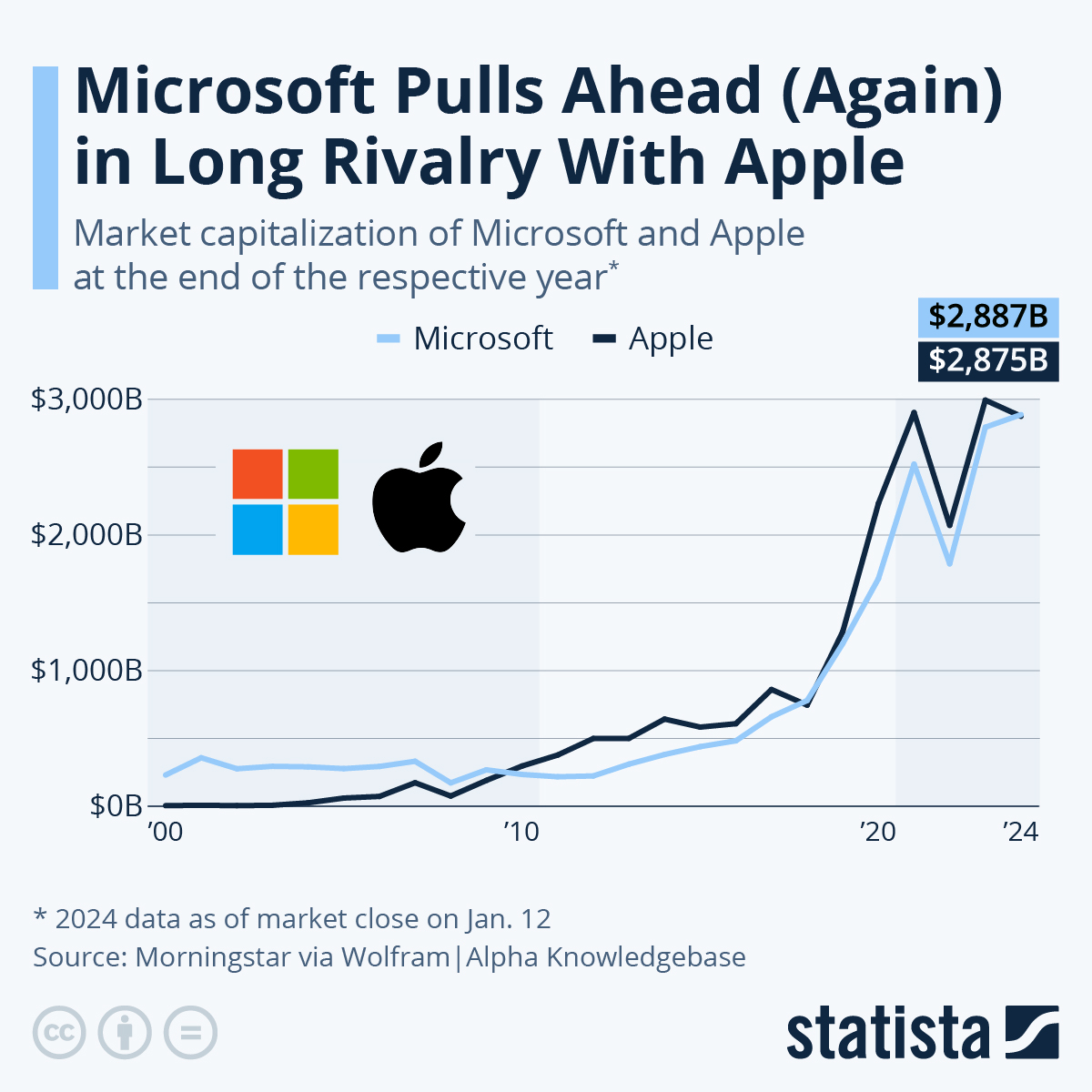
Market capitalization is calculated by multiplying the total number of outstanding shares by the current share price. For Microsoft, this figure has recently eclipsed the $3 trillion mark. This number represents the “market value” and reflects investor confidence in future earnings, the company’s leadership under Satya Nadella, and its strategic pivot toward generative AI. This valuation is forward-looking; investors are not just paying for what Microsoft owns today, but for the cash flows they expect the company to generate over the next several decades.
Shareholders’ Equity: The Accounting Net Worth
In strict accounting terms, the “net worth” of a corporation is its Total Shareholders’ Equity. This is found on the balance sheet by subtracting total liabilities from total assets. According to recent fiscal filings, Microsoft’s total assets—including cash, equipment, property, and intellectual property—hover around $500 billion, while its liabilities sit significantly lower. This leaves a “book value” or accounting net worth of approximately $250 billion to $270 billion.
The massive gap between the $250 billion book value and the $3 trillion market cap is known as the “market-to-book ratio.” This premium exists because Microsoft possesses intangible assets—brand recognition, proprietary software code, and a dominant market position—that are far more valuable than its physical offices or hardware.
The Pillars of Profit: What Drives Microsoft’s Valuation?
Microsoft is no longer just a “Windows and Office” company. Its valuation is supported by a diversified ecosystem of high-margin business units. By analyzing these segments, investors can see exactly where the “wealth” of the company is generated.
Azure and the Intelligent Cloud
The single largest driver of Microsoft’s net worth growth over the last decade has been Azure. As businesses worldwide migrate their operations to the cloud, Azure has captured a massive share of the infrastructure-as-a-service (IaaS) market. Cloud computing provides Microsoft with high-margin, recurring revenue. Unlike the one-time software sales of the 1990s, Azure represents a “toll booth” model where companies pay monthly for computing power, storage, and networking. This predictability is a cornerstone of Microsoft’s high valuation, as it reduces the perceived risk for institutional investors.
Productivity and Business Processes
This segment includes the Office 365 suite, LinkedIn, and Dynamics 365. Office 365 has successfully transitioned into a Software-as-a-Service (SaaS) model, ensuring a constant stream of cash flow from both enterprise and individual subscribers. LinkedIn, acquired by Microsoft in 2016 for $26.2 billion, has become a powerhouse in professional networking and advertising, contributing billions to the annual bottom line. The integration of these tools creates a “sticky” ecosystem—once a business is integrated into the Microsoft 365 environment, the cost of switching to a competitor is prohibitively high, protecting the company’s long-term value.
More Personal Computing
While the cloud is the growth engine, the “Personal Computing” segment remains a massive cash cow. This includes Windows OEM revenue, Surface hardware, and the Xbox gaming ecosystem. The recent $68.7 billion acquisition of Activision Blizzard has significantly bolstered this segment’s value, making Microsoft the third-largest gaming company in the world by revenue. By owning iconic franchises like Call of Duty and World of Warcraft, Microsoft has secured a massive foothold in the digital entertainment space, further diversifying its income streams away from purely corporate clients.
The Balance Sheet: Cash Reserves and Asset Management
A key component of a company’s net worth is its liquidity. Microsoft is famous for maintaining one of the cleanest balance sheets in corporate history, holding one of the few AAA credit ratings from Standard & Poor’s—higher than even the U.S. government at various points in time.
Cash and Short-Term Investments
Microsoft consistently maintains a “war chest” of cash and short-term investments. Even after massive acquisitions, the company typically holds between $60 billion and $100 billion in liquid assets. This liquidity allows the company to weather economic downturns, fund internal R&D without taking on expensive debt, and return value to shareholders through aggressive buybacks and dividends.
Debt Management and Liabilities
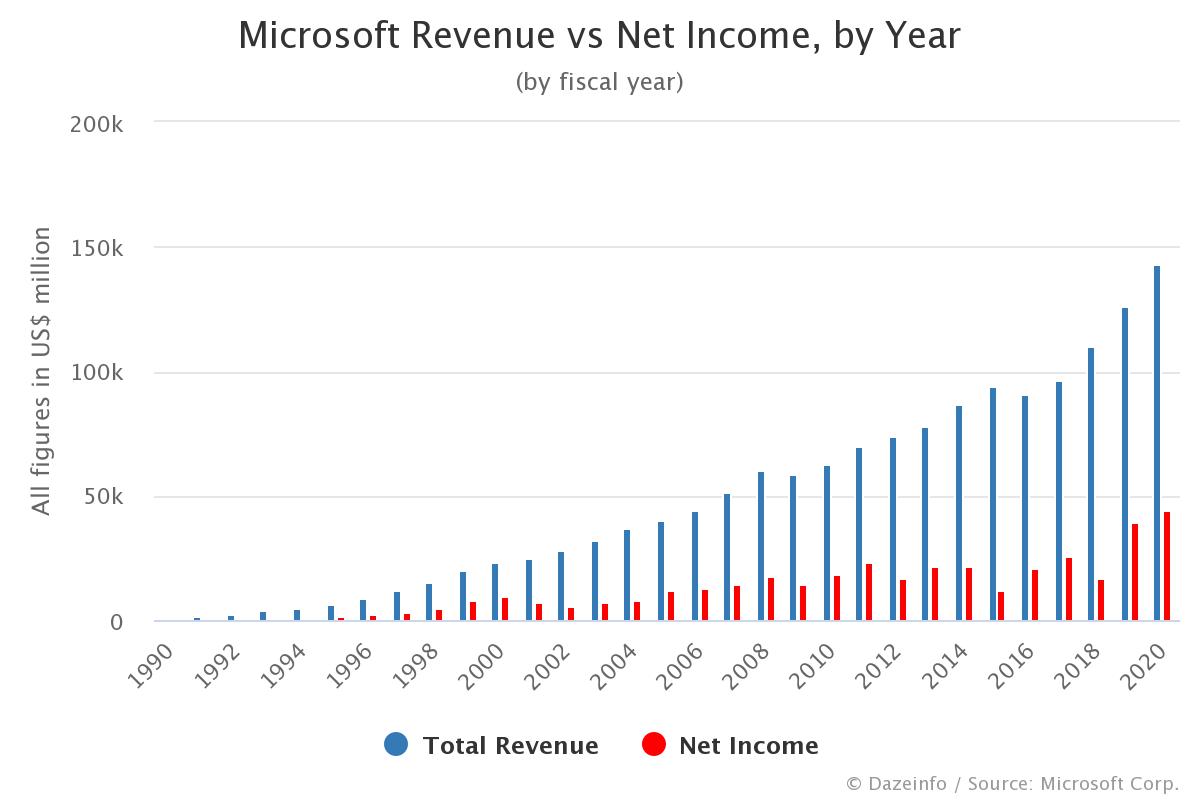
While Microsoft does carry debt, it is managed with extreme precision. Most of its debt is long-term and was secured at historically low interest rates. Because Microsoft’s operating income is so high—often exceeding $20 billion per quarter—the company can easily cover its interest payments many times over. This low debt-to-equity ratio is a primary reason why the company is viewed as a “safe haven” for personal finance and institutional investors alike.
The AI Premium: Why the Net Worth is Exploding
In the last 24 months, Microsoft’s valuation has seen a parabolic rise, largely attributed to its leadership in Artificial Intelligence. The “net worth” of the company in the eyes of the market is now inextricably linked to its partnership with OpenAI.
The OpenAI Investment
Microsoft’s multi-billion dollar investment in OpenAI (the creators of ChatGPT) is perhaps one of the most astute financial moves in tech history. By securing a 49% stake in the for-profit arm of OpenAI and integrating GPT models into its “Copilot” products, Microsoft has leapfrogged competitors like Google in the AI arms race. This hasn’t just increased the company’s prestige; it has directly increased the “intrinsic value” of the company by allowing them to charge premium subscription tiers for AI-enhanced software.
Monetizing the AI Stack
The market rewards companies that can monetize new technology quickly. Microsoft has integrated AI across its entire stack—from GitHub Copilot for developers to Microsoft 365 Copilot for office workers. Analysts estimate that AI could add tens of billions in incremental annual revenue by 2026. This potential for “explosive” growth is why the market cap has soared, even as the literal book value of assets remains relatively stable.
Investing Perspective: Is Microsoft’s Value Sustainable?
From an investment and business finance standpoint, the “net worth” of Microsoft is a reflection of its efficiency. The company boasts a Return on Equity (ROE) that is significantly higher than the industry average, often exceeding 35%. This means that for every dollar of “net worth” (equity) on the books, Microsoft generates 35 cents of profit every year.
Dividend Growth and Share Buybacks
For the individual investor, Microsoft’s net worth translates into tangible returns through dividends. Microsoft has a long history of increasing its dividend annually, making it a favorite for “Dividend Growth” investors. Furthermore, the company frequently engages in share buybacks. By reducing the number of shares outstanding, the company increases the “ownership slice” of every remaining shareholder, effectively boosting the net worth of each individual investor’s position.
Risks to Valuation
No company is without risk. Microsoft faces significant antitrust scrutiny in the US and the EU, particularly regarding its dominance in the cloud and its recent gaming acquisitions. Furthermore, the high P/E (Price-to-Earnings) ratio—often sitting above 30x—means that any slight miss in earnings growth could lead to a significant contraction in market cap. However, given its diversified revenue streams and massive cash reserves, Microsoft is better positioned than almost any other firm to navigate these headwinds.
Summary of Financial Standing
To summarize the net worth of Microsoft:
-
Market Value: Over $3 trillion, reflecting its dominance in Cloud and AI.
-
Accounting Net Worth (Equity): Approximately $250–$270 billion in tangible and intangible assets minus liabilities.
-
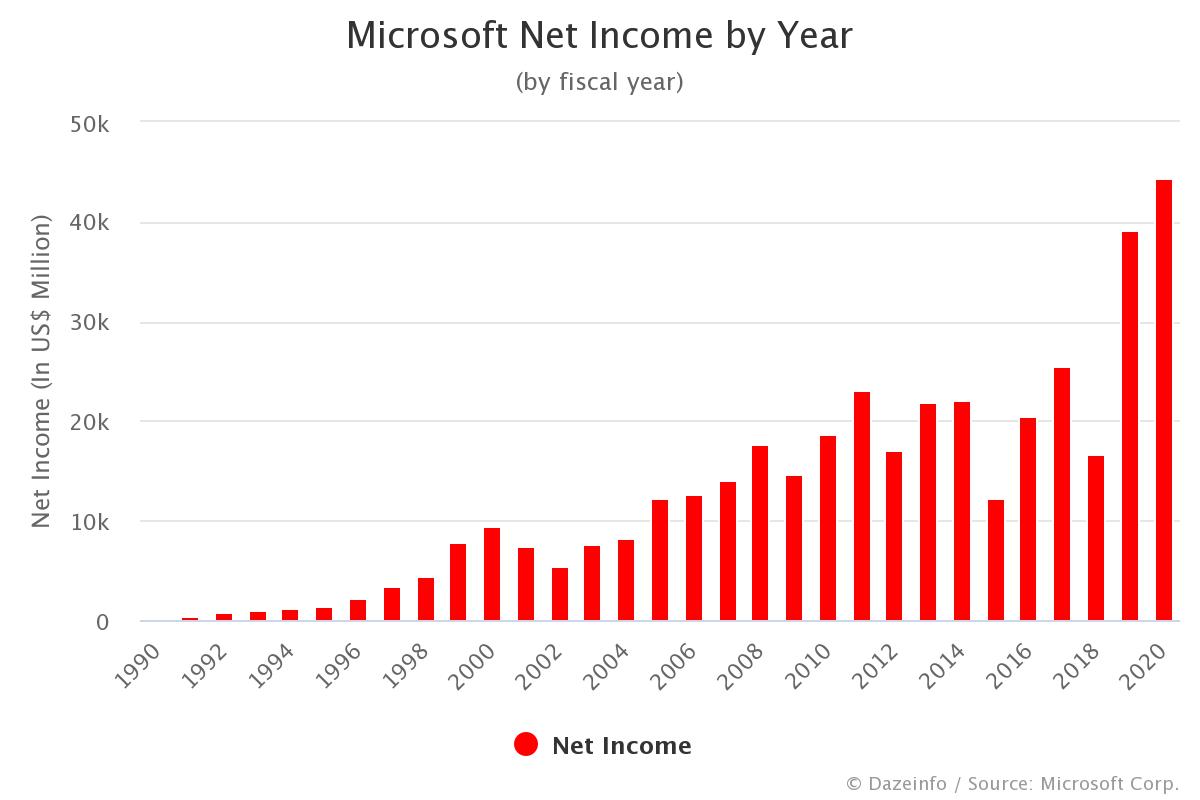
Profitability: Consistently generating over $70 billion in annual net income.
-
Strategic Assets: Azure, Office 365, LinkedIn, and Activision Blizzard.
Ultimately, Microsoft’s net worth is a testament to its ability to evolve. From a desktop software company to a cloud giant, and now to an AI pioneer, Microsoft has mastered the art of capital allocation. For those looking at the company through the lens of business finance, Microsoft represents the gold standard of corporate valuation—a rare blend of massive scale, high growth, and fortress-like financial stability.
aViewFromTheCave is a participant in the Amazon Services LLC Associates Program, an affiliate advertising program designed to provide a means for sites to earn advertising fees by advertising and linking to Amazon.com. Amazon, the Amazon logo, AmazonSupply, and the AmazonSupply logo are trademarks of Amazon.com, Inc. or its affiliates. As an Amazon Associate we earn affiliate commissions from qualifying purchases.