
To understand the trajectory of modern innovation, one must look back nearly 12,000 years to a period of profound transformation. When asking what the Neolithic era is also known as, the standard archaeological answer is the “New Stone Age.” However, in the context of human development and system design, it is more accurately described as the First Technological Revolution.
This era represents the pivotal moment when humanity pivoted from a “reactive” species—subsisting on whatever the environment provided—to a “proactive” species that utilized tools, biological engineering, and infrastructure to terraform the world. By examining the New Stone Age through a technological lens, we can see the origins of our current digital landscape, from the optimization of resources to the birth of complex social networking.
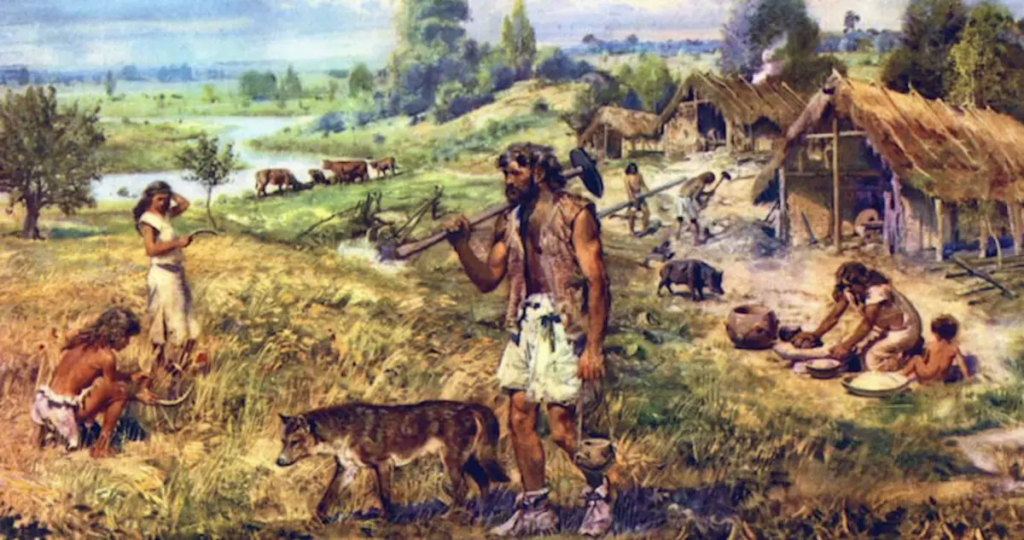
The New Stone Age: Redefining Humanity’s Hardware and Software
The term “Neolithic” derives from the Greek words neos (new) and lithos (stone). While its predecessor, the Paleolithic (Old Stone Age), relied on crude, chipped stone tools, the New Stone Age introduced a massive upgrade in “hardware” manufacturing. This wasn’t just a change in material; it was a shift in the philosophy of engineering.
From Chipped to Polished: The Hardware Upgrade
In the Paleolithic, tools were often disposable or rudimentary. In the Neolithic, humans developed the technology to grind and polish stone. This might seem like a cosmetic change, but from a tech perspective, it was a breakthrough in durability and precision. Polished stone axes allowed for the felling of large timber, which in turn enabled the construction of permanent housing and sophisticated transportation, such as canoes. This was humanity’s first move toward specialized toolkits designed for specific industrial tasks.
Domestication: The First Biological Algorithm
Perhaps the most significant “software” update in human history was the domestication of plants and animals. Instead of searching for data (food) in the wild, Neolithic humans “programmed” the environment to produce predictable results. By selecting for specific traits in wild grasses (the precursors to wheat and barley) and docile temperaments in animals, humans essentially performed the first feats of genetic engineering. This systematic approach to biology turned the natural world into a controllable resource, a precursor to the data-driven agriculture we see in the AgTech sector today.
The Neolithic Revolution: Programming the First Civilizations
As the New Stone Age progressed, the shift from nomadic lifestyles to sedentary communities required a complete overhaul of social and physical infrastructure. This period, often called the Neolithic Revolution, served as the beta test for urban living and the complex systems that sustain modern society.
The Infrastructure of Permanence
The move toward permanent settlements necessitated a leap in architectural technology. We see the emergence of mud-brick houses, organized street layouts, and communal storage facilities. Sites like Çatalhöyük in modern-day Turkey showcase early examples of “smart” urban planning, where houses were built adjacent to one another for thermal efficiency and defense. This was the birth of the built environment, a technological layer between humanity and the raw elements of nature.
Data Storage: From Memory to Proto-Writing
With the accumulation of surplus grain and livestock, Neolithic communities faced a new problem: inventory management. You cannot run a complex system based on memory alone. This led to the development of “tokens”—small clay shapes used to track quantities of goods. These tokens were the first external hard drives for human data. Eventually, this system of counting and tracking evolved into the earliest forms of writing, illustrating how technological needs for efficiency drive the development of communication tools.
Agricultural Innovation: The Ultimate Disruptive Tech
If the Paleolithic was the era of the “gig economy” (hunting and gathering day-to-day), the Neolithic was the era of the “enterprise system.” Agriculture was a disruptive technology that fundamentally changed the cost-benefit analysis of human existence.
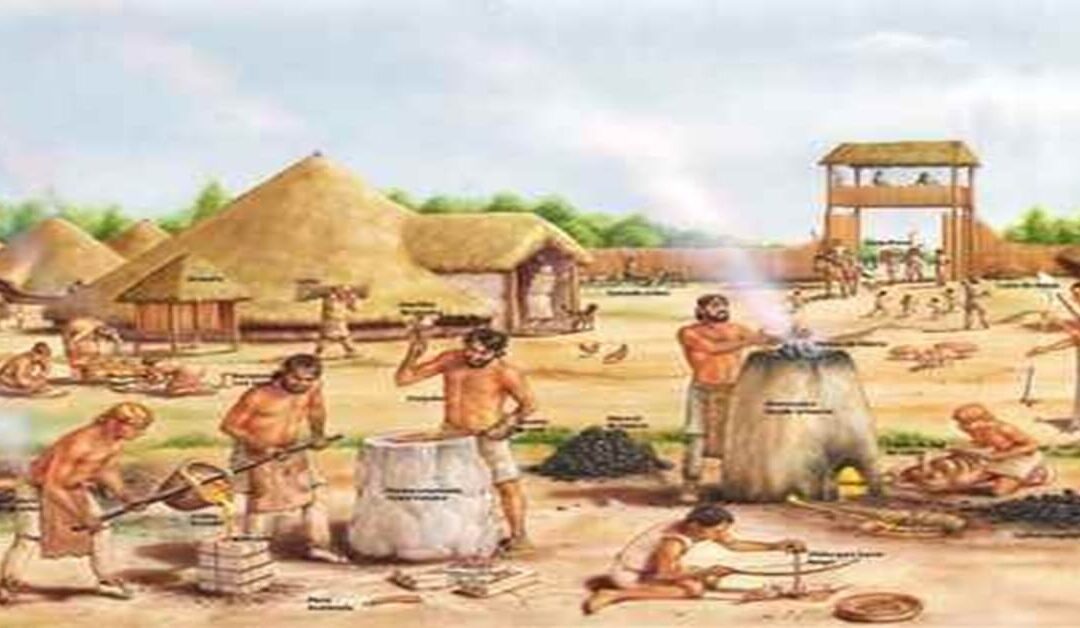
Irrigation and Resource Management Systems
As populations scaled, the “natural” water supply was no longer sufficient. Neolithic engineers developed the first irrigation systems—canals, dikes, and reservoirs designed to divert water to thirsty crops. This represented a shift toward environmental management, where humans no longer just lived within an ecosystem but actively managed its hydrological cycles. In modern terms, this was the first instance of large-scale systems engineering, requiring cross-functional collaboration and long-term maintenance.
The Optimization of Surplus
In a hunter-gatherer society, “zero-inventory” is the rule; you eat what you find. The Neolithic technological shift allowed for a “surplus-led” economy. This surplus was the original “capital” that allowed for specialization. Because not everyone had to spend every waking hour securing food, a portion of the population could become full-time “tech developers”—potters, weavers, and metalworkers. This division of labor is the direct ancestor of the modern tech firm, where specialized departments work toward a unified output.
Industrial Foundations: Pottery, Textiles, and Early Metallurgy
While “Stone Age” is in the name, the Neolithic era was actually the birthplace of several industries that we still rely on today. These were the high-tech sectors of their time, requiring a deep understanding of chemistry and physics.
Ceramic Engineering and Thermal Processing
The invention of pottery was more than just making bowls; it was a breakthrough in chemical engineering. By understanding how high heat changes the molecular structure of clay, Neolithic humans created the first synthetic materials. Pottery allowed for the storage of liquids and the boiling of foods, which expanded the human diet and improved health. The kiln technology developed during this time would later pave the way for the smelting of metals, transitioning the world from the New Stone Age into the Bronze Age.
The Loom: The First Binary Logic Machine
Textile production via the loom is one of the most underrated technological achievements of the Neolithic. The process of weaving—intersecting threads in a precise, repeating pattern—is inherently algorithmic. In fact, many computer scientists point to the loom as the spiritual ancestor of the computer, as it uses a binary-like system (over/under) to create complex patterns. The Neolithic transition from animal skins to woven fabrics represented a massive leap in material science and manufacturing efficiency.
Legacy in the Digital Age: Lessons from the First Tech Boom
When we analyze the Neolithic era as a technological phenomenon, we see startling parallels to our current digital transformation. The shift from “analog” foraging to “programmed” farming created new challenges that we are still trying to solve in the 21st century.
Scaling Challenges: From Tribes to Urban Networks
In the tech world, “scaling” is often the hardest phase of a startup’s life. The Neolithic era was humanity’s first experience with scaling. As villages grew into towns and towns into cities, the old methods of tribal governance (peer-to-peer networks) failed. This led to the creation of centralized “operating systems”—hierarchies, laws, and bureaucracies—to manage the increased complexity of the social network.
The Sustainability Paradox
The Neolithic Revolution brought about a massive increase in the human “user base,” but it also introduced the first anthropogenic environmental impacts. Overgrazing, deforestation for fuel, and soil depletion were the first signs of a technology’s “carbon footprint.” Just as we today grapple with the energy consumption of AI and data centers, Neolithic humans had to learn how to balance their technological advancements with the carrying capacity of their environment.
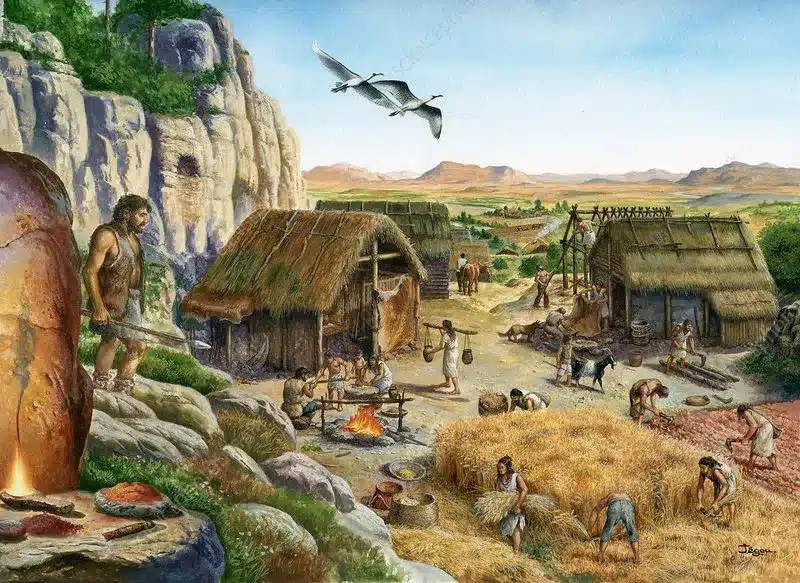
Conclusion: Why the “New Stone Age” Still Matters
What is the Neolithic era also known as? It is known as the foundation of the modern world. While the tools were made of stone, the logic applied during this period—optimization, specialization, data tracking, and environmental engineering—is the same logic that drives Silicon Valley today.
The New Stone Age was not merely a step in human evolution; it was a total system reboot. It moved humanity from a decentralized, mobile existence into a centralized, data-driven, and technologically dependent society. By recognizing the Neolithic as the first true Tech Revolution, we gain a deeper appreciation for the ancient roots of our modern innovations. We are still living in the world that the Neolithic engineers built, utilizing the same fundamental principles of resource management and system design to navigate our digital future.
aViewFromTheCave is a participant in the Amazon Services LLC Associates Program, an affiliate advertising program designed to provide a means for sites to earn advertising fees by advertising and linking to Amazon.com. Amazon, the Amazon logo, AmazonSupply, and the AmazonSupply logo are trademarks of Amazon.com, Inc. or its affiliates. As an Amazon Associate we earn affiliate commissions from qualifying purchases.