
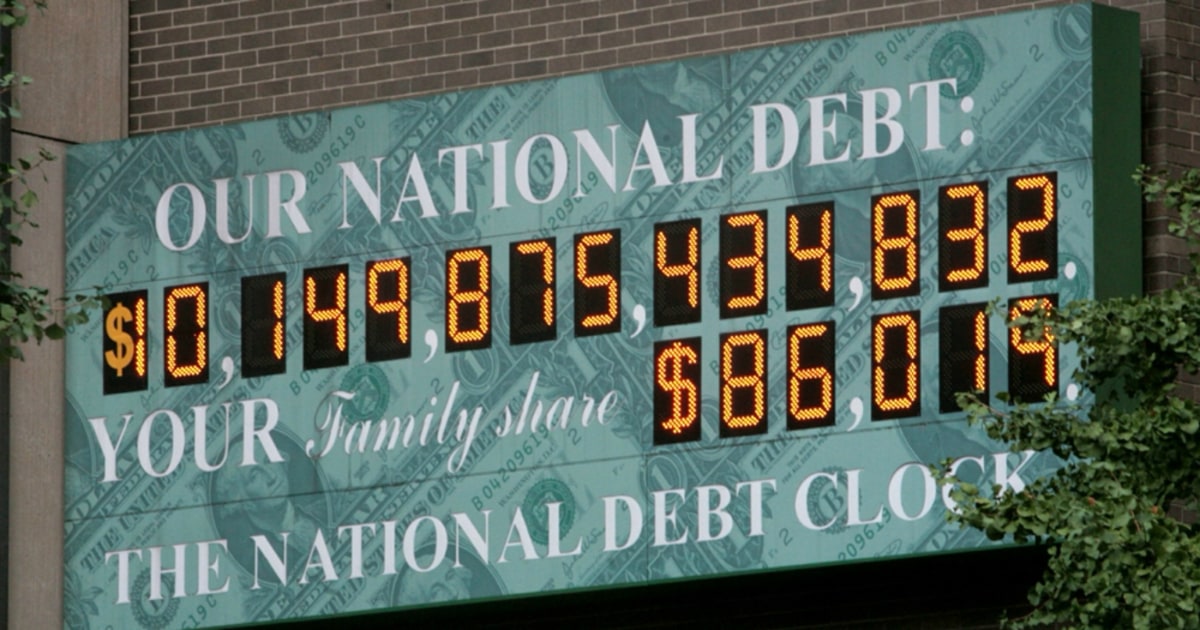
In the heart of Manhattan, near the bustling intersection of 44th Street and Sixth Avenue, hangs a large, glowing digital display that has become a permanent fixture of the American consciousness. It doesn’t tell the time, nor does it track the weather. Instead, it tracks a number so vast and fast-moving that it defies casual comprehension: the U.S. national debt.
The National Debt Clock is more than just a public installation; it is a financial tool, a political symbol, and a constant reminder of the complex relationship between government spending and the economy. For the average individual, the numbers on the clock can feel abstract, yet they carry profound implications for personal finance, investment strategies, and the future of the American dollar. Understanding what the National Debt Clock is—and, more importantly, what it represents—is essential for anyone looking to navigate the modern financial landscape.
The History and Evolution of the National Debt Clock
The National Debt Clock was not a government project. It was the brainchild of Seymour Durst, a real estate developer and fiscal hawk who believed that the American public needed a visual representation of the country’s growing financial obligations.
The Origins in Times Square
In 1989, when the national debt was “only” around $2.7 trillion, Durst installed the first clock on 42nd Street. His goal was simple: to draw attention to what he perceived as a looming crisis. At the time, the display was a technological marvel, using a series of mechanical wheels and lights to show the total debt alongside each family’s share of that debt. Durst wanted to bridge the gap between abstract federal policy and the kitchen-table economics of the average citizen.
Technological Upgrades and Moving Locations
As the debt grew, the clock had to evolve. In 2004, the original display was replaced by a more sophisticated digital model that could handle larger figures. The clock has moved locations a few times within Manhattan, but its mission has remained consistent. One of the most famous moments in the clock’s history occurred in 2008, during the height of the Great Recession. The national debt surpassed $10 trillion, and the clock actually ran out of digits. It had to be temporarily adjusted, and eventually, a new display was installed with enough placeholders to track quadrillions—a sobering reflection of the scale of modern fiscal policy.
The Durst Legacy and Public Impact
Seymour Durst passed away in 1995, but his family has continued to maintain the clock. It serves as a rare example of private activism aimed at public financial literacy. While critics argue that the clock is a tool for fear-mongering, proponents suggest it provides a necessary counterbalance to the often opaque nature of government accounting. It forces a public conversation about sustainability that might otherwise be ignored in the fast-paced news cycle.
How the National Debt Clock Functions: The Mechanics of the Numbers
To the casual observer, the numbers on the Debt Clock appear to be a real-time feed from a government computer. In reality, the mechanics are a bit more nuanced. The clock is an estimation tool that utilizes official data to project the current state of the nation’s liabilities.
Real-Time Tracking and Algorithmic Projections
The U.S. Treasury Department updates the official national debt figure once per business day. Because the Debt Clock needs to move continuously to illustrate the pace of spending, it uses an algorithm based on the Treasury’s daily reports. This algorithm calculates the rate of increase (the deficit) and applies it to the total, allowing the numbers to tick upward every second. While the exact figure shown at 2:00 PM on a Tuesday might differ slightly from the official Treasury ledger released later, it is remarkably accurate in representing the overall trajectory of the debt.
Distinguishing Between Gross Debt and Public Debt
When looking at the National Debt Clock, it is important to understand what the “Total Debt” figure actually includes. The national debt is comprised of two main categories:
- Debt Held by the Public: This includes Treasury securities held by individual investors, corporations, the Federal Reserve, and foreign governments. This is the debt the government must “pay back” to the market.
- Intragovernmental Holdings: This is debt that the government owes to itself, primarily through trust funds like Social Security and Medicare.
The National Debt Clock typically displays the “Gross National Debt,” which combines both of these figures to provide a comprehensive view of the government’s total legal obligations.
The Significance of “Debt per Citizen”
Perhaps the most relatable feature of the Debt Clock is the “Debt per Citizen” and “Debt per Taxpayer” sub-displays. By dividing the total gross debt by the current U.S. population, the clock attempts to personalize the burden. While no individual citizen is legally required to write a check for $90,000 to the Treasury, these figures serve to illustrate the potential future cost of current spending, whether through future taxation, reduced services, or inflationary pressures.
Why the National Debt Matters to Your Personal Finances
For the savvy investor or the person managing a household budget, the National Debt Clock is not just an interesting landmark; it is a leading indicator of economic conditions that directly affect wealth. The sheer volume of government debt influences several key pillars of personal finance.
Impact on Interest Rates and Borrowing
The relationship between the national debt and interest rates is a fundamental principle of macroeconomics. To fund its debt, the U.S. government must sell Treasury bonds. If the debt becomes too large or the market perceives higher risk, the government may have to offer higher interest rates to attract buyers. Because Treasury yields serve as a benchmark for the entire financial system, this upward pressure can lead to higher rates on mortgages, car loans, and credit cards. When the Debt Clock ticks faster, the cost of borrowing for the average American is likely to follow suit over the long term.
Inflation and Purchasing Power
There is a long-standing debate among economists regarding the link between high national debt and inflation. If the government chooses to “monetize” its debt—essentially having the Federal Reserve create more money to buy government bonds—it can lead to a devaluation of the currency. For the individual, this means that the dollars in your savings account or the salary you earn may buy fewer goods and services. Monitoring the debt is a way of monitoring the potential for long-term “hidden taxes” through the erosion of purchasing power.
The Future of Social Security and Taxation
The National Debt Clock also serves as a countdown for fiscal policy changes. High levels of debt often lead to one of two outcomes: spending cuts or tax increases. For those planning for retirement, the intragovernmental portion of the debt (owed to Social Security) is particularly relevant. As the debt grows, the pressure on the federal budget increases, making it more likely that future generations will face higher marginal tax rates or a shift in the eligibility age for social programs.
Critiques and Perspectives: Is the Clock a Useful Tool?
While the National Debt Clock is an iconic piece of financial Americana, it is not without its critics. Modern economists and financial strategists often argue that the clock lacks the context necessary to understand the health of a global superpower’s economy.
The Debt-to-GDP Ratio vs. Nominal Figures
The most common critique of the Debt Clock is that it shows nominal figures—absolute dollar amounts—rather than the debt-to-GDP (Gross Domestic Product) ratio. Most economists agree that the size of the debt is less important than the economy’s ability to service that debt. If a person earns $500,000 a year, a $100,000 debt is manageable; if they earn $30,000, it is catastrophic. By focusing solely on the ticking trillions, the clock may ignore the fact that the U.S. economy is also growing, which provides the tax base necessary to manage the interest payments.
Modern Monetary Theory (MMT) Perspectives
In recent years, a school of thought known as Modern Monetary Theory (MMT) has challenged traditional views on the national debt. MMT proponents argue that because the U.S. issues its own currency, it can never “run out of money” in the way a household can. From this perspective, the National Debt Clock is more of a political statement than a financial warning. They argue that the primary constraint on government spending is inflation, not the total number shown on a digital billboard.
The Psychological Impact of Large Numbers
There is also the “numbing effect” to consider. When the debt moves from $20 trillion to $30 trillion, the numbers become so large that they lose meaning for the average person. Financial experts suggest that while the clock is good for raising awareness, investors should focus more on specific indicators like the “Interest Expense as a Percentage of Tax Revenue.” This metric tells us how much of our tax dollars are going toward paying interest rather than funding infrastructure, education, or defense.

Conclusion: Navigating a High-Debt Environment
The National Debt Clock remains one of the most powerful visual metaphors in the world of finance. It captures the velocity of modern government spending and serves as a constant reminder that fiscal policy is not a victimless or cost-free endeavor.
For the individual, the lesson of the Debt Clock is not one of despair, but of preparedness. In an era of high sovereign debt, personal financial resilience becomes paramount. This involves diversifying investments to protect against currency fluctuations, staying informed about interest rate trends, and maintaining a long-term view of fiscal policy.
Whether you view the clock as a dire warning of a coming collapse or a simple accounting of a complex global economy, its presence is undeniable. As the digits continue to blur in their rapid ascent, the National Debt Clock challenges every citizen, investor, and policymaker to ask the most important question in finance: How much is too much, and what are we prepared to do about it?
aViewFromTheCave is a participant in the Amazon Services LLC Associates Program, an affiliate advertising program designed to provide a means for sites to earn advertising fees by advertising and linking to Amazon.com. Amazon, the Amazon logo, AmazonSupply, and the AmazonSupply logo are trademarks of Amazon.com, Inc. or its affiliates. As an Amazon Associate we earn affiliate commissions from qualifying purchases.