
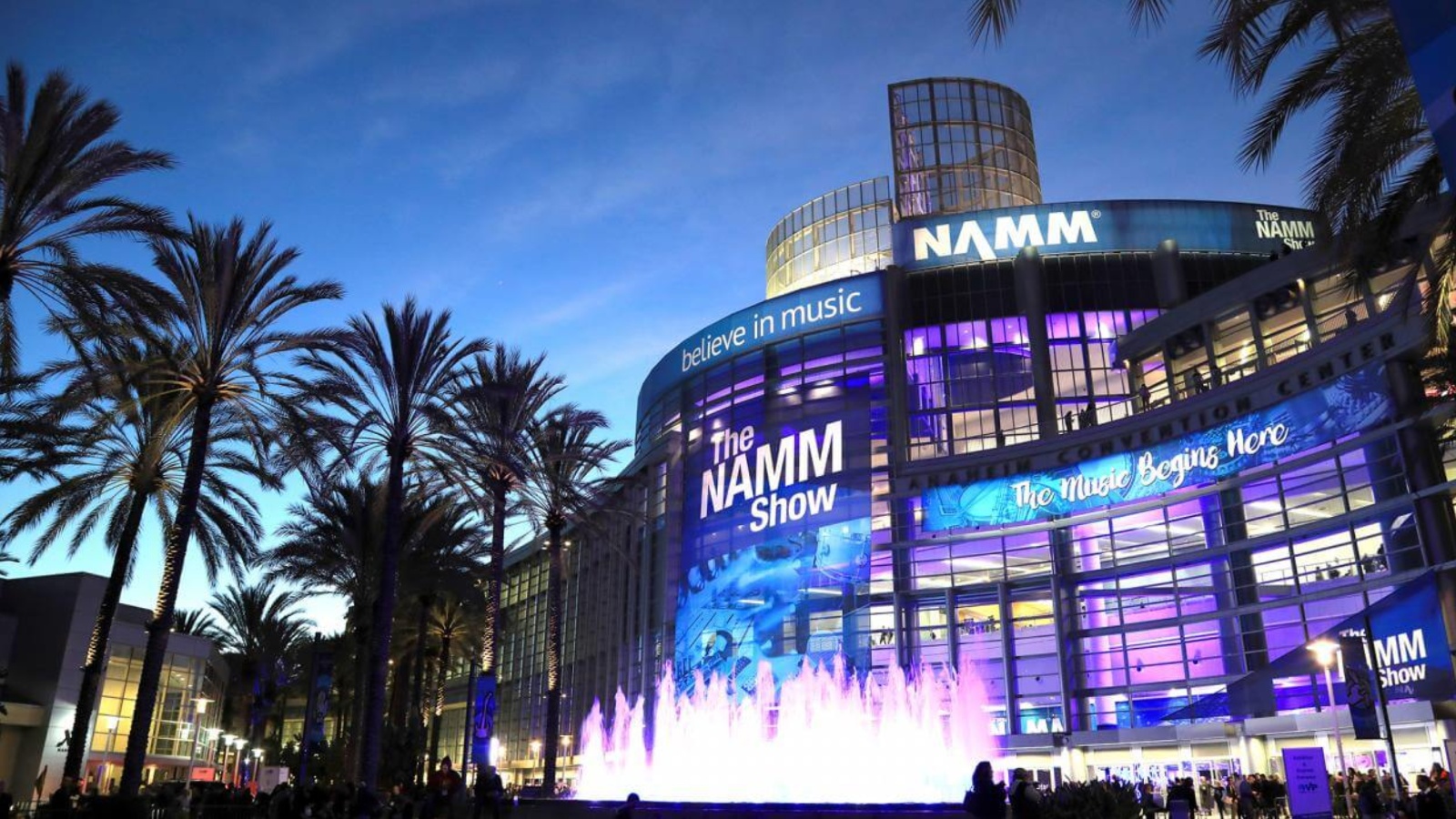
The NAMM Show, hosted by the National Association of Music Merchants, is far more than a mere gathering of musicians and instrument enthusiasts. It is the world’s most significant stage for music technology innovation, a sprawling exhibition where the future of sound is drafted, debated, and displayed. Often compared to the Consumer Electronics Show (CES) but focused exclusively on the audio and music sectors, NAMM serves as the annual pulse-check for the global music products industry.
In the contemporary landscape, NAMM has transitioned from a traditional trade show for acoustic instruments into a high-tech summit. It is the place where software developers, hardware engineers, and digital innovators converge to showcase products that define how we create, record, and consume sound. From the latest in Artificial Intelligence (AI) composition tools to advancements in spatial audio and MIDI protocols, the NAMM Show is the ultimate laboratory for music tech.

The Evolution of the NAMM Show: From Pianos to Plugins
To understand what the NAMM Show is today, one must look at its transformation through a technological lens. Founded in 1901, the show originally focused on the commerce of pianos and sheet music. However, as the 20th century progressed, the show mirrored the digital revolution, evolving into a powerhouse of electronic and software engineering.
Historical Roots and the Shift to Digital
While the early decades of NAMM were dominated by physical craftsmanship—wood, brass, and strings—the late 1970s and early 1980s marked a pivotal shift. This era saw the introduction of the first synthesizers and digital samplers. The NAMM Show became the birthplace of the MIDI (Musical Instrument Digital Interface) standard in 1983, a technological milestone that allowed different electronic instruments and computers to communicate with each other. This breakthrough laid the groundwork for the modern digital recording studio and remains one of the most significant tech developments in music history.
The Convergence of Hardware and Software
In the 21st century, the distinction between a “musical instrument” and “computing hardware” has blurred. Today’s NAMM Show is dominated by the “Software.NAMM” segment, highlighting the dominance of Digital Audio Workstations (DAWs) and Virtual Studio Technology (VST). At recent shows, the buzz has shifted from physical knobs and sliders to touchscreens, cloud-based collaboration tools, and software ecosystems that allow a producer in London to work in real-time with a musician in Los Angeles.
Core Technologies on Display: Innovation in Pro Audio and Performance
The primary draw of the modern NAMM Show is the sheer density of cutting-edge tech. It serves as a launchpad for gadgets and software that will eventually trickle down to home studios and professional concert tours alike.
Digital Audio Workstations (DAWs) and Virtual Instruments
Every year, the major players in the software world—such as Avid, Ableton, and PreSonus—use NAMM to announce major updates to their platforms. These updates often include massive leaps in processing efficiency and user interface design. Alongside these platforms, virtual instrument developers showcase plugins that use terabytes of high-fidelity samples or advanced physical modeling to recreate the sound of a million-dollar orchestra or a vintage rare synthesizer, all within a laptop’s RAM.
Smart Instruments and the Internet of Musical Things (IoMT)
One of the most exciting emerging tech categories at NAMM is the “Smart Instrument.” These are traditional-looking instruments—guitars, violins, or drum kits—embedded with sensors, Bluetooth connectivity, and onboard processing. These instruments can track a student’s progress, provide haptic feedback, or connect directly to an iPad for instant effects processing. The Internet of Musical Things (IoMT) is now a reality on the NAMM floor, showcasing how interconnected devices can create a seamless ecosystem for creators.
Cutting-Edge Audio Engineering and Spatial Sound
The “Pro Audio” halls at NAMM are a testament to the advancements in signal processing. Here, you find the latest in Analog-to-Digital (AD) converters, high-end microphones with digital modeling capabilities, and the massive shift toward immersive audio. With the rise of Dolby Atmos and Apple Spatial Audio, NAMM has become the primary venue for demonstrating how tech can place a listener “inside” a song, utilizing 360-degree soundscapes that go far beyond traditional stereo.

The Impact of Artificial Intelligence on Modern Music Gear
If there is one technological trend currently dominating the conversation at the NAMM Show, it is Artificial Intelligence. AI is no longer a futuristic concept in music; it is a core component of the tools being showcased to the public.
AI-Driven Mixing and Mastering Tools
The process of “finishing” a track—mixing levels and mastering the final audio—used to require decades of ear training and expensive hardware. Now, tech companies at NAMM are unveiling AI-driven plugins that can analyze a waveform, identify frequency clashes, and apply “smart” equalization and compression in seconds. These tools utilize machine learning algorithms trained on thousands of professional hit records, democratizing the ability to produce radio-quality sound for creators who lack access to professional studios.
Generative AI in Sound Design
Beyond just fixing audio, AI at NAMM is being used to create sound. New synthesizers are appearing that use generative neural networks to create entirely original timbres based on descriptive prompts. Instead of cycling through thousands of presets, a user might type “glassy, ethereal, and cold,” and the AI engine generates a custom patch. This intersection of linguistic processing and digital synthesis is a major frontier in the music tech sector.
The Future of NAMM: Virtual Reality and Immersive Environments
As we look toward the next decade of the NAMM Show, the integration of Virtual Reality (VR) and Augmented Reality (AR) is becoming a central theme. The “metaverse” of music is being built on the convention floor in Anaheim.
VR/AR in Live Performance and Education
Tech developers are increasingly using NAMM to showcase VR environments where musicians can practice on a virtual stage or attend a masterclass with a hologram of a legendary performer. AR is also finding its way into gear; imagine a guitar pedalboard that displays signal flow and setting information through a pair of smart glasses, or a piano that overlays digital “keys” on a physical keyboard to teach a beginner how to play.
Sustainable Tech and the Next Wave of Materials
Innovation at NAMM isn’t limited to code and circuits. There is a growing tech movement focused on sustainable materials and “green” engineering. This includes the development of high-performance carbon-fiber composites that replace endangered tonewoods, and the engineering of ultra-efficient, low-power-consumption digital amplifiers. The “tech” of NAMM is increasingly focused on how the industry can survive and thrive in an environmentally conscious world.
Why NAMM Matters for the Global Tech Ecosystem
While NAMM is specialized, its influence ripples across the entire technology sector. The demands of audio processing—which require zero latency and high data throughput—often push the boundaries of what computer hardware can achieve.
Networking in the Digital Age
NAMM is a hub for “Media over IP” (Internet Protocol) technologies. The show is where protocols like Dante (Digital Audio Network Through Ethernet) are standardized and expanded. These technologies allow for the transmission of hundreds of channels of uncompressed audio over standard IT networks. The innovations seen at NAMM in networked audio are often the same ones adopted by the broadcast, film, and corporate communication industries.
Cross-Industry Technological Spillovers
The research and development that goes into a high-end digital signal processor (DSP) for a guitar effect pedal often find applications elsewhere. For instance, noise-cancellation technology and voice-recognition algorithms showcased at NAMM frequently overlap with tech used in telecommunications and automotive industries. By fostering an environment where the most demanding audio challenges are solved, the NAMM Show acts as an incubator for broader technological progress.
In conclusion, the NAMM Show is the quintessential intersection of art and engineering. It is where the abstract world of music meets the concrete world of high-tech innovation. For anyone interested in the trajectory of digital tools, AI integration, or the future of human-computer interaction, NAMM provides an essential roadmap. It remains the premier destination to see not just what the world is listening to, but the sophisticated technology that makes that listening experience possible.
aViewFromTheCave is a participant in the Amazon Services LLC Associates Program, an affiliate advertising program designed to provide a means for sites to earn advertising fees by advertising and linking to Amazon.com. Amazon, the Amazon logo, AmazonSupply, and the AmazonSupply logo are trademarks of Amazon.com, Inc. or its affiliates. As an Amazon Associate we earn affiliate commissions from qualifying purchases.