
The question of a divine or celestial language, often referred to as the “language of the angels,” is a concept that has permeated theological, philosophical, and even artistic discussions for centuries. While not a tangible language in the way we understand human communication, its exploration within theological and mystical traditions offers profound insights into the nature of consciousness, divine revelation, and the potential for understanding beyond our current sensory and cognitive limitations. This article will delve into this intriguing concept, not as a literal linguistic endeavor, but as a metaphor for a higher form of communication and understanding. We will explore its origins, its manifestations in spiritual thought, and what it might signify for human perception and connection.
The Conceptual Genesis of Angelic Language
The notion of a divine language is not new; it is woven into the fabric of many religious and spiritual narratives. The idea often stems from the perceived gap between the finite human intellect and the infinite nature of the divine. How does one bridge this chasm? Through a language that transcends the limitations of human expression, a language spoken not with the tongue, but with the spirit.
Divine Revelation and Ineffable Truths
In many traditions, angels are seen as intermediaries between the divine and humanity. Their role is to convey messages, guidance, and truths from a higher realm. If these truths are of an order beyond human comprehension, then the language used to convey them must also be of a higher order. This is where the concept of an angelic language emerges. It is not a series of phonemes and grammatical structures like English or Mandarin, but rather a direct transmission of meaning, an infusion of understanding that bypasses the cognitive filters and interpretations inherent in human language.
This concept can be linked to the idea of unio mystica, or mystical union, where the individual soul experiences a direct connection with the divine. In such moments, verbal or conceptual communication might cease to be relevant, replaced by an immediate and profound apprehension of truth. The “language of the angels” can be seen as a metaphor for this ineffable communication, a silent understanding that transcends words.
Gnostic and Kabbalistic Interpretations
Certain esoteric traditions have explored the idea of divine languages more concretely, though still metaphorically. In Gnosticism, for instance, there are concepts of heavenly realms and divine beings communicating through emanations of light and pure thought. These “languages” are not spoken but perceived, a form of direct spiritual resonance.
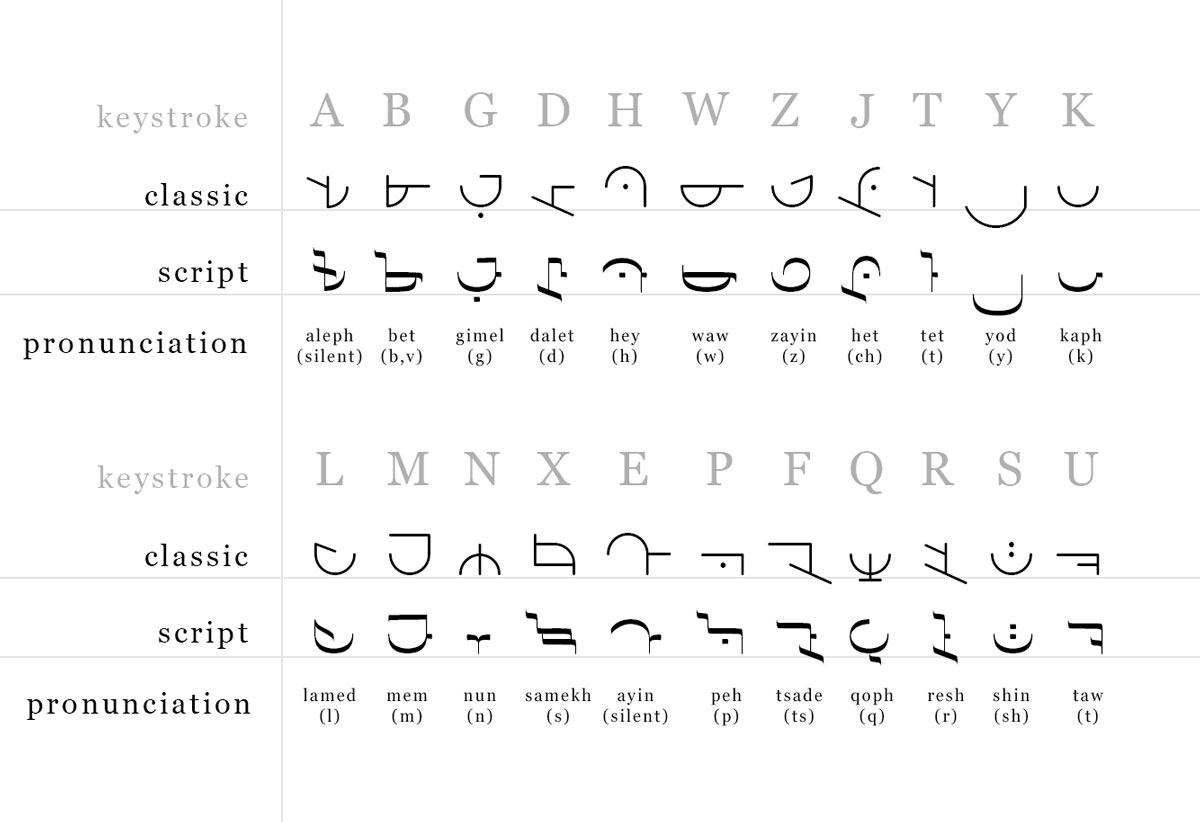
The Kabbalah, a system of Jewish mysticism, also touches upon divine languages through its focus on the Hebrew alphabet as a fundamental building block of creation. While Hebrew is a human language, in Kabbalistic thought, its letters and their combinations are seen as possessing a profound cosmic power, capable of shaping reality. Some interpretations suggest that the primordial language of creation, and by extension, the language of divine beings, is rooted in these sacred letters, a form of cosmic vibration or divine syntax that underpins all existence. This perspective suggests a language that is both symbolic and fundamentally real, a blueprint for the universe.
The Nature of Angelic Communication
If we are to conceptualize a “language of the angels,” we must consider what its characteristics might be, given its divine origin and purpose. It would likely be a language of pure intent, of direct consciousness, and of universal applicability.
Beyond Words: Thought, Emotion, and Pure Being
The core of angelic communication, as envisioned, is likely not auditory. Instead, it is a transfer of information or experience directly from one consciousness to another. Imagine a thought arising in your mind – it doesn’t have to be articulated verbally to exist. Now, amplify that by a divine consciousness. This “language” could be a direct impartation of knowledge, a sharing of emotional states, or even a transmission of pure being.
Consider the difference between reading a description of a sunset and actually witnessing one. The latter is a far richer, more immediate, and more profound experience. Angelic communication might be akin to this, where the essence of a message is conveyed directly, bypassing the need for interpretation of symbols. It’s about experiencing the truth, not just hearing about it. This could involve the transmission of complex ideas and emotions simultaneously, a form of telepathy elevated to a cosmic scale.
Universality and Transcendence
Human languages are inherently limited by culture, history, and individual experience. What one word means can vary greatly between individuals and across different contexts. A divine language, however, would need to be universally understandable and transcend these limitations. It would need to communicate truths that are fundamental to existence itself, not just to a specific human perspective.
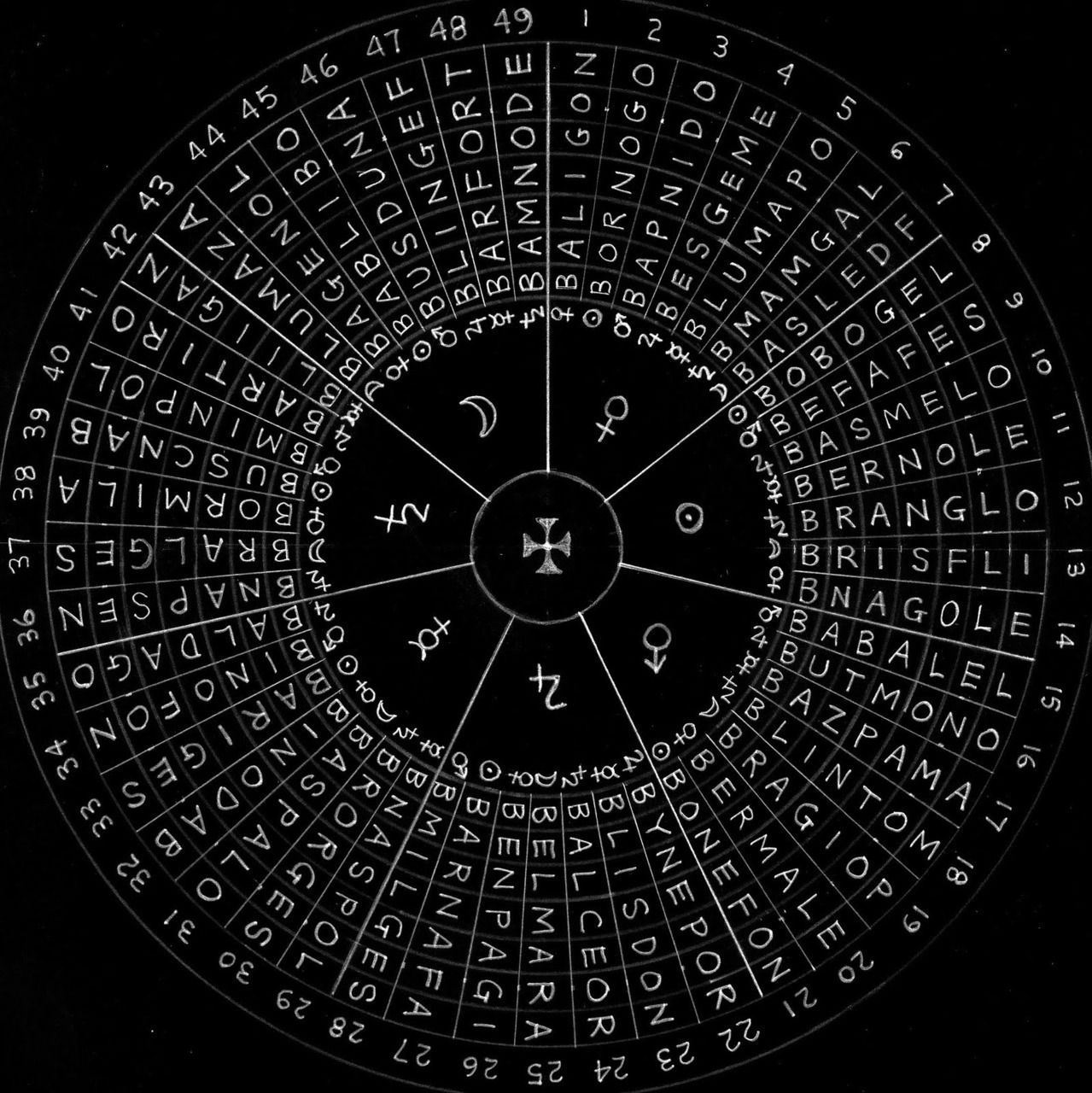
The “language of the angels” is often portrayed as a unifying force, capable of conveying messages that resonate with all sentient beings, regardless of their earthly origins or understanding. This universality suggests a language built not on arbitrary symbols, but on fundamental principles of reality, on the very essence of what it means to be. It’s a language that speaks to the soul directly, bypassing the superficial layers of learned communication.
Manifestations and Interpretations in Spirituality
While a literal dictionary of angelic words remains elusive, the concept of a divine language has influenced various spiritual practices and beliefs, offering pathways for humans to connect with higher realms.
Mystical Experiences and Divine Inspiration
Throughout history, mystics, prophets, and spiritual leaders have reported experiences of divine revelation, often describing a profound understanding that transcends ordinary thought. These experiences are sometimes attributed to a form of communication with celestial beings. The insights gained are often presented as profound truths about the nature of reality, morality, and the divine purpose.
These moments of divine inspiration can be seen as glimpses into the “language of the angels.” It’s not necessarily that they heard words, but that they received a direct download of understanding, a conceptual download that felt like a profound, undeniable truth. This form of communication is often described as overwhelmingly powerful and transformative, leaving an indelible mark on the recipient. The language, in this context, is the very content of the revelation itself, the unadulterated truth.
Symbolic Languages and Sacred Texts
While not directly “the language of the angels,” many sacred texts and symbolic systems are believed to carry divine wisdom and are considered channels through which divine communication can be apprehended. The intricate symbolism within religious art, the profound metaphors in scripture, and the complex numerological and geometrical patterns found in sacred architecture can all be viewed as attempts to translate or represent aspects of this higher form of understanding.
For example, the Bible, the Quran, the Vedas, and other sacred texts are considered by believers to be divinely inspired, containing messages from God or His messengers. The deep allegorical meanings, the parables, and the prophetic visions within these texts can be seen as human attempts to grapple with and convey truths that originate from a divine source. In this sense, the language of the sacred texts becomes a human echo of the “language of the angels.” Similarly, the visual language of mandalas, the geometric precision of Islamic art, or the iconography of Christian art are all attempts to communicate profound spiritual concepts that might otherwise be ineffable.
The Human Quest for Divine Understanding
The enduring fascination with the “language of the angels” speaks to a fundamental human yearning: the desire to connect with something greater than ourselves, to comprehend the mysteries of existence, and to transcend our own limitations. While we may never possess a literal translation, the concept serves as a powerful metaphor for spiritual growth and the pursuit of higher consciousness.
Cultivating Inner Resonance and Intuition
In the absence of a direct, audible language, spiritual traditions often emphasize the cultivation of inner receptivity. Practices such as meditation, prayer, contemplation, and mindfulness are designed to quiet the discursive mind and open up channels for intuition and spiritual insight. These practices aim to attune the individual to subtle forms of communication, to develop an inner “ear” that can perceive truths beyond the ordinary.
This cultivation of inner resonance is akin to learning to hear a faint signal amidst noise. By reducing the internal chatter of the ego and the constant bombardment of external stimuli, one can begin to perceive the subtler whispers of divine guidance or intuitive knowledge. The “language of the angels” in this context is not a set of external sounds, but an internal attunement, a harmonizing of one’s own consciousness with a higher frequency of awareness.

The Metaphorical Significance for Personal Growth
Ultimately, the “language of the angels” can be understood as a profound metaphor for achieving higher states of awareness and understanding. It represents a communication that is pure, direct, and universally comprehensible, transcending the ambiguities and limitations of human language. Our pursuit of this concept, therefore, becomes a quest for enlightenment, for a deeper connection with truth, and for the realization of our own spiritual potential.
By seeking to understand this divine discourse, we are, in essence, striving to become more open, more intuitive, and more attuned to the deeper currents of existence. The journey towards understanding the “language of the angels” is a journey of self-discovery, a testament to humanity’s innate desire to grasp the ineffable and to connect with the divine, even if that connection is expressed not in words, but in the silent language of the soul.
aViewFromTheCave is a participant in the Amazon Services LLC Associates Program, an affiliate advertising program designed to provide a means for sites to earn advertising fees by advertising and linking to Amazon.com. Amazon, the Amazon logo, AmazonSupply, and the AmazonSupply logo are trademarks of Amazon.com, Inc. or its affiliates. As an Amazon Associate we earn affiliate commissions from qualifying purchases.