
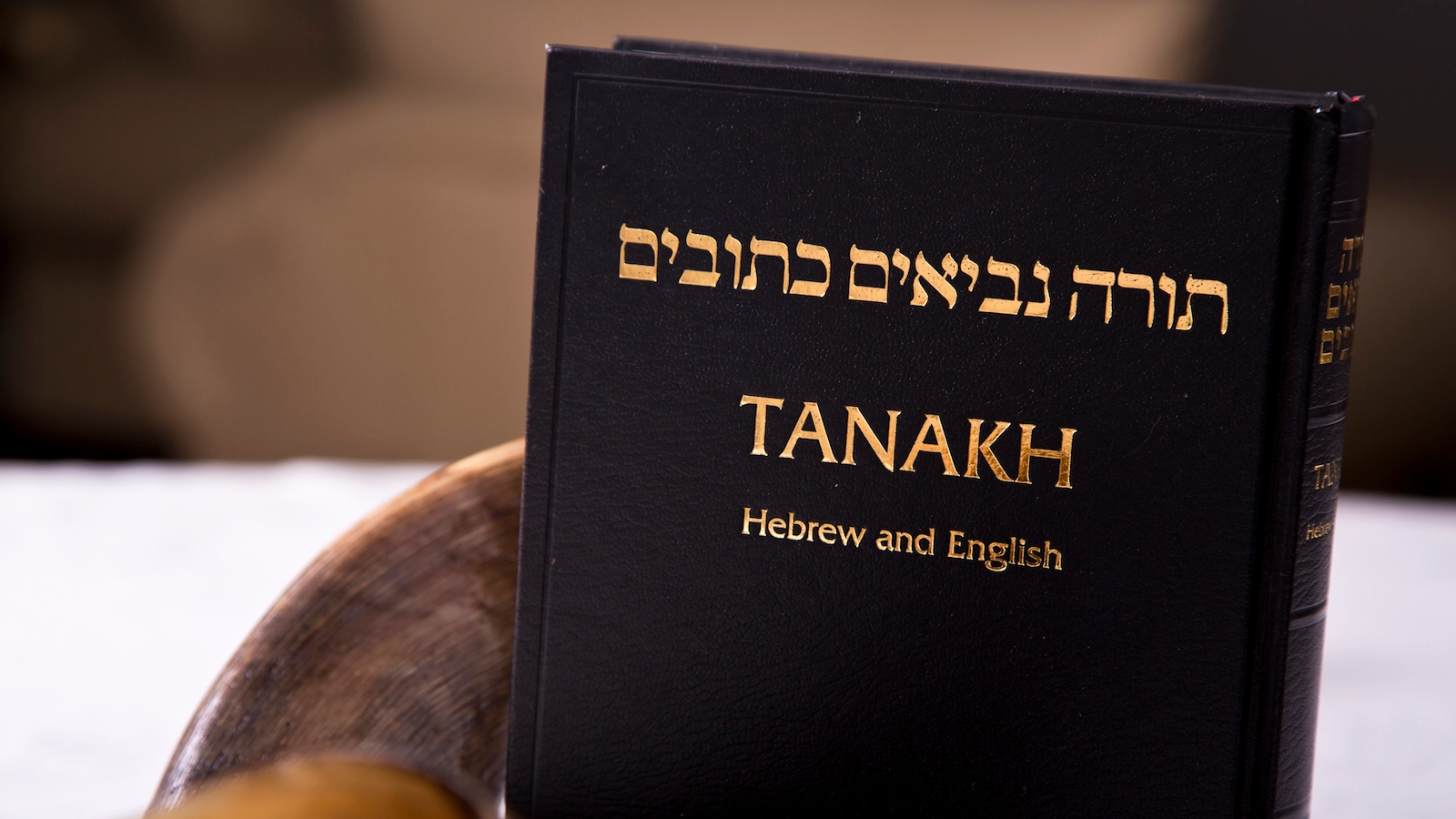
To answer the fundamental question: the name of the Jewish Bible is the Tanakh. While many in the Western world refer to it as the “Old Testament,” within Judaism and academic circles, the term Tanakh is the precise designation. It is an acronym derived from its three constituent parts: the Torah (Pentateuch), the Nevi’im (Prophets), and the Ketuvim (Writings).
In the modern era, the Tanakh has transitioned from physical parchment and ink to complex digital architectures. This evolution has transformed how scholars, theologians, and laypeople interact with ancient texts. By examining the Tanakh through the lens of technology—ranging from open-source databases to AI-driven linguistic analysis—we can understand how one of the world’s oldest libraries is being preserved and decoded for the digital age.
The Digital Architecture of the Tanakh: From Scrolls to Structured Data
The transition of the Tanakh into the digital sphere required more than just simple scanning. It necessitated the creation of “structured data” that allows software to understand the complex relationship between the Hebrew text, its vowels (nikkud), cantillation marks (trope), and centuries of commentary.
Understanding the Acronym in a Metadata Context
To a software developer, the Tanakh is essentially a hierarchical database. The Torah (The Five Books of Moses) serves as the foundational layer. The Nevi’im (Prophets) and Ketuvim (Writings) comprise the subsequent layers. In digital scholarship, each verse is assigned a unique identifier or “handle,” allowing for cross-referencing between different manuscripts and translations.
The Challenge of Digital Hebrew
Hebrew presents unique challenges for technology. It is a right-to-left (RTL) language, which required the development of specific Unicode standards to ensure that text displays correctly across different operating systems and browsers. Furthermore, the Tanakh is often studied alongside its “Mesorah”—a complex system of marginal notes that ensure the accuracy of the text. Digitizing these notes requires sophisticated layout engines that can handle multiple windows of text simultaneously.
Essential Software and Open-Source Platforms for Biblical Study
The democratization of the Jewish Bible has been driven largely by the “Open Source” movement. Today, some of the most powerful tools for studying the Tanakh are available for free, powered by global communities of developers.
Sefaria: The Open-Source Revolution
Sefaria is arguably the most significant technological development in Jewish education in the last century. It is a living library of Jewish texts, with the Tanakh at its core. As an open-source project, Sefaria provides an API (Application Programming Interface) that allows other developers to pull biblical texts into their own apps, websites, and research tools. By providing the Tanakh in a digital, interlinked format, Sefaria has enabled “hypertext” learning, where a user can click on a verse and instantly see every related commentary from the last two thousand years.
Logos Bible Software and Morphological Tagging
For professional researchers, tools like Logos Bible Software offer a more granular look at the Tanakh. These platforms use “morphological tagging,” where every single word in the Hebrew Bible is tagged with its root, its part of speech, its gender, and its number. This allows for complex queries, such as: “Find every instance where a specific verb is used in the imperative mood within the Book of Isaiah.” This level of data analysis was once the work of a lifetime; today, it takes milliseconds.
Mobile Applications and Daily Engagement
The accessibility of the Tanakh has also moved to the pocket. Apps like “Daily Torah” or various “Tanakh” readers utilize push notifications and mobile-optimized interfaces to encourage daily study. These apps often include “dark mode” for late-night reading, offline capabilities for areas without internet, and integrated audio for those who wish to hear the proper chanting of the Hebrew text.
AI and Machine Learning in Biblical Research and Archeology

Artificial Intelligence (AI) and Machine Learning (ML) are currently the most exciting frontiers in the study of the Jewish Bible. These technologies are being used to solve puzzles that have baffled historians for centuries.
Deciphering Damaged Manuscripts
One of the most remarkable tech applications involves “Virtual Unrolling.” Using high-resolution CT scans and machine learning algorithms, scientists can now read ancient, charred scrolls—such as those found at En-Gedi—without physically opening them. AI is trained to recognize the “ink” (often lead or iron-based) on the layers of the digital 3D model, effectively “flattening” the scroll so the Tanakh text can be read clearly for the first time in millennia.
Neural Machine Translation (NMT)
Translating the Tanakh is an ongoing challenge because ancient Hebrew contains nuances that are difficult to capture in modern English. AI-driven Neural Machine Translation uses deep learning to analyze how words were used in different contexts throughout the biblical corpus. This leads to more accurate and nuanced translations that consider the linguistic environment of the ancient Near East, rather than relying on a simple word-for-word substitution.
Pattern Recognition in Authorship
AI is also being used for “stylometry,” the statistical analysis of literary style. By feeding the Tanakh into machine learning models, researchers can identify patterns in vocabulary and syntax that might suggest whether certain sections of a book were written by a single author or multiple contributors. This provides a data-driven approach to biblical criticism that complements traditional theological study.
Digital Security and the Preservation of Sacred Textual Integrity
As the Tanakh moves into the cloud, ensuring the integrity and security of the text is paramount. In Jewish law, the accuracy of the biblical text is sacred; a single misplaced letter in a physical Torah scroll renders it “pasul” (invalid). Digital versions must meet similar standards of accuracy.
Blockchain and Immutable Records
Some tech-forward archivists are exploring the use of blockchain technology to create an “immutable” record of the Tanakh. By hashing the text of the Tanakh onto a decentralized ledger, researchers can ensure that the version of the text they are reading has not been altered or corrupted over time. This provides a digital “Seal of Authenticity” that mirrors the meticulous checking process used by traditional scribes (Soferim).
Cybersecurity for Digital Repositories
Large-scale repositories of Jewish texts, such as the National Library of Israel’s digital collection, face constant threats from cyberattacks and “bit rot” (the slow decay of digital data). Advanced digital security protocols, including multi-site redundancy and air-gapped backups, are employed to ensure that the digitized Tanakh survives for future generations. These institutions act as “digital arks,” protecting the data from both malicious actors and the physical degradation of storage hardware.
The Future of FaithTech: VR, AR, and Ethical AI
Looking forward, the intersection of the Tanakh and technology (often called “FaithTech”) is moving toward immersive and interactive experiences.
Virtual and Augmented Reality (VR/AR)
Imagine putting on a VR headset and walking through the Tabernacle as described in the Book of Exodus, or standing on the hills of Jerusalem as described in the Book of Kings. VR and AR technologies are being developed to turn the descriptive text of the Tanakh into 3D environments. This “spatial learning” helps users visualize the complex dimensions and geographical layouts mentioned in the Bible, making the text more tangible.
The Ethics of AI-Generated Interpretation
As Large Language Models (LLMs) like GPT-4 become more prevalent, many are using AI to ask questions about the Tanakh. However, this raises significant ethical and technical questions. How do we ensure that an AI doesn’t “hallucinate” or misinterpret a sacred commandment? Tech developers in this space are working on “Retrieval-Augmented Generation” (RAG), which forces the AI to ground its answers strictly in verified, peer-reviewed biblical commentaries rather than its general training data.

Conclusion
What is the name of the Jewish Bible? It is the Tanakh—a name that represents a library of wisdom that has survived for thousands of years. But in the 21st century, the Tanakh is also a sophisticated digital asset. Through the power of open-source software, artificial intelligence, and advanced digital preservation, the “People of the Book” are becoming the “People of the Byte.” As technology continues to evolve, the tools we use to access and understand the Tanakh will only become more powerful, ensuring that this ancient text remains relevant and accessible in an increasingly digital world.
aViewFromTheCave is a participant in the Amazon Services LLC Associates Program, an affiliate advertising program designed to provide a means for sites to earn advertising fees by advertising and linking to Amazon.com. Amazon, the Amazon logo, AmazonSupply, and the AmazonSupply logo are trademarks of Amazon.com, Inc. or its affiliates. As an Amazon Associate we earn affiliate commissions from qualifying purchases.