
In the modern marketplace, a company’s name is far more than a legal identifier or a placeholder on a business license. It is the cornerstone of a brand’s identity, the primary vessel for its reputation, and the first point of contact for every potential customer. When we ask, “What is the name of the company?” we are not just asking for a label; we are asking for the story, the values, and the promise that the organization represents. In the realm of brand strategy, naming is considered one of the most difficult and high-stakes challenges a business will ever face.
A name must be memorable, legally protectable, and culturally resonant. It must work as well on a smartphone screen as it does on a massive highway billboard. This article explores the intricate world of brand nomenclature, examining how the world’s most successful companies choose their identities and why the right name can be the difference between market dominance and total obscurity.
The Psychology of Naming: Creating an Immediate Emotional Connection
The human brain processes names through a complex filter of linguistics, phonetics, and personal experience. Before a customer understands what a company sells, they feel the name. The “Bouba/Kiki effect”—a psychological phenomenon where humans associate certain sounds with specific shapes—demonstrates that even the phonetics of a name can trigger subconscious perceptions of softness, sharpness, speed, or reliability.
Sound Symbolism and Phonetics
The way a name sounds—its “prosody”—can communicate a brand’s personality before the meaning is even considered. Hard consonants like ‘K’, ‘P’, and ‘T’ (often referred to as plosives) tend to sound energetic, modern, and punchy. Think of brands like Kodak, Pepsi, or TikTok. Conversely, soft vowels and liquid consonants like ‘L’, ‘M’, and ‘R’ evoke a sense of luxury, calm, and flow, such as Rolex, Chanel, or Lululemon. Strategic brand naming utilizes these phonetic building blocks to align the company’s “vibe” with its target demographic’s expectations.
Memorability and the Cognitive Load
In an era of information overload, simplicity is the ultimate sophistication. A brand name that is too long or difficult to pronounce increases the “cognitive load” on the consumer. If a name is hard to say, it is hard to remember; if it is hard to remember, it is impossible to refer to others. Successful brands often aim for “fluency”—the ease with which the brain processes information. Names like Apple, Nike, and Uber are easy to visualize and effortless to speak, ensuring they remain at the top of the consumer’s mind during the decision-making process.
Structural Archetypes: Choosing the Right Category for Your Business
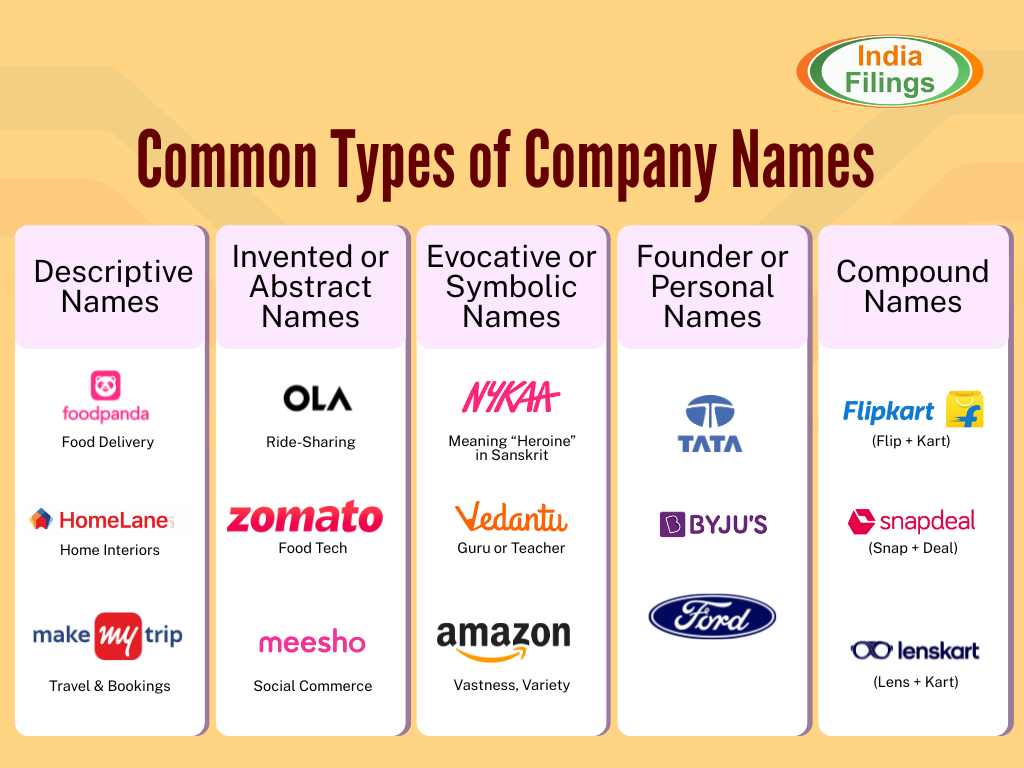
When architects of brand strategy sit down to name a company, they usually categorize potential names into several distinct archetypes. Each category offers different benefits and carries different risks. Understanding these categories is essential for any business looking to establish a clear corporate identity.
Descriptive Names: Clarity Above All
Descriptive names do exactly what they say on the tin. Examples include “The Weather Channel,” “General Motors,” or “Whole Foods Market.” These names are highly effective for new companies because they minimize consumer confusion. They tell the market exactly what the business does, reducing the marketing spend required to educate the public. However, the downside is that they are often difficult to trademark and can be seen as unimaginative or “boring.” Furthermore, if a company pivots its business model, a descriptive name can become a liability.
Abstract and Invented Names: Building a Blank Canvas
Invented names are “neologisms”—words that didn’t exist until the brand was born. Think of Xerox, Kleenex, or Pixar. The primary advantage here is that the brand starts with a completely blank canvas. There are no prior associations, and from a legal standpoint, these names are the easiest to trademark because they are entirely unique. The challenge is the “education cost.” Since the word has no inherent meaning, the company must spend significant marketing capital to teach the consumer what the name stands for.
Metaphorical and Suggestive Names: Telling a Story
Suggestive names sit in the middle ground between descriptive and abstract. They don’t name the product, but they suggest a quality or an experience. “Amazon” suggests something vast, diverse, and unstoppable. “Jaguar” suggests speed and elegance. “Patagonia” evokes images of rugged exploration. These names are often the most powerful in branding because they tap into human emotion and storytelling. They allow a company to expand into new categories without outgrowing its name.
The Global Challenge: Cultural Sensitivity and Linguistic Nuance

In a globalized economy, “the name of the company” must translate across borders, languages, and cultures. What sounds powerful in English might be an insult in another language, or simply impossible to pronounce. This is where many large corporations have stumbled, leading to expensive rebrands or market failures.
Translation Fails and Localization
The history of branding is littered with naming disasters. For example, when Coca-Cola first entered the Chinese market, some phonetic translations of the name sounded like “bite the wax tadpole.” While companies have become much more sophisticated, the risk remains. A name must be vetted through “linguistic disaster checks” to ensure it doesn’t have negative connotations in major global languages. This involves analyzing slang, regional dialects, and cultural taboos.
Designing for a Global Audience
A brand that intends to go global often opts for names that are short and vowel-heavy, as these tend to be easier to pronounce across different language families. Brands like Sony or Ikea were designed (or evolved) to be phonetically universal. When a brand name is easy to pronounce in Tokyo, New York, and Berlin, it creates a cohesive global identity that facilitates international expansion.
The Legal and Digital Perimeter: Securing Your Identity
A name is useless if you cannot own it. In the 21st century, naming a company is as much a legal and digital scavenger hunt as it is a creative exercise. The name of the company must be cleared through trademark offices and secured across digital platforms.
Trademark Protection in a Crowded Market
The trademark landscape is more crowded than ever. Thousands of new businesses are registered every day, making it increasingly difficult to find a name that isn’t already “in use” within a specific industry class. Branding experts often work alongside intellectual property (IP) lawyers to ensure that a name can be legally protected. If a name is too generic, it cannot be trademarked; if it is too similar to an existing brand, it risks a “likelihood of confusion” lawsuit.
The Digital Real Estate: Domain Names and Social Handles
Before a name is finalized, the “digital footprint” must be verified. Does the .com domain exist? Is it for sale? Are the social media handles available? Many companies have had to change their preferred name because the digital real estate was too expensive or already held by a competitor. In the modern brand strategy, the availability of a clean social media handle can be the deciding factor between two potential names. This has led to the rise of “creative spelling” (like Lyft instead of Lift) or the addition of verbs to URLs (like “GetDropbox.com” in the early days of the company).
Evolution and Rebranding: When the Old Name No Longer Fits
The lifespan of a company can span decades, and sometimes the name that worked at the beginning no longer reflects the reality of the organization. Rebranding—changing the name of the company—is a radical and risky surgery that is only performed when the benefits outweigh the loss of brand equity.
Signs Your Company Needs a Name Change
There are several reasons why a company might abandon its original name. Perhaps the name is too narrow (like “RadioShack” in a world without radios), or perhaps the name has been tarnished by a public relations disaster (like ValuJet rebranding to AirTran after a crash). In other cases, a merger or acquisition requires a new, neutral identity to represent the combined forces. Facebook’s transition to Meta and Google’s transition to Alphabet (as a parent company) are examples of mature brands changing their names to reflect a broader strategic vision beyond their original products.
The Risks of Rebranding
Rebranding is expensive and dangerous. You risk confusing your most loyal customers and losing search engine authority. If a rebrand is handled poorly, it can appear as though the company is having an identity crisis. A successful rebrand requires a clear narrative: why is the name changing, and what does the new name promise that the old one didn’t? The goal is to retain the trust built under the old name while opening doors to new opportunities under the new one.

Conclusion: The Name as a Strategic Asset
When we conclude our inquiry into “what is the name of the company,” we find that a name is the most enduring asset a business owns. Buildings can be sold, products can become obsolete, and leadership can change, but the brand name persists. It is the vessel for the company’s reputation and the anchor for its marketing efforts.
The art of corporate naming is a delicate balance of linguistics, law, and psychology. It requires a deep understanding of the brand’s core mission and an unwavering focus on the future. A great name doesn’t just describe a company; it defines it, gives it a voice, and allows it to take up residence in the minds of consumers. In the high-stakes world of brand strategy, the name is not just a word—it is the company’s destiny.
aViewFromTheCave is a participant in the Amazon Services LLC Associates Program, an affiliate advertising program designed to provide a means for sites to earn advertising fees by advertising and linking to Amazon.com. Amazon, the Amazon logo, AmazonSupply, and the AmazonSupply logo are trademarks of Amazon.com, Inc. or its affiliates. As an Amazon Associate we earn affiliate commissions from qualifying purchases.