
The celestial bodies orbiting our neighboring planet, Mars, have long captivated human imagination. While Mars itself is a focal point of scientific inquiry and technological ambition, its two diminutive moons, Phobos and Deimos, often operate in its shadow. Yet, understanding these celestial companions is not merely an astronomical curiosity; it is intrinsically linked to the advancement of space exploration technology. Their unique characteristics, orbital mechanics, and the very challenges they present for future Martian endeavors offer a rich landscape for technological innovation and problem-solving. This article will delve into the names of Mars’ moons, explore their physical attributes, and critically examine their profound implications for the development of cutting-edge technologies essential for our continued exploration of the Red Planet.
The Nomenclature and Discovery of Mars’ Moons
The naming of celestial bodies often reflects the historical context of their discovery and the prevailing scientific and cultural understanding of the time. The moons of Mars are no exception, with their appellations steeped in classical mythology.
Mythological Roots of Phobos and Deimos
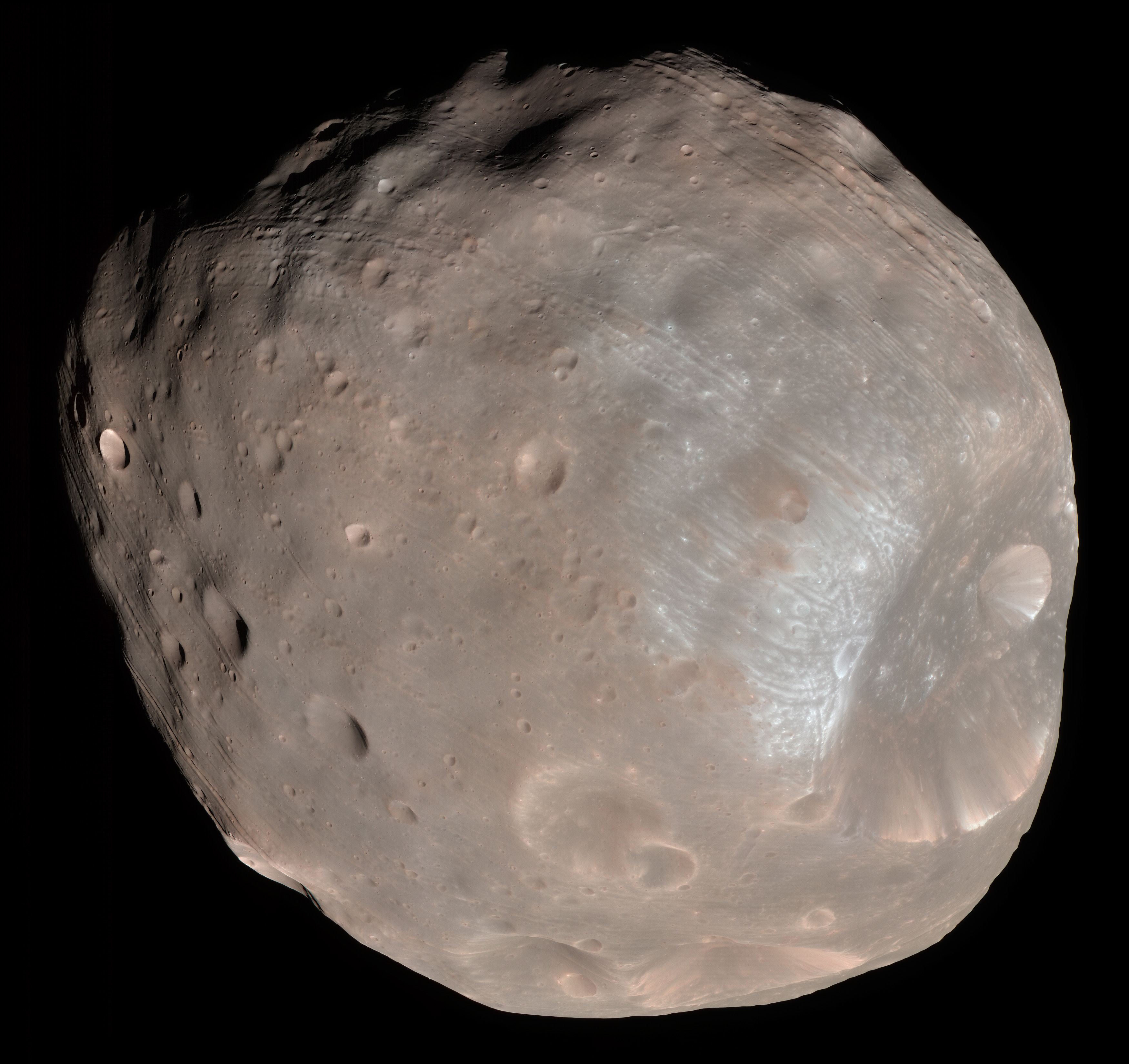
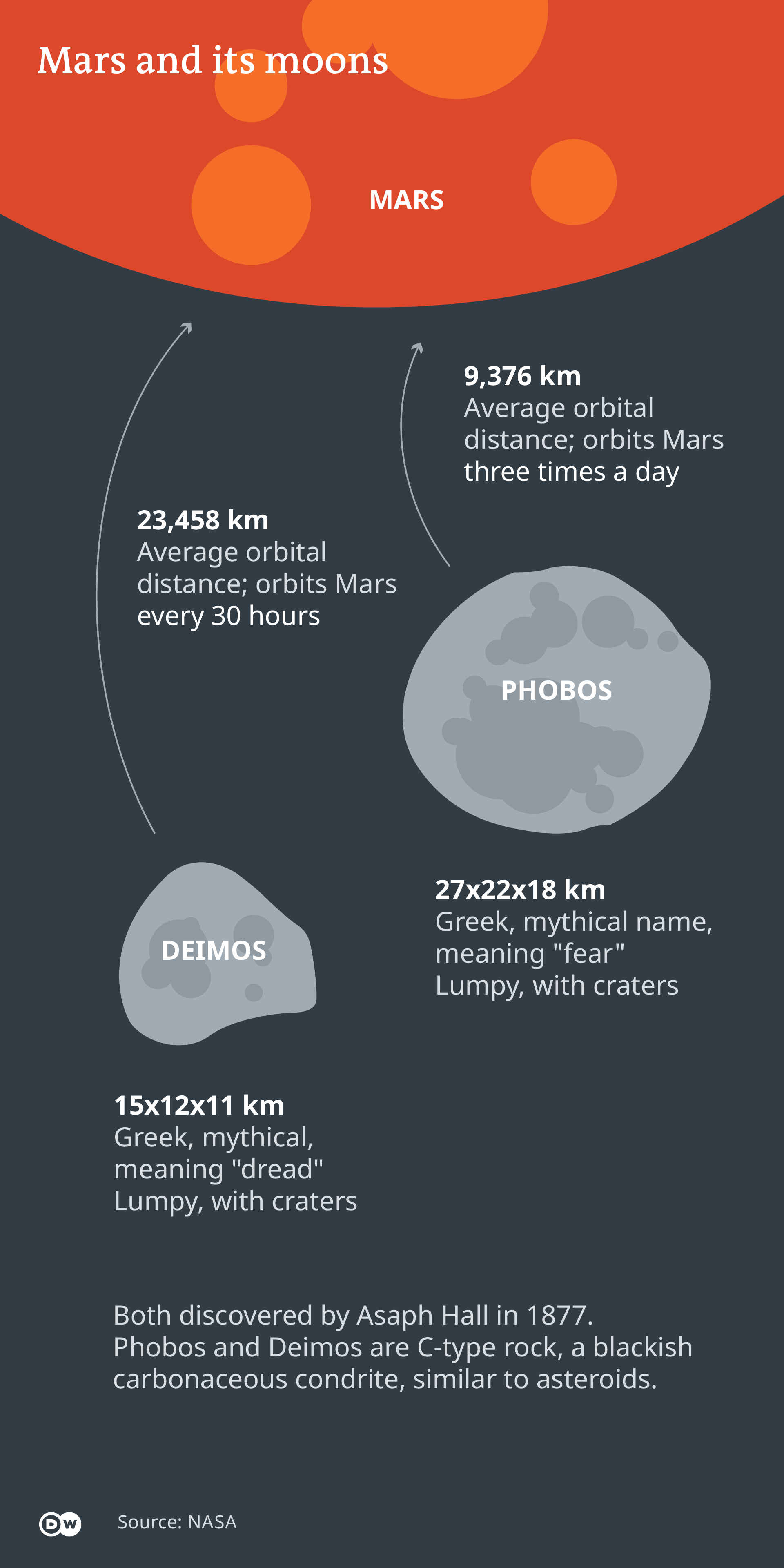
The names “Phobos” and “Deimos” are derived from Greek mythology, representing two sons of Ares (the Greek god of war), who was the counterpart to the Roman god Mars. Phobos personified fear and terror, while Deimos embodied dread and desolation. This choice of names, made by the American astronomer Asaph Hall Jr. in 1877, when he discovered the two moons, aptly reflects the sometimes daunting and fearsome nature of space exploration itself. Hall’s discovery was not a simple feat; it required meticulous observation and the deployment of advanced telescopic technology for its era. The naming convention, therefore, is not just a historical footnote but a subtle nod to the psychological and physical challenges inherent in venturing beyond Earth.
The Scientific Pursuit of Martian Satellites
The search for Martian moons had been ongoing for centuries, with many astronomers making claims that were later disproven. The eventual confirmation of Phobos and Deimos in 1877 was a testament to the evolving capabilities of astronomical observation. Asaph Hall’s diligent work, utilizing the 26-inch refracting telescope at the U.S. Naval Observatory, was a significant technological achievement. This period marked a crucial phase in the development of astronomical instrumentation, where improvements in lens grinding, mount stability, and observation techniques directly led to groundbreaking discoveries. The successful identification of these faint, small bodies underscored the importance of precision engineering and the relentless pursuit of technological enhancement in the scientific endeavor.
The Physical Characteristics and Orbital Dynamics of Phobos and Deimos
Beyond their names, the physical attributes and orbital behaviors of Phobos and Deimos present unique engineering challenges and opportunities for technological advancement. Their small size, irregular shapes, and proximity to Mars all have significant implications for spacecraft operations and future mission planning.
Irregular Shapes and Surface Features: A Challenge for Navigation and Landing

Unlike Earth’s Moon, Phobos and Deimos are not spherical. They are irregularly shaped, more akin to asteroids, with Phobos being the larger and closer of the two. Phobos is roughly 27 kilometers in its longest dimension, while Deimos is about 12 kilometers. This irregular topography poses a significant challenge for spacecraft attempting to orbit or land on them. Precise orbital insertion and trajectory planning become far more complex when dealing with a non-uniform gravitational field. For robotic landers or future human missions aiming to study these moons directly, advanced navigation systems capable of real-time course correction based on detailed topographical mapping are essential. Technologies such as sophisticated lidar (light detection and ranging) and advanced computer vision algorithms are being developed and refined to overcome these challenges, enabling the creation of high-resolution 3D maps and ensuring safe, accurate landings on these peculiar celestial bodies.
Orbital Mechanics: Implications for Spacecraft Design and Mission Planning
Phobos orbits Mars at a remarkably close distance of approximately 6,000 kilometers, completing an orbit in just under 8 hours. This rapid orbit means Phobos actually rises in the west and sets in the east for an observer on Mars, a phenomenon reversed from what we experience on Earth. Deimos, on the other hand, orbits much farther out, at about 23,000 kilometers, with an orbital period of nearly 30 hours. These distinct orbital parameters have critical implications for spacecraft design and mission planning. For probes designed to orbit Mars and study its moons, careful consideration must be given to gravitational perturbations and the potential for collisions or close encounters. Furthermore, the rapid orbit of Phobos offers potential technological advantages. Future concepts for Martian infrastructure might involve using Phobos as a relay station for communications or a platform for observation, leveraging its close proximity and rapid transit across the Martian sky. Designing spacecraft capable of robust operation within these dynamic orbital environments requires advanced propulsion systems, resilient structural integrity, and sophisticated control algorithms that can account for complex gravitational interactions.
Technological Frontiers Driven by Martian Moons
The unique characteristics of Phobos and Deimos are not just points of scientific interest; they are catalysts for innovation in space exploration technology. Understanding and interacting with these moons necessitates the development of novel tools and systems that can push the boundaries of what is currently possible.
Advanced Remote Sensing and Surface Analysis Technologies
To fully understand the composition and geological history of Phobos and Deimos, sophisticated remote sensing technologies are crucial. Future missions will likely employ advanced spectrometers to analyze the spectral signatures of their surfaces, revealing their mineralogical makeup. This information is vital for understanding their origins – are they captured asteroids, or were they formed in situ with Mars? Alongside spectroscopy, high-resolution imaging systems with enhanced ultraviolet, infrared, and thermal capabilities will be necessary to map their surfaces in unprecedented detail, identifying geological features and potential resource deposits. For in-situ analysis, miniaturized, robust robotic probes equipped with advanced drilling and sampling mechanisms will be required, capable of operating in the low gravity and vacuum of the Martian moons. The development of these technologies directly benefits broader applications in planetary science and resource utilization in space.
Innovative Propulsion and Navigation Systems for Close Proximity Operations
The close and rapid orbit of Phobos, in particular, presents a unique challenge and opportunity for propulsion and navigation technologies. For spacecraft intending to orbit Phobos, highly efficient and precise thruster systems are paramount to maintain stable orbits and avoid atmospheric drag or gravitational anomalies. Electric propulsion systems, with their high specific impulse, are becoming increasingly vital for such missions, offering the fuel efficiency needed for extended operations. Furthermore, advanced autonomous navigation systems are essential. Relying solely on ground control for maneuvers in such a dynamic environment would be too slow and inefficient. Future missions will rely heavily on AI-driven navigation, capable of real-time hazard avoidance, orbital adjustments, and precision rendezvous with the moons. This includes the development of sophisticated rendezvous and docking technologies, adaptable to the irregular surfaces and low gravity environments of these small celestial bodies, which can then be applied to asteroid mining or servicing future space stations.
Concepts for Phobos and Deimos as Stepping Stones for Deeper Space Exploration
The strategic location and unique characteristics of Phobos and Deimos are increasingly being considered as potential stepping stones for future human and robotic exploration beyond Mars. Phobos, with its proximity to Mars, could serve as a vital staging ground for missions venturing further into the solar system, acting as a platform for assembling larger spacecraft or launching probes with reduced energy expenditure due to Mars’ gravity. Technologies required for such a concept include robust habitat modules capable of withstanding the Martian environment, advanced life support systems, and efficient in-situ resource utilization (ISRU) techniques to extract water or other necessary materials from the moons or Mars itself. Deimos, while more distant, could also play a role in providing a stable orbit for astronomical observatories, free from the atmospheric interference of Earth or Mars. The development of these capabilities, driven by the potential utility of Mars’ moons, directly contributes to the broader technological roadmap for sustainable human presence in space and the eventual colonization of other celestial bodies.
In conclusion, the names Phobos and Deimos, rooted in myth, now represent tangible objectives in humanity’s relentless pursuit of technological advancement. The study of these Martian moons is not an academic exercise; it is a driving force behind the innovation of sophisticated navigation systems, advanced remote sensing capabilities, and novel propulsion technologies. As we continue to unravel the mysteries of Mars and its celestial companions, the technological solutions developed in response to the challenges and opportunities presented by Phobos and Deimos will undoubtedly propel us towards a more ambitious and capable future in space exploration.
aViewFromTheCave is a participant in the Amazon Services LLC Associates Program, an affiliate advertising program designed to provide a means for sites to earn advertising fees by advertising and linking to Amazon.com. Amazon, the Amazon logo, AmazonSupply, and the AmazonSupply logo are trademarks of Amazon.com, Inc. or its affiliates. As an Amazon Associate we earn affiliate commissions from qualifying purchases.